

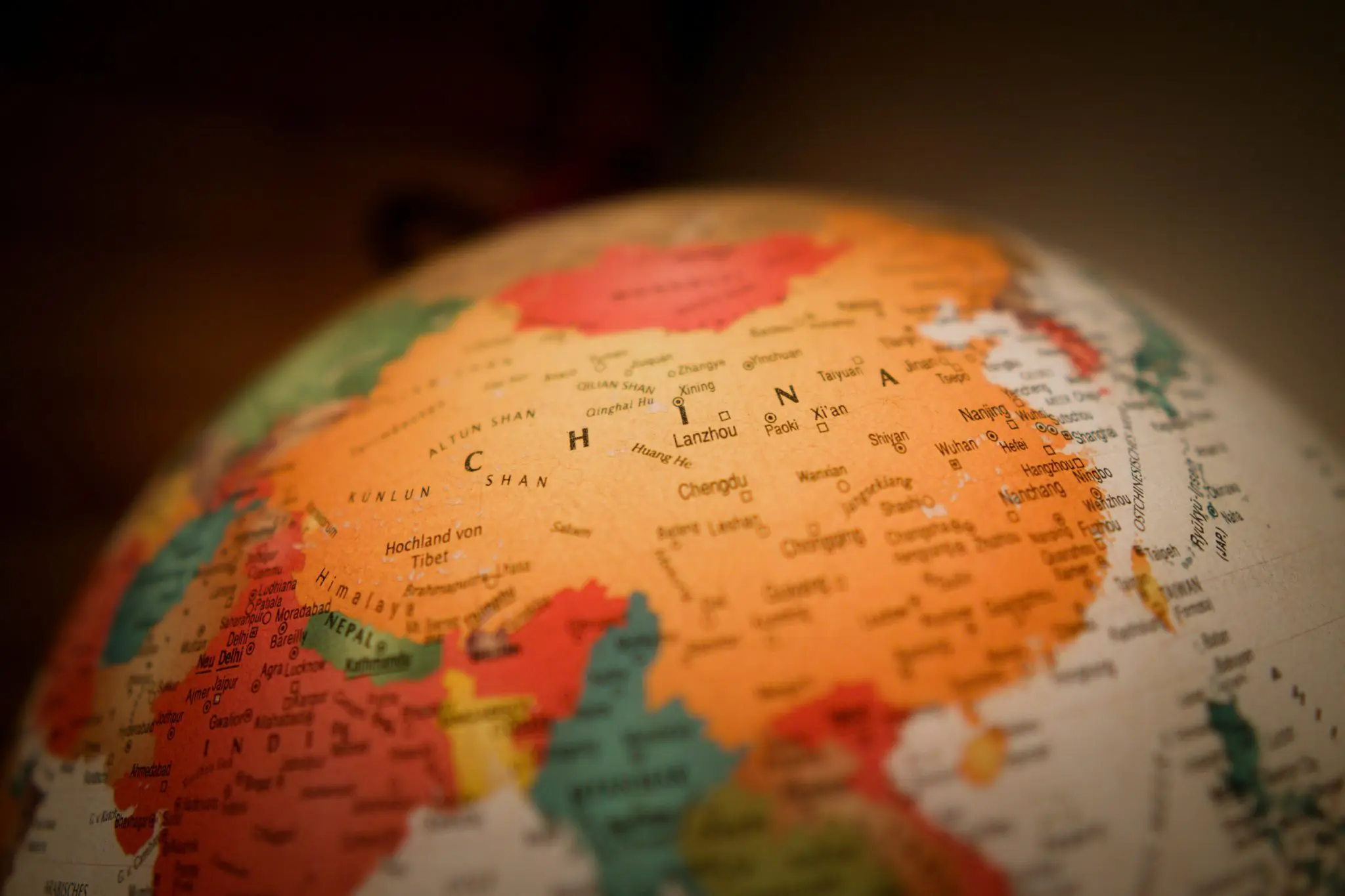
- This guide lists 244 country and territory names in Chinese, with characters, pinyin, and audio for every single entry.
- Most country names in Chinese are transliterations, chosen to approximate how the name sounds rather than to translate what it means.
- A small group of countries take the suffix 国 (guó, "country") — among them 中国 (Zhōngguó), 美国 (Měiguó), 英国 (Yīngguó), and 法国 (Fǎguó).
- Learning the recurring building blocks — 岛 (dǎo), 群岛 (qúndǎo), 共和国 (gònghéguó), 属 (shǔ), and 斯坦 (sītǎn) — lets you decode dozens of names at once.
How many countries and territories can you currently name in Chinese? It's our goal to increase this figure!
To this end, we've compiled a comprehensive list of 244 country and territory names in Chinese for your learning pleasure. Every entry comes with characters, pinyin, and audio, so you can check both how a name is written and how it actually sounds.
These names come up far more often than beginners expect. "你是哪国人?" (Nǐ shì nǎ guó rén? — "What country are you from?") is one of the first questions you will be asked in China, and being able to answer it clearly is a small but genuine milestone.
They are also unusually satisfying vocabulary to learn. Because most of them are sound-based, they tend to click into place quickly once you can read pinyin confidently.
01 Country and Territory Names in Chinese
Here's a comprehensive list of English-to-Chinese translations for the world's countries and territories.
🔈 Click on a country's Pinyin to hear the pronunciation. If the romanization itself is still unfamiliar, our guide to what pinyin is explains how the system works before you start listening.
Download the above table as a PDF or view it in Google Sheets.
A list this long is best tackled in small batches rather than all at once. Loading a few dozen entries into a spaced-repetition deck is one of the most efficient ways to make them stick, and our overview of Chinese flashcards covers the tools worth using.
A few entries above reflect older English names. Burma is now more commonly called Myanmar, and Swaziland officially became Eswatini in 2018, although the Chinese names in this list are still widely used for both.
Others reflect political changes: Macedonia was renamed North Macedonia in 2019 (北马其顿, Běi Mǎqídùn), Serbia and Montenegro became two separate countries in 2006, and the Netherlands Antilles was dissolved in 2010.
02 What's in a Name?
The Chinese versions of some country and territory names have interesting meanings.
The "Beautiful Country" That Isn't
For example, the Chinese word for the United States, 美国 (Měiguó), literally translates to "beautiful country."
That said, 美国 (Měiguó) was most likely selected for the United States because the "Měi" in Měiguó roughly approximates the sound "America." The fuller transliteration 亚美利加 (Yàměilìjiā) is where that syllable comes from, and 美国 is simply the shortened form that stuck.
Names Built Purely from Sound
Other country names, like 肯尼亚 (kěn ní yà, meaning Kenya) and 爱尔兰 (ài ěr lán, meaning Ireland), are also transliterations of their English sounds.
The same logic produces 加拿大 (Jiānádà) for Canada, 巴西 (Bāxī) for Brazil, and 意大利 (Yìdàlì) for Italy. In each case the characters were chosen for their pronunciation, so trying to read a meaning into them will only lead you astray.
This is exactly the same process used when foreign personal names are rendered in Chinese, which is why choosing your own Chinese name often involves the same balancing act between sound and pleasant-looking characters. If you'd like to dig further into how characters came to carry sound as well as sense, our introduction to Chinese etymology is a good next stop.
Names That Actually Translate
On the other hand, the name for Japan, 日本 (Rìběn), directly translates to "sun root," purportedly because Japan lies to the east of China, from which the sun appears to rise each morning.
A handful of others are similarly literal. Iceland is 冰岛 (Bīngdǎo), or "ice island," while South Africa is simply 南非 (Nánfēi) — 南 (nán, "south") plus 非 (fēi), the first character of 非洲 (Fēizhōu, "Africa").
Some names mix both approaches. 新西兰 (Xīnxīlán) pairs 新 (xīn, "new") with a transliteration of "Zealand," and 西撒哈拉 (Xīsāhālā) does the same with 西 (xī, "west") and "Sahara."
03 Patterns That Make These Names Easier to Learn
Two hundred and forty-four names is a lot to face at once. Fortunately, the list is full of repeating parts, and spotting them turns a long memorization job into a much smaller one.
The 国 (guó) Countries
A small group of countries — generally those China had the earliest and closest contact with — end in 国 (guó), meaning "country." China itself is 中国 (Zhōngguó), the "middle country."
In most of these names, the first character is a clipped transliteration. 英国 (Yīngguó) comes from 英吉利 (Yīngjílì, "England"), 法国 (Fǎguó) from 法兰西 (Fǎlánxī, "France"), and 德国 (Déguó) from 德意志 (Déyìzhì, "Deutsch").
Thailand (泰国, Tàiguó) and South Korea (韩国, Hánguó) follow the same shape. North Korea, by contrast, is 朝鲜 (Cháoxiǎn) — a reminder that the two Koreas have quite different names in Chinese.
Islands, Republics, and Territories
Once you know a few suffixes, dozens of entries in the table above become readable at a glance. 岛 (dǎo) means "island" and 群岛 (qúndǎo) means "islands" or "archipelago," which covers everything from 圣诞岛 (Shèngdàn Dǎo, Christmas Island) to 开曼群岛 (Kāimàn Qúndǎo, the Cayman Islands).
Longer official names use 共和国 (gònghéguó, "republic"), 联邦 (liánbāng, "federation"), and 领地 (lǐngdì, "territory"). Dependencies are marked with 属 (shǔ, "belonging to"), giving 英属 (Yīngshǔ, British), 法属 (Fǎshǔ, French), 美属 (Měishǔ, American), and 荷属 (Héshǔ, Dutch).
Familiar Endings
You will also notice 亚 (yà) closing a great many names, including 澳大利亚 (Àodàlìyà, Australia), 马来西亚 (Mǎláixīyà, Malaysia), and 罗马尼亚 (Luómǎníyà, Romania). It is the same character that appears in 亚洲 (Yàzhōu, "Asia").
Central Asia is even tidier. The "-stan" ending is consistently rendered as 斯坦 (sītǎn), which gives 哈萨克斯坦 (Hāsàkèsītǎn, Kazakhstan), 巴基斯坦 (Bājīsītǎn, Pakistan), and 乌兹别克斯坦 (Wūzībiékèsītǎn, Uzbekistan).
Saying Where You're From
The practical payoff is that adding 人 (rén, "person") to a country name gives you a nationality. 美国人 (Měiguórén) is "American," 英国人 (Yīngguórén) is "British," and 中国人 (Zhōngguórén) is "Chinese."
That single pattern turns the whole table into a set of ready-made answers to "你是哪国人?" It is one of the first exchanges you'll have if you Learn Chinese in China, and it comes up constantly in taxis, shops, and classrooms.
It pairs naturally with the rest of the small talk you'll need on the road, which our list of essential Chinese travel phrases covers in more detail.
04 How the World Map Looks from China
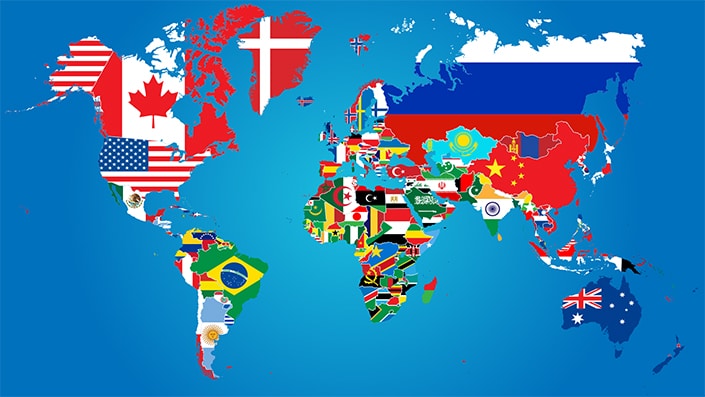
Knowing the names is one thing; seeing where they sit is another. Maps published in China are typically centered on the Pacific rather than the Atlantic, which puts East Asia in the middle and splits the Americas off to the right.
Ever wonder what China's version of the world map looks like? Check out our article on the topic to find out.

Study Chinese in Guilin or Start Online
CLI offers personalized Chinese instruction built around your goals. Join our Immersion Program in Guilin or begin from anywhere with a free Chinese lesson .
05 Useful Geography Vocabulary
The words below will help you talk about countries, continents, and borders once you have the names themselves down.
| Chinese | Pinyin | Translation |
|---|---|---|
| 国家 | country; nation | |
| 首都 | capital city | |
| 世界 | world | |
| 地图 | map | |
| 洲 | continent | |
| 亚洲 | Asia | |
| 欧洲 | Europe | |
| 非洲 | Africa | |
| 北美洲 | North America | |
| 南美洲 | South America | |
| 大洋洲 | Oceania | |
| 南极洲 | Antarctica | |
| 岛 | island | |
| 群岛 | islands; archipelago | |
| 共和国 | republic | |
| 王国 | kingdom | |
| 联邦 | federation | |
| 领地 | territory | |
| 边境 | border | |
| 语言 | language | |
| 护照 | passport | |
| 外国人 | foreigner | |
| 哪国人 | a person of which country (nationality) | |
| 家乡 | hometown |
06 Keep Learning with CLI
Now that you've learned how to say a few more country names in Chinese, we welcome you to go one step further and enroll in one-on-one online Chinese lessons with CLI!
We also welcome you to study at our Chinese language school in beautiful Guilin. 加油!