

- Bopomofo, also called Zhuyin Fuhao, is a phonetic notation system used to show Mandarin pronunciation.
- It is especially important in Taiwan, where children learn Mandarin pronunciation through Zhuyin before reading independently.
- Bopomofo uses 37 symbols plus tone marks to represent the sounds of Mandarin Chinese.
- Unlike pinyin, Bopomofo does not use the Latin alphabet, which helps learners avoid English-based pronunciation habits.
- Learners focused on mainland China usually start with pinyin, while learners focused on Taiwan may benefit from Bopomofo.
You’ve heard of pinyin, but have you heard of its Taiwanese cousin, Bopomofo? Also known as Zhuyin Fuhao (注音符号 / 注音符號, zhùyīn fúhào), Bopomofo is a phonetic system used to write the sounds of Mandarin Chinese.

If you study Mandarin in Taiwan, read Taiwanese children’s books, or type Chinese on a Taiwanese keyboard, you will probably encounter Bopomofo. If you study in mainland China, you are much more likely to use pinyin instead.
This guide explains what Bopomofo is, where it came from, and how it works. It also compares Bopomofo with pinyin so you can decide which system fits your Chinese study plan.
01 What is Bopomofo (Zhuyin)?
Bopomofo is the common English name for 注音符号 in simplified Chinese or 注音符號 in traditional Chinese. The name means “phonetic notation symbols.”
The system is also called 注音 (zhùyīn), meaning “phonetic notation.” In English, you may see it written as Bopomofo, Zhuyin, Zhuyin Fuhao, or Mandarin Phonetic Symbols.
Bopomofo is not a language, a Western-style alphabet, or a romanization system. It is a set of phonetic symbols that show how Chinese characters are pronounced.
The name “Bopomofo” comes from the first four symbols in the system: ㄅ, ㄆ, ㄇ, and ㄈ. This is similar to how “alphabet” comes from the first two Greek letters, alpha and beta.
What is Zhuyin used for?
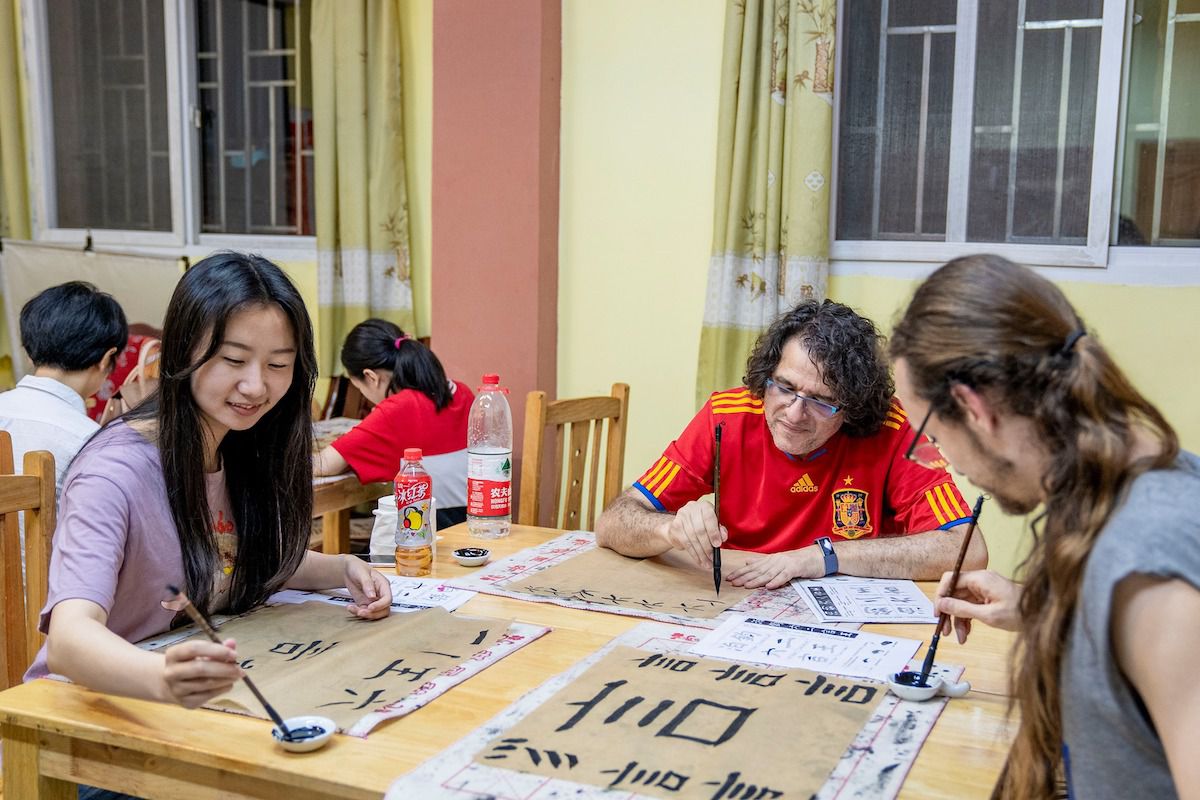
Zhuyin is used to teach Mandarin pronunciation, especially in Taiwan. It appears in children’s books, elementary school materials, dictionaries, language textbooks, and input systems for typing Chinese.
When Zhuyin appears next to Chinese characters, it works as a pronunciation guide. This helps readers learn how to pronounce new characters before they can recognize them by sight.
Is Bopomofo still used in Taiwan?
Yes. Bopomofo remains especially important in Taiwan, where it is commonly used in early education and Mandarin learning materials.
Many people in Taiwan also use Zhuyin input methods to type Chinese on phones and computers. You may see Bopomofo symbols on Taiwanese keyboards, in dictionaries, and in educational apps.
Is Bopomofo used in mainland China?
Bopomofo was developed in China in the early twentieth century and was used before Hanyu Pinyin became dominant. Today, mainland Chinese education overwhelmingly uses Hanyu Pinyin.
If your main goal is to study, work, or travel in mainland China, pinyin will usually be more practical. If your goal is Taiwan-focused Mandarin, Bopomofo is much more relevant.
02 Bopomofo history: where did Zhuyin come from?
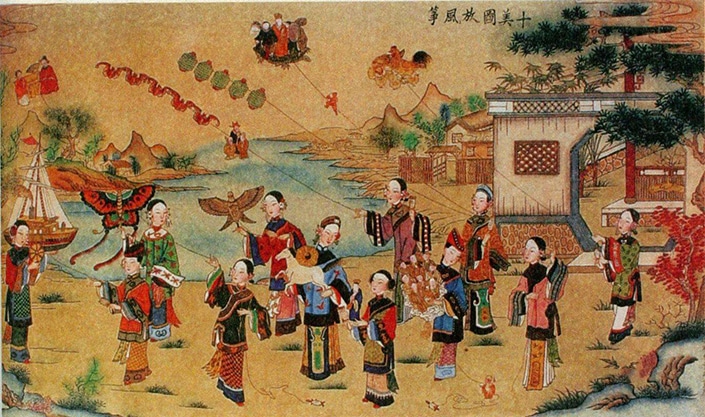
Bopomofo developed during a period of language reform in early twentieth-century China. After the fall of the Qing dynasty, scholars and officials worked to standardize national pronunciation and improve literacy.
The system was developed by the Commission on the Unification of Pronunciation in the 1910s and was officially promoted as a national phonetic system in the Republic of China period. Its symbols are largely based on components or older forms of Chinese characters.
Why was Bopomofo created?
China has many regional languages and varieties of Chinese. Before modern standardization, pronunciation could vary greatly from region to region.
Bopomofo provided a standard way to record and teach Mandarin pronunciation. This made it useful in schools, dictionaries, and literacy education.
When did pinyin replace Bopomofo in China?
Hanyu Pinyin was officially introduced in the People’s Republic of China in 1958. Over time, pinyin became the main system used in mainland China for teaching pronunciation, romanizing names and places, and typing Chinese.
Bopomofo did not disappear everywhere. It remained widely used in Taiwan, where traditional characters and Zhuyin-based education continued to develop in a separate direction.
03 Bopomofo symbols: how many Zhuyin characters are there?
Standard Bopomofo uses 37 core symbols to represent Mandarin sounds. These symbols combine with tone marks to show the pronunciation of Chinese syllables.
The symbols are not random. Many are derived from older Chinese characters or character components, which is one reason Bopomofo looks more visually connected to Chinese writing than pinyin does.
The Chinese character 好 (hǎo), meaning “good,” is written in Zhuyin as ㄏㄠˇ. The symbols show the pronunciation, while the tone mark shows that it is third tone.
Bopomofo chart: the 37 Zhuyin symbols and their pinyin equivalents
The first step to reading Bopomofo is learning the 37 symbols. The system is divided into 21 initials (consonant sounds) and 16 finals (vowel and ending sounds).
The tables below show each Zhuyin symbol with its approximate pinyin equivalent. As you study them, listen to native audio and repeat each sound out loud, then compare them with CLI’s pinyin chart.
| Zhuyin | Pinyin | Zhuyin | Pinyin | Zhuyin | Pinyin |
|---|---|---|---|---|---|
| ㄅ | ㄉ | ㄓ | |||
| ㄆ | ㄊ | ㄔ | |||
| ㄇ | ㄋ | ㄕ | |||
| ㄈ | ㄌ | ㄖ | |||
| ㄍ | ㄐ | ㄗ | |||
| ㄎ | ㄑ | ㄘ | |||
| ㄏ | ㄒ | ㄙ |
| Zhuyin | Pinyin | Zhuyin | Pinyin | Zhuyin | Pinyin |
|---|---|---|---|---|---|
| ㄚ | ㄠ | ㄤ | |||
| ㄛ | ㄡ | ㄥ | |||
| ㄜ | ㄢ | ㄦ | |||
| ㄝ | ㄣ | ㄧ | |||
| ㄞ | ㄨ | ㄩ | |||
| ㄟ |
Once the symbols feel familiar, practice writing them in the correct order using CLI’s guide to Chinese stroke order. Many Zhuyin symbols share strokes and shapes with the characters they come from.

Bopomofo tone marks explained
Mandarin is a tonal language, so Bopomofo needs tone marks as well as sound symbols. These tone marks tell you how the pitch of a syllable should change.
- First tone: no tone mark is usually written
- Second tone: ˊ
- Third tone: ˇ
- Fourth tone: ˋ
- Neutral tone: ˙, usually placed before (or above) the syllable
If you are still building confidence with Mandarin tones, review CLI’s guide to Mandarin tones and tone changes. Tone accuracy matters whether you use pinyin or Bopomofo.
04 How to read Bopomofo
Bopomofo works by combining symbols into Mandarin syllables. Each syllable usually contains an initial sound, a final sound, and a tone.
This is similar to the way pinyin writes hǎo as “h” + “ao” + third tone. Bopomofo writes the same sound as ㄏㄠˇ.
How Bopomofo builds Mandarin syllables
A Mandarin syllable can often be divided into an initial and a final. In 好 (hǎo), the initial is the “h” sound and the final is the “ao” sound.
In Bopomofo, those sounds are written as ㄏ and ㄠ. The third-tone mark ˇ is then added after the symbols.
| Character | Pinyin | Meaning | Bopomofo |
|---|---|---|---|
| 好 | good; well | ㄏㄠˇ |
Bopomofo examples: common Chinese words in Zhuyin
Once you understand the basic pattern, Bopomofo becomes easier to read. The table below gives more examples of common Chinese words and their Zhuyin spelling.
| Character | Pinyin | Meaning | Bopomofo |
|---|---|---|---|
| 妈 | mother | ㄇㄚ | |
| 你 | you | ㄋㄧˇ | |
| 我 | I; me | ㄨㄛˇ | |
| 中 | middle; center | ㄓㄨㄥ | |
| 谢 | to thank | ㄒㄧㄝˋ | |
| 爱 | to love | ㄞˋ |
Where does Bopomofo appear in books?
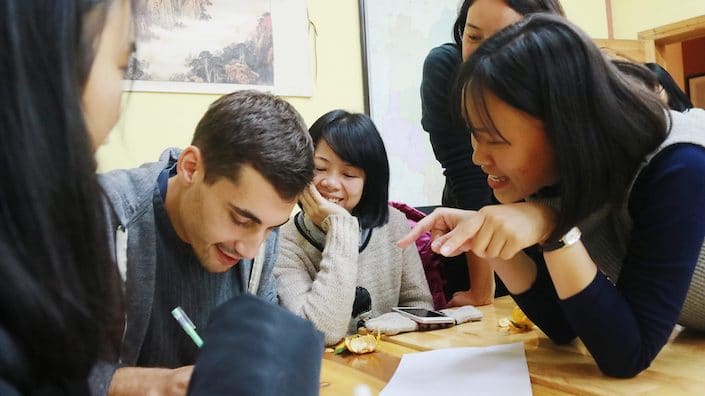
In Taiwanese children’s books and beginner materials, Bopomofo symbols often appear beside Chinese characters as small pronunciation hints. This helps learners read texts before they know every character.
Over time, students rely less on the hints and more on character recognition. CLI’s guide to learning Chinese characters can help you understand how pronunciation, meaning, and written form work together.
05 Bopomofo in Taiwan today
Bopomofo remains part of everyday language education in Taiwan. It is used by children, teachers, dictionary makers, language learners, and people using Zhuyin input methods.
You may also encounter Bopomofo in Taiwanese pop culture, captions, social media, and informal writing. In some contexts, people use the symbols creatively to represent sounds from Taiwanese Hokkien or colloquial speech.

Bopomofo keyboard: how to type Chinese with Zhuyin
Many Taiwanese keyboards include Bopomofo symbols. Users type the Zhuyin pronunciation of a word and then choose the correct Chinese characters from a list.
This is similar to pinyin input, but the pronunciation is entered through Zhuyin symbols instead of Latin letters. To compare both approaches, see CLI’s guide on how to type Chinese characters.
Bopomofo and Taiwanese Hokkien
Bopomofo was designed for Mandarin pronunciation, not for every language spoken in Taiwan. However, in informal writing, some people use Zhuyin symbols to suggest sounds from Taiwanese Hokkien or other local speech.
This usage is creative and context-dependent. It should not be confused with formal romanization systems used for Taiwanese Hokkien.
Do Chinese learners in Taiwan need Bopomofo?
If you study Mandarin in Taiwan, your school or teacher may introduce Bopomofo. Some Taiwan-based textbooks and classroom materials use Zhuyin, especially for pronunciation practice.
You do not have to master Bopomofo before starting Mandarin, but learning it makes Taiwanese materials easier to use. It can also help you understand local education, keyboards, and pronunciation resources.

Learn Chinese with Cultural Context
CLI offers personalized Chinese instruction built around real language and culture. Join our Immersion Program in Guilin or start online with a free Chinese lesson.
06 Bopomofo vs. pinyin: what is the difference?
Bopomofo and pinyin both help learners pronounce Mandarin Chinese. The main difference is that pinyin uses the Latin alphabet, while Bopomofo uses its own set of symbols.
Pinyin is the standard system in mainland China and the most common system for international learners. Bopomofo is especially associated with Taiwan.
| Feature | Bopomofo / Zhuyin | Pinyin |
|---|---|---|
| Writing system | Uses 37 phonetic symbols | Uses the Latin alphabet |
| Main region of use | Taiwan | Mainland China and most international Mandarin programs |
| Common uses | Children’s books, Taiwanese education, dictionaries, keyboards | Textbooks, dictionaries, signage, typing, romanization |
| Learning advantage | Avoids English-letter pronunciation habits | Easier to start because many learners already know Latin letters |
| Best for | Taiwan-focused Mandarin learners | Mainland China, global Mandarin study, and most beginner textbooks |
Is Bopomofo better than pinyin?
Bopomofo is not automatically better than pinyin. The better system depends on your goals, location, and learning materials.
Some learners like Bopomofo because it does not encourage English-based pronunciation guesses. For example, the pinyin letter “q” does not sound like English “q,” while the Zhuyin symbol ㄑ has no English association.
Is pinyin easier than Bopomofo?
Pinyin is usually easier at the beginning because it uses familiar Latin letters. This makes it accessible for many international learners.
However, pinyin letters do not always match English pronunciation. Learners still need to study the correct Mandarin sounds, especially initials such as , , , , , and .
Should beginners learn Bopomofo or pinyin first?
If you are learning Mandarin for mainland China, international exams, or general communication, start with pinyin. It is the more widely used system globally.
If you are focused on Taiwan, traditional characters, or Taiwan-based schools, learning Bopomofo is a smart choice. For a broader comparison, see CLI’s guide to learning Chinese in mainland China or Taiwan.
07 How to learn Bopomofo fast
Bopomofo looks unfamiliar at first, but the system is compact. Because there are only 37 core symbols, many learners can understand the basics quickly with focused practice.
The goal is not just to memorize the shapes. You need to connect each symbol with a Mandarin sound and then practice combining symbols into full syllables.
Learn the 37 Zhuyin symbols first
Start by learning the symbols in small groups. Practice initials first, then finals, then full syllables.
Say each sound out loud as you write or read the symbol. This builds a stronger connection between symbol shape and pronunciation.
Practice Bopomofo with tone marks
After learning the symbols, add tone marks. Practice reading simple syllables such as ㄇㄚ, ㄇㄚˊ, ㄇㄚˇ, and ㄇㄚˋ.
Tone practice is essential because Mandarin meaning changes with tone. This is true whether you use pinyin, Bopomofo, or Chinese characters alone.
Use a Bopomofo to pinyin comparison as a bridge
If you already know pinyin, use it as a bridge. Compare pinyin syllables with their Zhuyin equivalents until the patterns become automatic.
For example, becomes ㄇㄚ, becomes ㄏㄠˇ, and becomes ㄓㄨㄥ.
Practice Bopomofo with real Chinese characters
Do not study Bopomofo only as an abstract chart. Pair it with common Chinese characters and simple words.
This helps you understand how pronunciation connects with written Chinese. To keep your progress on track, combine Zhuyin practice with a structured Chinese study plan.
08 Should you learn Bopomofo or pinyin?
You should learn Bopomofo if Taiwan is central to your Mandarin goals. It helps you use Taiwanese learning materials, understand local pronunciation tools, and type Chinese with Zhuyin input.
You can safely prioritize pinyin if your focus is mainland China, most international textbooks, or general beginner Mandarin. Many learners never need Bopomofo unless they specifically study Taiwanese Mandarin.
Learn Bopomofo if you study Taiwanese Mandarin
Bopomofo is especially useful if you plan to study in Taiwan, read traditional-character children’s books, or work with Taiwan-based teachers. It gives you direct access to the pronunciation system many Taiwanese learners grow up with.
It can also make Taiwanese keyboards and educational resources feel less confusing. For serious Taiwan-focused learners, Bopomofo is worth the extra effort.
Learn pinyin if you study mainland Mandarin
Pinyin is the better first choice if you plan to study in mainland China or use most international Chinese textbooks. It is also the default for many online resources, dictionaries, and beginner courses, including most HSK exam preparation.
If your goal is to Learn Chinese in China, pinyin will usually be the first pronunciation system you encounter. Bopomofo can still be interesting later, especially if you want to compare Mandarin learning systems across regions.
Can you learn both Bopomofo and pinyin?
Yes. Learning both can deepen your understanding of Mandarin sounds and help you move between mainland Chinese and Taiwanese learning materials.
However, beginners should avoid overwhelming themselves. Pick the system that matches your main study environment first, then add the other once your pronunciation foundation feels stable.

09 Bopomofo vocabulary: useful Zhuyin terms
The following vocabulary will help you talk about Bopomofo, pinyin, Mandarin pronunciation, and Chinese writing systems.
| Chinese | Pinyin | Meaning |
|---|---|---|
| 注音符号 | Bopomofo; phonetic notation symbols | |
| 注音 | Phonetic notation; Zhuyin | |
| 拼音 | Pinyin; the Latin-based romanization system | |
| 声调 | Tone | |
| 声母 | Initial; the beginning consonant sound | |
| 韵母 | Final; the vowel or ending sound | |
| 国语 | Mandarin (term used in Taiwan) | |
| 普通话 | Mandarin (term used in mainland China) | |
| 汉字 | Chinese characters | |
| 繁体字 | Traditional Chinese characters | |
| 键盘 | Keyboard |
10 Bopomofo FAQ
What is Bopomofo in Chinese?
Bopomofo is called 注音符号 in simplified Chinese and 注音符號 in traditional Chinese. It is also commonly called 注音 or Zhuyin.
Is Bopomofo the same as Zhuyin?
Yes. Bopomofo is the common English nickname, while Zhuyin or Zhuyin Fuhao is closer to the Chinese name of the system.
How many Bopomofo symbols are there?
Standard Bopomofo uses 37 core symbols, made up of 21 initials and 16 finals. These combine with Mandarin tone marks to show pronunciation.
Is Bopomofo used in Taiwan?
Yes. Bopomofo is widely used in Taiwan for Mandarin education, dictionaries, children’s books, and Chinese input methods.
Is Bopomofo used in mainland China?
Bopomofo was historically used in China, but Hanyu Pinyin is now the dominant pronunciation system in mainland China. Bopomofo remains much more important in Taiwan.
Is Bopomofo better than pinyin?
Neither system is universally better. Pinyin is more useful for mainland China and most international learners, while Bopomofo is more useful for Taiwan-focused Mandarin study.
Is Bopomofo hard to learn?
Bopomofo is fairly quick to learn because it has only 37 symbols. Most learners can read basic syllables within a few focused study sessions, especially if they already know pinyin.
Should beginners learn Bopomofo or pinyin?
Beginners should learn Bopomofo if they are studying Taiwanese Mandarin or using Taiwan-based materials. Otherwise, pinyin is usually the more practical first step.
11 Final thoughts
Bopomofo is one of the most important pronunciation systems in the Mandarin-speaking world. It is especially central to Taiwan, where it supports early education, reading, typing, and dictionary use.
For most mainland-focused learners, pinyin remains the best starting point. For Taiwan-focused learners, Bopomofo opens the door to local materials and gives you a more direct connection with Taiwanese Mandarin education.
Whichever system you choose, remember that Bopomofo and pinyin are tools, not replacements for Chinese characters. The long-term goal is to use pronunciation support to build stronger listening, speaking, reading, and character recognition skills.