

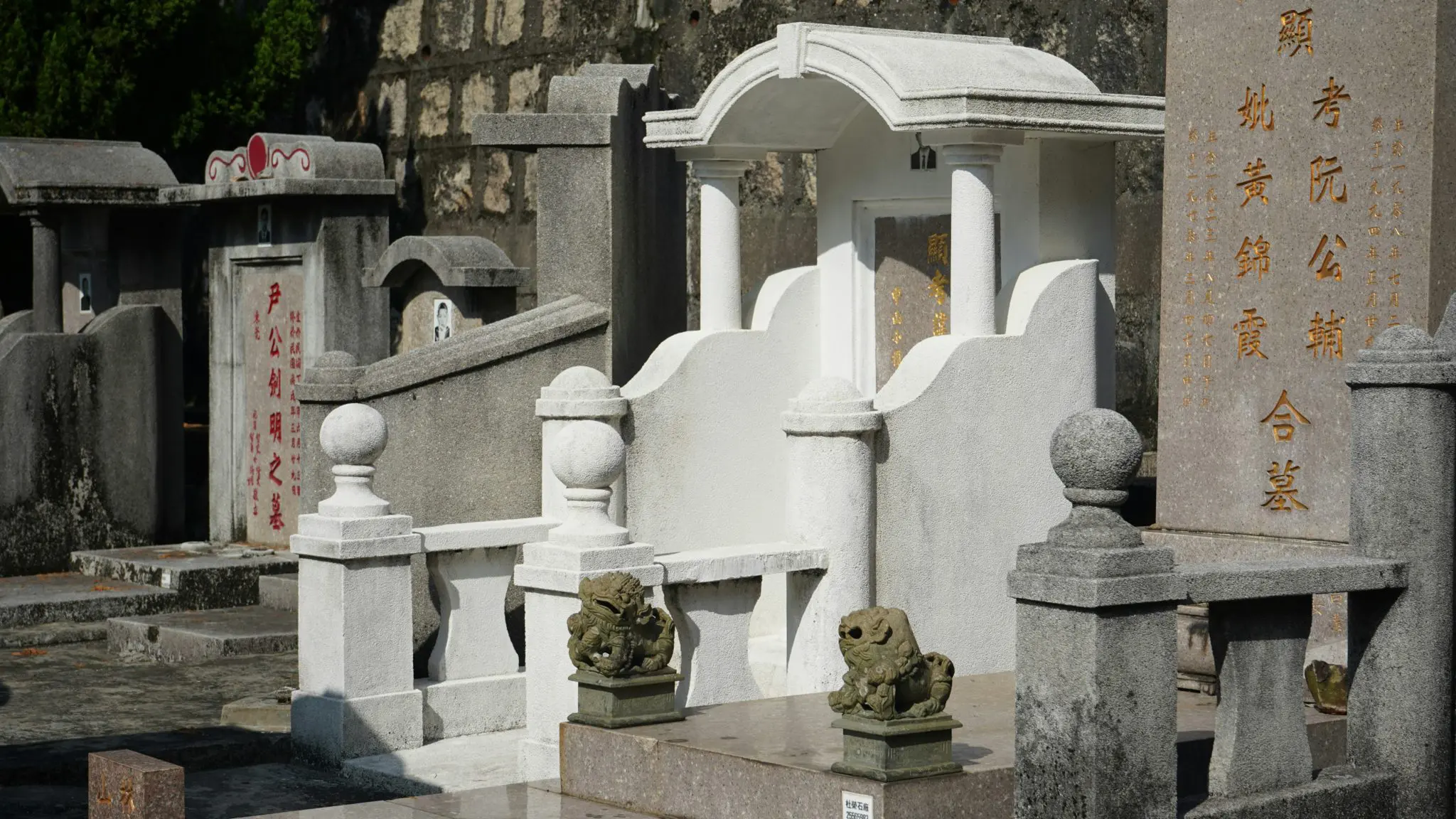
- Qingming Festival, or 清明节 (Qīngmíngjié), is also known as Tomb Sweeping Day or the Pure Brightness Festival.
- The festival usually falls between April 3 and April 6 because it follows the solar term 清明 (Qīngmíng), not a fixed lunar date.
- The holiday grew out of the ancient Cold Food Festival, known as 寒食节 (Hánshíjié).
- Core traditions include tomb sweeping, making offerings to ancestors, spring outings, and kite flying.
- Qingming Festival is an official public holiday in mainland China.
Qingming Festival, written 清明节 (Qīngmíngjié) in Chinese, is one of China’s most important traditional holidays. It is often called Tomb Sweeping Day or the Pure Brightness Festival in English.
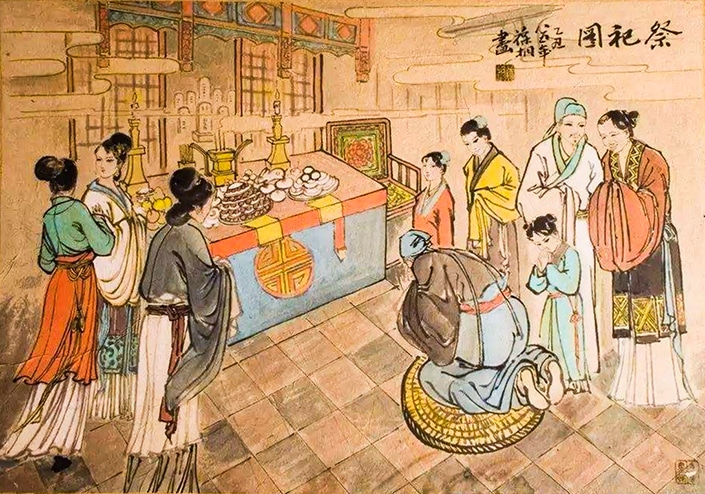
The festival is celebrated in mainland China and among Chinese communities around the world. Its central activity is cleaning the tombs of one’s ancestors and paying respects to the dead.
For language learners, Qingming is also a wonderful window into Chinese values like filial piety and ancestor remembrance. Experiencing festivals like this firsthand is one of the best reasons to Learn Chinese in China, where holiday customs come alive all around you.
01 What is Qingming Festival (Tomb Sweeping Day)?
Qingming Festival is a traditional Chinese holiday dedicated to honoring one’s ancestors. The name 清明 (Qīngmíng) literally means “clear and bright,” a reference to the fresh early-spring weather in which the festival takes place.
On this day, families visit their ancestors’ graves to clean them and make offerings. The holiday is closely connected with traditional ideas about filial piety, ancestor worship, and family continuity, themes that also appear in festivals like the Ghost Festival later in the year.
Tomb Sweeping Day is an official public holiday in mainland China. People are normally given one day off work, not counting weekends, and you can check exact dates on our Chinese public holiday calendar.
02 When is Qingming Festival and how is its date decided?
Qingming Festival is celebrated 15 days after the Spring Equinox, usually between April 3 and April 6. While the exact date shifts slightly from year to year, it always falls in early April.
Unlike most Chinese holidays, Qingming is not dated by a lunar month and day. Instead, it follows the solar term 清明 (Qīngmíng), one of the 24 solar terms used in the traditional Chinese calendar.
Because Qingming follows the sun rather than the moon, its Gregorian date barely moves each year. Festivals like Chinese New Year and Mid-Autumn Festival, by contrast, follow lunar dates and can shift by several weeks.
03 Qingming Festival history: from the Cold Food Festival to Tomb Sweeping Day
Qingming Festival grew out of an ancient Chinese festival called 寒食节 (Hánshíjié), known in English as the Cold Food Festival. The Hanshi Festival was originally celebrated to commemorate Jie Zitui, a nobleman of the Spring and Autumn Period (around 771 BC to 476 BC).
Jie Zitui was a loyal follower of Duke Wen of Jin. According to legend, when the duke was going through hard times, Jie Zitui cut flesh from his own thigh and cooked it to keep the duke from starving.
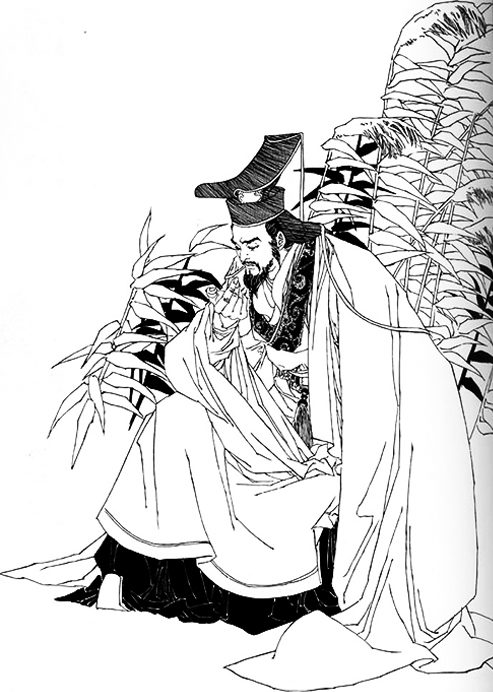
When Duke Wen eventually came to power years later, he sent for Jie Zitui, who was living as a poor man in the woods near Mt. Mian in Shanxi Province. Jie Zitui saw government as corrupt and ignored the summons.
To force a response, Duke Wen ordered a forest fire to smoke Jie Zitui out. Tragically, Jie Zitui and his mother were killed in the blaze.
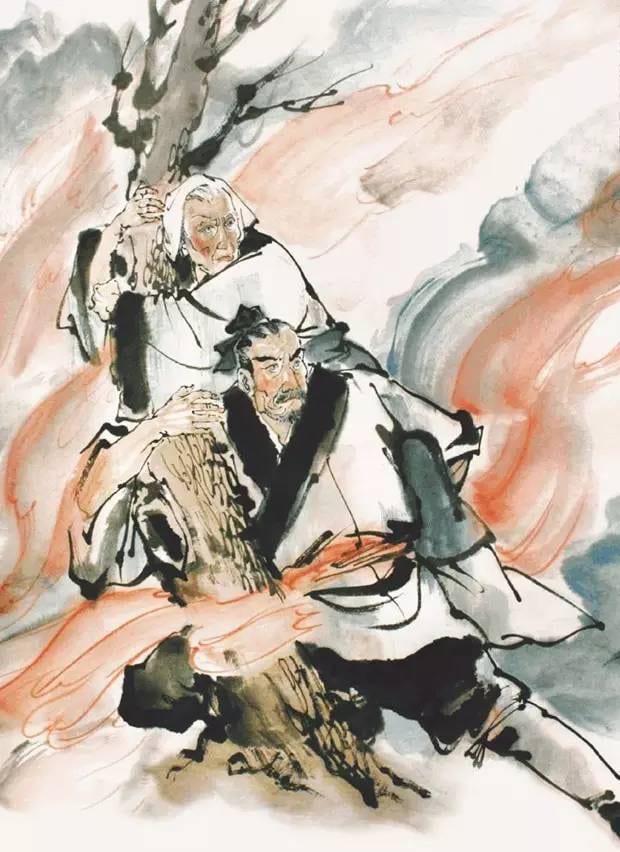
Feeling remorseful, Duke Wen decreed that the use of fire would be banned for several days each year in Jie Zitui’s memory. This tradition of going without fire, and therefore eating cold food, spread through the surrounding regions and grew in popularity.
Early on, the Hanshi Festival was held in winter and could last up to a month in some places. When authorities discovered that a month of cold food in the dead of winter was causing deaths each year, they tried to ban the festival, and eventually moved it from winter to spring.
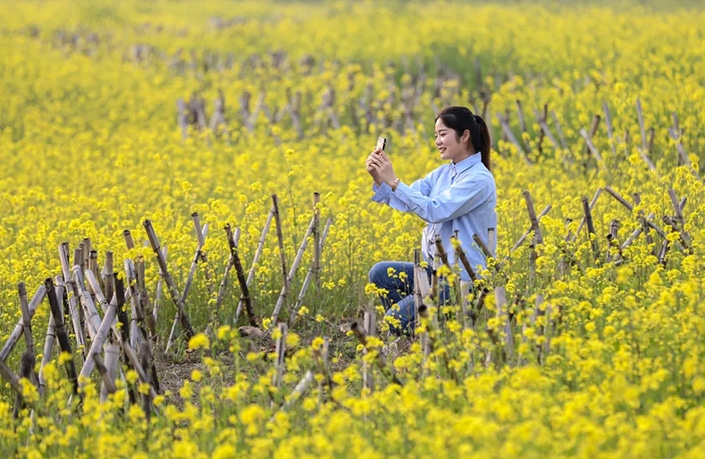
Over time, Hanshi traditions were gradually conflated with those of Qingming. The Cold Food Festival is rarely celebrated separately today, but it lives on in the custom of eating cold, uncooked food during Qingming Festival.
04 Qingming Festival traditions: what do people do on Tomb Sweeping Day?
Tomb sweeping is the most important activity of the holiday, which is why “Tomb Sweeping Day” is such a fitting English name. In addition to cleaning ancestors’ tombs and making offerings, people also go on spring outings, fly kites, and eat special seasonal foods.
Tomb sweeping (扫墓 sǎomù)
Tomb sweeping, or 扫墓 (sǎomù) in Chinese, is seen as a way to show respect to one’s ancestors. The practice is closely connected with Chinese traditions of filial piety and ancestor worship.
Because burial practices differ greatly between the countryside and the cities, the work of cleaning a family tomb also differs depending on where one lives. In rural China, Chinese tombs have changed very little over the years.
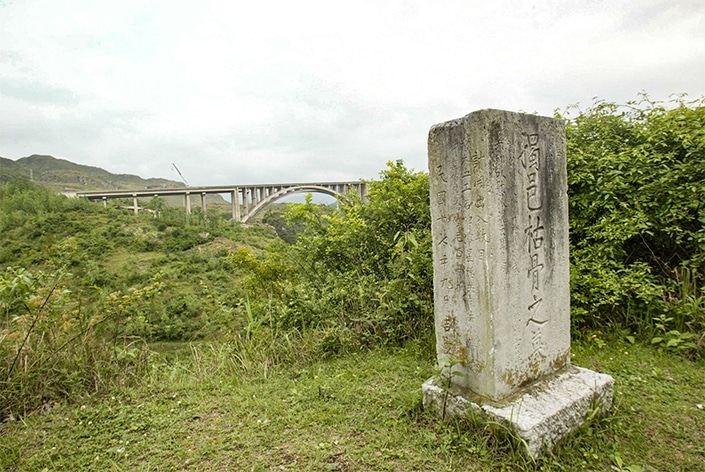
Most rural tombs are not located in a graveyard. Instead, they sit in auspicious spots with good feng shui, usually on the side of a hill or mountain.
The dead are buried in the ground rather than cremated, and relatives from one family group are often buried near each other. Less wealthy families may mark graves with simple mounds of earth, while wealthier families build large burial mounds fronted by a cemented semi-circular area.
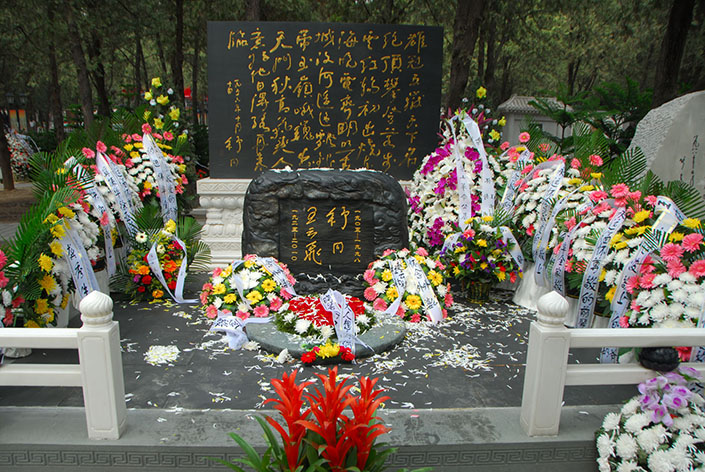
In the back portion of the semi-circle there is usually a raised cement wall with a rectangular stone carved with information about the deceased. Free-standing Western-style tombstones are rare.
Because of where the burial mounds sit, cleaning countryside tombs can be quite an undertaking. Families often need to climb a mountain just to reach the graves.
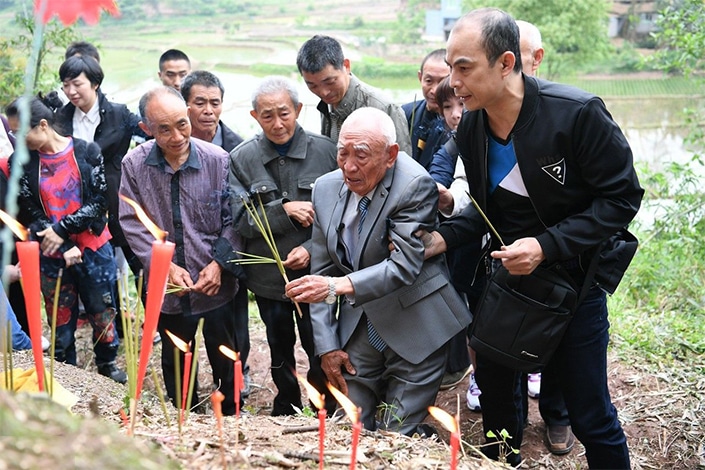
Dirt grave mounds frequently become overgrown with underbrush that must be cleared away. Depending on how long it has been since the last visit, this can mean hacking at stubborn weeds with machetes.
For families with cemented burial mounds, the job is much easier. Relatives may simply sweep away accumulated leaves and dirt.
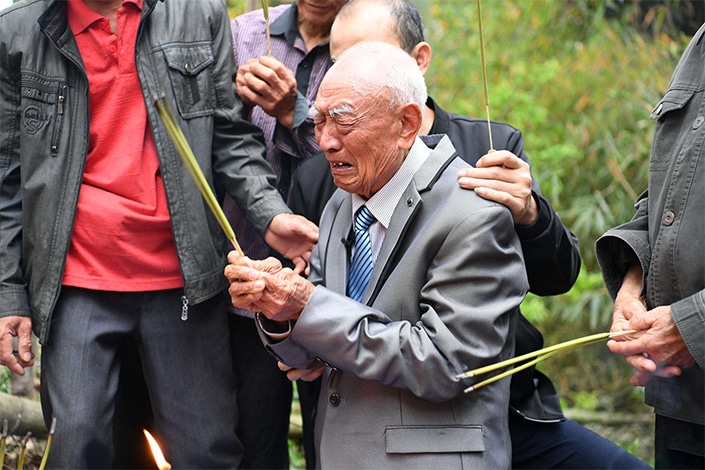
In many parts of China, including some rural areas, traditional burial is now illegal. To conserve land, the government has even carried out coffin-smashing campaigns to push people toward cremation.
While some people in isolated areas still find ways around burial bans, almost everyone in the cities now opts for cremation. Urban burial plots are compact, with rows of stone tablets separated by concrete paths, so very little grave maintenance is required.
Making offerings to ancestors
In the countryside, once the graves are cleared, offerings are placed at the foot of the burial mound or on the cemented semi-circle in front of the grave. What is offered varies by family and by region.
A typical offering in rural Hunan, for example, might include a bowl of rice with chopsticks, a plastic cup of the strong Chinese liquor known as 白酒 (báijiǔ), and a chicken head or another piece of meat.
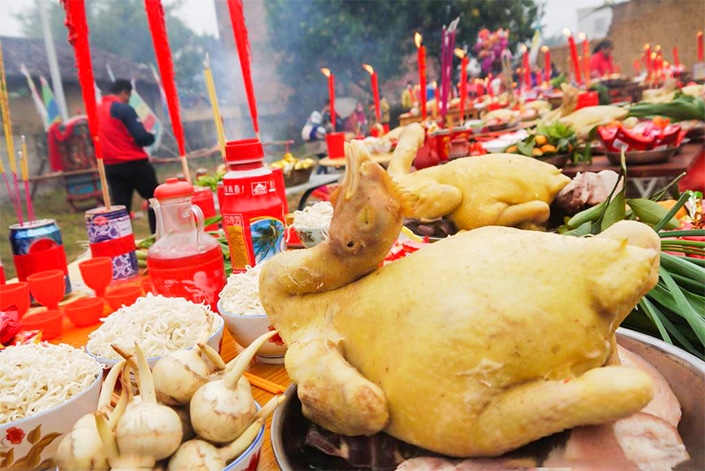
Once the offering is in place, family members set off firecrackers (鞭炮 biānpào), burn incense (香 xiāng), and burn paper “hell money” (冥钞 míngchāo). You can read more about this fascinating custom in our guide to why Chinese people burn paper money.
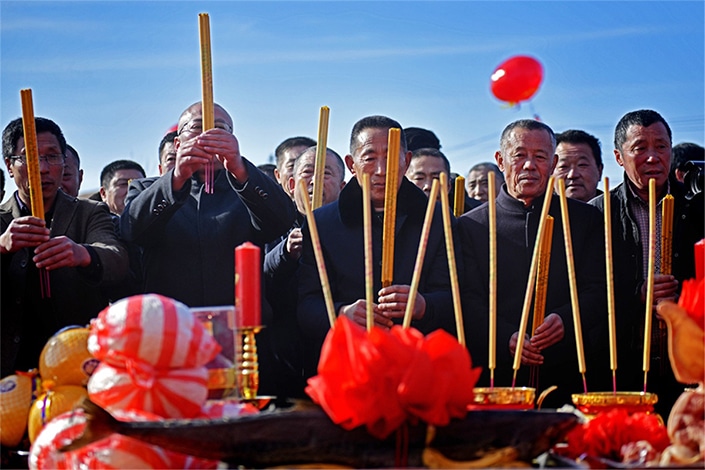
Firecrackers are now banned in most cities. Relatives of those buried in urban cemeteries may simply visit the graves, burn some incense, and leave flowers around the time of the festival.
Spring outings (踏青 tàqīng)
After paying respects to their ancestors, many people spend time outdoors on spring outings known as 踏青 (tàqīng). Since Qingming falls in early spring, it usually coincides with some of the first warm days of the year.
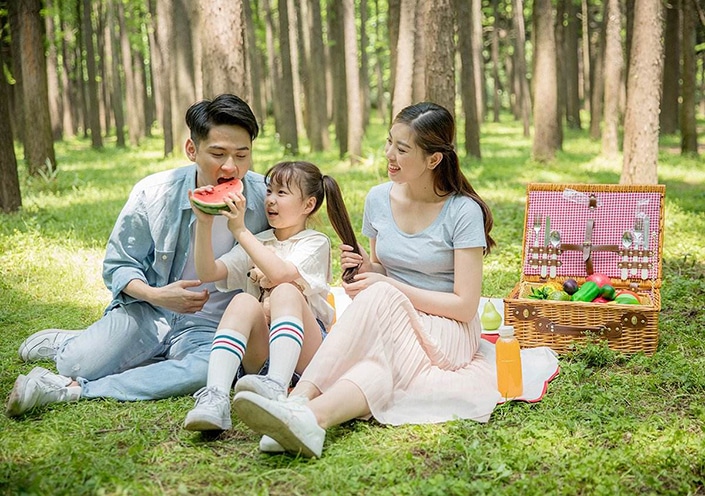
People whose ancestors are buried far away, or who cannot travel back to the countryside, often head to a park instead. Spending time in nature is itself considered part of the holiday spirit.
Kite flying at Qingming
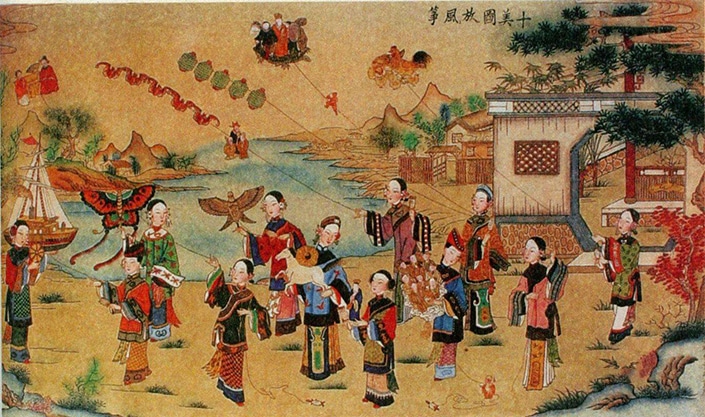
Kite flying is another popular Qingming activity, both during daytime outings and in the evening. At night, colored lanterns are often attached to kites so that they twinkle as they move across the sky.
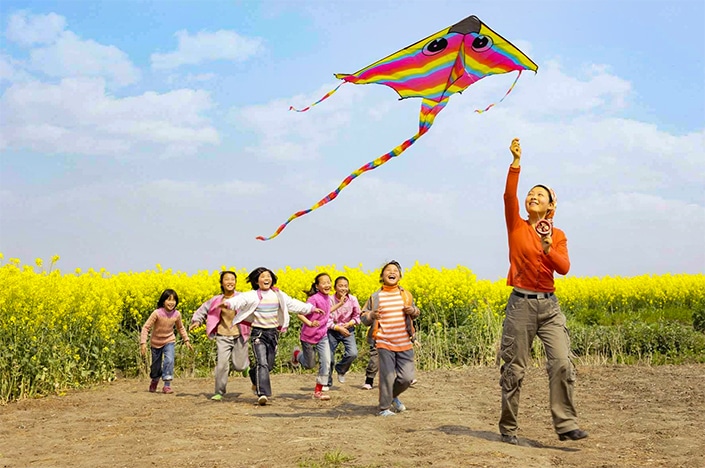
Traditionally, people believe they can improve their luck by cutting their kite strings and letting the kites float away rather than reeling them in. Kites released this way are thought to carry misfortune off into the sky.

Study Chinese in Guilin or Start Online
CLI offers personalized Chinese instruction built around your goals. Join our Immersion Program in Guilin or begin from anywhere with a free Chinese lesson .
05 Qingming Festival food: what do people eat on Tomb Sweeping Day?
Because of the holiday’s roots in the Cold Food Festival, people traditionally eat only cold food during Qingming. Several seasonal specialties are closely associated with the holiday.
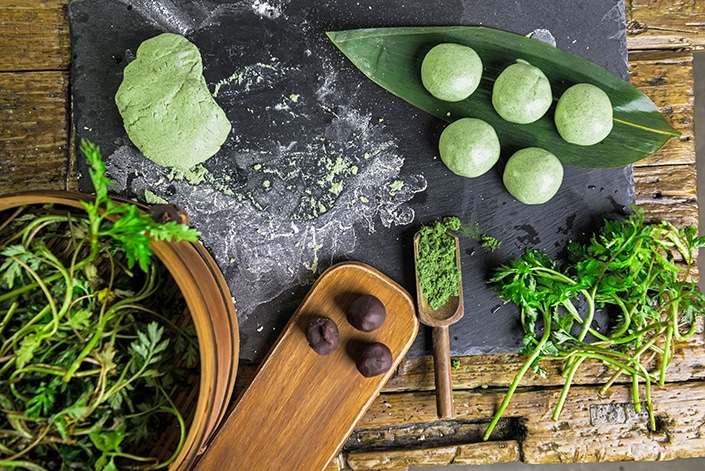
In southern China, the classic Qingming treat is 青团 (qīngtuán): round, sticky, slightly sweet green dumplings made from glutinous rice mixed with barley grass or Chinese mugwort. They are often stuffed with fillings such as sweet red bean paste.
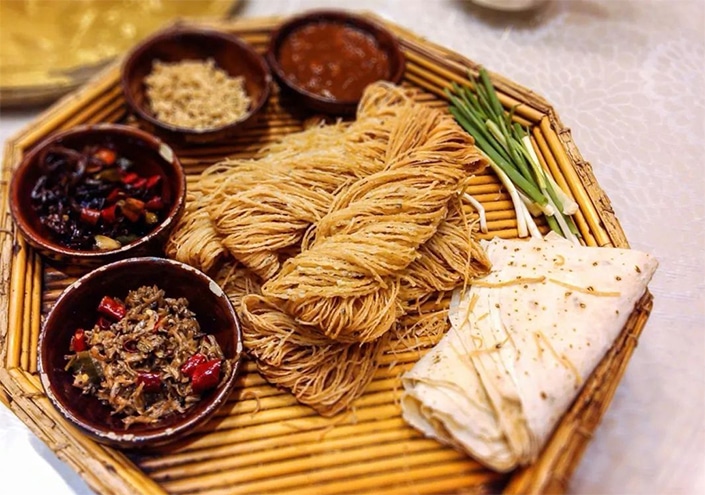
In both northern and southern China, it is also popular to eat 馓子 (sǎnzi): deep-fried, salty dough twists cooked in advance and allowed to cool and dry. Made of many thin strands of dough, each crunchy twist looks rather like a bundle of spaghetti and is often seasoned with sesame seeds.
06 How is Qingming Festival celebrated today?
Qingming remains an important holiday in modern China. It gives families a yearly opportunity to honor their ancestors while also enjoying the arrival of spring.
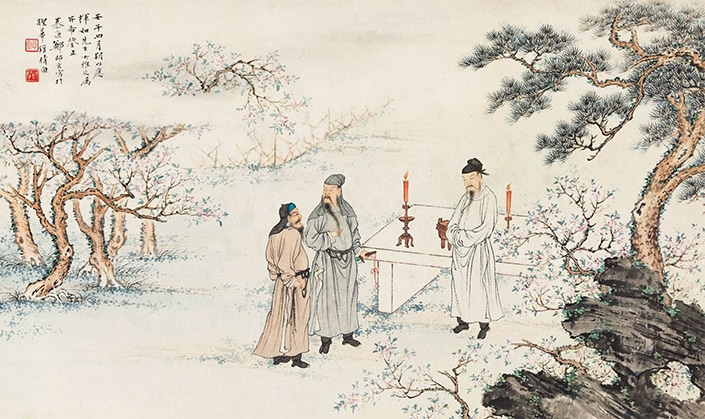
If you are in China during the festival, you can take part even without family tombs to visit. Try sampling traditional foods like 青团 (qīngtuán), or use the warm weather to head into the countryside and enjoy nature.
Learning the stories and vocabulary behind festivals like Qingming is also a great way to deepen your Mandarin studies. Consider building festival culture into a structured Chinese study plan so your language skills and cultural knowledge grow together.
Interested in other ancient Chinese festivals that have stood the test of time? Check out our guides to the Chinese Summer Solstice and the Dragon Boat Festival.
07 Useful Chinese vocabulary for Qingming Festival
The following words and phrases will help you understand Qingming references in conversations, news articles, and holiday greetings. Knowing the pīnyīn for each term will also help you pronounce them correctly.
| Chinese | Pinyin | Meaning |
|---|---|---|
| 清明节 | Qingming Festival; Tomb Sweeping Day | |
| 寒食节 | Cold Food Festival | |
| 扫墓 | To sweep a tomb; tomb sweeping | |
| 踏青 | Spring outing; to enjoy nature in spring | |
| 鞭炮 | Firecrackers | |
| 香 | Incense | |
| 冥钞 | Paper money burned as an offering to the dead | |
| 风水 | Feng shui; geomancy | |
| 白酒 | Strong Chinese liquor | |
| 青团 | Green glutinous rice dumplings eaten at Qingming | |
| 馓子 | Deep-fried salty dough twists |
08 FAQ
When is Qingming Festival?
Qingming Festival falls 15 days after the Spring Equinox, usually between April 3 and April 6. The exact Gregorian date shifts slightly from year to year.
Is Qingming Festival based on the lunar calendar?
Not exactly. Qingming is tied to the solar term 清明 (Qīngmíng) in the traditional Chinese calendar, which is why it stays in early April rather than shifting like lunar-dated holidays.
What does Tomb Sweeping Day mean?
Tomb Sweeping Day is the common English name for Qingming Festival. It refers to the central custom of cleaning ancestors’ tombs, known as 扫墓 (sǎomù), and making offerings to the dead.
What do people eat during Qingming Festival?
Traditional Qingming foods are eaten cold, a legacy of the Cold Food Festival. Popular choices include 青团 (qīngtuán), sweet green rice dumplings, and 馓子 (sǎnzi), crunchy fried dough twists.
Is Qingming Festival a public holiday in China?
Yes. Tomb Sweeping Day is an official public holiday in mainland China, and people are normally given one day off, not counting weekends.
09 Final thoughts
Qingming Festival is far more than a day for tidying graves. It weaves together remembrance, family duty, ancient legend, seasonal renewal, and the simple joy of spending a spring day outdoors.
For Chinese learners, understanding Qingming opens a window into values like filial piety that shape Chinese culture year-round. Whether you sample 青团, fly a kite, or simply learn the vocabulary, the festival offers a meaningful way to connect with Chinese tradition.
10 Selected References
- Wikipedia: overview of the Cold Food Festival and its connection to Qingming. View source →
- Facts and Details: background on traditional Chinese tombs and burial customs. View source →
- South China Morning Post: reporting on burial bans and cremation policy in China. View source →
- Note: Festival dates and public-holiday arrangements can vary by year and region. Always confirm specific holiday dates with an official calendar before planning travel or events.