

- The Mid-Autumn Festival, 中秋节 (Zhōngqiū jié), falls on the 15th day of the eighth lunar month. In 2027, that's Wednesday, September 15.
- Mainland China gets the festival day off, with the exact 2027 schedule set by the State Council's yearly holiday notice. The National Day "Golden Week" follows on October 1.
- In 2027 the moon is exactly full at 7:03 a.m. Beijing time on September 16, the morning after the festival, so it looks full on the nights of September 15 and 16.
- The festival is about family reunion. Mooncakes, 月饼 (yuèbǐng), are its signature food and its most common gift.
- Its best-known legend is the story of Chang'e, who drank an elixir of immortality and floated to the moon.
The Mid-Autumn Festival, 中秋节 (Zhōngqiū jié), is China's harvest moon holiday. It falls on the 15th day of the eighth month of the Chinese lunisolar calendar, which in 2027 is Wednesday, September 15. Families get together for dinner, share mooncakes, and step outside to look at a moon that, according to folk wisdom, is rounder and brighter than on any other night of the year.
Only Chinese New Year matters more as a time for going home. You'll also hear it called the Moon Festival or the Mooncake Festival, and it's celebrated well beyond mainland China: in Hong Kong, Taiwan, Singapore, Malaysia and Vietnam, with close relatives in Korea and Japan.
At CLI we celebrate it every year with our students in Guilin, and the timing is hard to beat. The festival usually arrives right around the time the city's osmanthus trees start to bloom, so the whole place smells sweet. If your goal is to Learn Chinese in China, this is one of the best weeks of the year to be here, because the holiday gives you something real to talk about with everyone you meet.
01 What is China's Mid-Autumn Festival?
The name is a literal description of the date. 中 means "middle," 秋 means "autumn," and 节 means "festival." In the traditional calendar, autumn covers the seventh, eighth and ninth lunar months. The eighth is the middle month, and its 15th day is the middle of that month, so the festival sits right at the midpoint of the season.
Three ideas run through everything people do on this day. The first is reunion, 团圆 (tuányuán): the round moon stands for a family that's whole, which is why people travel home for it. The second is the harvest, since the crops are in by the eighth month. The third is the moon itself, which people have been admiring, writing poems about and making offerings to on this night for more than a thousand years.
The Mid-Autumn Festival was among the first traditions added to China's national list of intangible cultural heritage in 2006. Two years later, in 2008, it became an official public holiday in mainland China.
02 When is the Mid-Autumn Festival in 2027?
The Mid-Autumn Festival 2027 falls on Wednesday, September 15. In 2026, it fell on Friday, September 25. Because it follows the lunar calendar, its Gregorian date moves every year, usually landing somewhere between early September and early October.
The 2026 holiday schedule
According to the State Council's 2026 holiday notice, mainland China was off from Friday, September 25 through Sunday, September 27. Since the festival fell on a Friday, there was no make-up workday attached to it. The 2027 days off will come with the State Council's next notice, and the 2026 one came out on November 4, 2025.
In 2026, National Day followed almost immediately, with a seven-day break from October 1 to 7. That one came with make-up workdays, on Sunday, September 20 and Saturday, October 10. Only three working days (September 28 to 30) separated the two holidays, and Chinese social media spent most of the summer pointing out that if you took those three days off, you got 13 days in a row.
Outside the mainland, the schedule works a little differently. Hong Kong's public holiday is the day after the festival, so in 2027 it's Thursday, September 16. Taiwan takes the festival day itself off.
In 2026, the moon was fullest two nights late
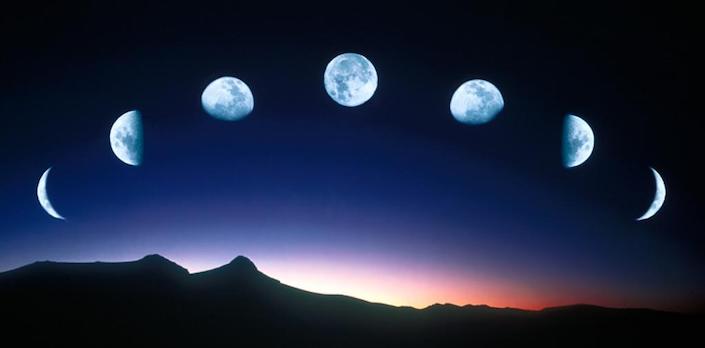
There's an old saying, 十五的月亮十六圆: "the moon of the 15th is roundest on the 16th." It's true more often than not. A lunar month starts on the day of the new moon, and the exact full moon can land anywhere from the 14th to the 17th, with the 16th being the most common.
2026 was one of the rarer years. The exact full moon arrived at 12:49 a.m. Beijing time on September 27, the 17th day of the lunar month, and the next full moon on a 17th doesn't come around until March 2029. In 2027, the exact full moon comes at 7:03 a.m. Beijing time on September 16, the morning after the festival. In practice, you won't see the difference, since the moon looks full for a couple of nights either way, so pick whichever night has the clearest sky.
Mid-Autumn Festival dates, 2026 to 2030
| Year | Date | Day of the week |
|---|---|---|
| 2026 | September 25 | Friday |
| 2027 | September 15 | Wednesday |
| 2028 | October 3 | Tuesday |
| 2029 | September 22 | Saturday |
| 2030 | September 12 | Thursday |
When the festival falls inside the first week of October, as it does in 2028, the mainland usually merges it with National Day into one longer break. The State Council announces each year's schedule in a notice published the year before, at some point between late October and early December.
03 The legend of Chang'e and Houyi
Most Chinese holidays come with a story, and this one has a famous one. It exists in dozens of versions. This is the one most Chinese children grow up hearing.
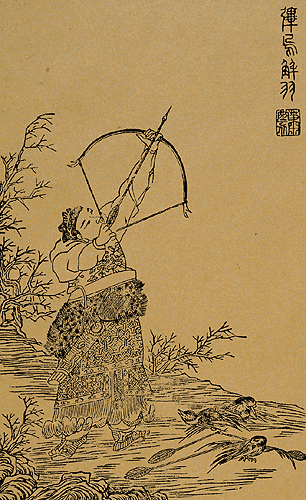
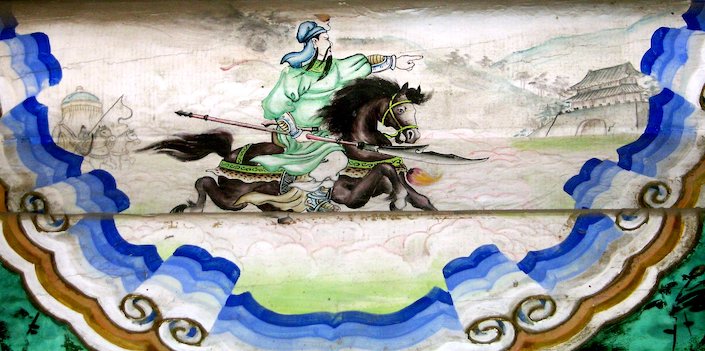
Long ago, ten suns rose into the sky at once. Crops withered, rivers dried up and people died in the heat. A gifted archer named Houyi, 后羿 (Hòu Yì), climbed a mountain and shot down nine of them, leaving a single sun to light the world.
Houyi became a hero, and the Queen Mother of the West, 西王母 (Xīwángmǔ), rewarded him with an elixir of immortality. Whoever drank it would rise to the heavens as a god. Houyi didn't want to leave his wife, Chang'e, 嫦娥 (Cháng'é), so he asked her to hide it.
One of Houyi's apprentices, a man named Pang Meng, 逢蒙 (Páng Méng), found out about the elixir. On the 15th day of the eighth month, while Houyi was away hunting, Pang Meng broke into the house with a sword and demanded it. Chang'e couldn't fight him off, so she drank it herself. She became weightless, drifted out the window and kept rising until she reached the moon, the closest place to earth where she could stay.
When Houyi came home, the moon was the brightest and roundest he had ever seen, and he was sure he could make out her silhouette on it. He set out her favorite fruit and cakes in the garden as an offering. His neighbors heard what happened and did the same, and according to the story, that's how the custom of making offerings to the moon began.
The older, darker versions
The earliest written sources are less kind to Chang'e. In the Huainanzi, a Han dynasty text from the 2nd century BC, she simply steals the elixir and runs off to the moon. The astronomer Zhang Heng later added that she was turned into a toad once she arrived, which is why the moon is sometimes called 蟾宫 (chángōng), "the Toad Palace." Even her name changed along the way. She was originally 姮娥 (Héng'é), and the character 姮 was swapped out because it shared a sound with the personal name of Emperor Wen of Han, which was taboo to use.
Who else lives on the moon?
Chang'e isn't alone up there. The Jade Rabbit, 玉兔 (Yùtù), keeps her company, pounding the elixir of immortality with a mortar and pestle. Look at the dark patches on the full moon and many people in China will tell you they can see him.
There's also a woodcutter named Wu Gang, 吴刚 (Wú Gāng), who was sentenced to chop down a giant osmanthus tree on the moon. Every time his axe comes out of the trunk, the cut heals. The story shows up in a Tang dynasty collection, and he's still at it.
These names are still very much in use. China's lunar exploration program is called the Chang'e program, and its moon rovers are named Yutu. In 2024, the Chang'e 6 mission brought back the first rock samples ever collected from the far side of the moon.
04 A short history of the festival
You'll often read that the Mid-Autumn Festival is 3,000 years old and dates back to the Shang dynasty. That's a stretch. People in ancient China certainly held harvest rites and made offerings to the moon, and the word 中秋 appears in the Rites of Zhou (周礼), a text from well over 2,000 years ago. But a festival with a fixed date, mooncakes and family dinners came much later.
From Tang poets to Song street parties
During the Tang dynasty (618 to 907), admiring the mid-autumn moon became a favorite pastime among poets and the imperial court, and a lot of the moon poetry Chinese students still memorize comes from this period. By the Northern Song dynasty (960 to 1127), the 15th of the eighth month was a recognized festival for everyone. A memoir of the Song capital, Kaifeng, describes wealthy families decorating their terraces for the night while ordinary people packed into wine houses to get a good view of the moon.
When mooncakes arrived
Mooncakes had become part of the celebration by the Ming dynasty. A 16th-century account of customs in Hangzhou notes that people gave each other mooncakes on the 15th of the eighth month as a symbol of reunion, which is exactly what they still do.
Moon worship
In traditional thought, the moon belongs to yin, the feminine side of yin and yang, so worshipping it was mostly women's work. An old northern saying puts it bluntly: 男不拜月,女不祭灶, "men don't bow to the moon, and women don't make offerings to the Kitchen God." On the festival night, families would set up an altar in the courtyard facing the moon, lay out round fruit and mooncakes, and burn incense. Old Beijing had its own twist: clay figures of 兔儿爷 (Tùryé), "Lord Rabbit," a version of the Jade Rabbit dressed as a general, which you can still buy there today.
Few families set up a full altar anymore. The moon-watching part never went away, though. If you want to go further into the beliefs behind all this, our guide to Chinese mythology and religion is a good next step.
05 Mooncakes
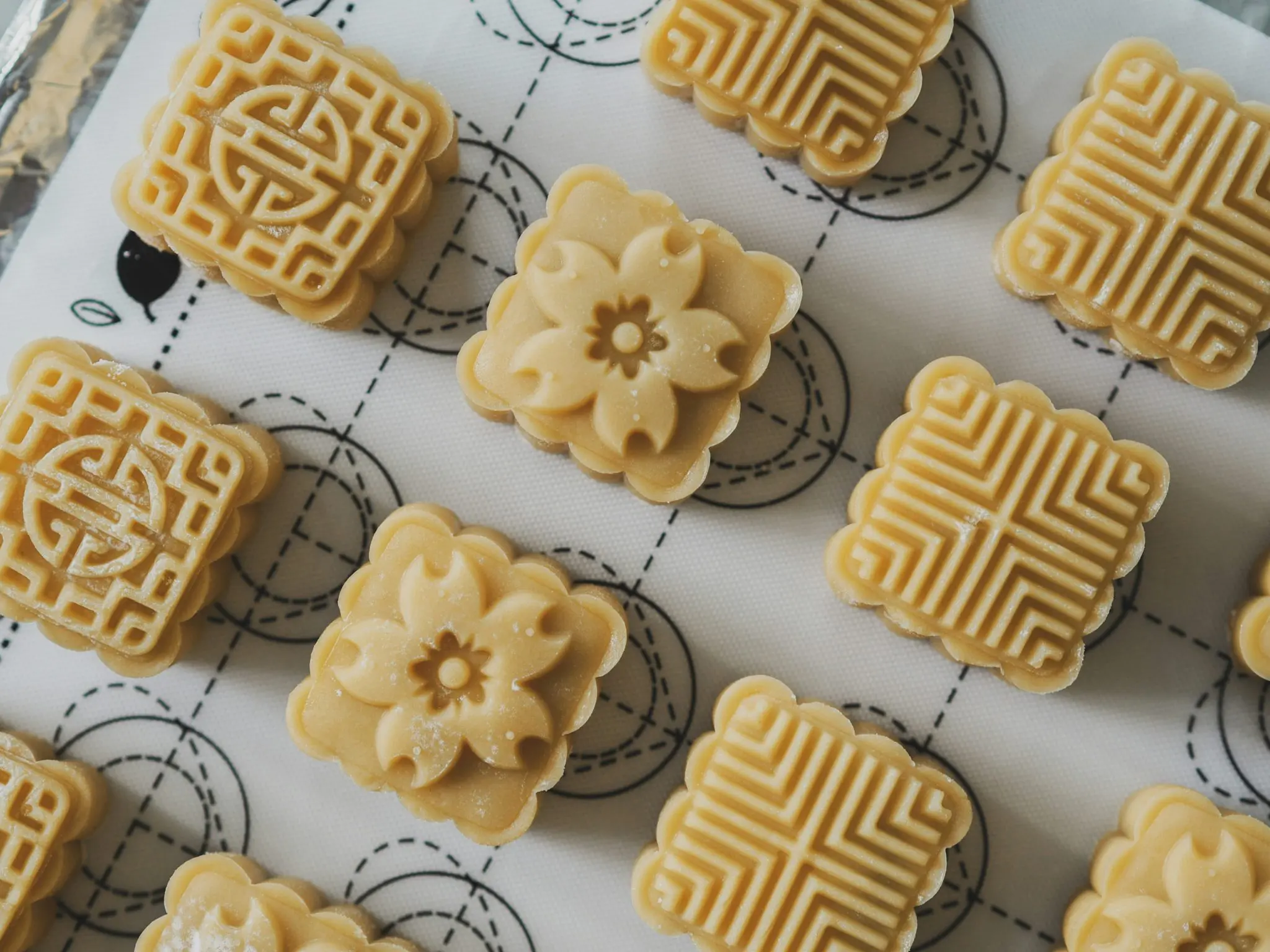
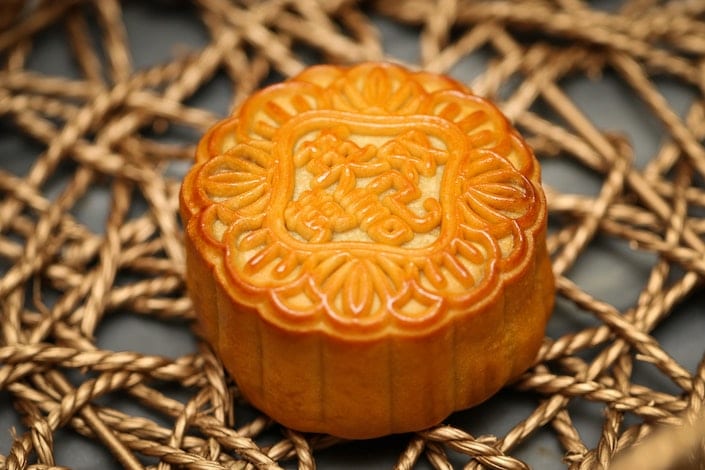
The mooncake, 月饼 (yuèbǐng), is the food of the Mid-Autumn Festival. A classic one is round, about the size of a hockey puck, and dense enough that you'll feel it. They're round for the same reason everything else about this holiday is round: the full moon, and the family gathered around the table.
Which mooncake you grew up with depends a lot on where you're from. These are the styles you're most likely to run into:
| Style | What it's like |
|---|---|
| Cantonese 广式 (guǎngshì) | The one most people outside China picture. Thin, glossy brown crust with a pattern pressed on top, usually filled with lotus-seed paste and one or two salted duck egg yolks. |
| Suzhou 苏式 (sūshì) | Flaky, layered pastry that shatters when you bite it. Comes sweet or savory, and the savory ones filled with minced pork are best eaten warm. |
| Yunnan 滇式 (diānshì) | A crumbly crust around cured Yunnan ham mixed with honey. Sweet and salty at once, and more addictive than it sounds. |
| Snow skin 冰皮 (bīngpí) | A Hong Kong invention from the 1980s. The soft glutinous rice skin isn't baked, so these are kept chilled. Fillings run from custard to durian. |
Beyond the classics, anything goes. You'll find ice cream mooncakes, coffee-flavored ones, and one-off flavors that seem designed mainly to get people talking. Nobody eats a whole traditional mooncake alone. Well, some people do, but it's usually a mistake. The normal thing is to cut one into wedges and share it, ideally with a pot of Chinese tea to cut through the sweetness.
Mooncakes as gifts
In the weeks before the festival, boxes of mooncakes move between families, friends, clients and coworkers in enormous numbers. For a while the boxes got absurdly lavish, complete with gold leaf, wine and jewelry tucked inside. Anti-extravagance rules since 2013 have reined that in, especially for gifts to officials, and today regulators keep a close eye on boxes priced above 500 yuan. If you're choosing a box for someone, our guide to thoughtful Chinese gift ideas covers the etiquette.
A popular tale says rebels at the end of the Yuan dynasty hid secret messages inside mooncakes to coordinate an uprising on the 15th of the eighth month. It's a great story, and you'll hear it told as fact. Historians haven't found contemporary evidence that it happened, so it's best filed under legend.
06 How people celebrate today
Like the Dragon Boat Festival and other holidays set by the lunar calendar, the Mid-Autumn Festival mixes old ritual with a lot of modern commerce. Here's what the day actually looks like for most families in China.
Family dinner and moon viewing
The center of the day is a big family dinner, 团圆饭 (tuányuán fàn). Afterward, people head out to admire the moon, which has its own verb: 赏月 (shǎngyuè). That might mean a rooftop, a balcony, a park, a riverbank, or a mountain if you're feeling ambitious. Mooncakes, fruit and tea come along. People who can't make it home often video call their families while looking at the same moon, which is more or less the whole point of the holiday.
Lanterns and riddles
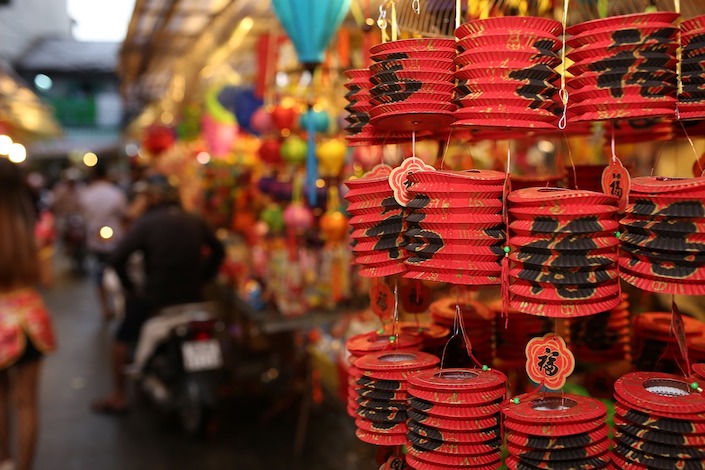
Lanterns are a bigger part of the celebration in southern China, Hong Kong and Southeast Asia than in the north. Kids carry paper lanterns shaped like rabbits, fish and stars, and parks put on light displays. Some places also hang riddles on lanterns for people to solve, a game called 猜灯谜 (cāi dēngmí). Our article on Chinese lanterns explains what the different designs mean.
Seasonal foods besides mooncakes
Mooncakes get the attention, but the table usually has more on it. Pomelos, 柚子 (yòuzi), are everywhere in the south, partly because they're in season and partly because 柚 sounds like 佑, "to bless and protect." Osmanthus wine, 桂花酒 (guìhuā jiǔ), is a nod to the tree on the moon. Around Shanghai and the Yangtze delta, the festival lines up with hairy crab season, and in parts of Guangdong people eat taro.
Gifts, galas and the trip home
Companies hand out mooncakes or holiday bonuses to staff. Brands release festival-themed everything. The big TV networks each run a Mid-Autumn gala on the night, and WeChat fills up with greetings, stickers and digital red envelopes.
And lots of people travel. Because the break is short, it's usually a quick trip home or a short getaway rather than a long vacation. The really heavy travel crush comes a few days later with National Day's Golden Week. If you're in China around the festival or in early October, book trains early.
Study Chinese in Guilin or Start Online
CLI offers personalized Chinese instruction built around your goals. Join our Immersion Program in Guilin or begin from anywhere with a free Chinese lesson .
07 The Mid-Autumn Festival around Asia
The same full moon gets celebrated in quite different ways depending on where you are. A few of the differences are surprising.
| Where | What it's called | What stands out |
|---|---|---|
| Mainland China | 中秋节 (Zhōngqiū jié) | A statutory holiday (the State Council sets the days off each year: three days in 2026), built around the family dinner, moon viewing and mooncake gifting. |
| Hong Kong | 中秋節 | The public holiday is the day after the festival. Big lantern displays, plus the Tai Hang Fire Dragon Dance, where a dragon made of straw is covered in burning incense sticks and paraded through the streets. |
| Taiwan | 中秋節 | Families barbecue outdoors, a habit that took off in the 1980s. Kids sometimes wear hollowed-out pomelo peels as hats. |
| Vietnam | Tết Trung Thu | Mostly a festival for children, with star-shaped lanterns, lion dances and parades. |
| South Korea | Chuseok (추석) | Same lunar date, but its own holiday. A major three-day break with ancestral rites, visits to family graves and half-moon rice cakes called songpyeon. |
| Japan | Tsukimi (月見) | A quieter moon-viewing custom with rice dumplings and pampas grass. Not a public holiday. |
| Singapore and Malaysia | Mid-Autumn or Mooncake Festival | Not a public holiday, but Chinese communities go all out with lantern walks, temple events and mooncake stalls in every mall. |
Only Chinese New Year pulls more people home. To see how the year's biggest reunion holiday compares, read our guide to Chinese New Year.
08 The moon in Chinese poetry
Chinese poets have been writing about the moon for as long as there have been Chinese poets, and most of them were homesick when they did it. The moon is the one thing you and your family can both see, wherever you are. That idea runs straight through the Mid-Autumn Festival.
The most famous moon poem in the language is Li Bai's "Quiet Night Thoughts." Strictly speaking, it isn't about the festival. It's about a man alone in a room, far from home, looking at the moonlight on the floor. But almost every child in China memorizes it, and its last two lines get quoted every Mid-Autumn because they capture the mood so well:
举头望明月,低头思故乡
"I raise my head to gaze at the bright moon, then lower it and think of home."
The poem that really belongs to this night was written by Su Shi, 苏轼, in 1076. He'd spent the Mid-Autumn Festival drinking until dawn and hadn't seen his younger brother in years. The poem, set to the tune "Prelude to Water Melody" (水调歌头), ends with lines people still write in holiday cards to friends who live far away:
但愿人长久,千里共婵娟
"I only wish we both live long, and share this moonlight a thousand miles apart."
If it sounds familiar, you may have heard it sung. Teresa Teng recorded a version of the poem in the 1980s, and it's still a staple of Mid-Autumn galas. Another line you'll see everywhere this week comes from the Tang poet Zhang Jiuling: 海上生明月,天涯共此时, "The bright moon rises over the sea; far apart, we share this moment." For more on how the moon became such a fixture in Chinese writing, see our overview of classical Chinese literature.
09 Mid-Autumn in Guilin: how CLI celebrates
A festival in the city of osmanthus
Guilin has a special claim on this holiday. The name 桂林 means "osmanthus forest," and the osmanthus, 桂花 (guìhuā), has been the city's official flower since 1984. The trees usually bloom from late September into October, depending on the weather, and when they do, you smell them all over town before you notice the tiny yellow flowers.
That timing ties Guilin neatly into the moon legends. The tree Wu Gang keeps chopping is an osmanthus. There's even an old idiom, 蟾宫折桂 (chángōng zhé guì), "to pick an osmanthus branch in the Toad Palace," which once meant passing the imperial exams. This time of year, you'll find osmanthus in local cakes, tea and wine. Guangxi is also famous for its pomelos, so those are on every table too.
On the rooftop under the full moon
Every Mid-Autumn Festival, we host a party on the rooftop of the CLI Center, which looks out over Guilin's karst hills. Students and teachers come, along with classmates from our partner university, Guangxi Normal University.
One of our teachers opens the evening with a short talk on the history of the holiday and its traditions. Then come a few rounds of trivia to see who was listening. After that it's fresh fruit, mooncakes and tea, and the night usually turns into a long game of charades. Charades works in any language, so everyone plays, and most people go home having learned a couple of new Chinese idioms along the way.
Traditionally, people also write wishes on sky lanterns, 孔明灯 (Kǒngmíng dēng), and let them float up toward the moon. Many cities now restrict them because of the fire risk, so how many you see drifting over the rooftops depends on the year and the neighborhood.
How the CLI team celebrates
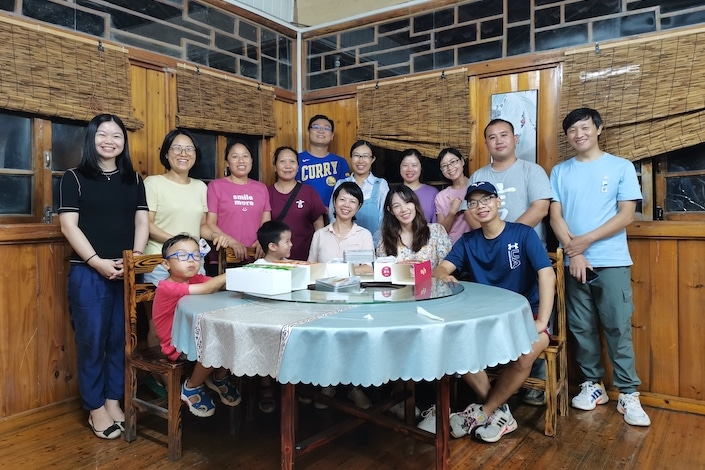
The holiday is also when our teachers and staff take a break together. Most years we head out of the city to a guesthouse in the countryside or a village outside Guilin. There's an outdoor barbecue, more food than anyone needs, and in recent years, fields of pink ornamental grass and blue flowers with the karst peaks behind them. It's one of the best days on our calendar.
10 Mid-Autumn greetings and vocabulary
How to say "Happy Mid-Autumn Festival" in Chinese
The greeting you'll hear and see most is 中秋快乐 (Zhōngqiū kuàilè). The longer 中秋节快乐 (Zhōngqiū jié kuàilè) is also correct, but in texts and WeChat messages most people drop the 节.
If you want to sound a little more thoughtful, try one of these. 阖家团圆 (héjiā tuányuán) wishes the whole family together, and it works for almost anyone. 花好月圆 (huā hǎo yuè yuán), "the flowers are lovely and the moon is full," is for couples and newlyweds. For a friend who lives far away, you can't beat Su Shi's 但愿人长久,千里共婵娟.
Tones can make or break a greeting, so it helps to practice them out loud. If you'd like a native speaker to walk you through it, you can book a free trial lesson with one of our teachers.
Useful Mid-Autumn Festival vocabulary
These words come up constantly in festival greetings, conversations and ads. They also make a good seasonal study list.
| Chinese | Pinyin | Meaning |
|---|---|---|
| 中秋节 | Mid-Autumn Festival | |
| 中秋快乐 | Happy Mid-Autumn (most common greeting) | |
| 中秋节快乐 | Happy Mid-Autumn Festival | |
| 月饼 | Mooncake | |
| 月亮 | Moon | |
| 满月 | Full moon | |
| 赏月 | To admire the moon | |
| 团圆 | Reunion; family togetherness | |
| 团圆饭 | Reunion dinner | |
| 阖家团圆 | May the whole family be together | |
| 花好月圆 | Lovely flowers and a full moon (a wish for couples) | |
| 嫦娥 | Chang'e, the moon goddess | |
| 后羿 | Houyi, the legendary archer | |
| 玉兔 | Jade Rabbit; the moon rabbit | |
| 月宫 | Moon palace | |
| 桂花 | Osmanthus flower | |
| 柚子 | Pomelo | |
| 灯笼 | Lantern | |
| 猜灯谜 | To guess lantern riddles | |
| 农历 | Traditional Chinese (lunisolar) calendar |
Want to learn to write a few of these by hand? Our guide to Chinese stroke order is a good place to start.
Other names for the festival
In English and Chinese, the holiday goes by several other names:
- Moon Festival
- Mooncake Festival
- Harvest Moon Festival
- Reunion Festival, 团圆节 (Tuányuán jié)
- Eighth Month Festival, 八月节 (Bāyuè jié)
Some English sources also call it the "Lantern Festival," which causes plenty of confusion. The festival usually meant by that name is 元宵节 (Yuánxiāo jié), which falls on the 15th day of the first lunar month and closes out the Chinese New Year season.
11 FAQ
When is the Mid-Autumn Festival in 2027?
The Mid-Autumn Festival falls on Wednesday, September 15, 2027. It always lands on the 15th day of the eighth lunar month, so its Gregorian date changes every year. In 2028, it falls on Tuesday, October 3.
Is the Mid-Autumn Festival a public holiday in China?
Yes. It is a statutory holiday in mainland China, and the State Council's yearly notice sets the days off: in 2026, Friday, September 25 to Sunday, September 27, with no make-up workday. Hong Kong's public holiday is the day after the festival (Thursday, September 16, in 2027), and Taiwan takes the festival day itself off.
Why does the festival's date change every year?
The festival follows the Chinese lunisolar calendar, where each month begins at the new moon. A lunar year is about 11 days shorter than a solar one, with a leap month added every few years to catch up, so the 15th of the eighth month shifts against the Gregorian calendar, usually landing between early September and early October.
Is the moon really full on the night of the festival?
Close, but not always exactly. The full moon can land anywhere from the 14th to the 17th of the lunar month. In 2027, it peaks at 7:03 a.m. Beijing time on September 16, the morning after the festival, so the moon looks full to the naked eye on the nights of September 15 and 16.
What food is eaten during the Mid-Autumn Festival?
Mooncakes come first, with fillings like lotus-seed paste, red bean, mixed nuts and salted egg yolk. Pomelos, osmanthus wine and taro are also seasonal favorites, and around Shanghai the festival coincides with hairy crab season.
What is the legend behind the Mid-Autumn Festival?
In the best-known version, the archer Houyi shot down nine of ten suns and was rewarded with an elixir of immortality. His wife, Chang'e, drank it to keep it away from a thief and floated up to the moon, where she is said to live with the Jade Rabbit.
How do you say "Happy Mid-Autumn Festival" in Chinese?
The most common greeting is 中秋快乐 (Zhōngqiū kuàilè). 中秋节快乐 (Zhōngqiū jié kuàilè) is also correct, just a little longer.
Is the Mid-Autumn Festival the same as the Lantern Festival?
No. The Lantern Festival (元宵节, Yuánxiāo jié) falls on the 15th day of the first lunar month and ends the Chinese New Year season. Lanterns are part of both celebrations, which is why some English sources mix them up.
Is Korea's Chuseok the same as the Mid-Autumn Festival?
They share the same lunar date and a lot of the same spirit, but Chuseok is Korea's own harvest holiday, with ancestral rites, visits to family graves and songpyeon rice cakes instead of mooncakes.
12 Final thoughts
If you're in China on the festival night and someone invites you to their family's Mid-Autumn dinner, say yes. Bring a box of mooncakes or a bag of fruit, eat more than you planned to, and go outside afterward to look at the moon with everyone else. You'll understand this holiday better in one evening than in any number of articles, this one included.
And if you're far from home this year, look up anyway. Your family is probably doing the same thing.
中秋快乐! Happy Mid-Autumn Festival!