

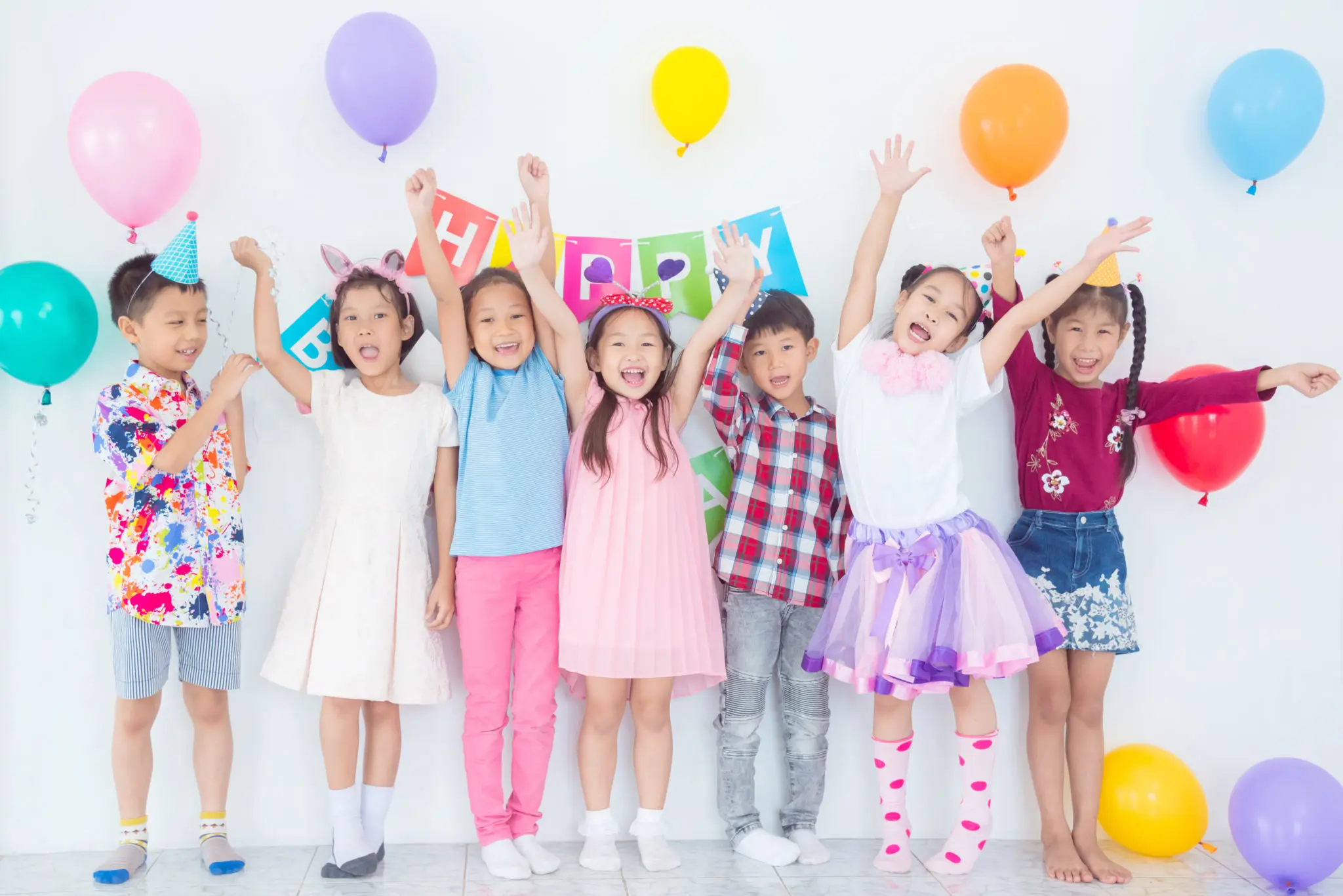
- Children's Day (六一儿童节, Liù Yī Értóng Jié) falls on June 1st in China and honors children while promoting their rights.
- China officially adopted June 1st shortly after the founding of the People's Republic, and the day gradually became a full-day school holiday for many children.
- Today, families celebrate with gifts, outings, school performances, special events, and discounts at attractions and businesses.
- The holiday also reflects broader themes in modern China, including consumer culture, family values, and concern over the country's declining birth rate.
Children's Day (六一儿童节, Liù Yī Értóng Jié) is one of China's most beloved holidays, celebrated every year on June 1st. Also known simply as 儿童节 (Értóng Jié), the holiday gives children a day centered on fun, attention, and family time.
In this article, we explore how families across China celebrate Children's Day, where the holiday came from, why it still matters today, and which useful words and phrases you should know if you're looking to learn Chinese in China through real cultural context and Chinese holidays.
01 What Is Children's Day in China?
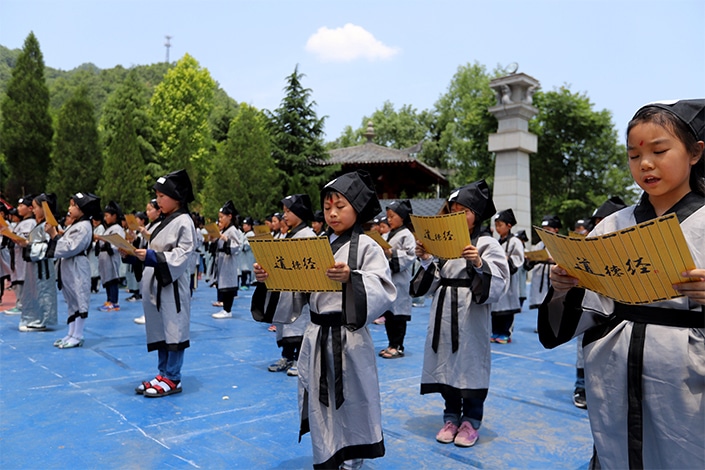
In short, Children's Day — or 六一儿童节 (Liù Yī Értóng Jié) in its full form — is a holiday that celebrates children and emphasizes their well-being and rights. The shorter name 儿童节 (Értóng Jié) is more common in everyday conversation, while the full name literally translates to "June 1st Children's Festival."
Notably, the date varies by country. The United Nations observes World Children's Day on November 20, but China celebrates Children's Day on June 1st instead. That makes it part of a broader global tradition, while still giving it a distinctly Chinese form.
When Is Children's Day in China?
Children's Day in China falls on June 1st every year. In Chinese, people often refer to it simply as 六一 (Liù Yī; "June First"), especially in speech, greetings, banners, and school programming.
Because it is so widely recognized, you'll often see it mentioned alongside other seasonal observances in annual holiday roundups like this guide to Chinese holidays in 2026.
Why Is It Called 六一儿童节?
The name 六一儿童节 breaks down very neatly: 六一 (Liù Yī) means "June 1st," while 儿童节 (Értóng Jié) means "Children's Day." In practice, both forms are common. You'll hear 儿童节 in general conversation, but 六一 often appears in slogans, event names, and greetings like 六一快乐!(Liù yī kuàilè!).
For Chinese learners, this is a useful reminder that many common expressions are shortened in natural speech. If you're still building your foundation, these kinds of patterns become much easier to notice once you have a clear Chinese study plan.

02 History of Children's Day in China and Beyond
Although many people associate Children's Day in China purely with modern school events and family outings, the holiday has a longer international history. Various child-centered observances appeared in different countries during the late nineteenth and early twentieth centuries, and June 1st gradually emerged as one widely recognized date.
Subsequently, the idea gained broader international recognition in 1925 during the World Conference on Child Welfare in Geneva. Over time, different countries adopted different versions of Children's Day, with some keeping June 1st and others choosing alternative dates.
Early Origins of the Holiday
Some accounts trace one early precursor to 1857 in the United States, when Reverend Dr. Charles Leonard dedicated a church service specifically to children. While that observance was not yet the modern international holiday, it is often cited as an early example of a formal day centered on children.
Later developments gave the idea more structure. By the twentieth century, Children's Day had become tied not only to celebration, but also to questions of child welfare, education, and social protection.
How China Adopted Children's Day
China officially adopted Children's Day shortly after the founding of the People's Republic in 1949. Initially, the State Council designated June 1st as a half-day holiday for primary school students. Later, the observance developed into the much more visible nationwide celebration recognized today.
That history helps explain why the holiday feels both cheerful and civic-minded. It is not just about toys and treats; it also reflects the idea that children deserve recognition, care, and a place at the center of family and society.

03 How Is Children's Day Celebrated in China Today?
Specifically, Children's Day in China generally applies to children up to age 14. For many families, the day is about making kids feel appreciated, entertained, and cared for. In that sense, it fits neatly with the strong emphasis Chinese culture places on family relationships and intergenerational bonds.
Because children often get time away from their usual school routine, the day usually includes outings with parents, small gifts, performances, games, or organized school activities. Businesses frequently run promotions on toys, snacks, movie tickets, and child-focused products. Attractions such as parks and zoos may also offer discounted or free admission for children.
How Schools Celebrate Children's Day
Schools play a major role in the holiday. Kindergarten and primary school campuses often organize stage performances, dance routines, singing competitions, art displays, class parties, or themed events. In many cases, children dress up, rehearse for weeks, and spend the day performing or participating in special programming rather than following a normal academic schedule.
Family Outings, Gifts, and Consumer Culture
There are no strict nationwide traditions tied to Children's Day in China. As a result, much of the celebration revolves around parents expressing affection through time together, small presents, snacks, outings, or special meals. In some families, grandparents are involved as well, making the day feel even more centered on family warmth.
At the same time, the holiday has obvious commercial appeal. Brands often launch Children's Day campaigns, special products, themed events, and limited promotions. Fast food chains, toy companies, shopping malls, and luxury brands have all used the occasion to market directly to families with young children.
04 Why Children's Day Still Matters in Modern China
Above all, Children's Day remains meaningful because it reflects what a society chooses to celebrate. In China, the holiday highlights childhood, education, family care, and the importance of investing in the next generation.
It also sits within a broader cultural landscape where academic success, family expectations, and child development carry significant weight. In that sense, Children's Day is not only festive; it also reveals a great deal about everyday social values in contemporary China.
Family Values and the Place of Children
Family relationships play a central role in Chinese culture, and children are often understood as the emotional and practical center of family life. That is one reason Children's Day feels so natural within the broader framework of Chinese social life.
Family relationships play a central role in Chinese culture, and Children’s Day fits naturally within that broader emphasis on parents, grandparents, and extended family. In many ways, the holiday reflects the same social structure seen in the traditional Chinese family tree, where family roles and intergenerational bonds carry deep importance.
Children's Day and China's Demographic Concerns
At the same time, the holiday also raises a more serious question: what does it mean to celebrate children in a country facing a declining birth rate? After China recorded historically low birth figures in recent years, public concern has grown around population aging, shrinking family size, and the long-term economic effects of fewer young people.
In response, the government has adjusted family planning rules, including the shift away from the one-child policy and later the announcement that couples could have three children. Even so, high living costs, education expenses, and intense work pressure continue to discourage many couples from having larger families.
These pressures also connect to broader shifts in how younger Chinese people approach relationships and marriage, with expectations around when — and whether — to settle down changing significantly. Dating culture in China has evolved considerably as a result.

06 How to Say Happy Children's Day in Chinese
If you want to wish someone a happy Children's Day in Chinese, here are several common phrases you can use:
The simplest and most widely used greeting is 儿童节快乐!(Értóng jié kuàilè!), which means "Happy Children's Day!" You can also say 六一快乐!(Liù yī kuàilè!), a casual shorthand that translates to "Happy June 1st!" For a slightly more formal greeting, try 祝你儿童节快乐!(Zhù nǐ értóng jié kuàilè!), meaning "Wishing you a happy Children's Day!"
In addition, there's a popular Chinese expression connected to this holiday: 童心未泯 (tóngxīn wèi mǐn), which means "to still have the heart of a child." Many young adults in China use this phrase on June 1st to celebrate their own inner child — a playful reminder that the holiday isn't just for kids.
Since expressions like 六一快乐 and 童心未泯 are short but culturally rich, they're also a good reminder that learning Chinese means learning both vocabulary and context. To keep building from here, you might also explore common celebratory phrases in Chinese, useful Chinese idioms, or the basics of learning Chinese characters.
If you want to go beyond just a few holiday greetings, it also helps to review core pronunciation and beginner vocabulary foundations such as what Pinyin is and some basic Chinese words you can start using right away.
| Chinese | Pinyin | Translation |
|---|---|---|
| 六一儿童节 | June 1st Children's Day | |
| 儿童节 | Children's Day | |
| 孩子 | child; kid | |
| 礼物 | gift; present | |
| 学校 | school | |
| 表演 | performance; show | |
| 庆祝 | to celebrate | |
| 快乐 | happy; joyful | |
| 童心未泯 | to still have the heart of a child | |
| 家庭 | family; household | |
| 父母 | parents | |
| 活动 | activity; event |
Want More Personalized Attention?
Consider signing up for online Chinese lessons or join us in Guilin for full Chinese immersion.