


- HSK 6 is one of the most advanced levels in the Chinese proficiency test system and remains a key benchmark for learners aiming to prove advanced Mandarin ability.
- Under HSK 3.0, HSK 6 sits at the top of the Intermediate stage and requires a cumulative vocabulary of 5,456 words and 1,800 characters.
- The exam includes listening, reading, and writing sections, and success depends on both targeted test prep and strong overall Chinese ability.
- For students hoping to Learn Chinese in China, preparing for HSK 6 can also serve as a roadmap for reaching real advanced fluency.
The HSK 6 is one of the most advanced levels in the series of Chinese proficiency tests known as the 汉语水平考试 (Hànyǔ Shuǐpíng Kǎoshì). Notoriously tricky and requiring focused preparation, the exam is a worthwhile challenge for anyone who'd like to prove their Mandarin fluency to universities, prospective employers, or just to themselves.
Read on to learn everything you need to know about the HSK 6.

If you are already working through the HSK system, this guide will help you understand where level 6 fits, what it tests, and how to prepare effectively.
It also pairs well with our guides to all HSK levels, the new HSK, and how long it takes to learn Chinese.
01 What Is HSK 6? Exam Overview and Level
The HSK is an international, standardized test that assesses non-native speakers' proficiency in Mandarin Chinese.
Authorized by the Centre for Language Education and Cooperation (formerly known as Hanban), the exam was first developed by Beijing Language and Culture University in the 1980s. It became an official national standardized test in 1992.
The HSK now consists of nine cumulative levels organized into three stages: Elementary (HSK 1-3), Intermediate (HSK 4-6) and Advanced (HSK 7-9). This new structure, known as HSK 3.0, takes full effect in July 2026.
That makes HSK 6 one of the most important milestones for serious learners of Mandarin. For many students, it is the final major benchmark before turning their attention toward advanced reading, academic writing, or professional-level fluency.
Where Does HSK 6 Fit in the New HSK 3.0 System?
Under HSK 3.0, level 6 sits at the top of the Intermediate stage. It requires a cumulative vocabulary of 5,456 words and 1,800 characters.
That includes roughly 2,000 new words not covered on lower levels. HSK 6 corresponds roughly to CEFR C1 (Advanced).
While HSK 7-9 now exists above it, HSK 6 remains the benchmark most universities and employers use for advanced proficiency. For the vast majority of learners, it is the practical ceiling of Chinese language study.
For a full breakdown of what each level requires, see our complete guide to all 9 HSK levels. You can also compare it with our advice on whether Chinese is hard to learn if you are still deciding how far you want to go.

02 Should You Take HSK 6?
The HSK 6 targets learners who can recognize at least 5,000 commonly used Chinese words. At this level, you should understand almost everything you hear or read in Mandarin.
You should also express advanced, complex ideas in both speech and writing. While every student is different, most learners study Chinese full-time for around four years to reach this level.
What Passing HSK 6 Proves
Once you conquer the HSK 6, you have every right to call yourself fluent in Chinese. A passing score proves this to schools and employers alike.
If you're ready to show the world that you can communicate in Chinese at an advanced level, this is the test for you.
Note that under HSK 3.0, the oral exam (HSKK) is now mandatory at HSK levels 3 and above. HSK 5 and 6 candidates must complete the Advanced level speaking test alongside the written exam.
Institutions now evaluate written and spoken scores together as a single proficiency profile. If your long-term goal is fluency, it also helps to build a structured Chinese study plan instead of preparing only for test day.


Study Chinese in Guilin or Start Online
CLI offers personalized Chinese instruction built around your goals. Join our Immersion Program in Guilin or begin from anywhere with a free Chinese lesson.
03 HSK 6 Exam Structure: Listening, Reading and Writing
Before diving in, it's important to understand the basic framework of the HSK 6 exam. The test lasts 140 minutes and includes listening, reading and writing sections totalling 101 questions.
You can choose to take either the online or paper version of the test. You must score 180 out of 300 to pass.
The HSK uses only simplified Chinese, so learners who need support with characters may also want to review how to learn Chinese characters as part of their prep.
HSK 6 Listening Section
The listening section is the shortest segment at 35 minutes. It includes 50 multiple choice questions divided into three parts: short clips, interviews and longer monologues.
After each passage and question, you'll have about 12-13 seconds to select the best answer.

HSK 6 Reading Section
The reading section lasts 45 minutes and includes four parts. In part one, you choose the incorrect sentence from a list of four.
Parts two and three ask you to fill in blanks with missing words and sentences across a variety of passages. In part four, you read five lengthy passages and answer questions about the content, tone and style of each text.
Plan to spend about 10 minutes on parts one, two and three, and 20 minutes on part four.

HSK 6 Writing Section
You have 45 minutes to complete the writing section. The task: summarize a 1,000-character passage in 400 characters.
You'll first get 10 minutes to read the passage. Then the original text disappears, and you have the remaining 35 minutes to type or handwrite your summary.
Note that under HSK 3.0, level 6 now requires handwriting proficiency for a set of core characters. If you plan to take the paper-based exam, be sure to practice writing by hand.
For extra support, tools like Skritter can help reinforce active character recall and handwriting habits.

04 How to Prepare for HSK 6
Before you create your plan to conquer the HSK 6, get an accurate read on your current level. If you skipped HSK 5, take a practice test or browse the level five books first.
Make sure you've mastered the required level five material before moving on. Once you're ready, follow the steps below to begin preparing.
Step 1: Choose the Best HSK 6 Study Materials
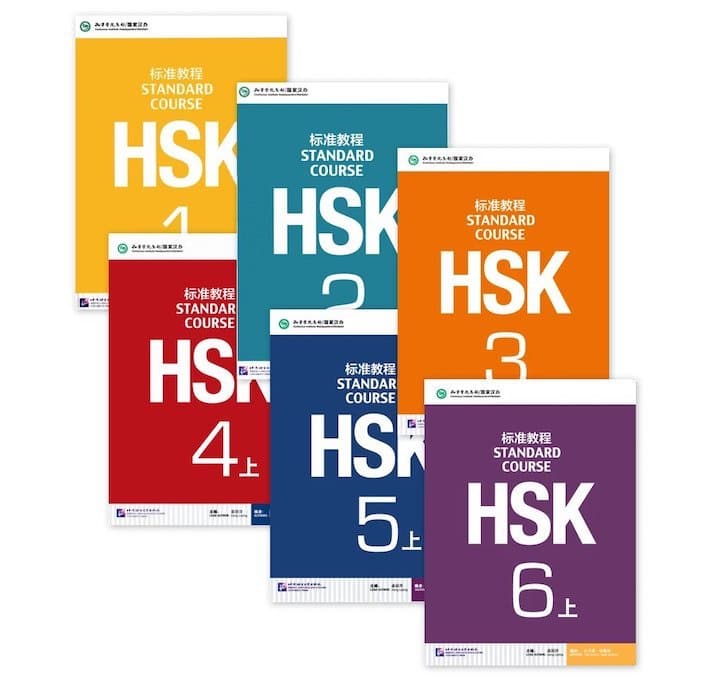
First, pick your study materials. We recommend the 标准教程 HSK Standard Course textbooks, which Hanban authorized and designed specifically for HSK preparation.
The books include audio CDs and lessons on diverse topics. They teach rich cultural and global trivia alongside relevant grammar and vocabulary.
The accompanying workbooks simulate actual test questions, so you gain valuable test-taking experience with each lesson. Work through both HSK 6 textbooks and workbooks (HSK 6 上 and 下) as an essential part of your preparation.
Note that Foreign Language Teaching and Research Press (FLTRP) is releasing new textbooks aligned with HSK 3.0 throughout 2026. These may offer updated vocabulary and formatting that better match the new exam.
If you plan to take the paper test, integrate plenty of handwriting practice using an app like Skritter. Students who prefer spaced repetition can also review our guide to Anki.
Step 2: Create and Stick to an HSK 6 Study Routine
Once you have a test date in mind, plan to devote 90 minutes each day to your preparation. Split this time between learning new material, reinforcing vocabulary and grammar, and completing practice tests.
Check out the steps below to plan your weekly routine.
Week One
Start by taking an untimed HSK 6 practice test to uncover your strengths and weaknesses. Consider splitting the test into sections.
Complete the listening, reading and writing parts on three consecutive days. Answer questions at your own pace on your first try.
Don't look up any words or rely on study materials. Once you finish, check your answers and note which questions you missed and why.

Week Two and Beyond
From week two on, complete one section of the test every other day. Time yourself each session.
Your speed will improve with practice, so keep working until you finish each section, even if you go over the limit.
On off days, review your practice test answers and note any errors. Make flashcards based on the vocabulary and grammar points you missed.
Continue this cycle until the week before your test date.

The Week Before Test Day
During the final week, complete 2 or 3 full, timed practice tests without interruption. Treat each one as if you're sitting the real exam.
After each test, review your answers and note any remaining gaps. Integrate the material you missed into your daily review.
Set aside time each day to reinforce and test your retention.
Step 3: Focus on HSK 6 Vocabulary
Vocabulary is often the biggest challenge for HSK 6 test-takers. The sheer volume of new words can feel overwhelming.
Resist the urge to sit down and memorize all 2,000+ new words at once. Instead, create a custom flashcard deck targeting your individual strengths and weaknesses.
Each time you review a lesson or take a practice test, add any unfamiliar words to your deck. Remove them once you can recognize and use them with ease.
The HSK 6 also challenges you to differentiate between similar words. Include example sentences on your flashcards so you know how to use each word in context.
Step 4: Boost Your Overall Chinese Skills
The HSK 6 exam accurately measures your real-life Chinese listening, reading and writing skills. Many passages cover specialized topics, from ancient history to plant biology.
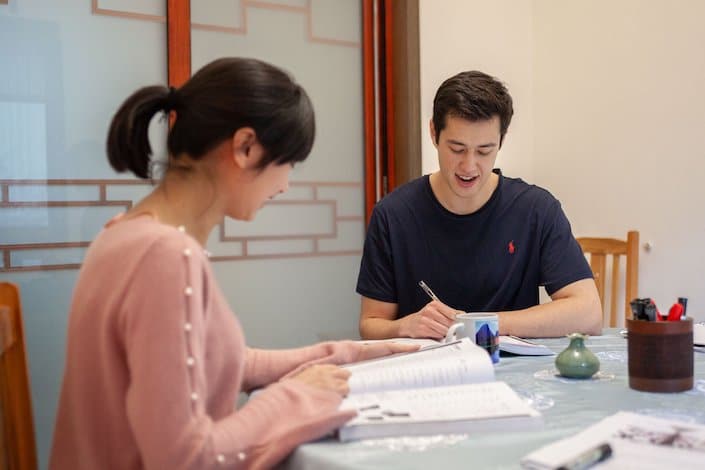
Integrating general Chinese practice into your daily routine will strengthen your overall competency. Interact with native speakers, watch Chinese movies and TV shows, and expose yourself to a wide range of topics.
Supplementary resources like The Chairman's Bao, Mandarin podcasts, and videos from ChinesePod will all help round out your skills.
If your goal extends beyond passing the test, programs that let you Learn Chinese in China can accelerate the kind of immersion HSK 6 is meant to measure.

05 HSK 6 Test Day Tips
Once test day arrives, keep these pointers in mind to stay focused and beat the clock.
Tip 1: Preview the Listening Section Answers
If you have a few seconds to spare between questions, scan the upcoming answer choices for keywords. This gives you a head start on what to listen for.
Just remember to pay careful attention during the recording. Don't try to answer any question before the passage finishes.
Tip 2: Complete Your Stronger Sections First
Breeze through the sub-sections you find easy and save harder questions for the end. Many learners find the 语病 (yǔbìng, incorrect wording) questions in the reading section especially tricky.
Skip those and come back to them if you have time.
Tip 3: Scan the Reading Sections
Time is tight on the HSK 6. To save precious minutes, try reading the answer choices first.
Then return to the passage and scan for key sentences. This lets you find answers quickly and efficiently.
06 What Makes HSK 6 So Difficult?
As the crown jewel of the Intermediate stage, the HSK 6 stands out for a few reasons.
Chinese Idioms (成语) on HSK 6
Unlike lower levels, you'll find plenty of 成语 (chéngyǔ, Chinese idioms) throughout the exam. All idioms on the test should appear in the HSK textbook lessons.
Add them to your flashcard deck and make sure your chéngyǔ skills are sharp. Keep your practice fresh by trying to use one new idiom per day in real life, whether speaking or writing.

The HSK 6 Vocabulary Mountain
The vast amount of vocabulary can overwhelm some students. Don't panic.
Stick to your personalized flashcard routine as described above, and you'll chip away at it steadily. We also recommend practicing how to guess word meanings from context.
This skill helps you tackle unfamiliar words on the exam without getting stuck.
The HSK 6 Writing Challenge
The writing section is lengthy and requires you to rehash a text from memory. Build the habit of summarizing in your daily life.
Describe movies or TV shows to your Chinese friends. Rewrite news articles you've recently read.
Keep a journal outlining the events of your day.

07 Final Thoughts on Passing HSK 6
While the HSK 6 is undoubtedly complex and challenging, thousands of Chinese learners have conquered it — and so can you. Visit ChineseTest.cn to check this year's test dates and sign up for the exam.
With dedication, persistence and a positive attitude, you'll pass the HSK 6 and earn your place among the world's most proficient Chinese speakers.
If you want to continue building beyond test prep, explore our resources on one-on-one vs. group Chinese classes, learning Chinese as an adult, and language immersion.
08 HSK 6 Test-Related Vocabulary
Use the table below to review core test-related vocabulary as you prepare for the exam.
| Chinese | Pinyin | Translation |
|---|---|---|
| 考试 | exam | |
| 汉语水平考试 | HSK | |
| 考场 | exam venue | |
| 考点 | test site | |
| 考生 | examinee | |
| 考官 | examiner | |
| 笔试 | written exam | |
| 口试 | oral exam | |
| 抽认卡 | flashcard | |
| 备考 | prepare for an exam | |
| 背 | memorize | |
| 单词 | individual word | |
| 词汇 | vocabulary | |
| 成语 | Chinese idiom | |
| 语病 | incorrect wording | |
| 刷题 | do practice exam problems | |
| 作弊 | to cheat | |
| 通过 | to pass (a test) | |
| 没通过 | to fail (a test) | |
| 报名 | sign up | |
| 模拟考试 | practice test | |
| 在线模考 | online practice test | |
| 试卷 | test paper | |
| 流利 | fluent |