
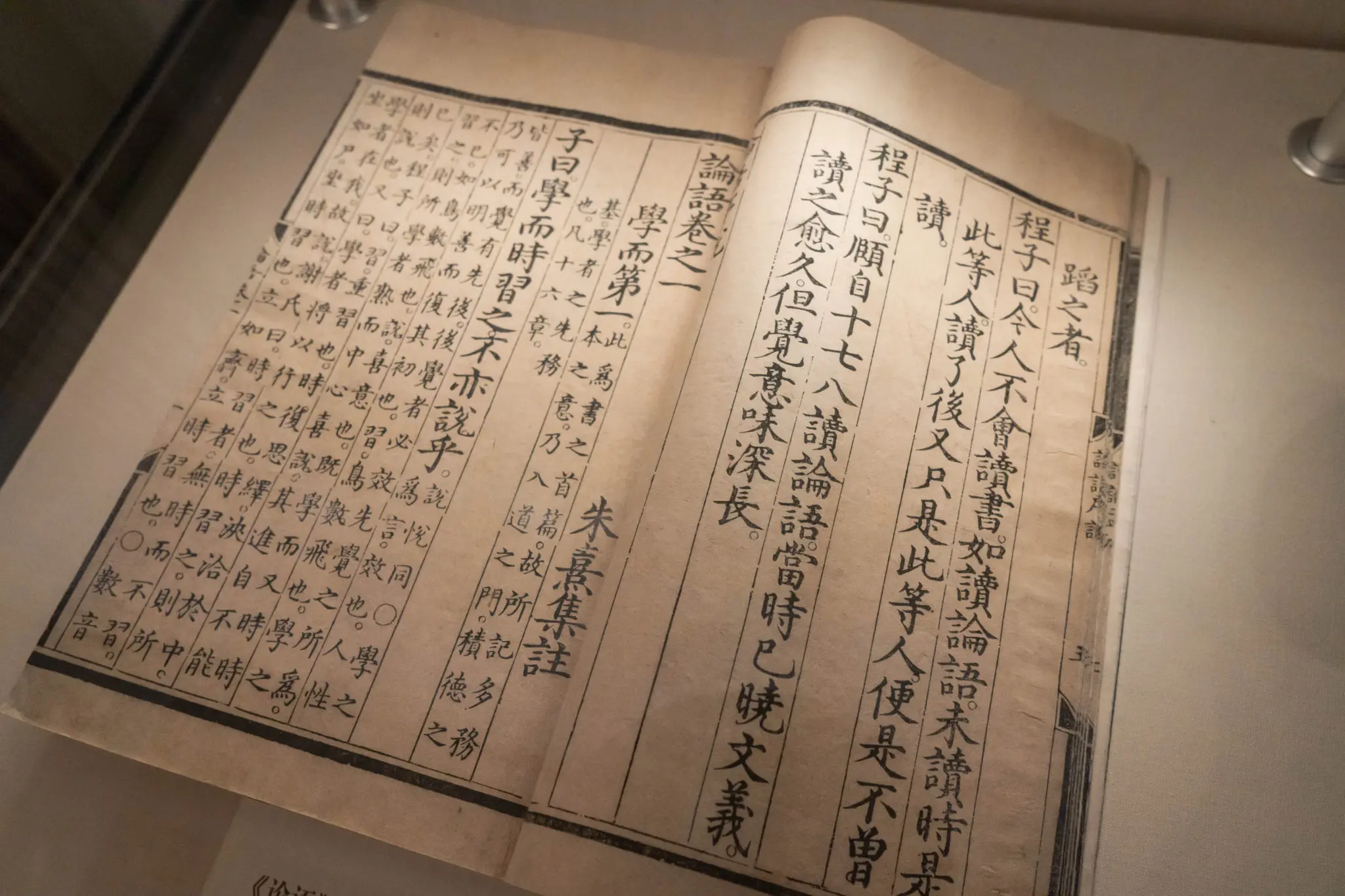
At first glance, Chinese characters can look like a set of random and confusing symbols. In reality, they are formed and used according to a well-documented set of rules known as 六书 (liùshū), or the “six types” of Chinese characters.
青色の中国語の単語、または表の中のピンインをクリック(タップ)すると、音声が聞けます。
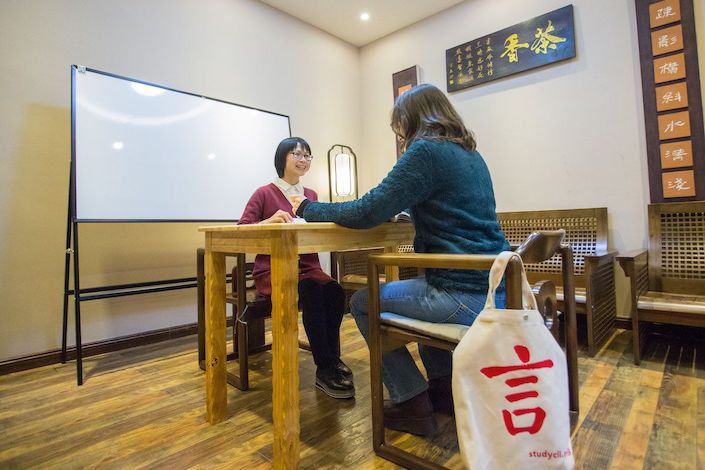
HSKの合格が目標でも、レストランのメニューを読めるようになりたいだけでも、漢字の構成を知っておくと上達が早まります。中国で中国語を学ぶことが目標なら、この6つの分類を理解しておくと、実際の会話練習と並行して漢字の知識も身につけやすくなります。
01 漢字とは?
漢字は表語文字です。アルファベットの文字で表記するのではなく、表語文字は一つの語を表す文字、いわば「絵」で成り立っています。古代エジプトのヒエログリフも、これと同じ原理のよい例です。
現在、世界のほとんどの言語は、単語を書き表すのに表音文字(アルファベット)を使っています。中国語は、日本語や韓国語のように中国語の文字体系を借りた他の東アジアの言語とともに、今も表語文字を使う主な言語です。
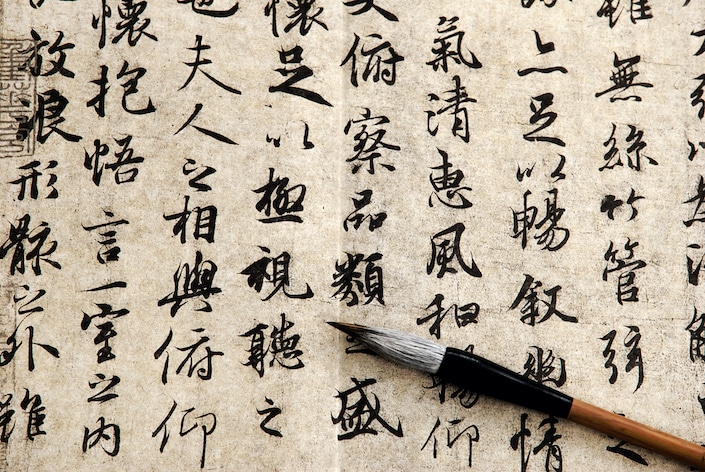
漢字はすべて象形文字なのでしょうか?
There is a widespread misconception that all Chinese characters are pictograms, meaning that every character visually resembles the word or meaning it represents. It’s common to see characters such as 木 (mù; wood or “tree”) and 山 (shān; mountain) used as examples of the “easy” nature of Chinese character composition.
こうした理解は、中国語を初心者に「売り込む」ために使われることもありますが、誤解を招きます。象形文字は楽しく初心者向きですが、漢字全体のわずか約4%にすぎません。実際の成り立ちははるかに複雑で、象形文字は6種類ある成り立ちの1つにすぎないのです。
02 漢字の6つの種類(六书)
Chinese characters are split into six categories referred to as 六书 (liùshū). This framework was first developed by scholars who studied the composition and usage patterns of individual characters, and it’s still the standard way linguists describe how Chinese characters are formed.
タイプ1:象形文字 象形字(xiàngxíngzì)
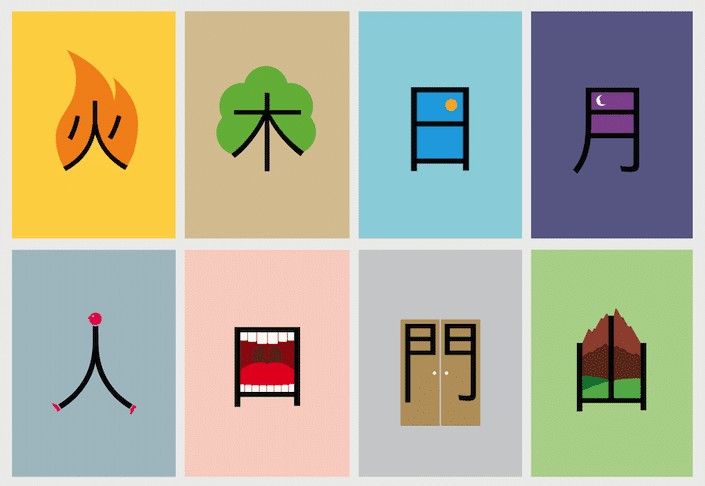
象形 (xiàngxíng) characters are pictograms. This method of forming characters is the easiest and most comprehensible for beginners to learn, since the characters are descriptive and resemble the object or phenomenon they represent.
Common pictographic characters include 日 (rì; sun), 雨 (yǔ; rain), 火 (huǒ; fire), and 口 (kǒu; mouth). Each of these 象形 characters visually echoes the concept it represents, but as mentioned above, they only make up about 4% of all Chinese characters.
タイプ2:形声文字 形声字(xíngshēngzì)
形声 (xíngshēng) literally means to “form sound.” Over 80% of all Chinese characters fall into this category, making it by far the most common formation type.
形声とは、これらの漢字の発音と意味の両方が、見るだけでおおよそ推測できるということです。母語話者は、漢字に隠れた音を表す部分をよく知っています。
When they come across an unfamiliar character, they typically follow the rule of thumb 有边读边 (yǒu biān dú biān), which translates to “if it has a side, read the side.” This works because the phonetic component of a character usually appears on one of its sides.
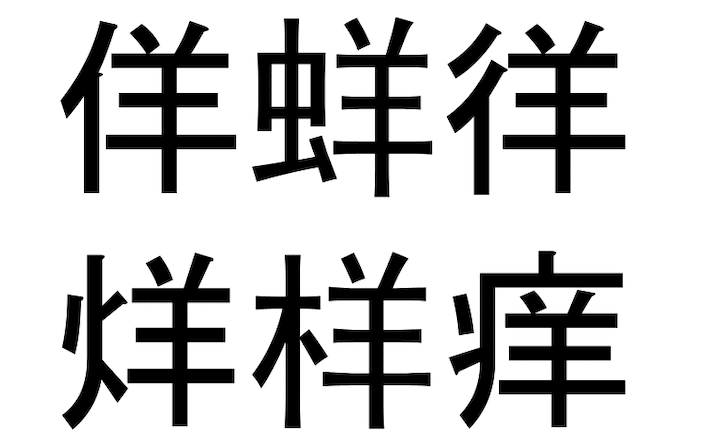
一般に、漢字の音を表す部分は右側に、意味を表す部分は左側に置かれます。ほかにも、音を表す部分を上に、意味を表す部分を下に置いたり、一方をもう一方の中に入れたりする漢字もあります。
意味を表す部分は多くの場合部首なので、部首を覚えると役立ちます。部首を知るほど、漢字の発音も推測しやすくなります。部首を取り除くと、たいてい音を表す部分が残るからです。
同じ音を表す部分を持つ漢字
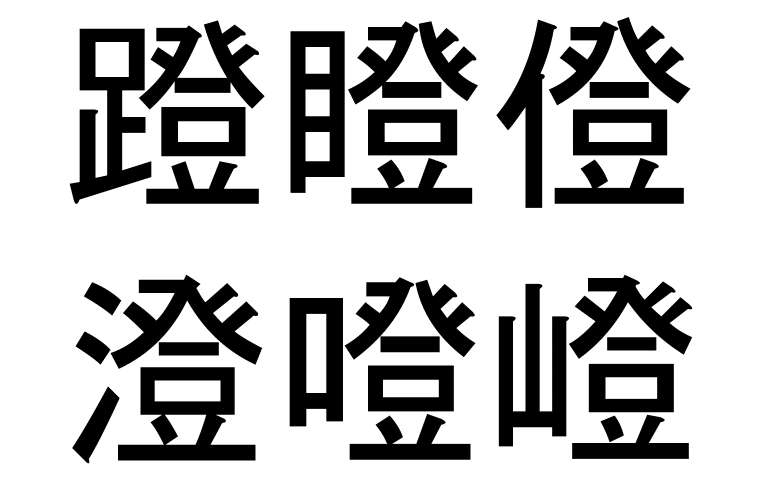
To see how a phonetic component can shape pronunciation across several characters, it helps to look at a few examples. The characters below all contain the phonetic component 登 (dēng; to ascend, to put on).
| 中国語 | ピンイン | 意味 | 構成 |
|---|---|---|---|
| 蹬 | dēng | 踏む | 足(足)+登 |
| 瞪 | dèng | にらむ、見つめる | 目(目)+登 |
| 僜 | dèng | 少数民族のDeng族(チベット) | 亻(人)+登 |
| 澄 | dèng | 落ち着く、澄む | 氵(水)+登 |
| 噔 | dēng | ドン(擬音語) | 口(口)+登 |
| 嶝 | dèng | 山道 | 山(山)+登 |
The table below shows another pair of characters that both contain the phonetic component 反 (fǎn; contrary, in reverse).
力試し:扳
ここまでの内容をもとに、扳の意味と発音を推測できますか?部首に詳しければ、この字に手へん(扌、手の部首の形、shǒu)が含まれていることに気づくでしょう。
That means this character is probably related to the use of hands. We also know the sound component is usually on the right, and here that’s 反 (fǎn), so you might guess the whole character is pronounced “fan.”

実際には、扳 の発音は bān で、意味は何かを引っ張る、向きを変えるです。手へんだという推測は当たっていましたが、予想した音とは完全には一致しません。ここから、漢字の発音がどのように変化してきたかという大切なポイントに入ります。
音符を手がかりに発音を推測する方法は、いつも確実とは限りません。漢字の音は歴史の中で変化してきたからです。同じ音符を持つ漢字でも、今の発音がかなり違うものがあります。
The characters below all contain the phonetic component 周 (zhōu). Most of them shifted toward an “iao” vowel sound over time, while only one kept the original “ou” ending.
こうしたパターンに気づくと、完全には一致しなくても、知らない漢字の発音を推測しやすくなります。パターンをより体系的に身につけたいなら、体系的な中国語学習プランに沿って学ぶと、一度に詰め込まず着実に知識を積み上げられます。
第3類:指事 指事字(zhǐshìzì)
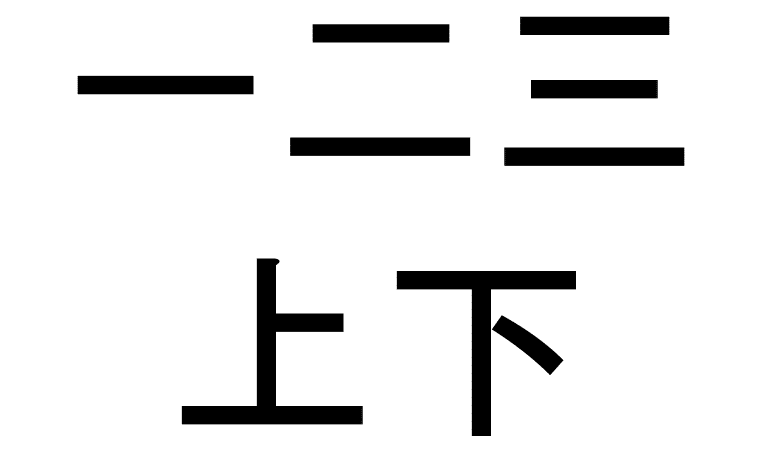
指事 (zhǐshì) literally translates as “pointing to matters.” Characters in this category are ideogramic: they express an abstract idea in an iconic form and are often called “self-explanatory” characters.
The characters 上 (shàng; up) and 下 (xià; down) are good examples. If the horizontal line represents the ground, the vertical stroke pointing upward conveys “up,” while the flipped version conveys “down.”

桂林で中国語を学ぶ、またはオンラインで始める
CLIは、あなたの目標に合わせた中国語指導を行っています。桂林での イマージョンプログラム に参加することも、どこからでも 無料の中国語レッスン から始めることもできます。
第4類:会意 会意字(huìyìzì)
会意 (huìyì) characters are also fairly self-explanatory. They’re usually created by combining two or more pictograms or ideograms, resulting in a more abstract meaning.
This method “remedies” the limits of pure pictograms or simple ideograms, since combining elements makes it possible to express more abstract ideas. For example, the pictograph 木 (mù; wood) combines with the person radical 亻 (rén) to create 休 (xiū; to rest) — picture a person resting in the shade of a tree.

Other interesting compound ideograms include 看 (kàn; to look), a combination of 手 (shǒu; hand) and 目 (mù; eye), and 烦 (fán; to trouble, to feel vexed), which combines 火 (huǒ; fire) with the radical 页 (yè; page, leaf). A pile of burning pages certainly sounds stressful.
タイプ5:転注文字 转注字(zhuǎnzhùzì)
转注字 (zhuǎnzhùzì) are characters whose meanings were influenced by other words, sometimes called “mutually explanatory” characters. Chinese linguistics recognizes three styles of transfer: form transference (形转; xíngzhuǎn), meaning transference (义转; yìzhuǎn), and sound transference (音转; yīnzhuǎn).
The characters 考 (kǎo; to test) and 老 (lǎo; old) are considered 转注 characters because they were once interchangeable before their meanings drifted apart over time. 窍 (qiào; hole) and 空 (kōng; emptiness) show a similar pattern of historically overlapping meanings that later diverged.
タイプ6:仮借文字 假借字(jiǎjièzì)
假借字 (jiǎjièzì) are “borrowed” or “loan” characters, used to write words that sound the same or similar to an existing character. Linguists refer to these as homophonous or near-homophonous morphemes.
Sometimes a borrowed character’s original meaning was later dropped entirely, and a brand-new character was created to preserve it. The character 乎 (hū) originally meant “to call out,” but it was also borrowed as a grammatical particle in classical Chinese to express a question.
Eventually, a new character, 呼 (hū), was created to write the verb “to call out” by adding a mouth radical to 乎. A similar story applies to 必 (bì; must), which originally meant “weapon handle” before its sound was borrowed for the more common meaning of “must,” prompting the creation of 柲 (bì) to preserve the original sense.
The common character 来 (lái) has a similar history. It originally meant “wheat,” but that meaning was gradually replaced as 来 came to mean “to arrive,” so a new character, 麦 (mài), was assigned to represent “wheat” instead.
03 なぜ漢字の種類を学ぶのか
漢字は、単なる絵や記号の寄せ集めではありません。6つの成り立ちを理解すると、新しい漢字を見分けて覚えるのが格段に楽になります。
部首と形声文字の関係を理解しておくと、初めて見る漢字でも意味や発音を推測しやすくなります。こうした知識は、筆順を意識し始めたときにも役立ちます。漢字を正しく書くことで、各パーツがどう組み合わさっているかがより深く身につくからです。
現在中国大陸で使われている簡体字も、繁体字と同じ6つの成り立ちの原則に基づいて作られたことも覚えておきましょう。漢字が現代の形になるまでの過程に興味があれば、中国語の語源が次に学ぶテーマとしておすすめです。繁体字と古典中国語の漢字がどう発展してきたかとも深く関わっています。
6つのタイプすべてに慣れてくると、漢字は暗記というより、パターンを見つける作業のように感じられるようになるでしょう。学習の途中でおよそ何字必要になるのか知りたい方は、必要な漢字の数についてのガイドをご覧ください。
実際にこれらの種類を見るには、私たちの無料中国語コースのレッスン4で、絵から生まれた漢字や、意味を表す部分と音を表す部分から構成された漢字を、一画ずつ書きながら紹介しています。
04 漢字の種類に関する用語
6つの漢字のタイプを、それぞれ1、2字の例とともにまとめた早見表です。
| 中国語 | ピンイン | 意味 | 例の漢字 |
|---|---|---|---|
| 六书 | 漢字の6つのタイプ | — | |
| 象形字 | 象形文字 | 日, 雨, 火 | |
| 形声字 | 形声文字 | 蹬, 饭 | |
| 指事字 | 指事文字 | 上, 下 | |
| 会意字 | 会意文字 | 休, 看 | |
| 转注字 | 転注文字 | 考, 老 | |
| 假借字 | 仮借文字 | 乎, 来 |
05 よくある質問
六书 はどういう意味ですか?
六书 (liùshū) literally means “six writings” and refers to the six traditional categories used to classify how Chinese characters are formed.
ほとんどの漢字は、意味するものの絵なのでしょうか?
いいえ。純粋な象形文字は漢字全体の約4%にすぎません。80%以上は、意味を表す部首と音を表す部分を組み合わせた形声文字です。
知らない漢字の発音はどうすれば推測できますか?
Many characters follow the rule 有边读边, meaning the phonetic component on one side often hints at the pronunciation. This isn’t foolproof, since pronunciations have shifted over time.
漢字の部首とは何ですか?
部首は通常、漢字の意味を表す部分で、意味を推測する手がかりになります。よく使われる部首を覚えておくと、残りの音を表す部分も見つけやすくなります。
同じ声符を持つ漢字は、すべて同じように発音されますか?
必ずしもそうではありません。声符を共有する漢字はよく似た音になることが多いものの、何世紀にもわたる音の変化により、周から作られた漢字のように、発音が大きく異なるものもあります。