


- Pico Iyer is a British-born essayist and novelist of Indian descent, widely regarded as one of the finest travel writers working today.
- In his TEDGlobal 2013 talk "Where is home?", Iyer argues that for people with several origins, home is less a place on a map than something we carry with us.
- His observation that being "surrounded by the foreign" slaps you awake describes the heightened attention that makes travel — and immersion — so memorable.
- That same alertness is exactly what language learners rely on, which is why so many students find their Mandarin improves fastest in the country itself rather than only in a classroom at home.
Few writers have thought as carefully about travel as Pico Iyer. Born in England to Indian parents and long resident in Japan, he has spent a career asking what it means to belong somewhere.
One passage of his has stayed with us at CLI for years, because it puts words to something every student feels in their first week in a new country.
"... the beauty of being surrounded by the foreign, is that it slaps you awake. You can't take anything for granted. Travel for me is a little bit like being in love, because suddenly all of your senses are at the setting marked 'on'. Suddenly you're alert to the secret patterns of the world."
— Pico Iyer, "Where is home?", TED Talk
01 Watch the Full Talk: "Where is home?"
The quote above comes from a roughly fourteen-minute talk Iyer gave at TEDGlobal 2013. It is worth watching from start to finish.
Iyer's own biography sits behind the argument. He was born in Oxford to Indian parents, grew up partly in California, and has lived in Japan for decades.
Out of that mix, he suggests that home is better understood as the people and experiences you carry rather than the country stamped in your passport. If the theme appeals to you, our roundup of TEDx talks that inspire language learning collects several more in the same spirit, and one of CLI's own former students has given a TED talk of his own.
02 What "Surrounded by the Foreign" Means for Language Learners
Iyer is describing travel, but he could just as easily be describing the first month of studying a language abroad. The state he calls being slapped awake is the state most learners are in when everything around them is written in characters they are still learning to read.
The First Weeks Abroad Are the Sharpest
Arriving somewhere genuinely unfamiliar removes the autopilot. Ordering breakfast, catching a bus, and reading a street sign all become deliberate acts rather than background noise.
That is uncomfortable, and it is also the point. Attention is the raw material of language learning, and an unfamiliar environment supplies it for free — which is part of why studying or working abroad changes the way you think.
Turning Alertness into Language
The trick is to convert that alertness into vocabulary before it fades into routine. Carrying a handful of Chinese travel phrases gives you something to reach for in the moments when your senses are already switched on.
Structured study alongside daily life is what turns those moments into progress. Research on one-on-one tutoring and immersion points in the same direction: the environment supplies the motivation, and good teaching supplies the shape.
This is the reasoning behind CLI's own programs, where students learn Chinese in China while living among the people whose language they are studying. The unfamiliar surroundings do half the work.
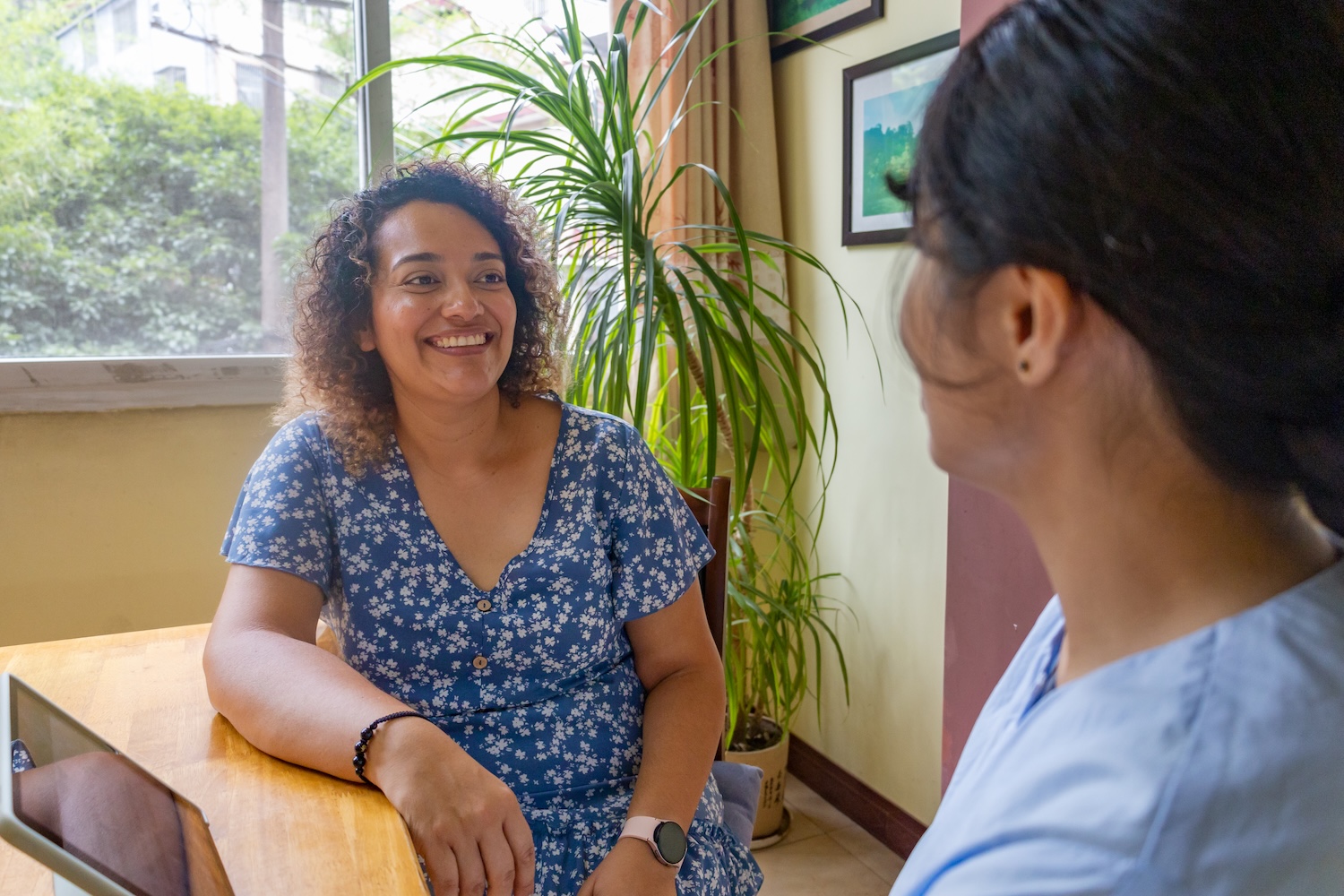
Study Chinese in Guilin or Start Online
CLI offers personalized Chinese instruction built around your goals. Join our Immersion Program in Guilin or begin from anywhere with a free Chinese lesson .
CLI's students study Mandarin one-on-one with personal teachers at our center in Guilin, China, or online from wherever they happen to be. Either way, the aim is the same: to keep your senses at the setting marked "on" for as long as possible.