

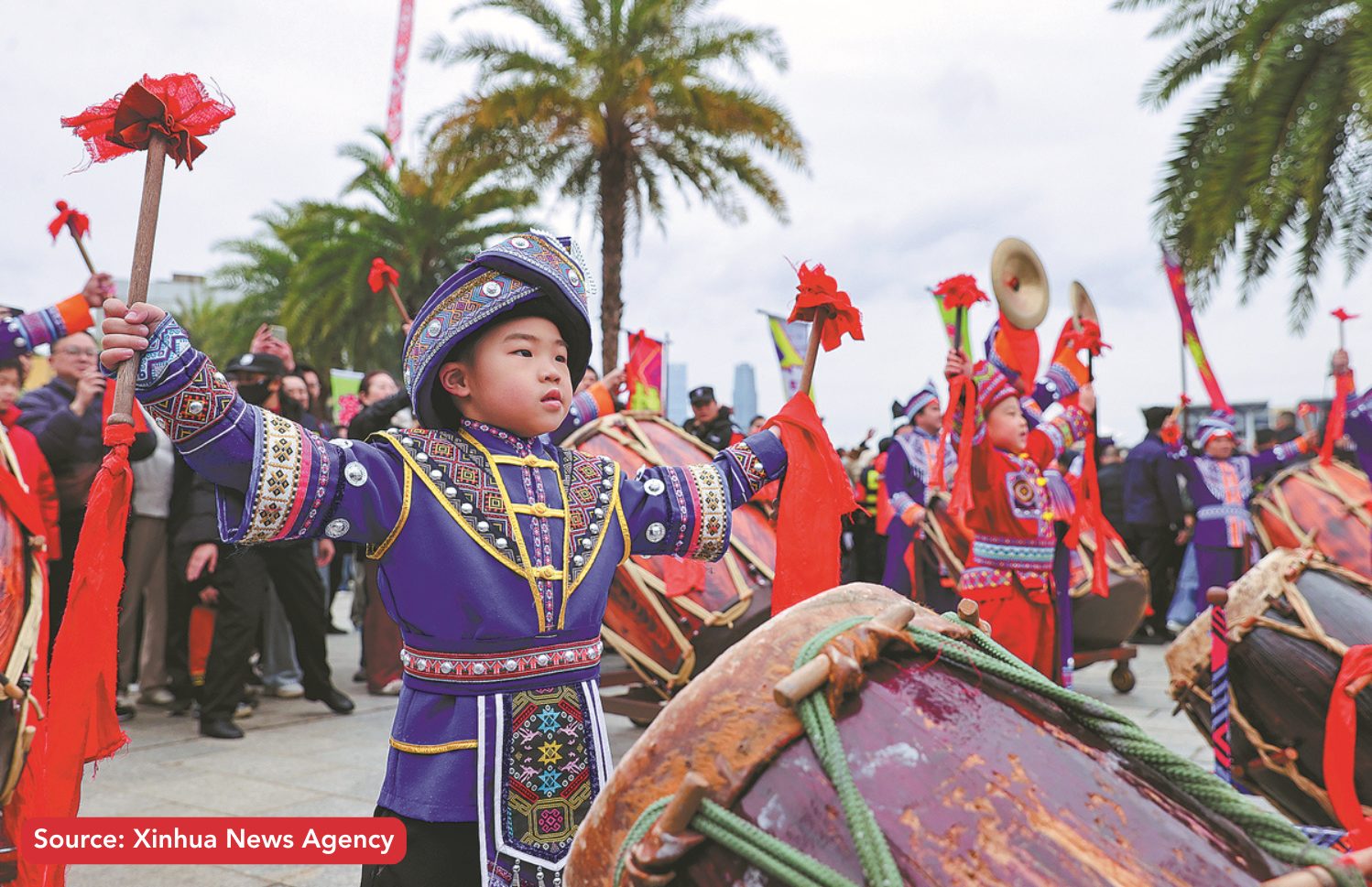
- Sanyuesan (三月三) is the most important traditional festival of the Zhuang people of southern China.
- It takes place on the third day of the third lunar month and is celebrated widely across Guangxi, including Guilin.
- The festival is known for mountain songs, ancestor rituals, five-colored glutinous rice, dance, music, and traditional dress.
- Today, Sanyuesan remains a living cultural tradition while also serving as a major public celebration of Zhuang heritage.
Sanyuesan is one of the most vibrant spring festivals in southern China. Celebrated widely across Guangxi, including Guilin, it brings together folk singing, ritual, food, traditional clothing, and communal gatherings.
For many learners, Sanyuesan offers a vivid introduction to Zhuang culture. It is not just a holiday on the calendar. It is a living festival in which music, memory, landscape, and identity all come together.
Sanyuesan is a traditional Zhuang festival celebrated on the third day of the third lunar month. It is best known for antiphonal folk singing, ancestral and seasonal rituals, five-colored glutinous rice, dancing, music, and public celebrations across Guangxi.
01 What Is Sanyuesan?
Sanyuesan (三月三; Sānyuèsān), sometimes called the Zhuang Song Festival, is a traditional spring festival rooted in Zhuang culture.
The name literally means “the third day of the third month.” It is observed on the third day of the third month of the traditional Chinese lunar calendar (农历, nónglì), which usually falls in late March or early April.
| Question | Answer |
|---|---|
| When is it celebrated? | The third day of the third lunar month |
| Who is it most associated with? | The Zhuang ethnic group |
| Where is it most widely celebrated? | Guangxi, especially places such as Nanning and Guilin |
| What is it known for? | Mountain songs, rituals, festive foods, dance, music, and traditional dress |
Celebrations often last several days, though the festival itself centers on the third day of the third lunar month. While Sanyuesan is most strongly associated with Guangxi, related “Double Third” traditions are also observed elsewhere in southern China.
Sanyuesan is more than a holiday. It is a shared cultural performance of memory, music, ritual, and community.
02 The Origins of Sanyuesan
Sanyuesan is closely related to the broader Shangsi, or “Double Third,” tradition that also falls on the third day of the third lunar month. In Guangxi, however, the festival developed a particularly strong Zhuang identity and became especially associated with song, communal gathering, and seasonal ritual.
Long before it became a modern public celebration, Sanyuesan was connected to ancestor remembrance, agricultural cycles, and the natural world. Over time, folk singing became one of the festival’s most visible features and helped preserve stories, local memory, and communal identity.
Ancestor Worship and Spiritual Elements
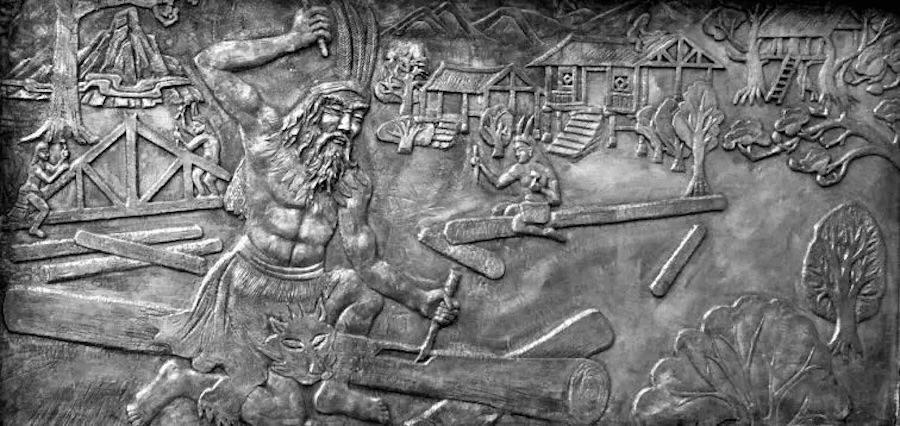
During Sanyuesan, the Zhuang people may honor ancestral figures such as Buluotuo (布洛陀, Bùluòtuó), an important culture hero in Zhuang tradition. In some communities, ceremonies also express gratitude for the land, the seasons, and the well-being of the family.
These rituals reflect the Zhuang people’s long relationship with the land and their historical environment. Some local traditions also preserve ritual specialists and chant traditions tied to older forms of worship and oral culture.
Many modern celebrations are public and festive, but Sanyuesan also has a spiritual layer tied to ancestry, seasonal renewal, and the natural world.
The Legend of Liu Sanjie
Liu Sanjie (刘三姐, Liú Sānjiě) is a legendary figure closely associated with Zhuang song culture and with how many people imagine Sanyuesan today. She is often described as a brilliant singer whose mountain songs expressed intelligence, courage, and emotional depth.
Although she belongs more to legend than verified history, her story has circulated across Guangxi for centuries. Over time, she became one of the most recognizable cultural symbols linked to folk singing in the region.
03 How Is Sanyuesan Celebrated?
Sanyuesan brings together a rich mix of ritual, music, social life, festive food, and public celebration. Different communities observe it in different ways, but several traditions appear again and again.
| Tradition | What It Represents |
|---|---|
| Antiphonal singing | Storytelling, wit, courtship, and communal identity |
| Five-colored glutinous rice | Harmony, seasonal blessing, and good fortune |
| Dance and music | Celebration, memory, and shared cultural performance |
| Water-related customs | Renewal, purification, and respect for nature |
| Traditional dress | Visible expression of Zhuang heritage |
Antiphonal Singing: Shange 山歌
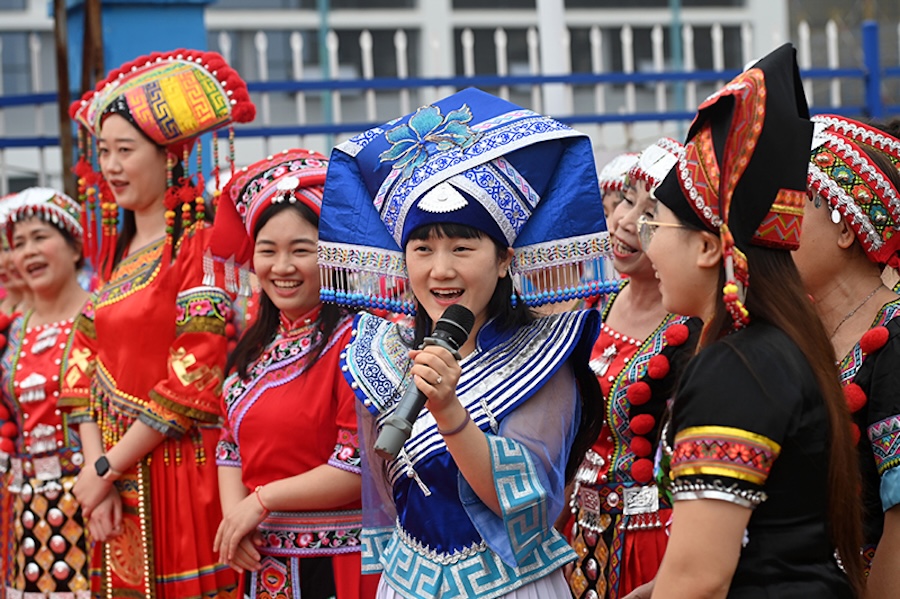
Song fairs form the soul of Sanyuesan. At the center of the festival is shange (山歌, shāngē), or mountain folk songs.
These songs are often performed in an antiphonal, call-and-response style known as duige (对歌, duìgē). Singers take turns answering one another in verse, showing humor, intelligence, emotional expression, and creativity. Historically, this tradition also functioned as a form of courtship, which is why Sanyuesan is sometimes compared to a local “Valentine’s Day.”
Today, these performances may take place on hillsides, in public squares, at schools, in scenic areas, and as part of large organized festivals. Song fairs are especially associated with Guangxi, including well-known celebrations in places such as Wuming in Nanning.
This video offers a helpful example of Sanyuesan-related mountain singing in performance.
Five-Colored Glutinous Rice
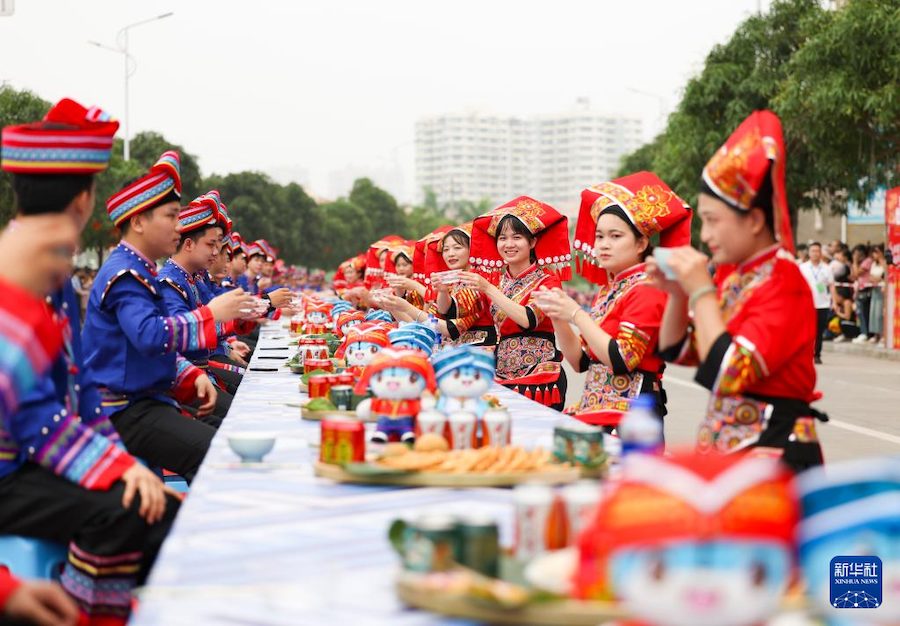
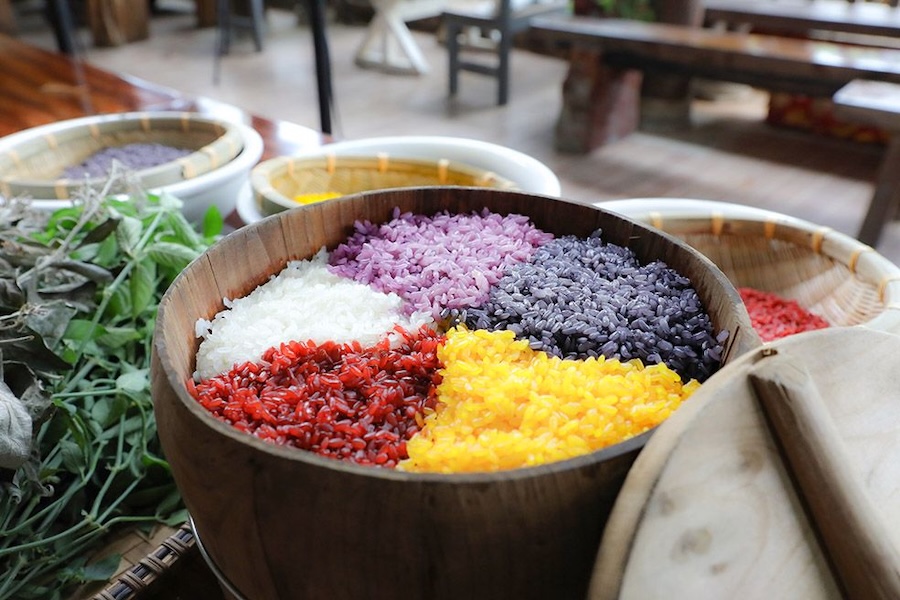
Five-colored glutinous rice (五色糯米饭, wǔsè nuòmǐfàn) is the signature Sanyuesan food. The rice is naturally dyed in five colors, usually black, red, yellow, purple, and white.
These colors are commonly linked to the Five Elements (五行, wǔxíng) and symbolize harmony, balance, good fortune, and a bountiful harvest. In some places, the rice is shaped into birds or animals, further highlighting the festival’s connection to nature.
Dance and Musical Performances
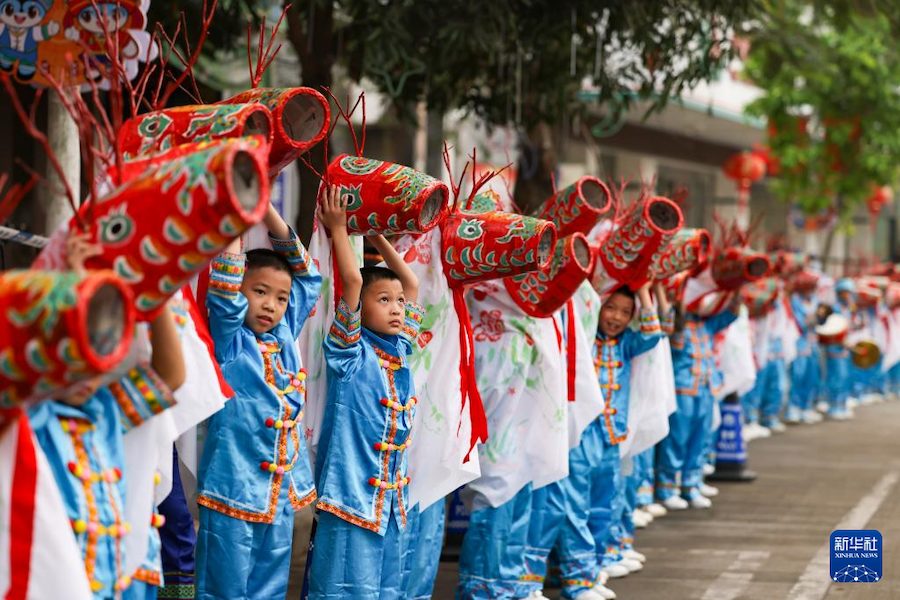
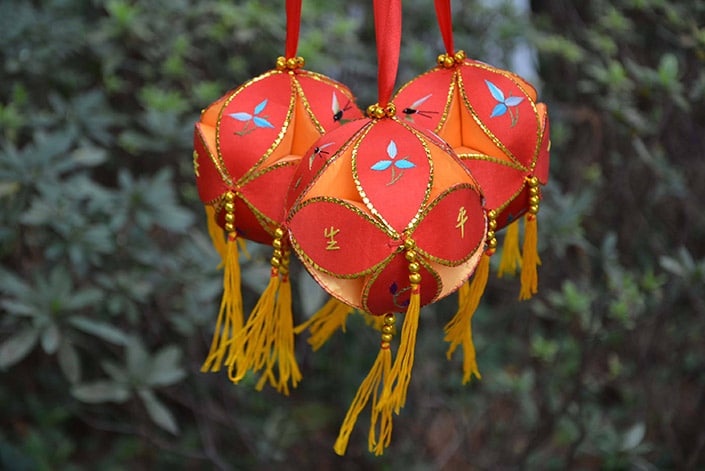
Dance and music are central to Sanyuesan celebrations. Common traditional performances include the Bronze Drum Dance, the Embroidered Ball Dance, and the Bamboo Pole Dance.
Traditional instruments such as bronze drums, bamboo flutes, the maguhu, and the tianqin help create the festival’s distinctive atmosphere. In many modern celebrations, these traditional elements are blended with stage performance, amplified sound, and large public events.
River Activities and Water Rituals
In some communities, water-related customs form part of the broader meaning of Sanyuesan. These activities can reflect ideas of renewal, purification, and harmony with the natural world.
In some places, families and communities may gather near rivers, make symbolic offerings, or release lanterns on the water during evening festivities. These practices vary by locality and are not the same everywhere Sanyuesan is celebrated.
Traditional Ethnic Dress
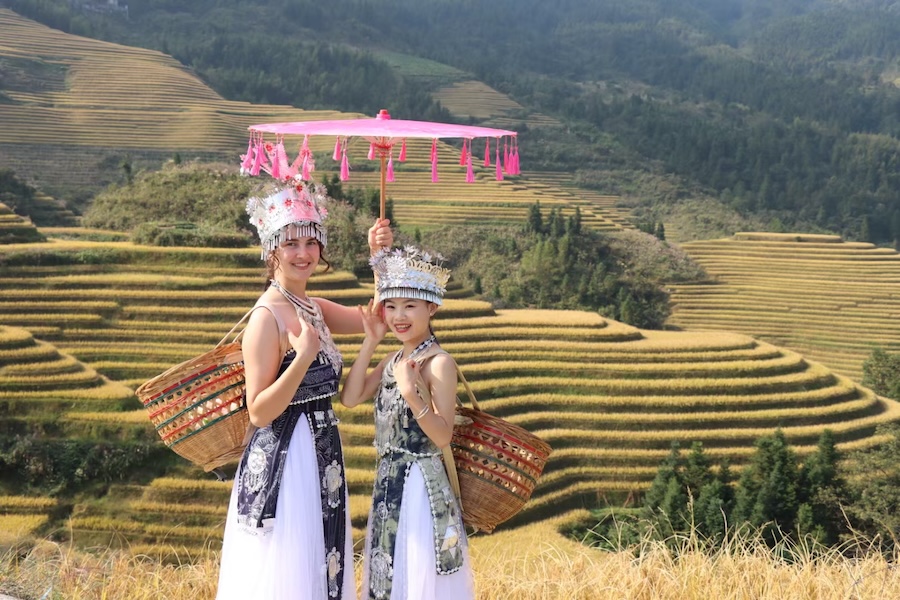
Traditional clothing is another important part of Sanyuesan. The festival offers a public setting for Zhuang people to showcase textiles, embroidery, color, pattern, and regional dress traditions.
In contemporary celebrations, traditional fashion is often combined with staged performances, cultural tourism, and demonstrations of Zhuang crafts such as weaving, embroidery, and instrument-making.
This video gives readers another look at Sanyuesan-related performance and cultural display.
04 Why Sanyuesan Matters to the Zhuang People
Today, Sanyuesan is both a living tradition and a major public expression of Zhuang cultural identity. It gives communities a chance to continue rituals, songs, and customs while also presenting them to wider audiences.
Affirming Zhuang Cultural Identity
Sanyuesan is a powerful cultural marker. Through song, food, clothing, performance, and ritual, it helps preserve and transmit Zhuang traditions from one generation to the next.
Its ongoing celebration also keeps Zhuang language, music, and social customs active in everyday life rather than reducing them to museum artifacts.
Public Holiday and Government Support
Since 2014, Guangxi has treated Sanyuesan as a regional folk-festival holiday, which has helped increase the festival’s visibility and support larger public celebrations, heritage displays, tourism promotion, and educational programming.
In today’s Guangxi, Sanyuesan often includes large-scale performances, cultural heritage exhibitions, hands-on craft demonstrations, and special public events such as the Zhuang Sanyuesan Bagui Carnival.
05 Modern Celebrations Across Guangxi
Sanyuesan celebrations vary widely across Guangxi. Some are large, public, and performance-driven. Others remain intimate and village-centered.
| Place | What You May See |
|---|---|
| Nanning | Large official events, song and dance performances, museum and heritage programming, and waterfront cultural fairs |
| Guilin and Yangshuo | Scenic performances, song fairs, and tourism-linked cultural programming |
| Rural Zhuang communities | Ancestor rites, village song fairs, communal meals, embroidered ball games, and family-based tradition passing |
Major Festival Events in Nanning
As the capital of Guangxi, Nanning hosts some of the region’s largest and most formally organized Sanyuesan events. Major scenic and cultural venues in and around the city often become focal points for performances, song fairs, and exhibitions.
Celebrations in Guilin and Yangshuo
In Guilin and Yangshuo, Sanyuesan often merges traditional culture with dramatic natural scenery. Celebrations in and around Guilin may include scenic performances, folk-song activities, and tourism-linked cultural programming.
Because Guilin is part of Guangxi’s multi-ethnic cultural landscape, the festival can be an especially vivid experience for visitors interested in both language and local culture.
Village Festivities and Rural Traditions
In rural communities, Sanyuesan remains closely connected to everyday life. Families prepare festive foods, conduct ancestor rituals, join communal gatherings, and pass down stories and customs through participation.
06 Experience Sanyuesan with CLI
Want to experience Sanyuesan in one of its most memorable settings? CLI is located in Guilin, in the heart of Guangxi, where the festival comes alive against karst peaks, rivers, and rich local tradition.
For students learning Chinese, Sanyuesan offers something especially valuable: a chance to connect language study with living culture. You are not just learning vocabulary in a classroom. You are seeing how culture, place, and tradition shape daily life.

Study Chinese in Guilin or Start Online
CLI offers personalized Chinese instruction built around your goals. Join our Immersion Program in Guilin or begin from anywhere with a free Chinese lesson.
07 Vocabulary About Sanyuesan
| Chinese | Pinyin | Translation |
|---|---|---|
| 三 月 三 | Sanyuesan Festival | |
| 壮 族 | Zhuang ethnic group | |
| 传 统 节 日 | traditional festival | |
| 农 历 | lunar calendar | |
| 民 族 文 化 | ethnic culture | |
| 祭 祀 | ritual sacrifice | |
| 祖 先 崇 拜 | ancestor worship | |
| 山 歌 | mountain folk songs | |
| 对 歌 | antiphonal singing | |
| 歌 圩 | song fair | |
| 布 洛 陀 | Buluotuo (Zhuang ancestor figure) | |
| 刘 三 姐 | Liu Sanjie (legendary singer) | |
| 五 色 糯 米 饭 | five-colored glutinous rice | |
| 五 行 | Five Elements | |
| 铜 鼓 | bronze drum | |
| 竹 竿 舞 | bamboo pole dance | |
| 水 神 | Water Deity | |
| 河 灯 | floating river lantern | |
| 传 统 服 饰 | traditional clothing | |
| 文 化 遗 产 | cultural heritage |
08 Selected References
- David Publishing — Research related to Buluotuo and Zhuang cultural tradition. View source →
- English.gov.cn — Coverage related to Sanyuesan and Guangxi celebrations. View source →
- English.gov.cn — Background on Guangxi’s Sanyuesan holiday and its relation to Shangsi. View source →
- SCIO — Background on Sanyuesan as intangible cultural heritage and a Guangxi holiday. View source →
- YouTube — Mountain song performance example. View source →
- YouTube — Festival performance and cultural display example. View source →