


- Guangxi is in the far south of China, with Yunnan, Guizhou, Hunan and Guangdong around it, Vietnam to the southwest and a coastline on the Beibu Gulf.
- Its official name is the Guangxi Zhuang Autonomous Region. It ranks as a province, so most people simply say Guangxi province, and its capital is Nanning.
- It's the home of Guilin and the Li River, and of our school.
- About 50 million people live in Guangxi, and nearly a third of them are Zhuang, whose festival on the third day of the third lunar month, Sanyuesan, is a public holiday across the region.
- High-speed trains make it easy to see more than one city: Guilin to Nanning takes about 2 hours, and Nanning to the beaches of Beihai about an hour.
Guangxi province (广西, Guǎngxī) is a region in the far south of China, on the border with Vietnam, with a coast on the Gulf of Tonkin, which China calls the Beibu Gulf. Its capital is Nanning, and it's home to Guilin, the city of karst hills and the Li River where the Chinese Language Institute (CLI) teaches Chinese. Officially it's the Guangxi Zhuang Autonomous Region, named for the Zhuang people who make up almost a third of its population.
We live and teach in Guilin, and this page is the answer we give friends who ask where that actually is. For more on each city, our Guilin travel guide and our Nanning travel guide go into the details.

01 Where is Guangxi province?
Guangxi is in southern China, and it touches four other provinces, a foreign country and the sea. The port city of Beihai looks out over the Beibu Gulf (北部湾, Běibù Wān).
| Direction | Neighbor |
|---|---|
| North | Guizhou province |
| Northeast | Hunan province |
| East | Guangdong province |
| West | Yunnan province |
| Southwest | Vietnam (land border) |
| South | The Beibu Gulf (Gulf of Tonkin) |
The region covers about 237,600 square kilometers (about 91,700 square miles). Guilin is in the north, and Nanning, the capital, is in the south, close enough to the border and the coast that most trips to either start there. From Guilin, high-speed trains run south to Nanning and southeast to Guangzhou.
02 Province or autonomous region?
Both, in practice. The full name is 广西壮族自治区 (Guǎngxī Zhuàngzú Zìzhìqū), the Guangxi Zhuang Autonomous Region, and Guangxi has had that status since 1958, with Nanning as its capital. Autonomous regions sit at the same level as provinces, so in English most people call it Guangxi province.
Nanning hasn't always been the capital. It first took the role in 1912, the government moved back to Guilin in 1936, and Nanning has been the capital again since 1950. Our history of Guilin covers the centuries when Guilin was the capital.
The short name: 桂
Guangxi's one-character short name is 桂 (Guì), the word for the osmanthus tree, whose flower is 桂花 (guìhuā); the same character also names cassia, 肉桂 (ròuguì). Guilin's own name, 桂林, means "osmanthus forest." There are two explanations for how the tree came to stand for the whole region, and you'll find both in Chinese sources.
The first is about government. In the Song dynasty the region was run from Guizhou (桂州, Guìzhōu), the city we now call Guilin, so the character of the capital became the character of the region. The second goes back further, to the Qin dynasty's Guilin Commandery (桂林郡, Guìlín Jùn), which covered most of today's Guangxi and, by an old account, was named for the many 桂 trees that grew at the source of its river. Despite the name, that commandery was not centered on today's Guilin. Guangxi also has a literary name built on the same tree, 八桂 (Bāguì), "Eight Osmanthus."
The old Guizhou, 桂州, has nothing to do with Guizhou province next door, 贵州. Both are read Guìzhōu, with exactly the same tones, so only the characters (or the context) tell you which one someone means.
03 Guangxi's cities
Most visitors come for Guilin and never leave the north, which is a shame, because the cities of Guangxi feel quite different from each other and the trains between them are quick. Here are the ones we'd point a friend to, with the train time from Guilin.
| City | Chinese | Known for | From Guilin |
|---|---|---|---|
| Nanning | 南宁 (Nánníng) | The capital: parks, museums, laoyou noodles | About 2 hours by high-speed train |
| Guilin | 桂林 (Guìlín) | The Li River, karst hills, Guilin rice noodles, and our school | You're here |
| Liuzhou | 柳州 (Liǔzhōu) | Luosifen, the river-snail rice noodles | An hour or a little more by train |
| Beihai | 北海 (Běihǎi) | The coast, Silver Beach and the ferry to Weizhou Island | Through Nanning, about 1 hour beyond it by train |
| Chongzuo | 崇左 (Chóngzuǒ) | Detian Waterfall and the Huashan rock art, on the Vietnam border | Via Nanning |
Nanning
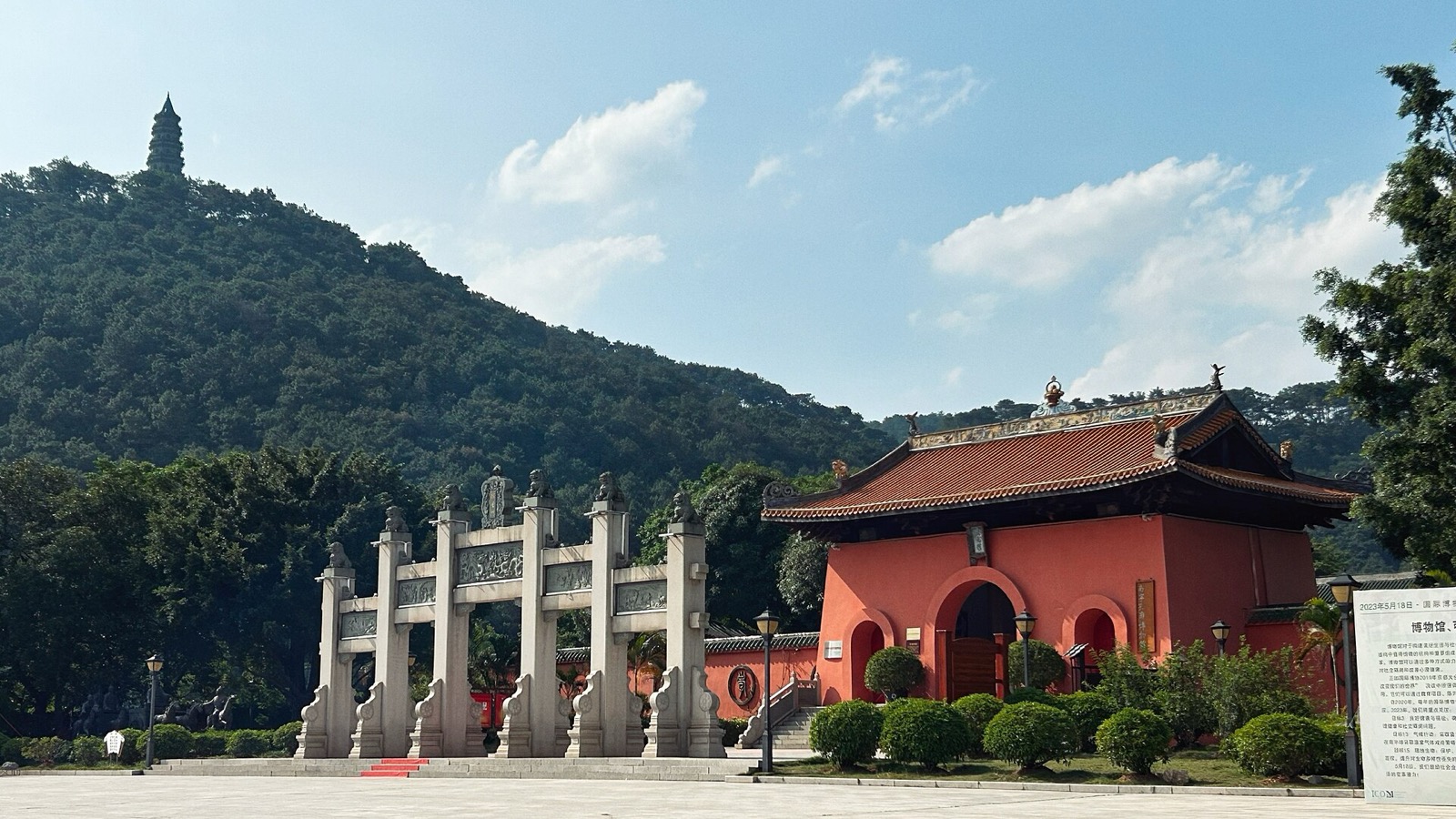
Nanning is the capital and the largest city, with about 9 million people across its whole municipal area at the end of 2025. It's a green, easygoing place, warmer than Guilin in winter, and it's where you change trains for the coast and the border country. Our Nanning travel guide has two days' worth of things to do.
Guilin and Yangshuo
Guilin is where we live and teach. The Li River (漓江, Lí Jiāng) runs through the city between the karst hills, and Yangshuo (阳朔, Yángshuò), downriver, is a county of Guilin rather than a separate city. Our Guilin travel guide covers both, and if you're flying in, our guide to getting to Guilin covers every route.
Liuzhou
Liuzhou is an hour or a little more from Guilin by train, and for many people in China its name means luosifen (螺蛳粉, luósīfěn), rice noodles in a sour, spicy river-snail broth. You'll find it all over Guangxi, but Liuzhou is where it comes from.
Beihai and Weizhou Island
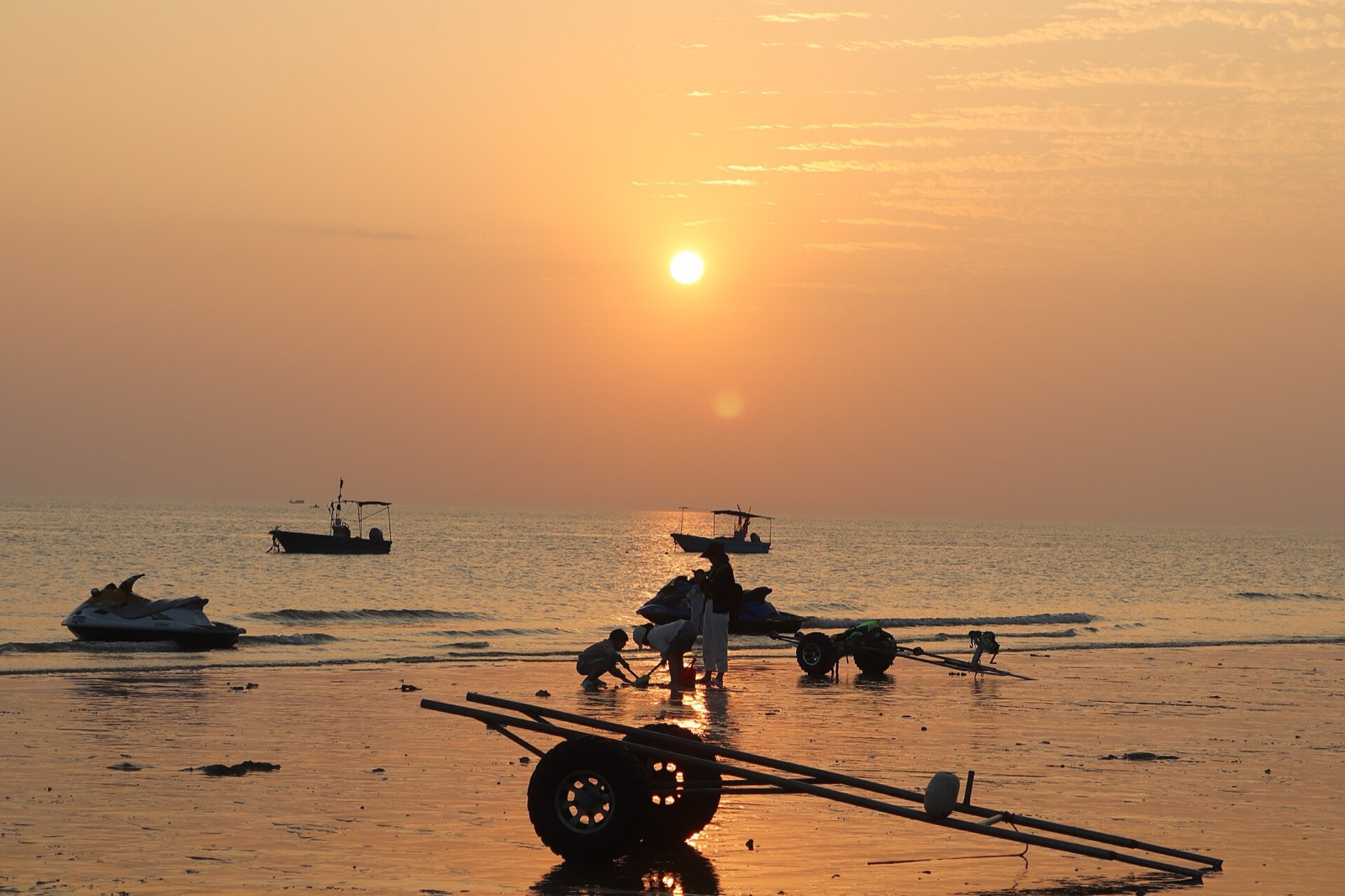
Beihai is Guangxi's beach city, about an hour by train from Nanning. Its long, pale Silver Beach is the main draw, along with the seafood. From Beihai's international passenger port, fast ferries take 70 to 80 minutes to Weizhou Island (涠洲岛, Wéizhōu Dǎo), which People's Daily calls China's largest and youngest volcanic island. Bring your original passport for the ferry.
Chongzuo and the border
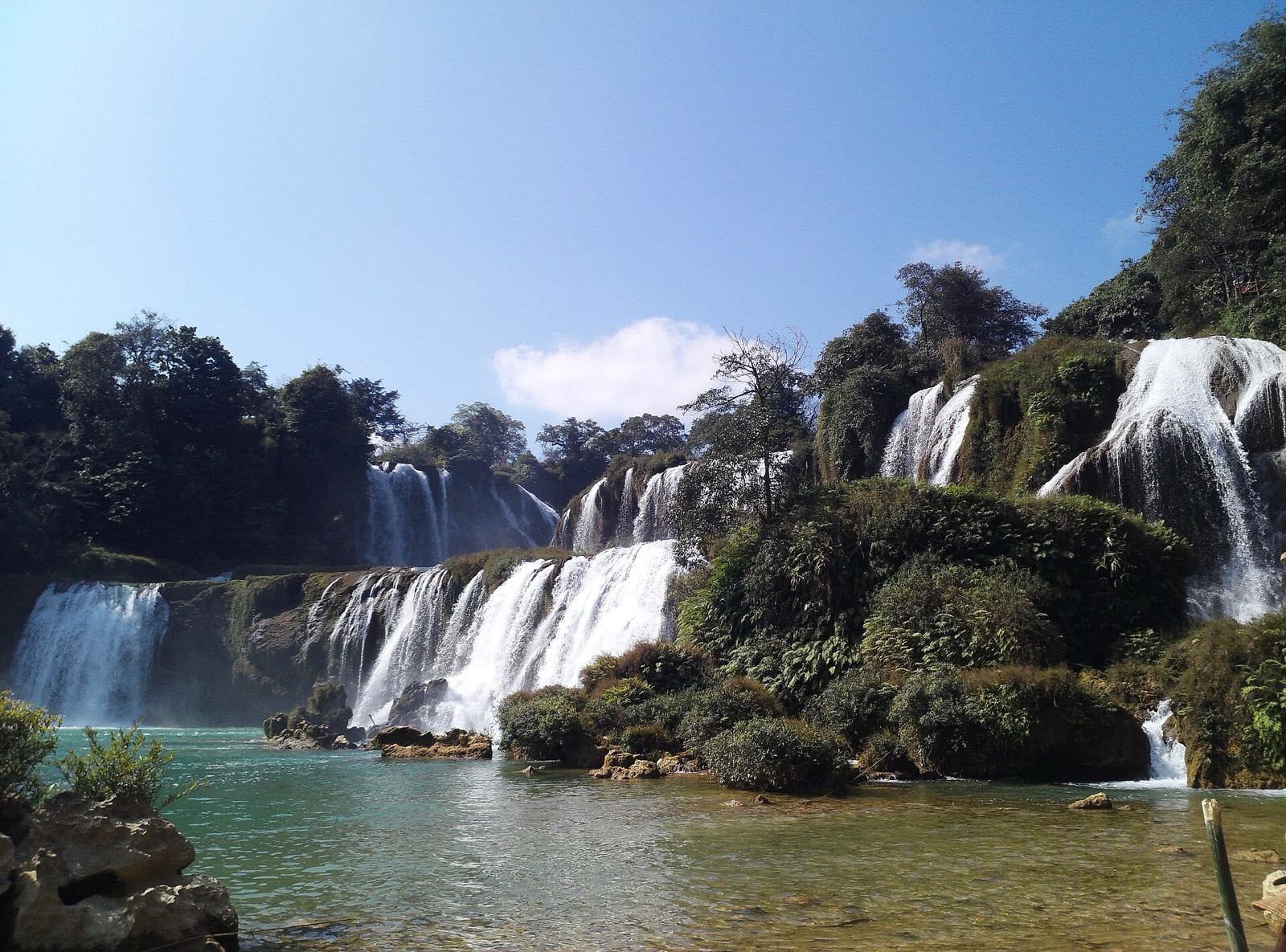
Southwest of Nanning, the city of Chongzuo runs up to the Vietnam border, and it has two of the best sights in Guangxi. Detian Waterfall (德天瀑布, Détiān Pùbù) sits right on the border, a long day trip from Nanning by road, and the Chinese government calls it Asia's largest cross-border waterfall. The Zuojiang Huashan Rock Art, red figures painted on a river cliff roughly 2,000 years ago, became a UNESCO World Heritage Site in 2016. Since December 2025 a high-speed train from Nanning reaches Ningming East, the high-speed station for the rock art, in as little as 65 minutes. You see the paintings from a boat on the river.

Study Chinese in Guilin, Guangxi
Our students learn Chinese one-to-one with their own teachers in Guilin, with the whole of Guangxi a train ride away. You can start any Monday, and housing and airport pickup are included.
04 People and languages
The 2020 census counted about 50.13 million residents in Guangxi. The Zhuang (壮族, Zhuàngzú) make up 31.36% of them, about 15.72 million people, and Han Chinese 62.48%, with other ethnic groups making up the rest. That's why the region carries the Zhuang name. Our guide to the Zhuang ethnic group covers their history, language and beliefs.
The Zhuang language
The Zhuang language (壮语, Zhuàngyǔ) is spoken in the districts around Nanning and in other Zhuang areas, and written Zhuang (壮文, Zhuàngwén) uses the Latin alphabet. Nanning, for example, is Namzningz. Under a Guangxi regulation in force since August 1, 2018, public institutions in Zhuang areas should put both Chinese and Zhuang on their name plaques and seals, so keep an eye out for a line of Latin letters beside the characters on official name plaques.
Which Chinese will you hear?
Mandarin is spoken everywhere, and it's all you need as a visitor. The local speech changes from city to city, though. In Guilin the everyday dialect, 桂林话 (Guìlínhuà), is a form of Southwestern Mandarin, so it's close to the standard Chinese you learn in class. In Nanning's old city you'll hear Báihuà (白话), a form of Cantonese, and in the countryside around it, Pínghuà (平话) and Zhuang.
For a learner, that difference matters. In Nanning, don't be discouraged if you can't follow two locals chatting: they may be speaking a different language from the one you're learning. Our guide to Mandarin vs Cantonese explains how far apart the two are.
05 What to eat in Guangxi
Guangxi runs on rice noodles (米粉, mǐfěn), and each city is loyal to its own bowl. Tap a word in the table to see its meaning, and tap again to watch it written.
| Chinese | Pinyin | What it is |
|---|---|---|
| 桂林米粉 | Guilin rice noodles, our own city's bowl. Our guide to Guilin rice noodles explains how to order them. | |
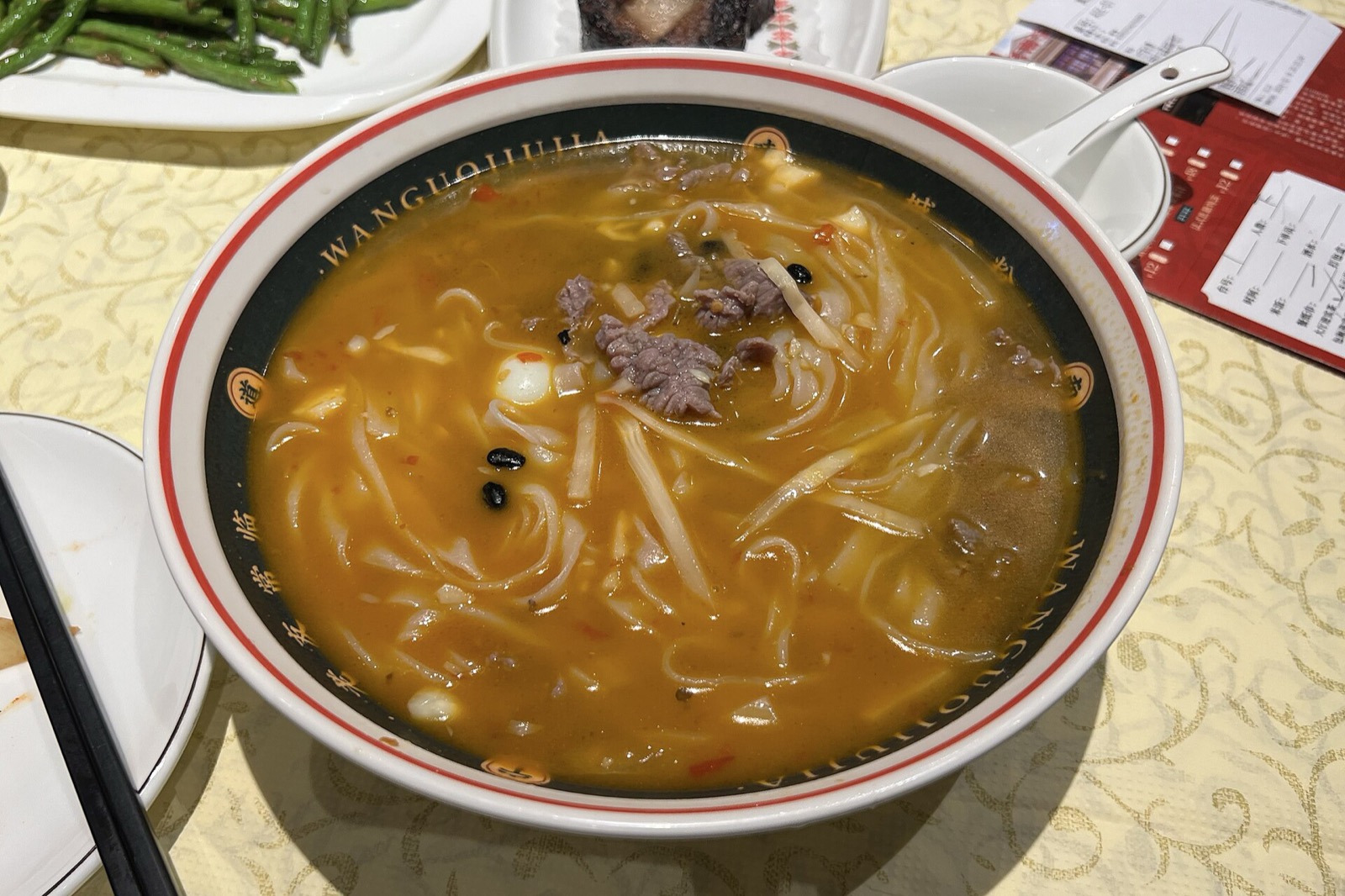
| 老友粉 | Nanning's "old friend" noodles, cooked to order with garlic, fermented black beans, chili and pickled bamboo shoots | |
| 螺蛳粉 | Liuzhou's river-snail rice noodles, now sold all over Guangxi | |
| 酸野 | Fruit and vegetables such as papaya, mango and radish, pickled with vinegar, salt, chili and sugar and sold from street carts all over Guangxi |
Suanye's name comes from Nanning's local Cantonese and means, roughly, "sour stuff." It's the snack people reach for on a hot afternoon, and it's a good one to try even if you're not sure about snail broth.
06 Guangxi weather by month
Guangxi has a subtropical climate, and Guilin and Nanning are both humid subtropical: short, mild winters and long, hot, wet summers. The south is warmer in winter, so Nanning averages about 4 °C more than Guilin in January, while in July and August Guilin is, if anything, slightly the warmer of the two. In Nanning most of the year's rain falls from May to September, and typhoons that reach the coast can bring heavy rain well inland.
| Month | Guilin, average temperature | Nanning, average temperature | Nanning, rainfall |
|---|---|---|---|
| January | 8.7 °C (48 °F) | 12.7 °C (55 °F) | 43 mm (1.7 in) |
| February | 11.1 °C (52 °F) | 14.9 °C (59 °F) | 31 mm (1.2 in) |
| March | 14.3 °C (58 °F) | 17.9 °C (64 °F) | 62 mm (2.4 in) |
| April | 20.0 °C (68 °F) | 22.6 °C (73 °F) | 76 mm (3.0 in) |
| May | 24.1 °C (75 °F) | 26.0 °C (79 °F) | 157 mm (6.2 in) |
| June | 26.9 °C (80 °F) | 27.8 °C (82 °F) | 203 mm (8.0 in) |
| July | 28.8 °C (84 °F) | 28.2 °C (83 °F) | 242 mm (9.5 in) |
| August | 28.8 °C (84 °F) | 27.9 °C (82 °F) | 184 mm (7.2 in) |
| September | 26.5 °C (80 °F) | 26.5 °C (80 °F) | 121 mm (4.7 in) |
| October | 22.0 °C (72 °F) | 23.2 °C (74 °F) | 77 mm (3.0 in) |
| November | 16.7 °C (62 °F) | 18.8 °C (66 °F) | 48 mm (1.9 in) |
| December | 11.2 °C (52 °F) | 14.0 °C (57 °F) | 32 mm (1.3 in) |
Temperatures are the Japan Meteorological Agency's long-term averages. Its figures for Guilin don't include rainfall, so the table shows rainfall for Nanning only.
Our suggestion is October and November, when it's still mild and the rain has eased off, or March and April, which are mild (though often rainy in Guilin) and bring the Sanyuesan festival. Summer works if you can take the heat. Please pack an umbrella from spring onward: in Guilin the heavy rain builds from March and peaks in May and June, and in Nanning most of it falls from May to September. Winter in Guilin is cool, under 9 °C on average in January, so bring a warm layer.
07 Getting around Guangxi
High-speed rail is the easiest way to get between Guangxi's cities, and for most trips it beats flying door to door. Dozens of trains a day run between Guilin and Nanning, and from Nanning the lines fan out to the coast and the border.
| Route | Fastest trains | Second class |
|---|---|---|
| Guilin to Nanning East | About 2 hours (most 2 to 2.5) | Around ¥140 |
| Guilin to Liuzhou | About 1 to 1½ hours | Check 12306 |
| Guilin to Guangzhou South | About 2 to 3 hours | Check 12306 |
| Nanning East to Beihai | About 1 hour | ¥65 to ¥87 |
| Nanning to Ningming East (for Huashan) | About 65 minutes at fastest | Check 12306 |
Fares and times change from season to season, so please check China Railway's 12306 app or Trip.com before you go.
Train tickets in China are sold against your ID, which for foreigners means your passport. You can verify a foreign passport at any station ticket window, or, since November 28, 2023, online in the 12306 app. Please carry the same passport onto the train.
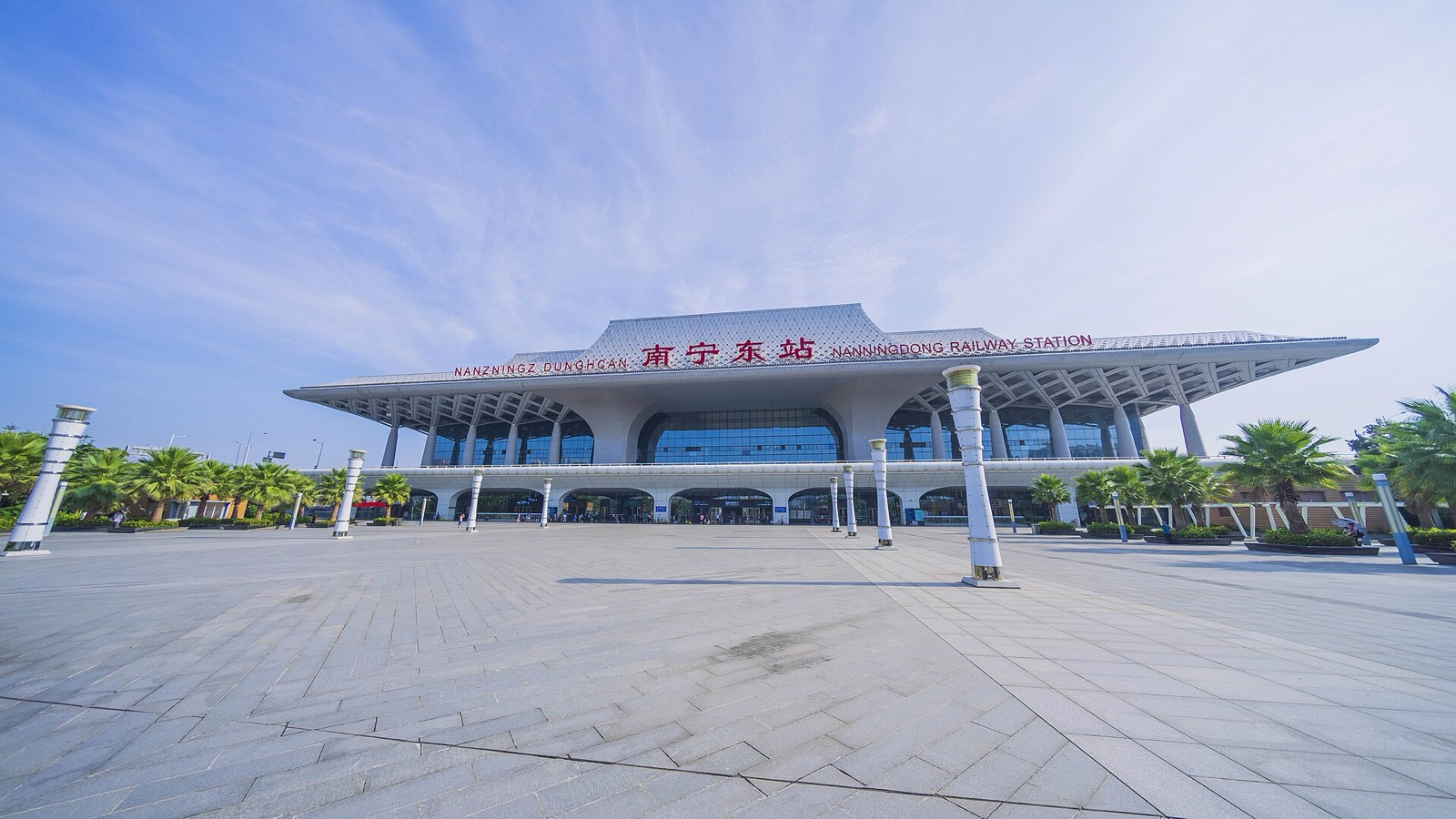
Flying in. Nanning Wuxu International Airport is 31 km (19 miles) southwest of Nanning, and Guilin has its own airport for the north of the region. Our guide to getting to Guilin compares the ways in by air and rail.
On to Vietnam. Since May 25, 2025, an overnight train has run daily again between Nanning Station and Gia Lam in Hanoi. It leaves Nanning at 6:05 p.m. Beijing time and arrives at 5:30 a.m. Hanoi time, with border checks at Pingxiang and Dong Dang. You need a Vietnamese visa or visa exemption, and Vietnam added the Dong Dang railway gate to its e-visa list in December 2025, but please check the latest rules before you book.
08 Sanyuesan, Guangxi's own holiday
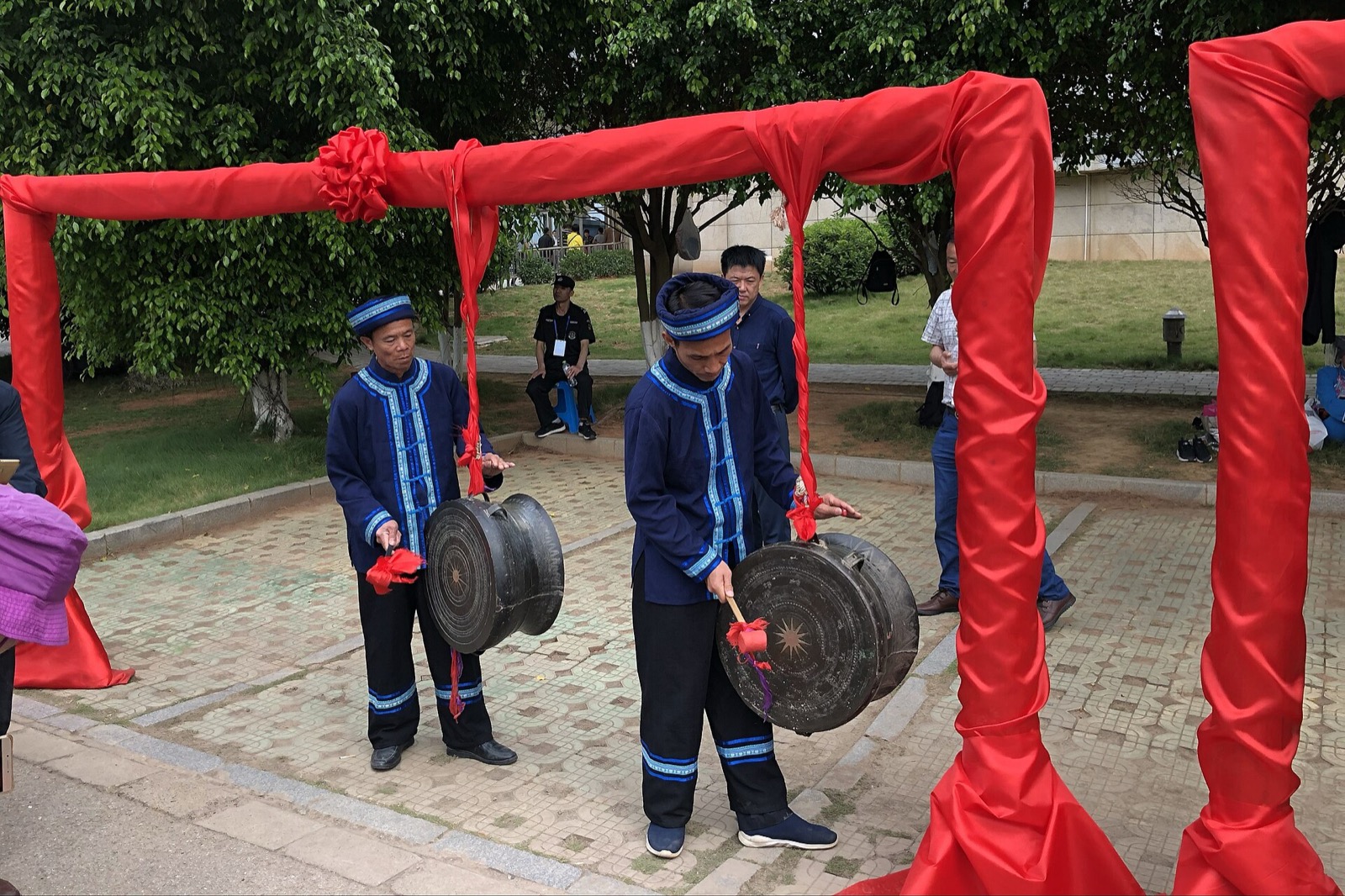
The big festival that belongs to Guangxi alone is Sanyuesan (三月三, Sānyuèsān), the third day of the third lunar month. It's the great springtime festival of the Zhuang, and since 2014 it has been a public holiday across the region, with two days off for everyone in Guangxi, Zhuang or not. In 2026 it fell on April 19, and with the weekend the break ran from April 17 to 20.
Singing is at the heart of it. In Nanning's Wuming District the Sanyuesan song fair has run since 1980 and is one of the largest in China, and it's on the national intangible heritage list. Our guide to the Sanyuesan festival has the full story.
Nanning also hosts the China–ASEAN Expo every September (in 2026 it ran September 17 to 21), so book your hotel early if your trip overlaps.
09 Say the names: Guangxi in Chinese
Tap the characters to hear a woman's voice and the pinyin to hear a man's. These are the names you'll see on train boards and hear from taxi drivers, so they're worth getting right before you arrive.
| Chinese | Pinyin | Meaning |
|---|---|---|
| 广西 | Guǎngxī | Guangxi |
| 广西壮族自治区 | Guǎngxī Zhuàngzú Zìzhìqū | The Guangxi Zhuang Autonomous Region, the official name |
| 壮族 | Zhuàngzú | The Zhuang people |
| 桂 | Guì | Osmanthus, and Guangxi's short name |
| 南宁 | Nánníng | Nanning, the capital |
| 桂林 | Guìlín | Guilin ("osmanthus forest") |
| 柳州 | Liǔzhōu | Liuzhou |
| 北海 | Běihǎi | Beihai, on the coast |
| 漓江 | Lí Jiāng | The Li River |
| 米粉 | mǐfěn | Rice noodles |
| 三月三 | Sānyuèsān | Sanyuesan, the festival on the third day of the third lunar month |
Guǎngxī is a third tone followed by a high, level first tone. Before a tone that isn't a third tone, the third tone is usually said as a "half third": stay low and don't rise at the end, then jump up high and hold. The x is a soft sound close to the "sh" in "she," never a "z" or "ks," so it comes out roughly as "gwahng-shee." In Zhuàngzú, both syllables carry strong tones, a sharp fall and then a rise. Běihǎi is two third tones in a row, so in speech the first one rises and you'll hear béihǎi; the table shows the dictionary tones. Liǔzhōu starts low and ends high and level. Our pinyin chart lets you hear each syllable on its own, and our guide to tone changes in Mandarin explains the third-tone rule.
10 FAQ
Where is Guangxi?
Guangxi is in the far south of China. It borders Yunnan to the west, Guizhou to the north, Hunan to the northeast and Guangdong to the east, with Vietnam to the southwest and a coastline on the Beibu Gulf (the Gulf of Tonkin). Guilin is in the north of the region, and Nanning, the capital, is in the south.
Is Guangxi a province?
Officially, Guangxi is the Guangxi Zhuang Autonomous Region, named for the Zhuang people, and it has had that status since 1958. Autonomous regions rank the same as provinces, so it's normal to call it Guangxi province.
What is the capital of Guangxi?
Nanning is the capital of Guangxi. It has been the capital since 1950 and stayed the capital when Guangxi became an autonomous region in 1958. Guilin, about two hours away by high-speed train, was the capital for centuries before 1912 and again from 1936 until 1950.
How do you pronounce Guangxi?
Guangxi is 广西, Guǎngxī in pinyin: a low third tone, without the rise at the end, and then a high, level first tone. The x sounds close to the "sh" in "she," never a "z," so it comes out roughly as "gwahng-shee."
What language is spoken in Guangxi?
Mandarin is spoken everywhere and is all a visitor needs. Locally you'll also hear Guilin dialect, a form of Southwestern Mandarin; Nanning Báihuà, a form of Cantonese; Pínghuà in the countryside; and Zhuang, which is written in the Latin alphabet.
What is the population of Guangxi?
The 2020 census counted about 50.13 million residents in Guangxi. About 15.72 million of them (31.36%) are Zhuang, and 62.48% are Han Chinese.
When is the best time to visit Guangxi?
Going by the weather, we suggest October and November, when it's mild and the rain has eased, or March and April, which are mild and bring the Sanyuesan festival. Summers are hot and wet, and January in Guilin averages under 9 °C (48 °F).
If you're coming to Guangxi for more than a few days, we'd start in Guilin, take the train south to Nanning for the food, and keep a day or two for the coast or the border country. And if you'd like to stay longer and learn the language, you can study with us in Guilin.
11 Sources
Facts were checked in November 2026. Train times, fares and border rules change, so please check them before you travel.
- China Daily: Guangxi's population and area. View source →
- China Daily: the 2020 census and the Zhuang population. View source →
- The Paper: Guangxi's 2020 census results. View source →
- Wikipedia: Guangxi (neighbors and area). View source →
- The Paper: Nanning and Guilin as capitals of Guangxi. View source →
- The Paper: why Guangxi's short name is Gui. View source →
- China News Service: the origin of the short name Gui. View source →
- Zdic: Bagui, a literary name for Guangxi. View source →
- CNR Guangxi: Nanning's 2025 population. View source →
- China Daily: Guangxi's 2018 regulation on minority languages. View source →
- Wikipedia: Guilin (rainfall by month, China Meteorological Administration normals). View source →
- Wikipedia: Gui–Liu Mandarin (the Guilin dialect). View source →
- Phoenix News: the seat of the Qin Guilin Commandery. View source →
- The World of Chinese: suanye, Guangxi's pickled fruit. View source →
- China News Service: laoyou noodles. View source →
- Japan Meteorological Agency: climate normals for Nanning. View source →
- Japan Meteorological Agency: climate normals for Guilin. View source →
- Trip.com: Guilin to Nanning train timetable and fares. View source →
- Trip.com: Nanning to Beihai train timetable and fares. View source →
- Travel China Guide: Guilin to Liuzhou train timetable. View source →
- China Highlights: Guilin to Guangzhou trains. View source →
- China Services Info: online passport verification for train tickets. View source →
- China Southern Airlines: Nanning Wuxu International Airport. View source →
- Xinhua: the Nanning to Hanoi train timetable. View source →
- Vietnam National Authority of Tourism: border gates added to the e-visa list. View source →
- Xinhua: the Nanning to Pingxiang high-speed railway. View source →
- Science and Technology Daily: Nanning to Ningming East by high-speed train. View source →
- Gov.cn: Detian Waterfall. View source →
- UNESCO World Heritage Centre: Zuojiang Huashan Rock Art Cultural Landscape. View source →
- People's Daily: Weizhou Island. View source →
- Sohu: ferries from Beihai to Weizhou Island. View source →
- Xinhua: the 2026 China–ASEAN Expo. View source →
- Beijing Daily: the 2026 Sanyuesan holiday in Guangxi. View source →
- China News Service: the Wuming Sanyuesan song fair. View source →