

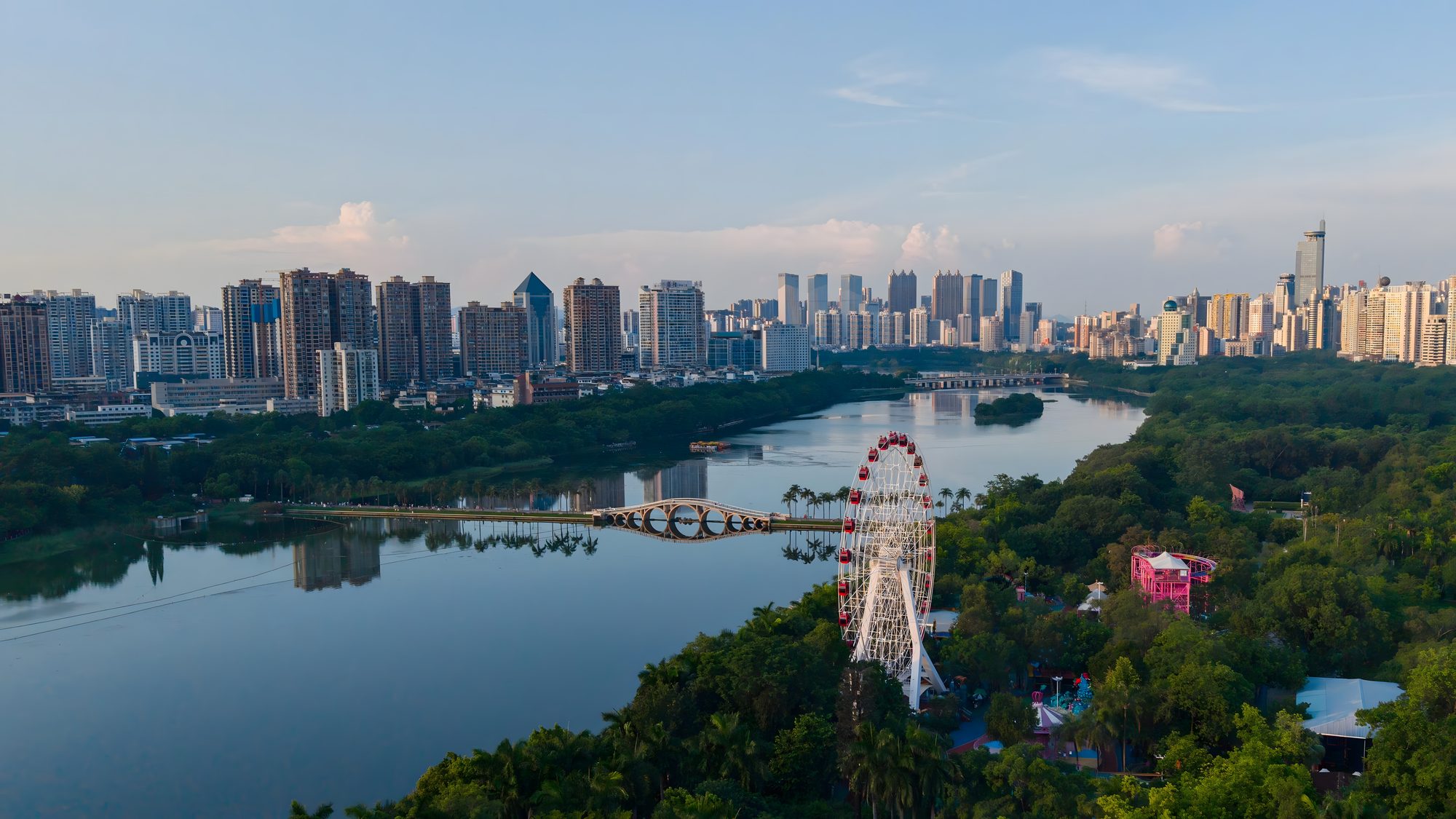
- Nanning is the capital of Guangxi, a green, subtropical city of about 9 million people across its whole municipal area.
- From Guilin it's an easy trip: the fastest trains reach Nanning East in about 2 hours, and a second-class seat costs around ¥140.
- Give the city two days: Qingxiu Mountain, the Guangxi Museum of Nationalities (free), the old arcade streets of the Three Streets and Two Lanes, and a bowl of laoyou noodles, the city's signature dish.
- Nanning is the base for the best day trips in southern Guangxi: Detian Waterfall on the Vietnam border, the UNESCO-listed Huashan rock art, and the beaches of Beihai.
- It's warmer than Guilin in winter (about 4 °C warmer in January), and its old local dialect is a form of Cantonese, so you'll hear more than one kind of Chinese on the street.
Nanning (南宁, Nánníng) is the capital of Guangxi in southern China, the region the Chinese Language Institute (CLI) calls home, and it's two hours by high-speed train from our center in Guilin. Plenty of travelers only change trains here on the way to Vietnam or the coast, which is a pity, because it's a relaxed, leafy city with its own very good noodles.
Guilin has the karst mountains and the tour groups. Nanning is a working regional capital, warmer than Guilin in winter, with big lakeside parks and busy night markets.
01 Nanning at a glance
The name 南宁 means "southern peace." Locals also use the one-character short name 邕 (Yōng), which you'll see on shop signs, in business names and in the name of the river that runs through town, the 邕江 (Yōng Jiāng). Its nickname is 绿城 (Lǜchéng), the "Green City," and it earns it: even downtown, the streets are lined with big shade trees.
| Chinese name | 南宁 (Nánníng), short name 邕 (Yōng) |
|---|---|
| Zhuang name | Namzningz |
| Role | Capital of the Guangxi Zhuang Autonomous Region |
| Population | About 9.02 million in the whole city area (end of 2025) |
| Climate | Humid subtropical: mild winters, long hot and rainy summers |
| From Guilin | About 2 to 2.5 hours by high-speed train |
| Airport | Nanning Wuxu International Airport, 31 km (19 miles) southwest of the city |
| Languages you'll hear | Mandarin, Nanning Cantonese (Báihuà), Pínghuà and Zhuang |
02 A short history of Nanning
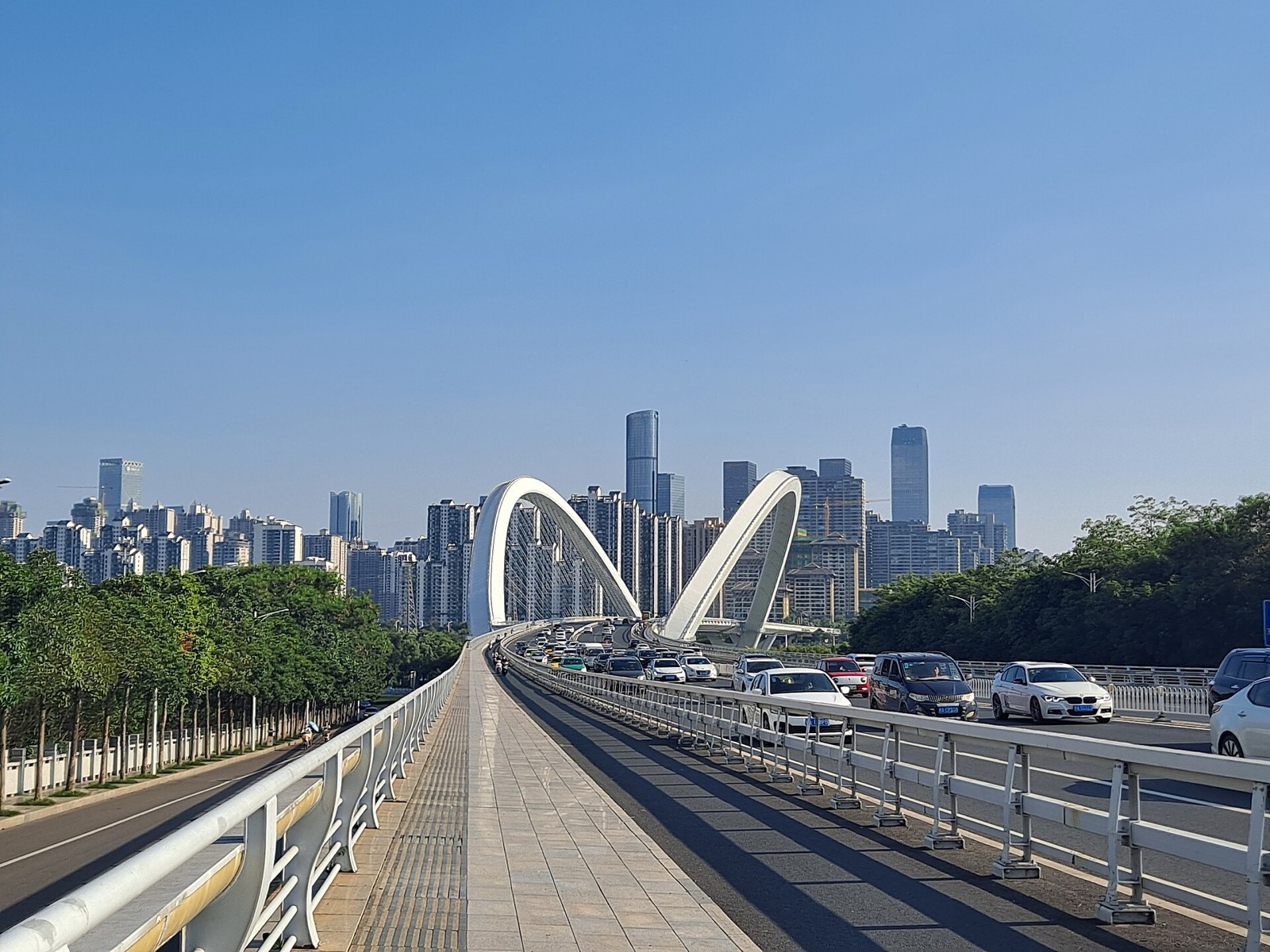
Nanning dates its history to AD 318, when the Eastern Jin dynasty set up the Jinxing commandery here. Under the Tang it became 邕州 (Yōngzhōu), which is where the short name 邕 comes from, and in 1324 the Yuan dynasty renamed it Nanning.
For most of its history Nanning was a frontier town, and Guilin was the capital of Guangxi. That changed in the twentieth century. In 1907 Nanning opened itself to foreign trade, one of the first inland cities in China to do so by its own choice, and it became the provincial capital in 1912. The government moved back to Guilin in 1936, and Nanning was confirmed as the capital again in 1950. When Guangxi became the Guangxi Zhuang Autonomous Region in 1958, Nanning stayed its capital. Our history of Guilin tells the story from the other side.
| Year | What happened |
|---|---|
| 318 | The Jinxing commandery is founded on the site of today's city |
| 632 | The Tang dynasty names the area Yongzhou (邕州) |
| 1324 | The Yuan dynasty renames it Nanning (南宁) |
| 1907 | Nanning opens to foreign trade |
| 1912 | Nanning becomes the capital of Guangxi |
| 1936 | The capital moves back to Guilin |
| 1950 | Nanning is made the capital again |
| 1958 | Guangxi becomes the Guangxi Zhuang Autonomous Region, with Nanning as its capital |
| 2004 | The first China–ASEAN Expo is held in Nanning; it has been held here every year since |
| 2016 | Nanning Metro Line 1 opens |
Today Nanning looks south. It's China's main meeting point with Southeast Asia, and the China–ASEAN Expo fills its convention center every September. It's also the capital of China's largest ethnic minority, the Zhuang; our guide to the Zhuang ethnic group covers their history and culture.
03 Getting to Nanning
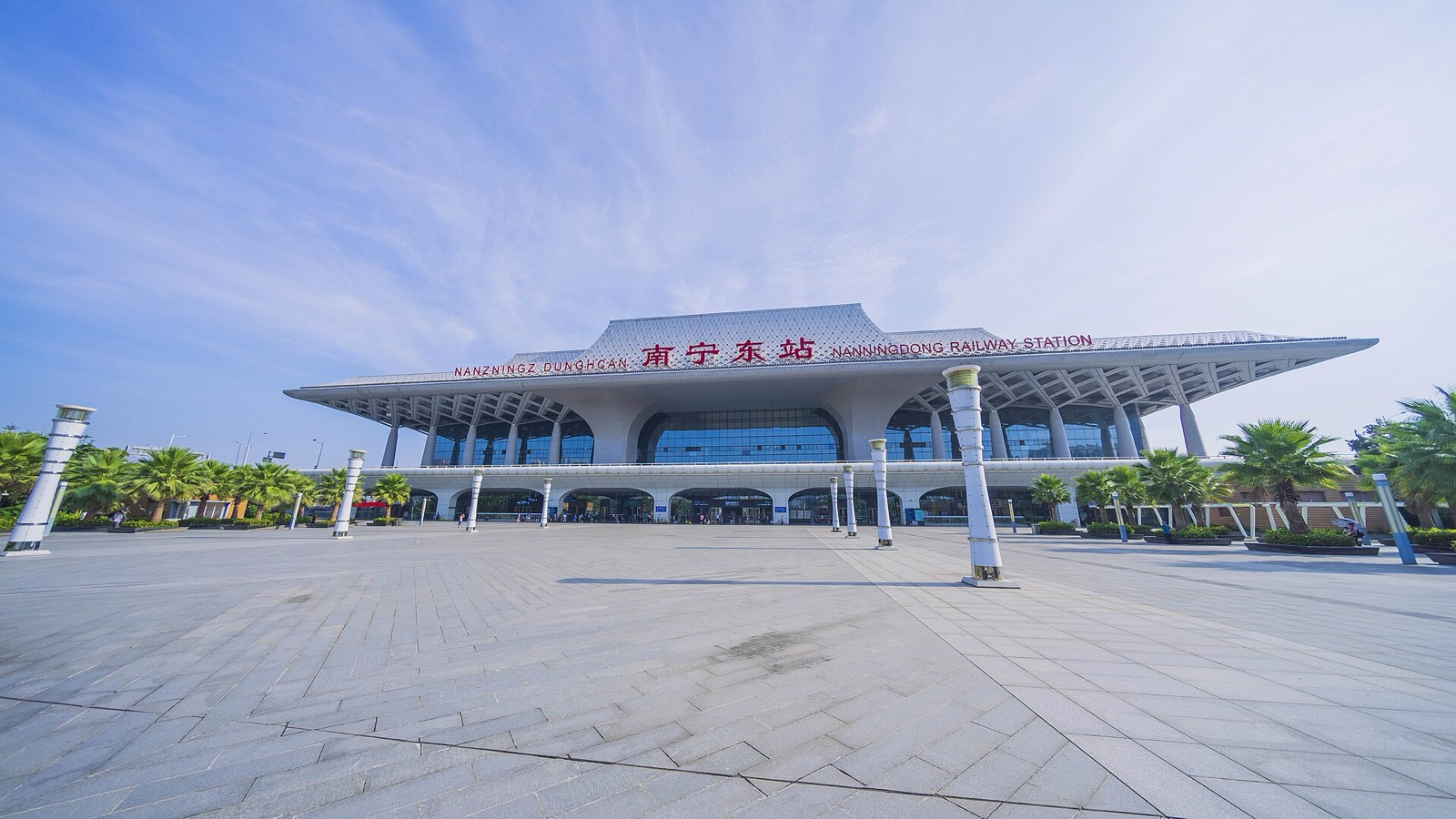
From Guilin, the train is the way to go. Dozens of high-speed trains a day run from Guilin North and Guilin Station to Nanning East (南宁东站, Nánníng Dōng Zhàn), with a few going to the older Nanning Station in the center. The fastest take about 2 hours; most take between 2 and 2.5. Flying between the two cities makes no sense at this distance.
| From | To | Time | Second class |
|---|---|---|---|
| Guilin North (桂林北站, Guìlín Běi Zhàn) | Nanning East (南宁东站, Nánníng Dōng Zhàn) | About 2 h to 2 h 40 min | Around ¥140 |
| Guilin Station (桂林站, Guìlín Zhàn) | Nanning East (南宁东站, Nánníng Dōng Zhàn) | From about 2 h | Around ¥140 |
| Nanning East (南宁东站, Nánníng Dōng Zhàn) | Beihai (北海) | About 1 h to 1 h 10 min | ¥65 to ¥87 |
Fares and times are from the August 2026 timetable and change from season to season, so check 12306 or Trip.com before you go. Nanning Metro Line 1 runs from Nanning East into the city center.
Train tickets in China are sold against your ID, which for foreigners means your passport. Since late 2023 you can verify a foreign passport online in the 12306 app, or at any station ticket window. Carry the same passport onto the train, and keep it with you for your hotel check-in too.
Coming from outside China? Nanning Wuxu International Airport is 31 km (19 miles) from the city. There's no metro to the airport yet, so take an airport bus (about 45 minutes to an hour) or a taxi. If you're starting your trip in Guilin instead, our guide to getting to Guilin covers every route in.
04 Getting around Nanning
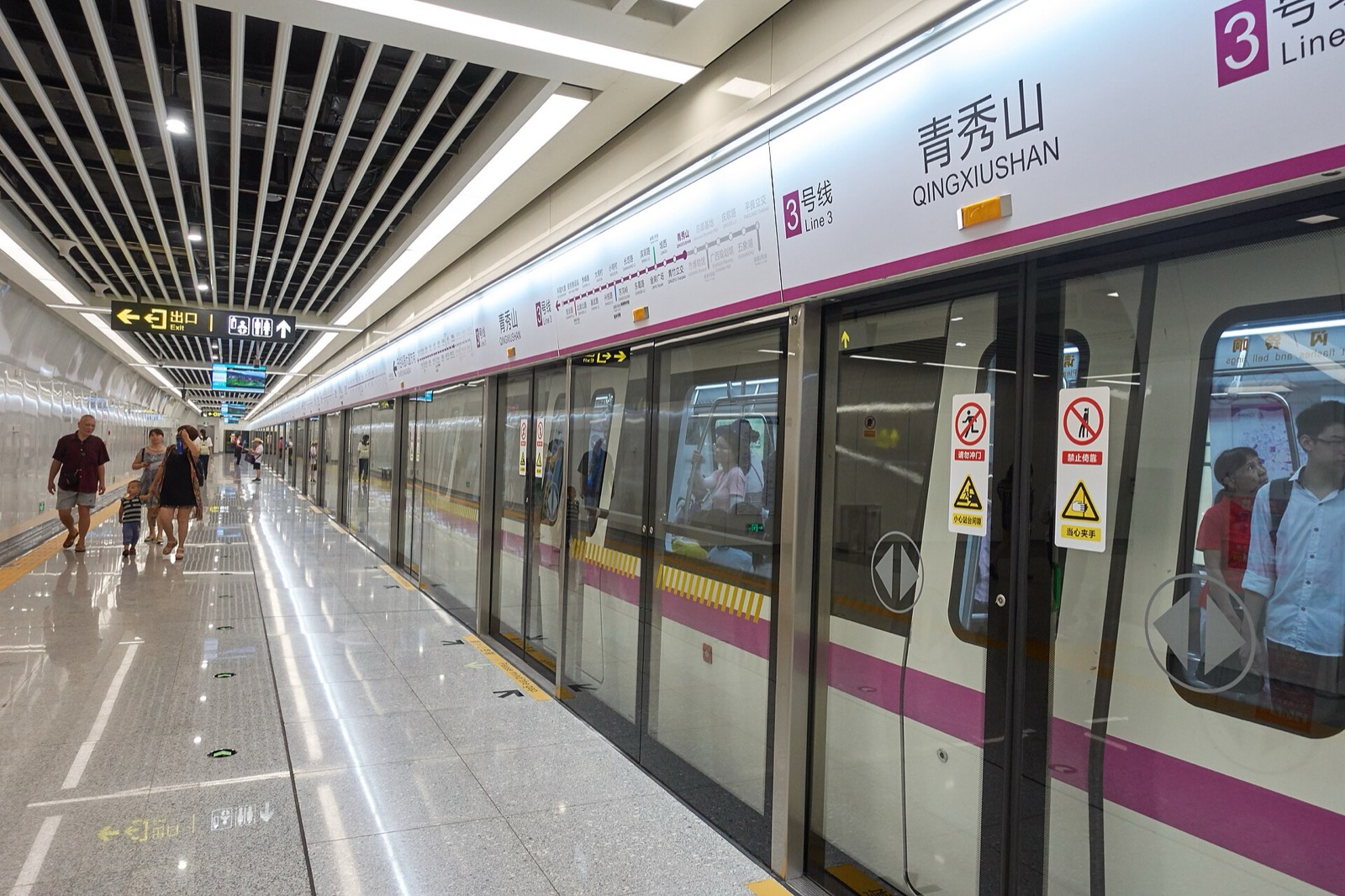
Metro. Nanning has five metro lines, about 132 km and 95 stations. The first opened in 2016, and Line 6 is under construction.
Ride-hailing. DiDi (滴滴出行, Dīdī Chūxíng) works here as it does across China, and it's the easiest way to reach places off the metro. Taxis are plentiful and cheap.
Electric scooters. The first thing most visitors notice is the e-bikes. Nanning banned motorcycles in 2002, people switched to electric bicycles, and by the end of 2023 the city had more than 4.3 million of them, about one for every two residents. They have their own lanes and their own traffic lights, and they're silent, so look both ways even on a one-way street. Our post on crossing the street in China has more on the local rhythm.
Set up Alipay or WeChat Pay with your foreign card before you arrive. DiDi and almost every noodle shop take them, and few small places take foreign cards. Carry a few hundred yuan in cash as a backup.
Where to stay
For a first visit, stay near Chaoyang Square (朝阳广场, Cháoyáng Guǎngchǎng) in the old center, where Metro Lines 1 and 2 meet. The Three Streets and Two Lanes and the Zhongshan Road food street are close by. If you'd rather be near the lakes and museums, look around Nanhu Park, which is quieter and a short DiDi ride from Qingxiu Mountain. When you book, check that the hotel accepts foreign guests; it will register your passport at check-in.
05 Things to do in Nanning
Nanning's sights are spread out but easy to string together. A good two days looks like this: Qingxiu Mountain and the Museum of Nationalities on the first morning, Nanhu Park in the afternoon, and the old town and Zhongshan Road for dinner. Spend the second day on the Guangxi Museum and the medicinal garden, or on a day trip (see section 07).
Qingxiu Mountain
Qingxiu Mountain (青秀山, Qīngxiù Shān) is a big wooded park beside the Yong River, and the only 5A scenic area in Nanning, the top grade in China's rating system. Paths climb through palm and cycad gardens, and the park charges a small entry fee.
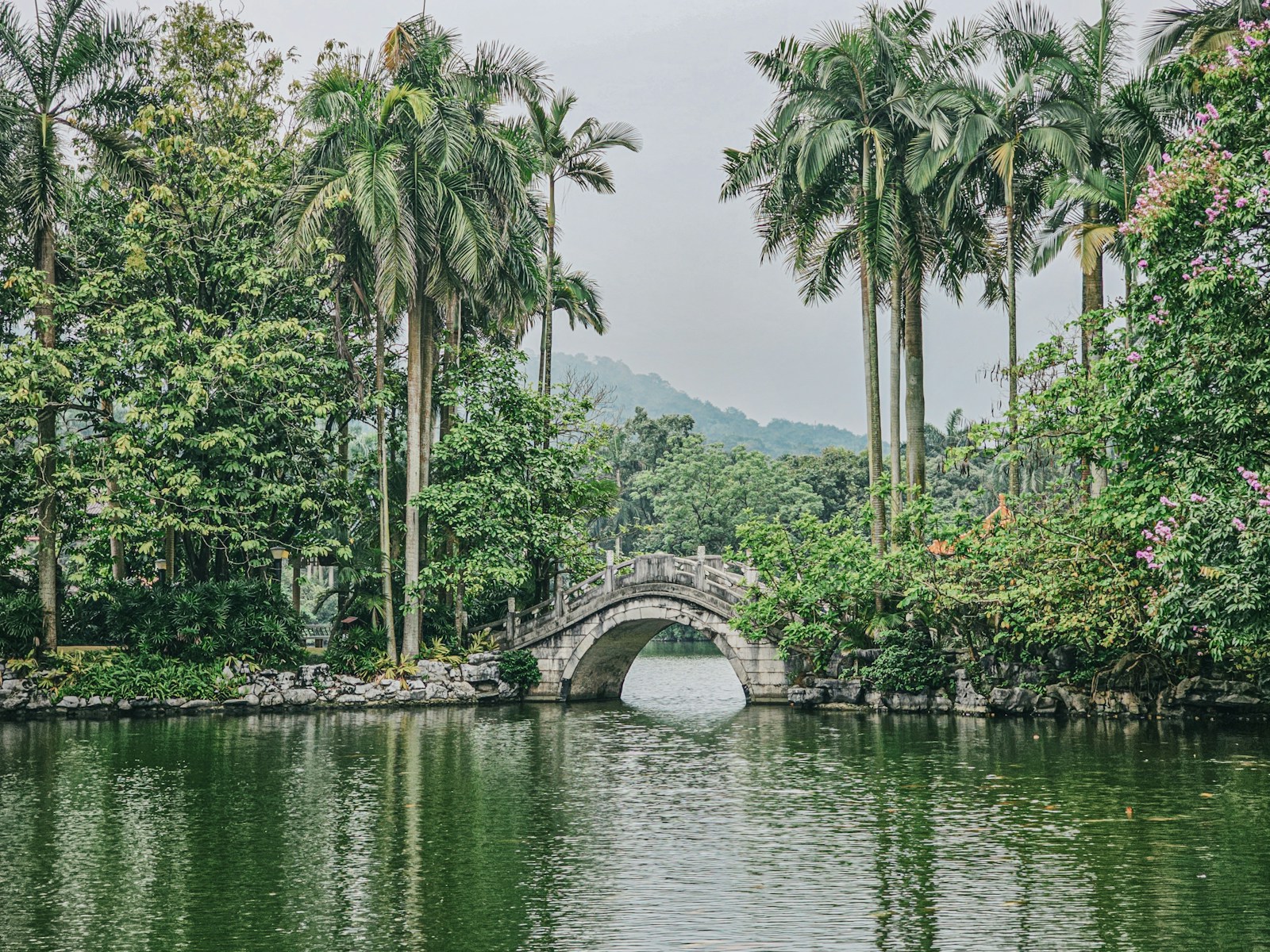
At the top stands the nine-story Longxiang Pagoda (龙象塔, Lóngxiàng Tǎ), first built in 1618. It was taken down during the war so Japanese bombers couldn't use it as a landmark and was rebuilt in 1985. Climb it for the best view of the river and the skyline.
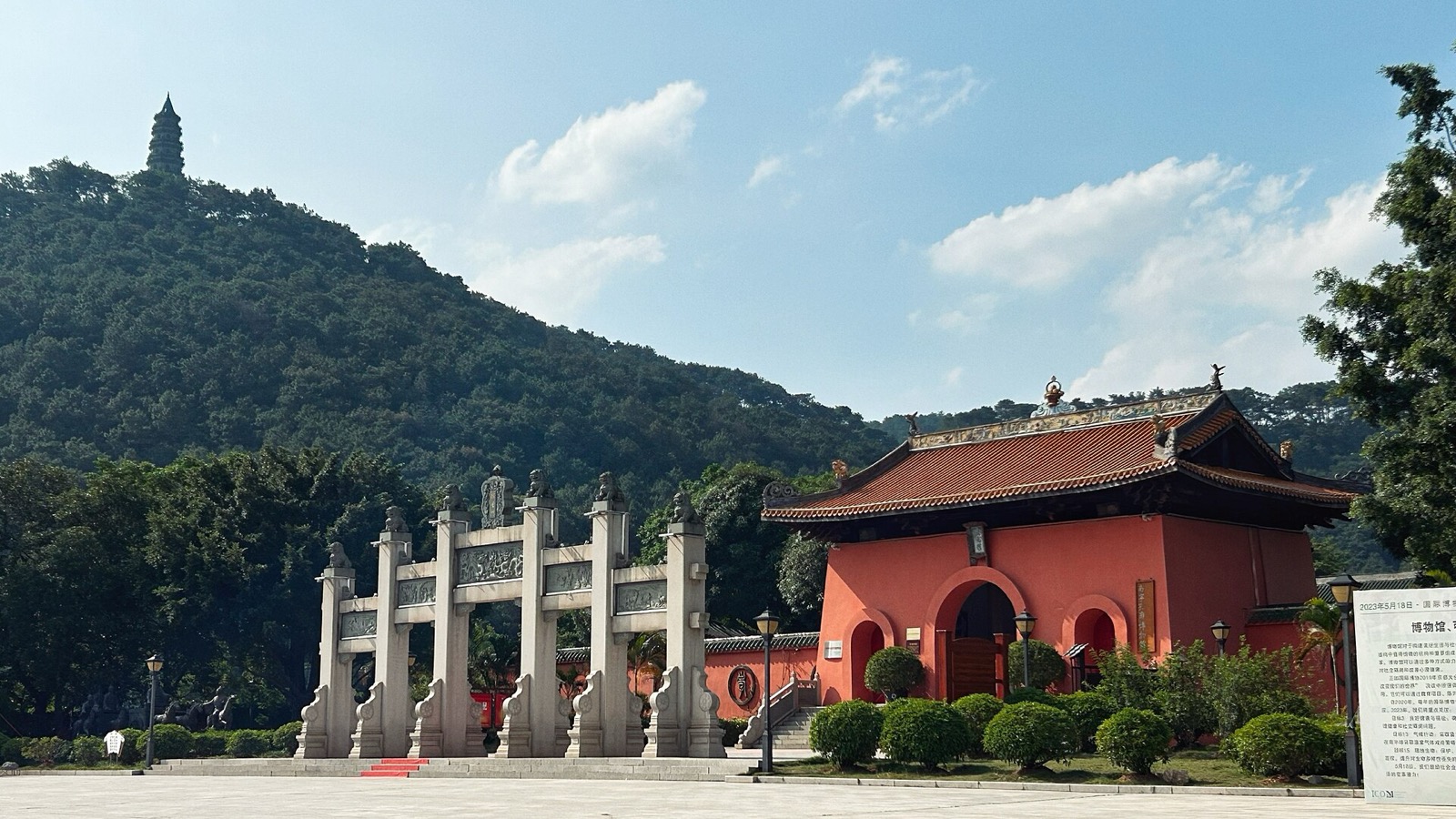
Guangxi Museum of Nationalities
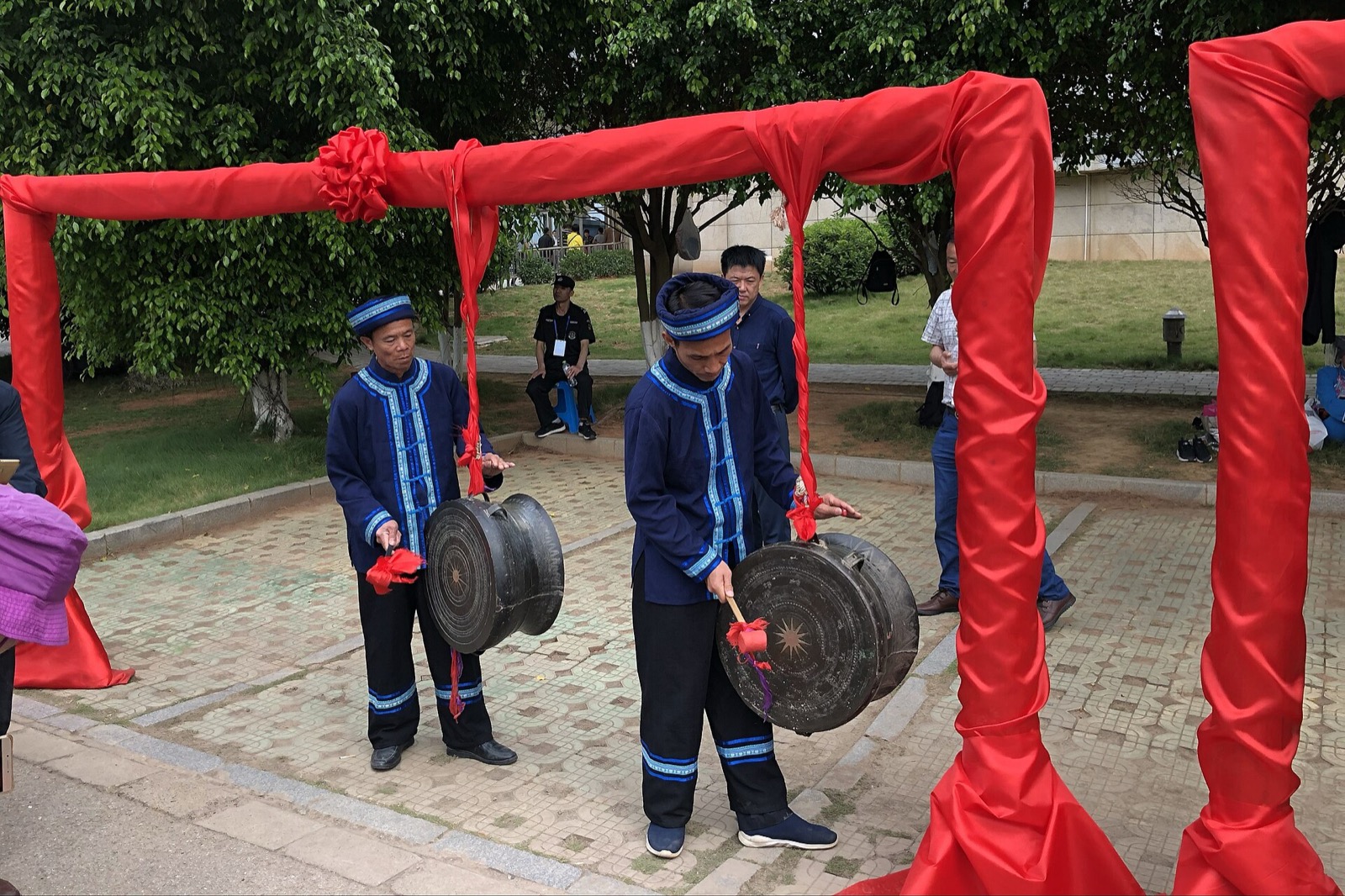
Just down the road from Qingxiu Mountain, the Guangxi Museum of Nationalities (广西民族博物馆, Guǎngxī Mínzú Bówùguǎn) is the best introduction to the twelve ethnic groups that have lived in Guangxi for generations, including the Zhuang, Yao, Miao and Dong. Look for the bronze drums, the embroidered clothing and the full-size village buildings in the garden. Entry is free, and it's closed on Mondays.
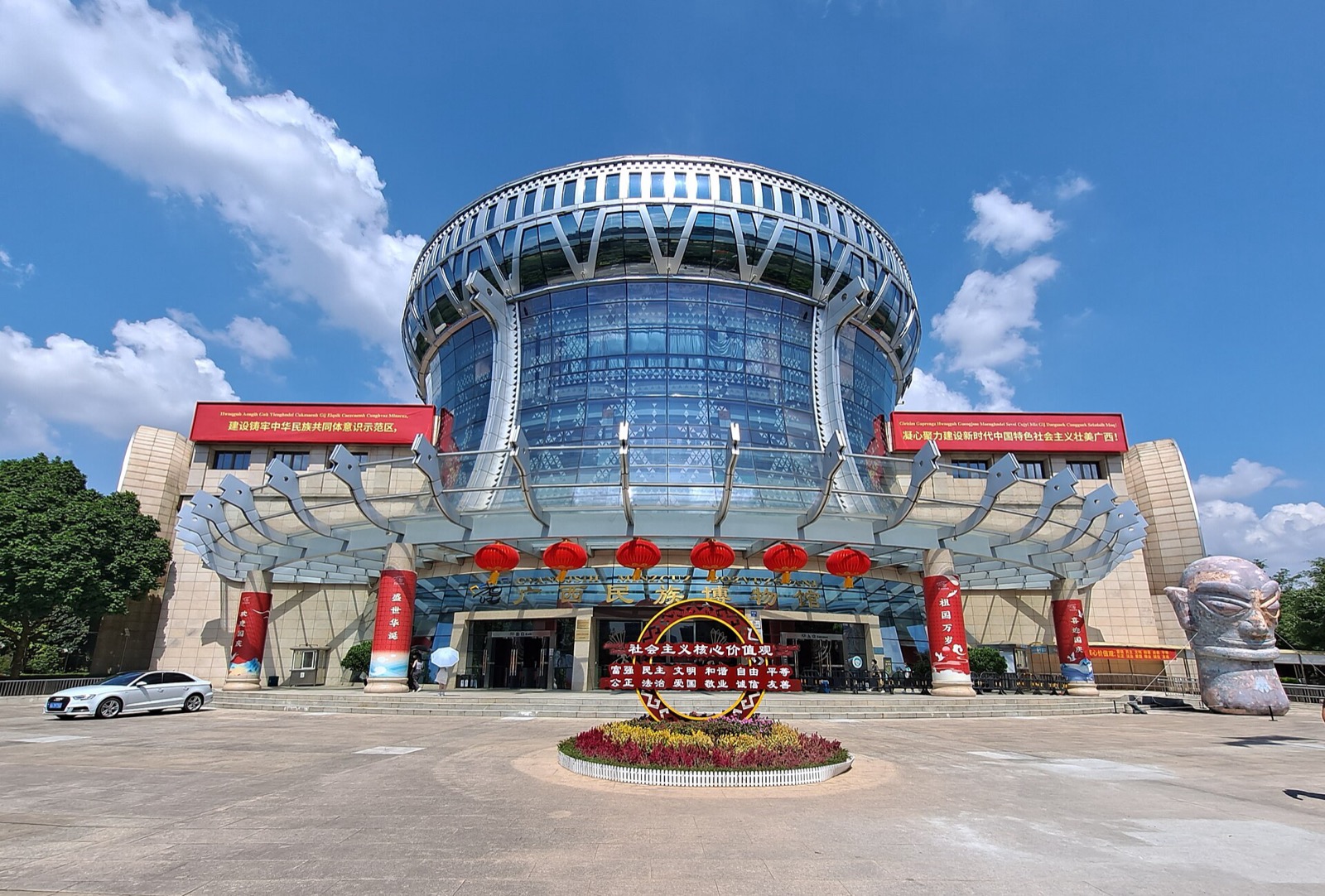
Guangxi Museum
The regional museum (广西壮族自治区博物馆, Guǎngxī Zhuàngzú Zìzhìqū Bówùguǎn) on Minzu Avenue reopened in late 2022 after a rebuild that began in 2018, with more than 3,000 objects on show from a collection of nearly 100,000. It's the place to see Guangxi's history from prehistoric times on. General admission is free with a reservation, and it's also closed on Mondays, so keep a Monday for the parks and the old town.
Nanhu Park
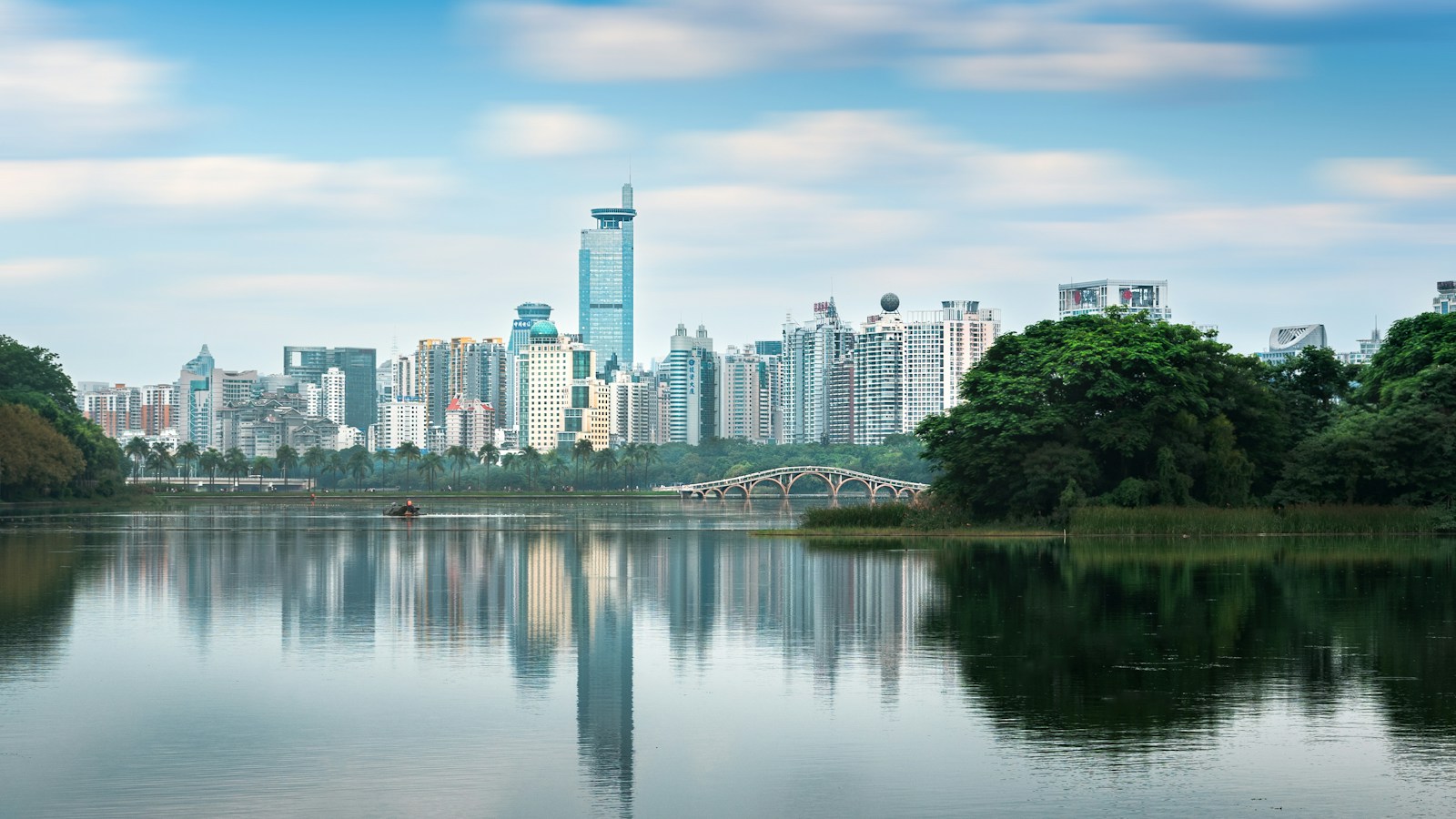
Nanhu Park (南湖公园, Nánhú Gōngyuán) wraps around South Lake in the middle of the city. It's free, and in the evening it's where Nanning comes to walk, jog, dance and play cards. Walk a loop of the lake at sunset, when the towers across the water light up.
The Three Streets and Two Lanes
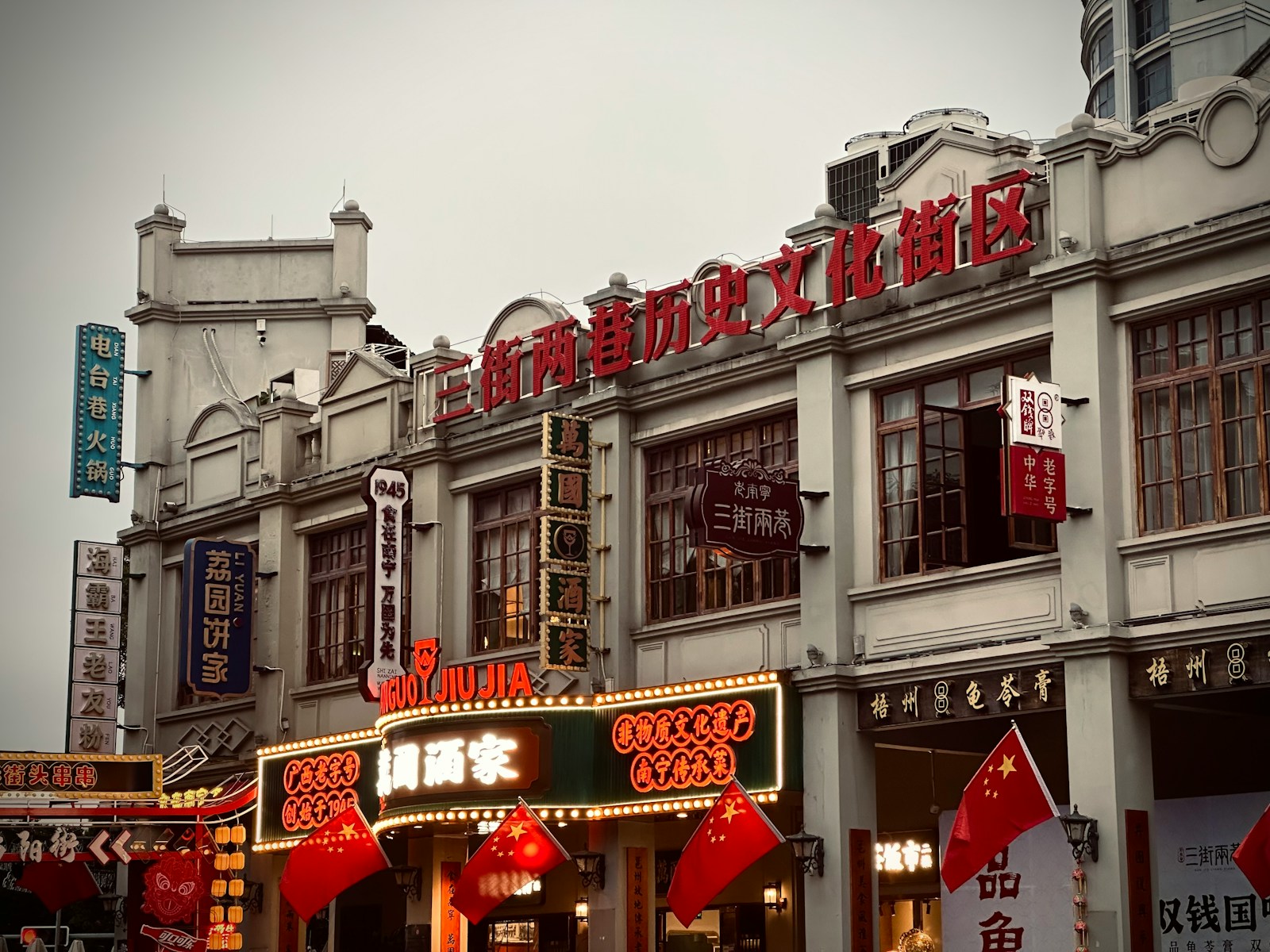
Nanning's old town is the Three Streets and Two Lanes (三街两巷, Sān Jiē Liǎng Xiàng): Xingning Road, Minsheng Road and Jiefang Road, plus Jinshi Lane and Yinshi Lane. The area was restored and reopened in 2018. Its arcade buildings (骑楼, qílóu), with shops on the ground floor and covered walkways out front, are the kind once common across southern China, built to keep shoppers out of the sun and the rain. Come in the late afternoon, wander the lanes, then walk over to Zhongshan Road for dinner.
Guangxi Medicinal Botanical Garden
Guinness World Records lists the Guangxi Medicinal Botanical Garden (广西药用植物园, Guǎngxī Yàoyòng Zhíwùyuán) on the northeast edge of the city as the world's largest medicinal herb garden: 201.57 hectares (about 500 acres) and 5,600 kinds of medicinal plants when it was certified in 2011. It's a quiet half day, especially if you're curious about traditional Chinese medicine.
People's Park
People's Park (人民公园, Rénmín Gōngyuán), founded in 1951, is the city's classic neighborhood park: a free, shady hill with the old Zhenning Fort (镇宁炮台, Zhènníng Pàotái) at the top. Go early in the morning, when the paths fill with people doing tai chi and singing.
06 What to eat in Nanning
Like the rest of Guangxi, Nanning runs on rice noodles (米粉, mǐfěn), and every city has its own bowl. If you've had Guilin rice noodles, Nanning's are a different thing again: sour, spicy and cooked to order.
Laoyou noodles
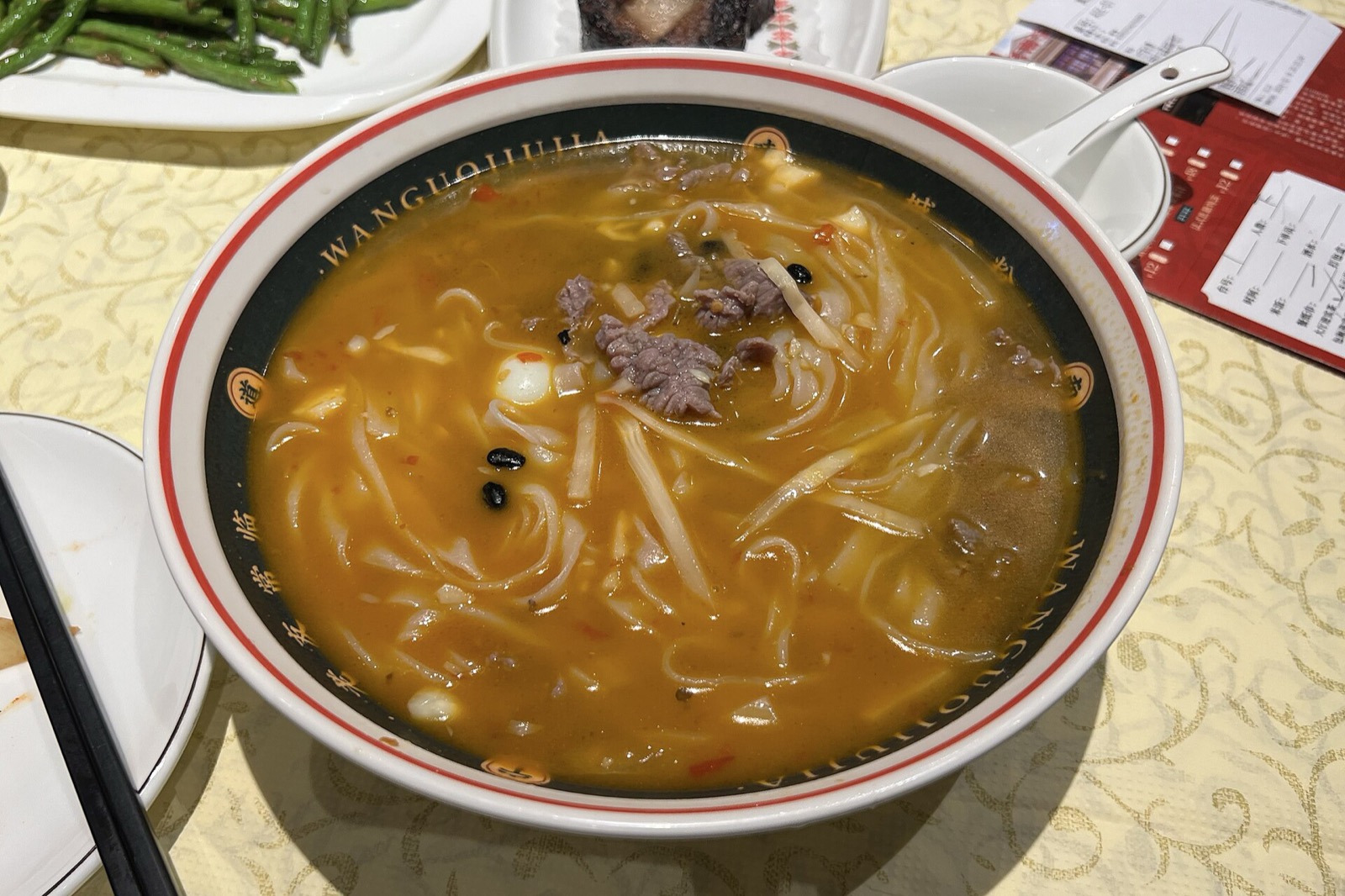
Laoyou noodles (老友粉, lǎoyǒufěn), or "old friend noodles," are Nanning's signature dish: rice noodles stir-fried and simmered with garlic, fermented black beans, chili and pickled bamboo shoots, often with meat such as pork or beef. The pickled bamboo gives it a sour smell that some people love on the first bite and others need a few bowls to get used to.
老友常临 (lǎoyǒu cháng lín) · "Old friends come often."The plaque behind the name, according to Nanning legend
The story goes that a regular at a Nanning teahouse fell ill, so the owner made him a bowl of hot noodles with exactly these seasonings. He recovered and gave the owner a plaque reading 老友常临. The dish, first made with wheat noodles, has been "old friend" noodles ever since.
More dishes to try
| Chinese | Pinyin | What it is |
|---|---|---|
| 老友粉 | Old friend noodles: sour, spicy rice noodles with pickled bamboo shoots | |
| 卷筒粉 | Steamed rice sheets rolled around a filling, often with wampee (黄皮, huángpí) sauce; a breakfast favorite | |
| 生榨米粉 | Noodles pressed from fermented rice batter straight into the pot, slightly sour | |
| 粉饺 | Dumplings with a translucent rice-flour skin, filled with pork, barbecued pork or mushrooms | |
| 柠檬鸭 | Duck stir-fried with pickled lemon and chili, sour and spicy | |
| 酸嘢 | Fruit and vegetables (papaya, mango, pineapple, radish) pickled with vinegar, chili and sugar, sold from street carts |
That last one, 酸嘢, is a word from Nanning's local Cantonese: 嘢 (yě) means "thing," so it's simply "sour stuff." On Mandarin menus you'll often see it written 酸野.
For snacks, go to the Zhongshan Road food street (中山路美食街, Zhōngshān Lù Měishí Jiē) in the old center, or the Jianzheng Road night market (建政路夜市, Jiànzhèng Lù Yèshì). You'll also find plenty of snail-broth noodles (螺蛳粉, luósīfěn), but those come from Liuzhou, another Guangxi city, not Nanning.
Study Chinese two hours from Nanning
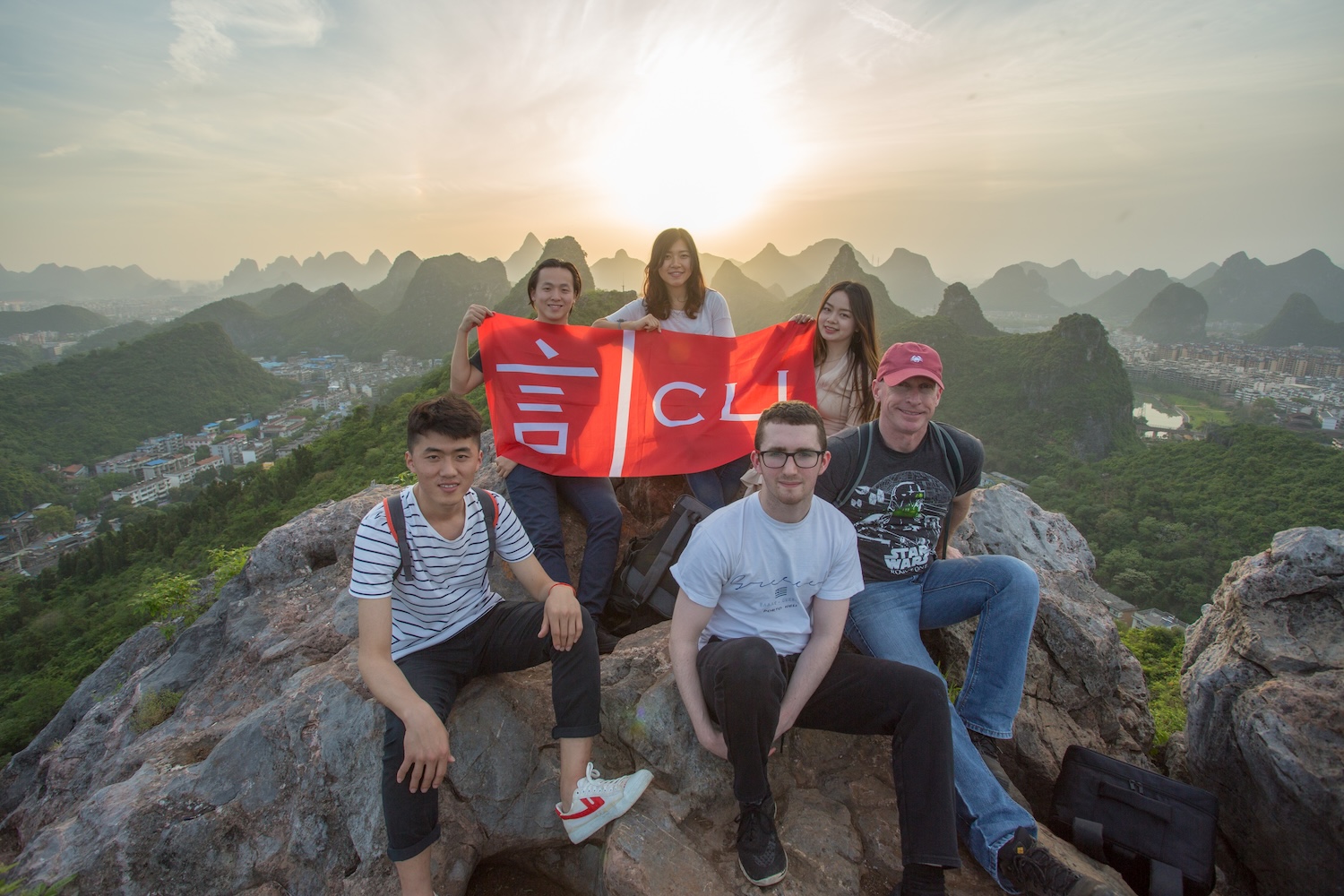
Our students learn Chinese one-to-one with their own teachers in Guilin, two hours up the line from Nanning. You can start any Monday, and housing and airport pickup are included.
07 Day trips from Nanning
Nanning's best sights are outside the city. Southwest of town is the karst border country of Chongzuo, and to the south is the Beibu Gulf coast.
| Trip | Getting there | Best for |
|---|---|---|
| Detian Waterfall | About 3 hours by road (200 km); tours and tourist buses | Scenery, the Vietnam border |
| Huashan rock art | High-speed train to Ningming East (from about 65 min), a taxi to the pier, then a boat | History, river scenery |
| Yangmei Ancient Town | About 36 km by tourist bus or city bus | An easy half day |
| Beihai and Silver Beach | Train, about 1 hour | Beaches, seafood |
| Weizhou Island | Train to Beihai, then a 70- to 80-minute ferry | A night or two by the sea |
Detian Waterfall (Ban Gioc)
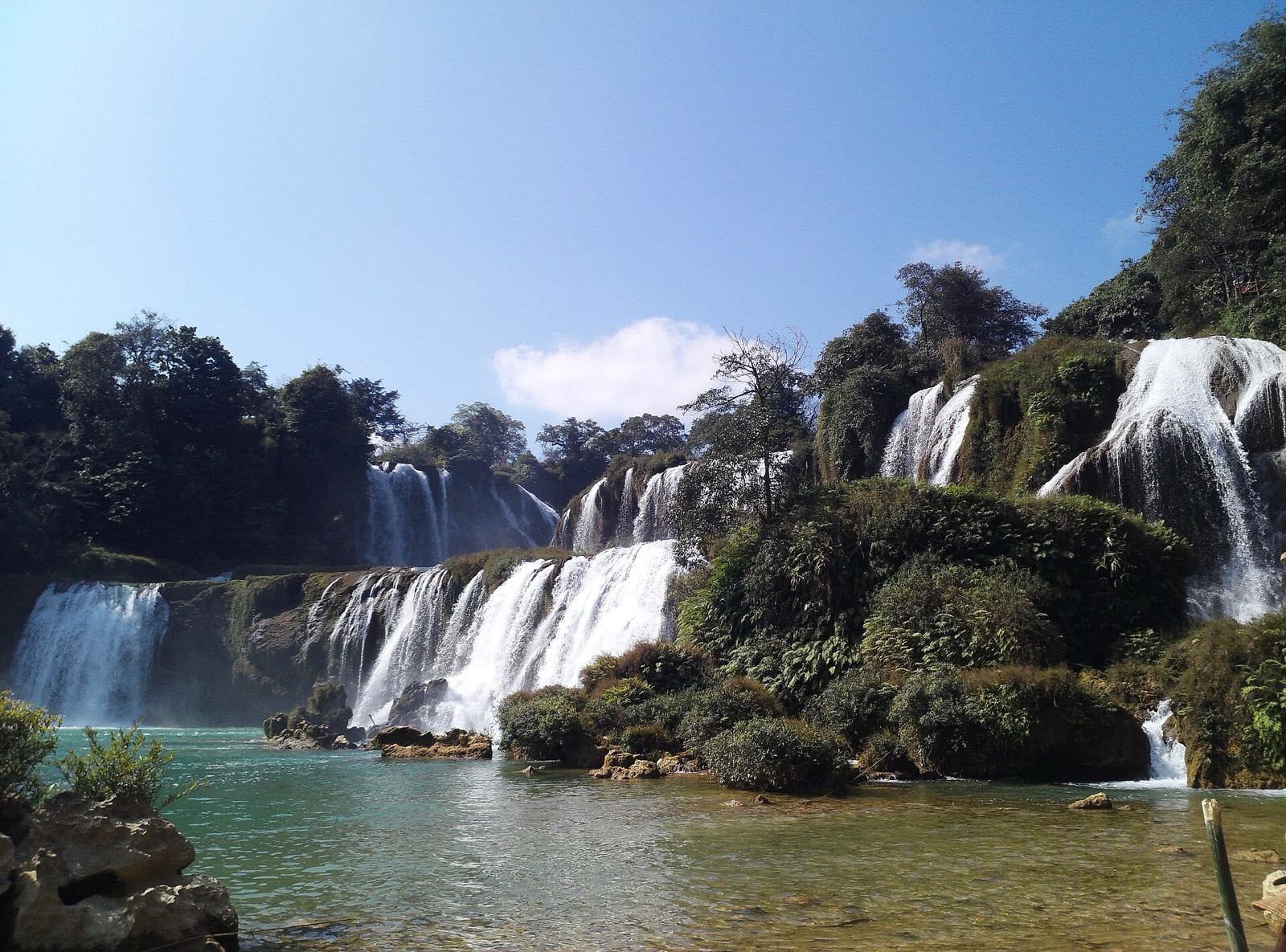
Detian Waterfall (德天瀑布, Détiān Pùbù) is in Daxin County, right on the China–Vietnam border, where the river drops over a wide series of limestone steps. The Chinese government calls it Asia's largest cross-border waterfall; on the Vietnamese side it's called Ban Gioc. It's a long day from Nanning, about three hours each way by road, so many people stay a night nearby and add a bamboo-raft trip at Mingshi Pastoral (明仕田园, Míngshì Tiányuán), about an hour away. The water is at its fullest after the summer rains.
Carry your passport on any trip toward the border. A cross-border tourism zone at Detian opened in 2024, where visitors cross in small groups formed by the scenic area. Reports mention some visitors from other countries, but no official rule for other passports has been published, so ask the scenic area before you count on it. Anywhere else, crossing into Vietnam needs a Vietnamese visa or visa exemption.
Zuojiang Huashan Rock Art
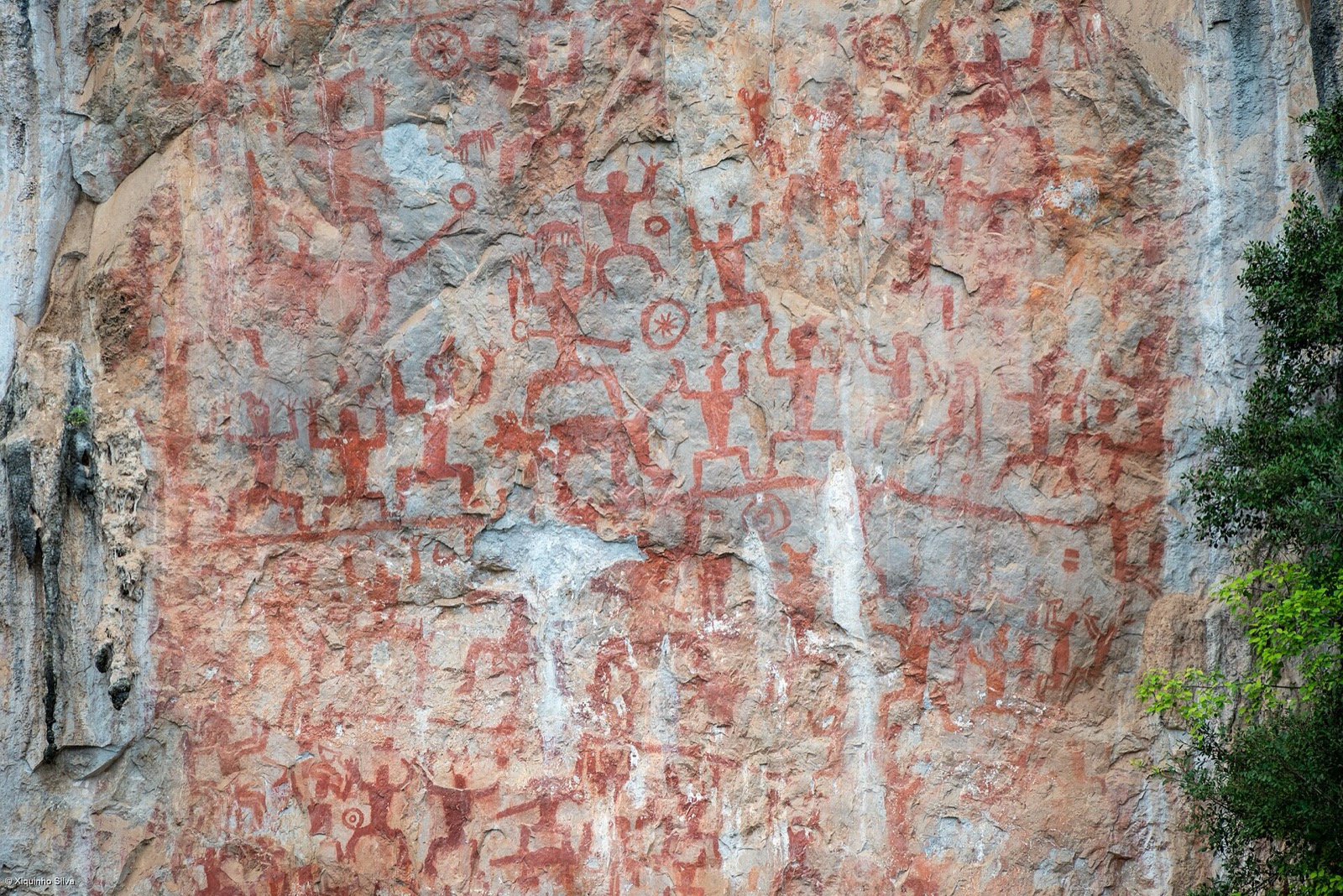
On a cliff above the Ming River in Ningming County, hundreds of red figures, painted roughly 2,000 years ago by the Luoyue people, dance with their arms raised beside drums, dogs and boats. The Zuojiang Huashan Rock Art Cultural Landscape (左江花山岩画文化景观, Zuǒ Jiāng Huāshān Yánhuà Wénhuà Jǐngguān) became a UNESCO World Heritage Site in 2016. The trip got much easier in December 2025, when the high-speed line to Pingxiang opened: the train reaches Ningming East in as little as 65 minutes, and from there it's a taxi to the boat pier at Panlong. You can see the cliff only from the river; boats left hourly from 8:30 a.m. to 4 p.m. in 2025, and admission was ¥90.
Yangmei Ancient Town
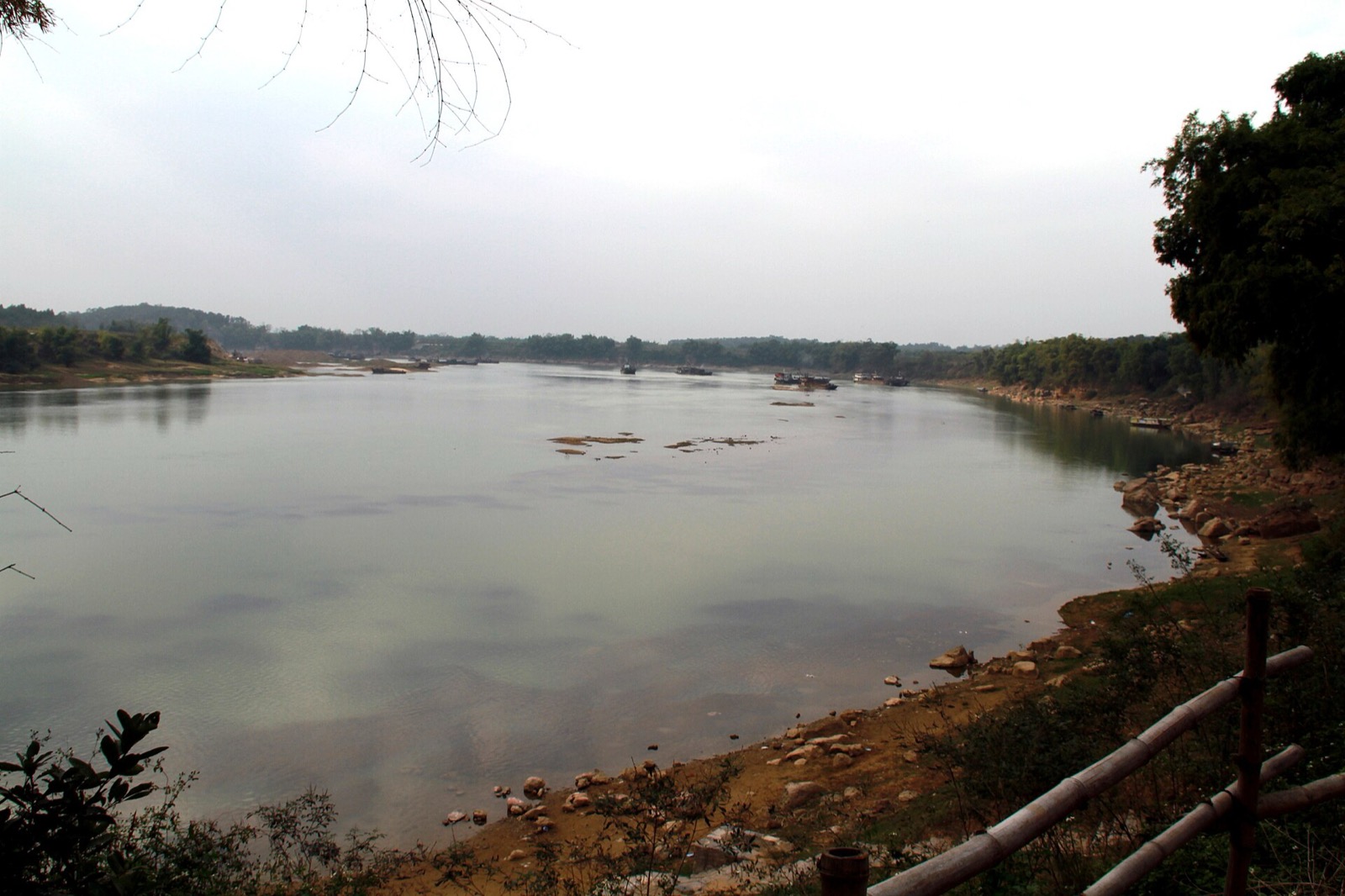
Yangmei Ancient Town (扬美古镇, Yángměi Gǔzhèn) is an old riverside town on the Yong River, about 36 km from the city, with stone lanes, old houses and a riverfront for lunch. It's the easiest escape from Nanning, by tourist bus or city bus. Check locally whether the river boat is running; when it does, a common plan is the bus out and the boat back.
Beihai and Weizhou Island
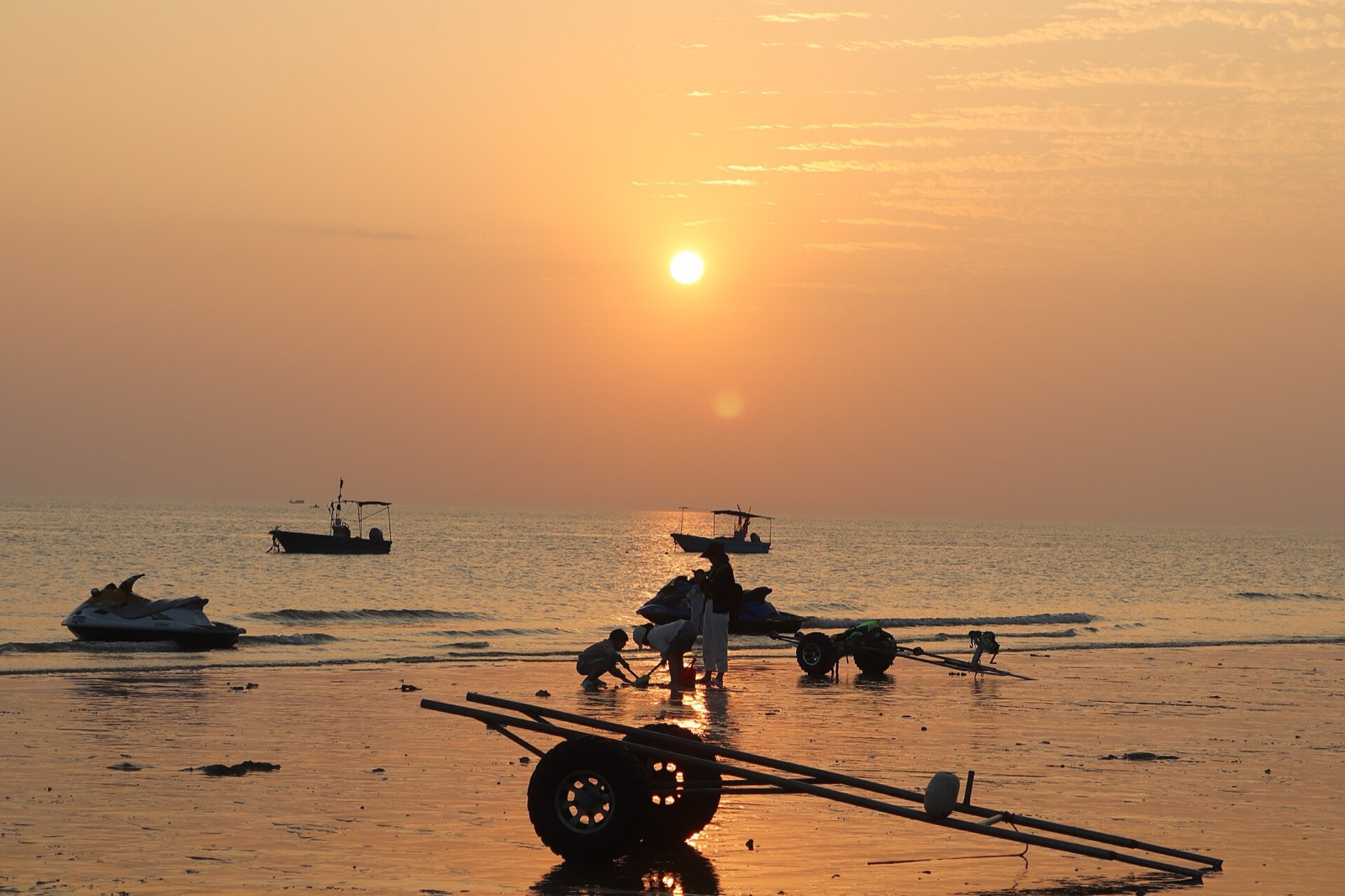
The fastest trains reach the port city of Beihai (北海, Běihǎi) in about an hour. Its long, pale Silver Beach (银滩, Yíntān) is the main draw, along with the seafood. From Beihai's international passenger port, fast ferries take 70 to 80 minutes to Weizhou Island (涠洲岛, Wéizhōu Dǎo), China's largest volcanic island, with sea cliffs and an old church in the fishing village. Book the ferry ahead in summer and on holidays, and bring your original passport.
On to Vietnam
Since May 2025, an overnight international train has run daily again between Nanning Station and Gia Lam in Hanoi. It leaves Nanning at 6:05 p.m. and arrives at 5:30 a.m. Hanoi time, with border checks at Pingxiang and Dong Dang. When the train restarted, the border post at Dong Dang did not accept Vietnamese e-visas, but in December 2025 Vietnam added the Dong Dang railway gate to its e-visa list. Make sure your e-visa or visa exemption covers this route, and check the latest rules before you book. There are also direct buses through the Friendship Pass (友谊关, Yǒuyì Guān).
08 What language do people speak in Nanning?
Almost everyone in Nanning speaks Mandarin (普通话, Pǔtōnghuà), and it's the language you'll use for everything from ordering noodles to buying a train ticket. Locals have a recognizable accent of their own, which they call 南普 (Nánpǔ), "Nanning Mandarin."
Listen to older people chatting in the parks and you'll hear something different. The old city dialect is Nanning Báihuà (白话), a form of Cantonese with some grammar borrowed from Zhuang. In the suburbs and villages you'll also hear Pínghuà (平话) and the Zhuang language (壮语, Zhuàngyǔ), which is written in the Latin alphabet. The city's Zhuang name is Namzningz, and Guangxi's rules ask public offices in Zhuang areas to put Zhuang on their name plaques next to the Chinese.
This mix is a big difference from Guilin, two hours away, where the local dialect is a form of Southwestern Mandarin, much closer to the standard Chinese you're learning in class. If you're curious how Cantonese and Mandarin differ, our guide to Mandarin vs Cantonese explains it.
Nanning is a fun test of your listening. Taxi drivers and shop owners will switch to Mandarin for you, but you'll hear Cantonese-type Báihuà between locals. Don't be discouraged if you can't follow it: it's a different language from the one you're studying.
09 Festivals and events
Sanyuesan (三月三, Sānyuèsān) falls on the third day of the third lunar month, usually in late March or April (April 19 in 2026). It's the great spring festival of the Zhuang and an official holiday across Guangxi, with two days off for everyone in the region. In Nanning's Wuming District, the Sanyuesan song fair has run since 1980 and is one of the largest in China: people gather to sing antiphonal folk songs, toss embroidered balls and eat five-colored sticky rice. Our guide to the Sanyuesan festival has the full story.
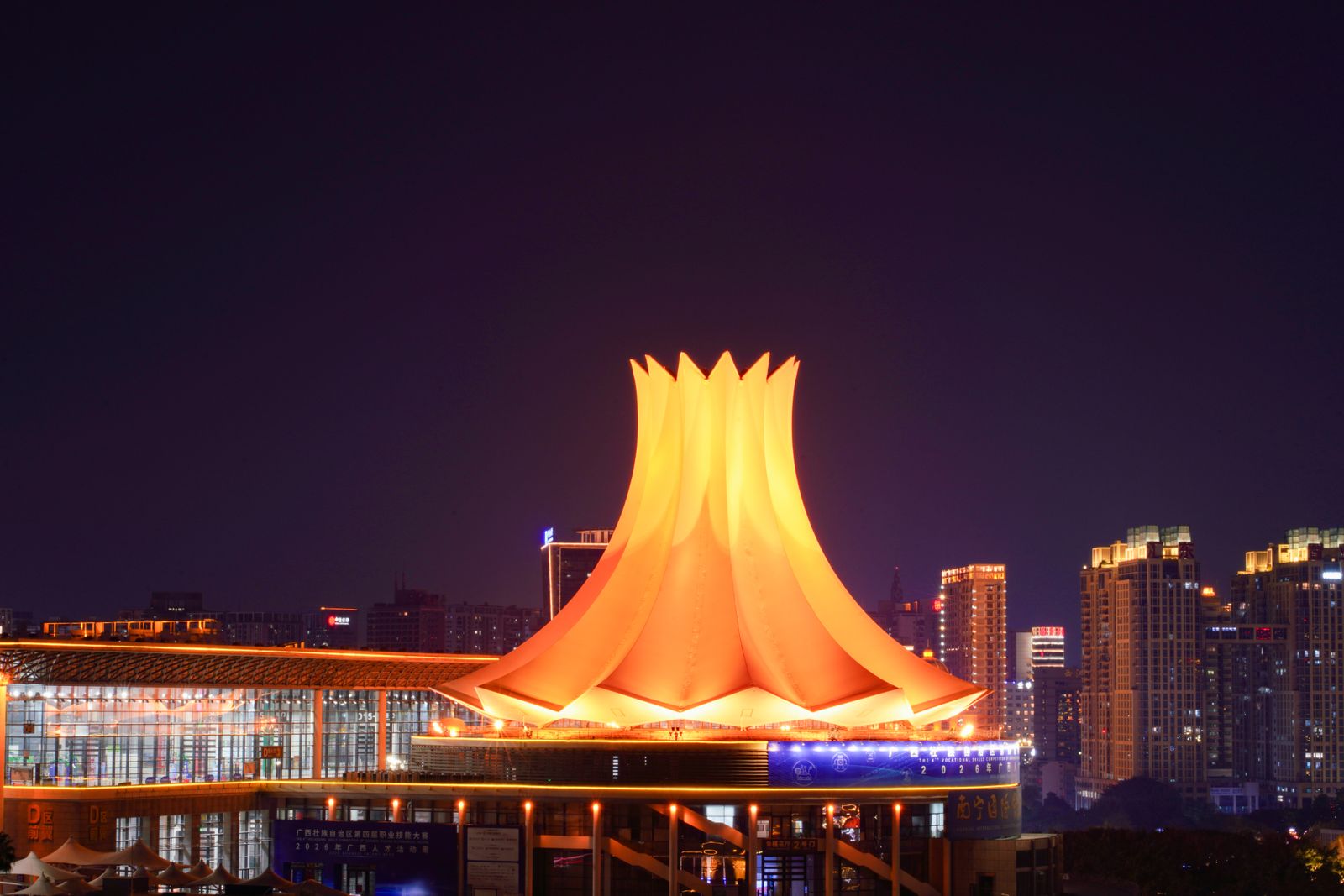
The China–ASEAN Expo (中国—东盟博览会, Zhōngguó-Dōngméng Bólǎnhuì) takes over the Nanning International Convention and Exhibition Center every September; in 2026 it ran September 17 to 21. If your trip overlaps, book your hotel early.
10 Nanning weather by month and the best time to visit
Nanning has a humid subtropical climate. Winters are short and mild, and summers are long, hot and wet, with most of the year's rain falling between May and October. Typhoons that reach the coast often bring heavy rain this far inland too.
| Month | Nanning, average temperature | Nanning, rainfall | Guilin, average temperature |
|---|---|---|---|
| January | 12.7 °C (55 °F) | 43 mm (1.7 in) | 8.7 °C (48 °F) |
| February | 14.9 °C (59 °F) | 31 mm (1.2 in) | 11.1 °C (52 °F) |
| March | 17.9 °C (64 °F) | 62 mm (2.4 in) | 14.3 °C (58 °F) |
| April | 22.6 °C (73 °F) | 76 mm (3.0 in) | 20.0 °C (68 °F) |
| May | 26.0 °C (79 °F) | 157 mm (6.2 in) | 24.1 °C (75 °F) |
| June | 27.8 °C (82 °F) | 203 mm (8.0 in) | 26.9 °C (80 °F) |
| July | 28.2 °C (83 °F) | 242 mm (9.5 in) | 28.8 °C (84 °F) |
| August | 27.9 °C (82 °F) | 184 mm (7.2 in) | 28.8 °C (84 °F) |
| September | 26.5 °C (80 °F) | 121 mm (4.7 in) | 26.5 °C (80 °F) |
| October | 23.2 °C (74 °F) | 77 mm (3.0 in) | 22.0 °C (72 °F) |
| November | 18.8 °C (66 °F) | 48 mm (1.9 in) | 16.7 °C (62 °F) |
| December | 14.0 °C (57 °F) | 32 mm (1.3 in) | 11.2 °C (52 °F) |
October and November are the most comfortable months, warm and mostly dry, and December is cooler but still mild. March and April are pleasant too, and April brings Sanyuesan. Summer works if you can take the heat, and it's when Detian Waterfall is at its fullest. Pack an umbrella from May onward.
11 Nanning or Guilin?
We're biased, since the CLI Center is in Guilin, but the two cities really are different, and plenty of travelers see both.
| Nanning | Guilin | |
|---|---|---|
| Population (whole city) | About 9 million | About 4.9 million |
| Feel | A big, leafy regional capital with lakes, parks and street food | A scenic city among karst mountains and rivers |
| Winter | Mild, about 13 °C (55 °F) in January | Cooler, about 9 °C (48 °F) in January |
| Local dialect | Báihuà (a form of Cantonese), Pínghuà, Zhuang | Guilin dialect, a form of Southwestern Mandarin |
| Best known for | Laoyou noodles, the China–ASEAN Expo, the border country | The Li River, Yangshuo, Guilin rice noodles |
| Best for | A city break and a base for southern Guangxi | Scenery, hiking and studying Chinese |
For a short trip, see Guilin and Yangshuo for the scenery, then take the train south to Nanning for the food and the border country. For learning Chinese, we'd pick Guilin: it's a smaller city, and its local dialect is a form of Mandarin, so what you hear on the street is close to what you learn in class. If you want a bigger city with milder winters and an easy way into the border country, Nanning is the better base.
Practice your travel Chinese first
Try a free 30-minute online lesson with one of our teachers in Guilin. Tell your teacher you're planning a trip, and you can practice the words for train tickets and ordering noodles.
12 Useful Nanning vocabulary
Tap any word in this table or the food table to see its meaning, and tap again to watch it written stroke by stroke.
| Chinese | Pinyin | Meaning |
|---|---|---|
| 南宁 | Nanning ("southern peace") | |
| 广西 | Guangxi, the region Nanning is the capital of | |
| 邕江 | The Yong River, which runs through Nanning | |
| 绿城 | "Green City," Nanning's nickname | |
| 壮族 | The Zhuang, China's largest ethnic minority | |
| 青秀山 | Qingxiu Mountain | |
| 南湖 | South Lake, in Nanhu Park | |
| 高铁 | High-speed rail | |
| 南宁东站 | Nanning East Station | |
| 地铁 | Subway, metro | |
| 电动车 | Electric scooter or e-bike | |
| 德天瀑布 | Detian Waterfall | |
| 三月三 | Sanyuesan, the spring festival on the third day of the third lunar month | |
| 白话 | The local name for Nanning's Cantonese dialect | |
| 辣 | Spicy. Try 少辣 (shǎo là), "less spicy," when you order |
13 FAQ
Where is Nanning?
Nanning is in southern China. It's the capital of the Guangxi Zhuang Autonomous Region, two hours from Guilin by high-speed train, and the usual starting point for the train and buses to Hanoi in Vietnam.
Is Nanning worth visiting?
Yes, especially for the food and as a base for southern Guangxi. The city has leafy parks, a free museum of Guangxi's ethnic groups and its own sour, spicy laoyou noodles, and it's the starting point for Detian Waterfall, the Huashan rock art and the Beihai coast. Two days covers the city; add a third for a day trip.
How do I get from Guilin to Nanning?
Take a high-speed train from Guilin North or Guilin Station to Nanning East. The fastest trains take about 2 hours and most take 2 to 2.5 hours, with dozens a day. A second-class seat costs around ¥140. Bring your passport to buy the ticket and to board.
What is Nanning famous for?
Nanning is famous as the green capital of Guangxi, for laoyou noodles (老友粉), for the China–ASEAN Expo held there every September, and as the starting point for trips to the China–Vietnam border. Its huge number of electric scooters is famous too.
What language is spoken in Nanning?
Almost everyone speaks Mandarin, which is all a visitor needs. Older locals also speak Nanning Báihuà, a form of Cantonese, and you'll hear Pínghuà and Zhuang in the surrounding districts.
When is the best time to visit Nanning?
October and November are the most comfortable, warm and mostly dry, and December is cool but mild. March and April are also pleasant, and April often brings the Sanyuesan festival. Summers are hot and rainy.
How do I get from Nanning to Detian Waterfall?
Detian Waterfall (Ban Gioc on the Vietnamese side) is about 200 km from Nanning, roughly three hours by road. The easiest way is a tour or a hired car, and many people stay a night nearby and add a bamboo raft at Mingshi Pastoral. Some agencies also list a morning tourist bus from Nanning's Langdong bus station, so check the times before you go. Carry your passport, since the waterfall is on the border.
Can you get from Nanning to Vietnam?
Yes. An overnight train runs daily between Nanning Station and Hanoi's Gia Lam station, and direct buses cross at the Friendship Pass. You need a Vietnamese visa or visa exemption. Vietnam added the Dong Dang rail border gate to its e-visa list in December 2025, but check the latest rules before you book.
14 Sources
Facts were checked on November 8, 2026. Train times, fares, opening hours and border rules change, so check them before you travel.
- CNR Guangxi: Nanning's 2025 population (Nanning Statistics Bureau figures). View source →
- China News Service: the meaning of the name Nanning and the city's 1,700-year history. View source →
- The Paper: Nanning and Guilin as capitals of Guangxi. View source →
- Xinhua: the 2026 China–ASEAN Expo. View source →
- Trip.com: Guilin–Nanning and Nanning–Beihai train timetables and fares. View source →
- China Services Info: online passport verification for train tickets. View source →
- China Southern Airlines: Nanning Wuxu International Airport. View source →
- Huxiu: Nanning's electric bicycles. View source →
- China Daily: the Guangxi Museum of Nationalities. View source →
- Xinhua: the reopened Guangxi Museum. View source →
- Guinness World Records: largest medicinal herb garden. View source →
- China News Service: the story of laoyou noodles. View source →
- The World of Chinese: suanye, Guangxi's pickled fruit. View source →
- Gov.cn: Detian Waterfall and the cross-border tourism zone. View source →
- UNESCO World Heritage Centre: Zuojiang Huashan Rock Art Cultural Landscape. View source →
- China Daily: visiting the Huashan rock art. View source →
- Xinhua: the Nanning–Pingxiang high-speed railway. View source →
- Xinhua: the Nanning–Hanoi train timetable. View source →
- Vietnam National Authority of Tourism: border gates added to the e-visa list (Resolution 389/NQ-CP, December 2025). View source →
- People's Daily: the Detian–Ban Gioc cross-border tourism zone. View source →
- China News Service: the Wuming Sanyuesan song fair. View source →
- Beijing Daily: the 2026 Sanyuesan holiday in Guangxi. View source →
- Journal of Chinese Linguistics, Monograph Series 24: Zhuang influence on Nanning Cantonese grammar.
- Japan Meteorological Agency: climate normals for Nanning. View source →
- Japan Meteorological Agency: climate normals for Guilin. View source →
- Wikipedia: Nanning and Guilin population. View source →