


- China's official currency is called renminbi (人民币, RMB), meaning "the people's money." Yuan (元, CNY) is the primary unit of that currency — similar to how "sterling" is the British currency and "pound" is its unit.
- In everyday conversation, most Chinese speakers refer to money as "kuài" (块) rather than "yuan" or "renminbi," much like Americans say "bucks" instead of "dollars."
- Chinese banknotes use special anti-fraud characters (e.g., 壹 instead of 一) to prevent counterfeiting — a detail that surprises many learners encountering real currency for the first time.
- Mobile payments via WeChat Pay and Alipay have become the dominant way to pay in China, though cash is still accepted in most places.
China has the world's second largest economy, and Chinese money plays an increasingly important role in global financial transactions. Yet there is still a great deal of confusion when it comes to Chinese currency — starting with what to call it.
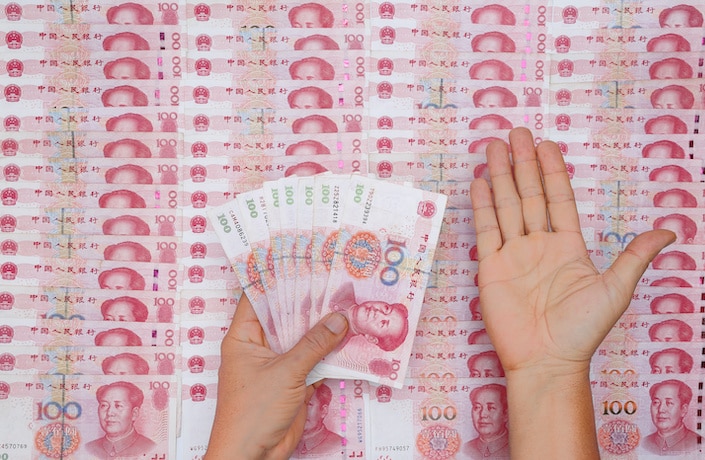
Whether you are planning to travel to China, study the language, or simply follow Chinese economic news, knowing how China's currency works is essential. Read on to discover the difference between Chinese renminbi (RMB) and yuan (CNY), and learn to talk about China's money in both English and Chinese.
01 What Is the Chinese Currency Called?
You may have heard Chinese currency referred to as "renminbi," usually abbreviated as RMB. In Chinese, renminbi is written 人民币 (rénmínbì in pīnyīn), which translates to "the people's money."
Confusingly, you may also have heard Chinese money called "yuan" (元, yuán), commonly abbreviated as CNY ("Chinese Yuan"). So which is correct — and does China have two different currencies?
02 RMB vs CNY: What Is the Difference?
There is very little practical difference between the terms RMB (renminbi) and CNY (Chinese yuan). In everyday usage, the two are interchangeable, and you will hear them used as though they mean the exact same thing.
If you ask an economist, however, they will tell you that the terms are technically distinct. It comes down to the difference between a currency and a unit of that currency.
Where Did the Names Renminbi and Yuan Come From?
The word renminbi came into use the same year the People's Republic of China was founded, in 1949. According to Britannica, renminbi became the official name of the currency in 1969, though it had been in widespread use for two decades prior.
The word yuan, however, is much older. It was originally used to refer to the silver coins that European merchants traded with Chinese merchants nearly 500 years ago.
How to Understand the Renminbi vs Yuan Distinction
Today, renminbi is the general name for the Chinese currency, while yuan is the name of a unit of that currency. One way to understand this is to imagine a country that uses gold as its currency.
You would be unlikely to say "This car costs 10 gold." You need a unit — such as ounces. Then you could say, "This car costs 10 ounces of gold." In this example, gold is the currency and ounce is the unit.
A commonly cited example of a similar situation is the difference between "sterling" and "pounds" in Great Britain. England's currency is still referred to as "sterling," but technically you cannot say something costs "15 sterling." Instead, you should say "15 pounds sterling" or simply "15 pounds."
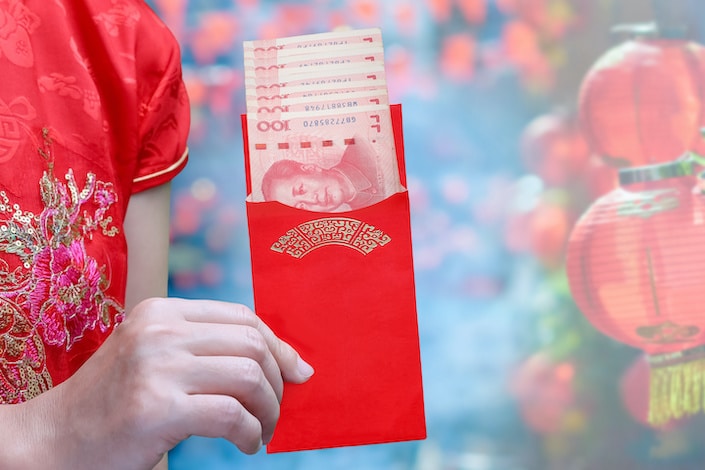
In Chinese, then, it would technically be incorrect to say that breakfast cost "15 renminbi." Instead, you should say it cost "15 yuan." If you are interested in the broader role of numbers in Chinese life, our guide to Chinese numerology explores how digits carry deep cultural meaning.
03 How Do People in China Refer to Their Money?
If you find the difference between currency and units confusing, you might want to just figure out which word is most popular in China and use that one.
Unfortunately, neither "yuan" nor "renminbi" is commonly used in daily conversation in China. Instead, most people refer to their money as "kuài" (块).
What Does Kuài Mean?
Kuài is a Chinese measure word that is commonly used in many contexts to mean "one piece." For example, if you buy a steamed dumpling for breakfast and ask how much it costs, the vendor might respond "yī kuài" (一块), meaning it costs one yuan.
You may also hear vendors say "yī kuài qián" (一块钱). Since "qián" (钱) means "money," this literally translates to "one piece of money."
Referring to yuan as "kuài" in China is similar to the way Americans refer to US dollars as "bucks." Once you start learning basic Chinese words, you will quickly pick up this informal usage.
When shopping or eating in China, using "kuài" will sound much more natural than saying "yuan." Practice saying prices like "sān kuài" (三块, 3 yuan) or "shí kuài" (十块, 10 yuan) to sound like a local.
04 Why Chinese Banknotes Use Different Characters
Chinese paper money comes in denominations of one, five, ten, twenty, fifty, and one hundred. If you have started to learn Chinese characters, you might be surprised when you examine your banknotes.
While Arabic numerals such as 1 and 5 are prominently displayed, the familiar Chinese number characters like 一 (yī) and 五 (wǔ) are nowhere to be found. In addition, although you will see "yuan" written in Chinese pinyin, you will not see the character 元 anywhere.
Anti-Fraud Characters on Chinese Money
If you look closely at a 1 yuan banknote, you will see the characters 壹圆 (yī yuán) under the "1" in the middle, to the left of Mao's portrait. Although they look quite different, 壹圆 (yī yuán) are actually the same as 一元 (yī yuán).
The character 圆 (yuán) is a variant of 元 (yuán), and the two share the same pronunciation. As for 壹 (yī), it is a more complex form of 一 (yī) used by bankers in China as an anti-fraud measure, since it is much harder to alter than the simple horizontal stroke of 一.
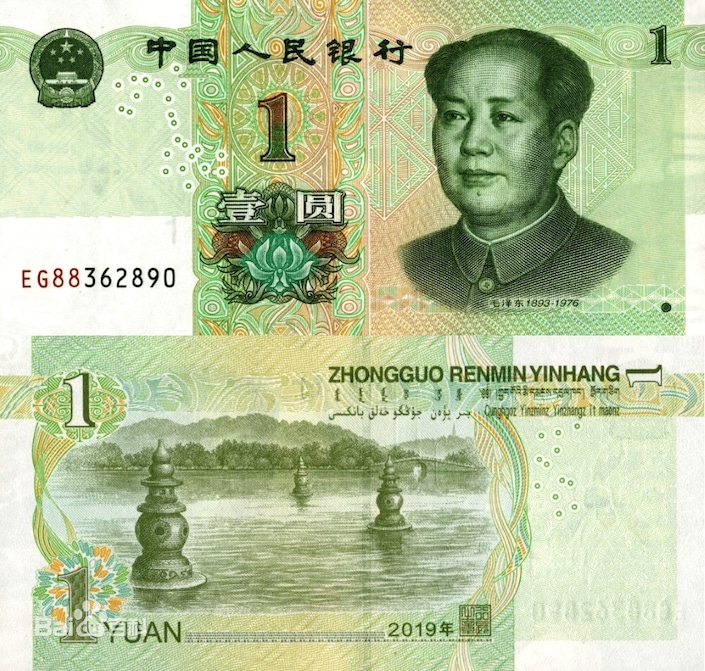
The other denominations also replace regular Chinese numbers with these special fraud-resistant characters. You may notice these more complicated forms on certain official receipts in China as well.
Thankfully, the pronunciation is exactly the same as the standard Chinese number characters you may already have learned. The table below shows how to write Chinese numbers like a banker:
| Number | Familiar Form | Complex Form | pīnyīn |
|---|---|---|---|
| 1 | 一 | 壹 | yī |
| 5 | 五 | 伍 | wǔ |
| 10 | 十 | 拾 | shí |
| 20 | 二十 | 贰拾 | èrshí |
| 50 | 五十 | 伍拾 | wǔshí |
| 100 | 一百 | 壹佰 | yībǎi |

Study Chinese in Guilin or Start Online
CLI offers personalized Chinese instruction built around your goals. Join our Immersion Program in Guilin or begin from anywhere with a free Chinese lesson .
05 Can You Still Use Cash in China?
Learning how to talk about and identify Chinese money is important. But if you have been following the news about the rise of mobile payments in China, you might wonder whether you will even need physical renminbi.
The short answer is yes — China does still accept cash. However, mobile payment platforms such as WeChat Pay and Alipay are now the dominant way most people pay for things, from restaurant meals to taxi rides.
It is even possible to spend an entire day paying for everything with a smartphone. Even the owners of small vegetable stalls in traditional wet markets accept mobile payments.

In fact, mobile payments have become so common that some merchants no longer keep enough small bills to make change. If a customer tries to pay in cash without the exact amount, shop owners and taxi drivers may ask them to pay via WeChat or Alipay instead.
Should You Set Up WeChat Pay or Alipay?
If you plan to stay in China for an extended period — for example, to learn Chinese in China — setting up a WeChat Pay or Alipay account will make your daily life much easier.
If you only plan a short visit, you should be able to withdraw cash at most Chinese ATMs using major credit cards such as Visa or Mastercard. In most cases, you will need to pay a small fee when withdrawing money with international cards.
As of recent years, both WeChat Pay and Alipay have expanded access for international visitors, allowing foreign credit cards to be linked directly. Check the latest requirements before your trip, as policies update frequently.
06 How Much Cash Should You Bring to China?
If you are traveling to China for the first time, you may be wondering whether or not to bring cash. Legally, you are permitted to bring 20,000 CNY, 5,000 USD, or the equivalent in other foreign currencies into China. Since this limit can change, be sure to verify it before you travel.
Realistically, you will usually not need much cash. USD is not accepted in China, so you are unlikely to need it during your trip. Before you go, make sure to review our China visa-free travel guide for the latest entry requirements.
Where to Exchange Currency in China
There are currency exchange booths at most major airports in big cities, so you could bring a small amount of your home currency and exchange it upon arrival. Alternatively, you could exchange money before getting on the plane.
Before you travel, familiarize yourself with the current exchange rates for Chinese renminbi. The Federal Reserve Bank of St. Louis also publishes historical exchange rate data that can help you spot trends.

Bring enough cash to cover a taxi from the airport to your hotel, a couple of nights at your hotel, and the hotel deposit. Once you have settled in, you can withdraw more from a local ATM.
Knowing some essential Chinese travel phrases will also make navigating currency exchanges and taxi rides much smoother.
ATMs at Chinese bank branches (such as ICBC, Bank of China, and China Construction Bank) generally accept international cards. Airport ATMs are convenient but may charge higher fees.
07 The Digital Yuan and the Future of Chinese Currency
Beyond physical cash and mobile apps, China has also been developing a digital version of the yuan, known as the e-CNY or Digital Currency Electronic Payment (DCEP). The digital yuan has been piloted in several major cities since 2020.
Unlike decentralized cryptocurrencies such as Bitcoin, the digital yuan is a centralized digital currency fully controlled by China's central bank. It is designed to complement — and potentially replace — physical cash over time.
The renminbi's growing global importance was underscored in 2016, when the International Monetary Fund (IMF) included it in its Special Drawing Rights (SDR) basket alongside the US dollar, euro, British pound, and Japanese yen.
For anyone interested in China's economy and culture, understanding the renminbi is a window into the country's rapid transformation. Whether you are exchanging currency at an airport kiosk or tapping your phone to pay for street food, the story of Chinese money is still being written.
08 Chinese Currency Vocabulary List
The following vocabulary will help you talk about money with confidence during your next trip to China or your next online Chinese lesson.
| Chinese | Pinyin | Translation |
|---|---|---|
| 人民币 | Renminbi (RMB; "the people's money") | |
| 元 | Yuan (basic unit of RMB) | |
| 块 | Colloquial term for yuan ("piece") | |
| 角 | Jiao (1/10 of a yuan) | |
| 毛 | Colloquial term for jiao | |
| 分 | Fen (1/100 of a yuan) | |
| 钱 | Money | |
| 现金 | Cash | |
| 手机支付 | Mobile payment | |
| 微信支付 | WeChat Pay | |
| 支付宝 | Alipay | |
| 换钱 | To exchange money | |
| 汇率 | Exchange rate | |
| 银行 | Bank | |
| 多少钱 | How much does it cost? | |
| 红包 | Red envelope (monetary gift) |
Red envelopes, or hóngbāo, play a major role in Chinese gift-giving culture. They are filled with cash and given during holidays, weddings, and other celebrations — making them one of the most visible everyday uses of Chinese currency.
09 Tips for Spending Money in China
Paying for things in a new currency in a new country can be exciting, but make sure you have a good idea of how much you are actually paying in your own currency equivalent before you spend.
The value of China's currency has shifted against the dollar in recent years, and things in China are not as cheap as they once were. Checking the latest rates on resources like Xe before and during your trip is always a good idea.
Once you have your renminbi in hand, take some time to examine it. Think about its history, its future, and all the different ways there are to refer to it in both English and Chinese. For more on what to expect during your first trip, our study abroad in China guide covers everything from visas to daily life.