

- A Chinese name (姓名, xìngmíng) is written surname first, given name second — the reverse of Western order.
- Chinese surnames are highly concentrated: the top three (Wang, Li, Zhang) cover roughly a fifth of the population, and the top 100 cover about 85%.
- Given names are chosen for meaning, sound, and often their connection to the Five Elements (五行, wǔxíng).
- Many Chinese speakers also adopt an English name, while learners are encouraged to choose an authentic Chinese name rather than just transliterate.
- Understanding how names work makes introductions, classroom life, and everyday conversation far smoother for learners.
Chinese names can be puzzling if you're not yet familiar with the language and culture. This guide walks you through how Chinese surnames and given names work, how people are addressed using nicknames and titles, and how to choose your own Chinese name.
Along the way you'll see why a small handful of surnames dominate, how parents weigh meaning and sound when naming a child, and what to keep in mind if you decide to Learn Chinese in China and need a name of your own.
01 How Chinese names work: surname first, then given name
In Chinese culture, information generally moves from big to small. Addresses start with the country and narrow down to the house number, and names always begin with the surname.
So someone called "John Smith" in English would be ordered "Smith John" by Chinese naming conventions. The family — represented by the surname — comes before the individual.
A full Chinese name, or 姓名 (xìngmíng), is made up of a surname (姓, xìng) and a given name (名, míng). Children usually inherit the father's surname, though it's legally possible to take the mother's maiden surname instead.
02 Chinese surnames: the most common last names in China
The classic text 百家姓 (Bǎijiāxìng, the "Hundred Family Surnames"), compiled in the Song dynasty, records several hundred surnames. In practice, though, only a small pool is in everyday use today.
According to Encyclopædia Britannica, the number of commonly used Chinese family names has narrowed to roughly a couple of hundred. This concentration is largely because the Han Chinese — China's largest ethnic group — share a relatively small set of names.
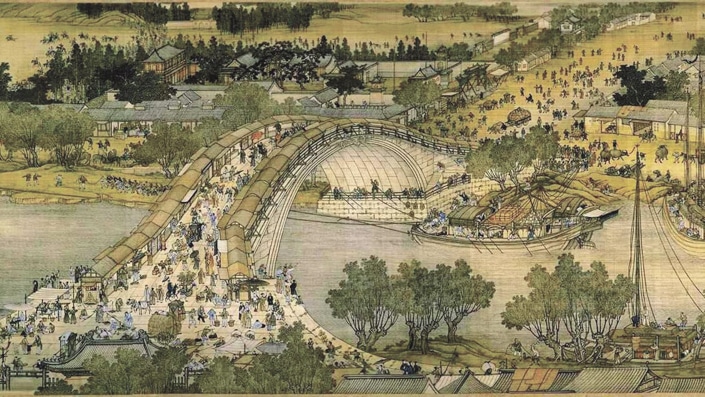
The 10 most common Chinese surnames
The surnames Wang (王), Li (李), and Zhang (张) alone account for more than 20% of people in mainland China. A broader study of more than a billion citizens found that the top 100 surnames cover roughly 85% of the population.
Here are the ten most common Chinese surnames, with approximate share figures for the top three. Counts vary by survey year and source, so treat the percentages as close estimates.
| Surname | Pinyin | Meaning | Rank | Approx. share |
|---|---|---|---|---|
| 王 | "King" | 1 | ≈ 7.9% | |
| 李 | "Plum tree"; the Tang imperial surname | 2 | ≈ 7.4% | |
| 张 | "To draw a bow" / archer | 3 | ≈ 7.1% | |
| 刘 | The Han imperial house | 4 | Top 5 | |
| 陈 | "To arrange / display"; common in the south and Taiwan | 5 | Top 5 | |
| 杨 | "Poplar / willow" | 6 | Top 10 | |
| 黄 | "Yellow"; common in Guangdong | 7 | Top 10 | |
| 赵 | First surname listed in the 百家姓 | 8 | Top 10 | |
| 吴 | From the ancient state of Wu | 9 | Top 10 | |
| 周 | From the Zhou dynasty | 10 | Top 10 |
Sources: national population studies summarized by Science (AAAS) and Encyclopædia Britannica. Figures are approximate and shift slightly between census years.
03 How Chinese first names are chosen
Chinese given names are usually made up of two characters, although single-character names also exist. Picking a name for a newborn is taken seriously, and several factors come into play.
Choosing characters and their meaning
Most parents choose Chinese characters whose meanings they hope their child will embody. They also tend to pick characters with connotations seen as masculine or feminine.
For boys, that often means characters suggesting strength and ambition. For girls, parents frequently choose characters conveying beauty, grace, or intelligence.
The Five Elements (五行) and birth charts
In more traditional families, the Five Elements (五行, wǔxíng) and their link to each Chinese zodiac sign play a key role. Based on a child's birth chart, a name can be used to restore balance.
A child said to "lack fire" (缺火, quē huǒ) in their birth chart might receive a character containing the fire radical, such as 杰 (jié), 荧 (yíng), 炫 (xuàn), or 炜 (wěi). The same balancing logic shows up elsewhere in Chinese culture, from feng shui to traditional date selection.
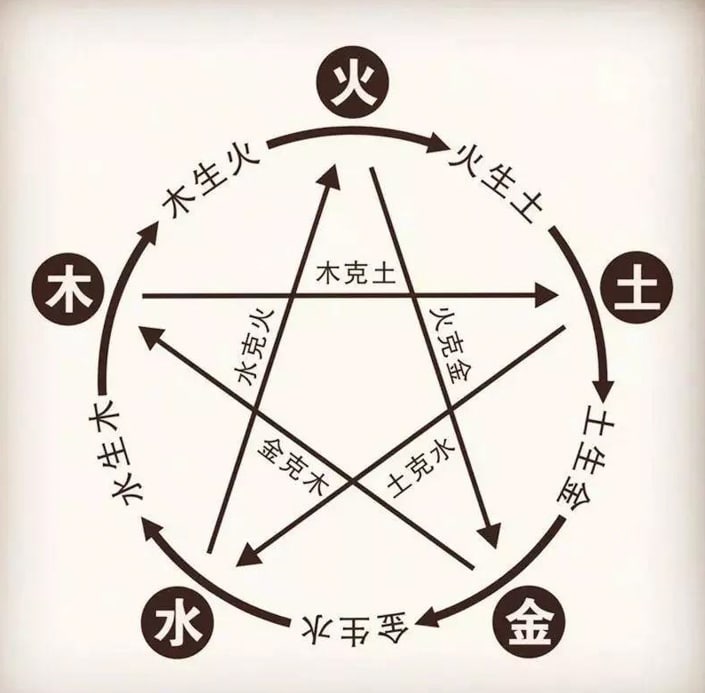
The Five Elements are also believed to act on one another in a fixed overcoming cycle:
金克木,木克土,土克水,水克火,火克金。
Jīn kè mù, mù kè tǔ, tǔ kè shuǐ, shuǐ kè huǒ, huǒ kè jīn.
Metal overcomes wood, wood overcomes earth, earth overcomes water, water overcomes fire, fire overcomes metal.
How a Chinese name sounds (tones and wordplay)
Chinese is a tonal language, so how the characters sound together — especially alongside the surname — matters a great deal. If you're still building confidence here, review how Mandarin tones and tone-change rules work.
Because Chinese has so many homophones, wordplay can make a name sound auspicious or unfortunate. This sensitivity to sound and symbolism connects to broader ideas in Chinese numerology.
Chinese naming taboos to avoid
It's considered inappropriate to name a child after a famous person. In imperial times this meant avoiding the emperor's name; today it means steering clear of names tied to celebrities.
Ignoring this taboo comes across as immodest, so families generally favor a more understated name.
04 The most common Chinese first names for girls and boys
In Taiwan, the phrase "farmer's market name" (菜市场名, càishìchǎng míng) describes a name so common that heads turn whenever it's called out — the equivalent of the Johns and Karens of the English-speaking world.
The lists below show popular given names for women and men, drawn from China's national name reporting. Like all naming trends, these shift over time.
Popular Chinese girl names
| Name | Pinyin | Meaning |
|---|---|---|
| 梓涵 | "Growth" + "to contain"; nurturing and broad-minded | |
| 欣怡 | "Joyful" + "content"; happy and at ease | |
| 雨涵 | "Rain" + "to contain"; nourishing and gentle | |
| 诗涵 | "Poetry" + "to contain"; refined and cultured | |
| 梓萱 | "Growth" + "day lily"; graceful and carefree | |
| 思涵 | "Thoughtful" + "to contain"; reflective and tolerant | |
| 可欣 | "Lovable" + "joyful"; sweet-natured and happy | |
| 语桐 | "Speech" + "paulownia tree"; eloquent and upright | |
| 若曦 | "Like" + "morning sunlight"; bright as the dawn | |
| 一诺 | "One" + "promise"; true to one's word |
Popular Chinese boy names
| Name | Pinyin | Meaning |
|---|---|---|
| 浩然 | "Vast" + "so"; a noble, righteous spirit | |
| 子轩 | "Scholar" + "lofty"; dignified bearing | |
| 浩宇 | "Vast" + "universe"; broad-minded | |
| 宇轩 | "Universe" + "lofty"; expansive and dignified | |
| 梓豪 | "Growth" + "heroic"; strong and capable | |
| 俊杰 | "Talented" + "outstanding"; a hero of ability | |
| 宇航 | "Universe" + "to navigate"; to voyage the cosmos | |
| 子墨 | "Scholar" + "ink"; learned and literary | |
| 浩轩 | "Vast" + "lofty"; grand and dignified | |
| 奕辰 | "Radiant" + "celestial body"; bright and far-reaching |
05 Do Chinese women change their surname after marriage?
In traditional Chinese culture, women keep their original surname after marriage, and the idea of taking a husband's name is almost nonexistent. This reflects the influence of filial piety and patrilineal family values.
Today, couples are free to pass on either parent's surname to their children, though in practice the father's surname is still the most common choice.

06 Chinese nicknames and terms of endearment
Beyond formal names, Chinese speakers use a rich set of affectionate prefixes and titles. Three of the most common are 老, 小, and 阿.
老 (Lǎo): adding respect
老 (lǎo, "old") is generally used for men as a colloquial prefix of respect. It suits someone you're acquainted with — often around your own age, or someone older or senior to you.
Be careful, though: adding 老 (lǎo) to the name of someone much older than you is actually rude. Instead, address them with a kinship-style term such as 哥 (gē, older brother), 姐 (jiě, older sister), 阿姨 (āyí, aunt), or 叔叔 (shūshu, uncle) — terms covered in our Chinese family tree guide.
小 (Xiǎo): a term of endearment
小 (xiǎo, "little") works for both men and women. It's usually a term of endearment, and can also be used when addressing someone junior to you.
阿 (Ā): an affectionate prefix
阿 (ā) carries no distinct meaning of its own. It's usually attached to the last character of a name to create an affectionate, diminutive form, and is most common among Hokkien, Hakka, and Min speakers in southern China.
Example: nicknames for 王宇航 (Wáng Yǔháng)
Imagine a man named 王宇航 (Wáng Yǔháng), around 30 years old. His friends might call him 老王 (Lǎo Wáng), while his boss calls him 小王 (Xiǎo Wáng).
Those younger than him might say 王哥 (Wáng Gē), and those much younger might use 王叔叔 (Wáng Shūshu). There's even a running joke that you know you're getting old once younger people start calling you 阿姨 (āyí) or 叔叔 (shūshu)!
His family might add their own nicknames too. Grandparents could repeat the last character of his given name as 航航 (Háng Háng), or, in the south, older relatives might call him 阿航 (Ā Háng).

07 Why many Chinese people adopt English names
Many Chinese speakers adopt an English name to integrate more easily abroad or at work, or simply because it's easier for foreigners to pronounce and remember. Often an elementary or middle school English teacher assigns these names, though some students pick their own.
When English names get lost in translation
Chinese names are chosen for sound and positive meaning, and applying those same instincts to English can produce some memorable results. It's not unusual to meet people whose English names are Candy, Happy, Sunny, Star, or even Piggy.
These choices are frequently direct translations of the person's Chinese name. As Mandarin's global influence grows — one of the many reasons to learn Chinese — more people instead keep their Chinese name, transcribed using the pinyin system (usually without tone marks).
Because Chinese surnames come first while Western surnames come last, many people reverse the order abroad. Our friend 王宇航 (Wáng Yǔháng) might therefore introduce himself as Yuhang Wang in a foreign setting.

Study Chinese in Guilin or Start Online
CLI offers personalized Chinese instruction built around your goals. Join our Immersion Program in Guilin or begin from anywhere with a free Chinese lesson .
08 How to choose a Chinese name for yourself
After reading this far, you may be wondering how to pick your own Chinese name. Here's the best way to approach it.
Ask a native Chinese speaker
Even with strong Mandarin, it's best to have a native speaker choose your name, given the cultural nuances involved. A great candidate is your Chinese teacher, who can weigh your personality, date of birth, and your name in your native language.
If you need to introduce yourself before you've settled on a name, you can use the Chinese transliteration of your English name as a stopgap. That said, an authentic Chinese name is always the better long-term choice.
How do I say my name in Chinese?
Why bother adopting a Chinese name at all? Learning a language means engaging with its culture, and choosing a Chinese name signals real commitment and respect.
It also gives you a fun new identity to grow into as you immerse yourself in the language. 取一个名字吧!
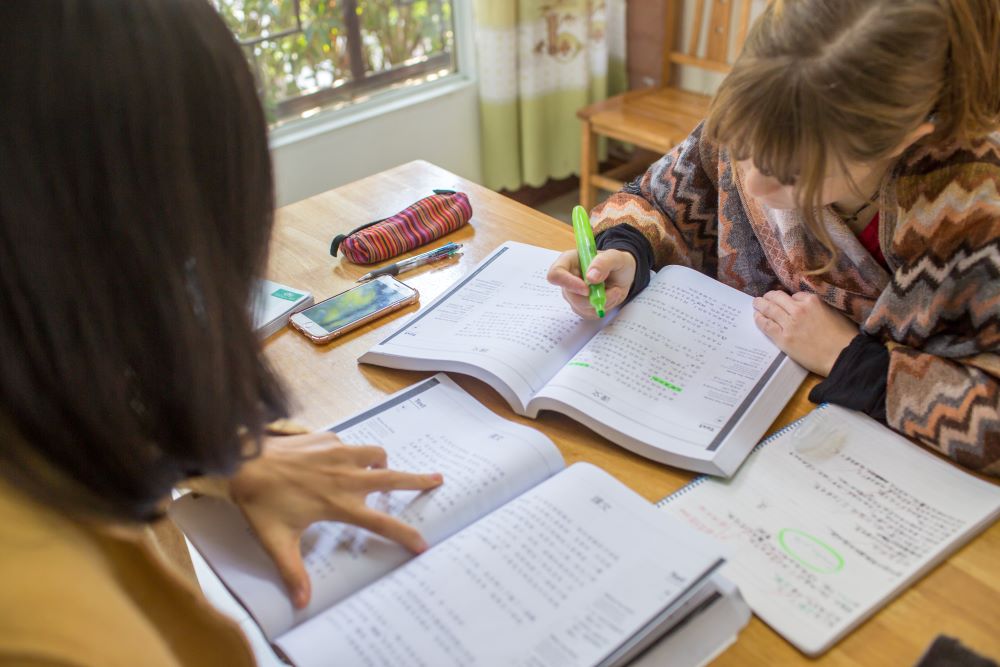
09 Chinese name generator: find your Chinese name
Curious what your name could be in Chinese? Enter your English name below to generate personalized suggestions instantly. You can tailor the results to focus on sound, meaning, or a balance of the two.
Because Chinese naming is so culturally nuanced, we still recommend confirming your choice with a native speaker — for instance, during a free 30-minute online trial lesson with CLI.
10 Useful Chinese name vocabulary
The following terms will help you talk about names in Chinese with more confidence.
| Chinese | Pinyin | Meaning |
|---|---|---|
| 姓名 | Full name (surname + given name) | |
| 姓 | Surname; family name | |
| 名字 | Given name; name | |
| 取名 | To choose or give a name | |
| 小名 | Childhood nickname; pet name | |
| 外号 | Nickname | |
| 五行 | The Five Elements | |
| 老 | "Old"; respectful prefix | |
| 小 | "Little"; affectionate prefix | |
| 阿 | Affectionate diminutive prefix | |
| 哥 | Older brother | |
| 姐 | Older sister | |
| 阿姨 | Aunt; older woman | |
| 叔叔 | Uncle; older man |
11 FAQ
Why do Chinese names put the surname first?
Chinese culture orders information from large to small, and the family is considered more important than the individual. The surname (family) therefore comes before the given name.
What is the most common Chinese surname?
Wang (王) is generally the most common surname in mainland China, followed closely by Li (李) and Zhang (张). Together these three cover more than 20% of the population.
How many Chinese surnames are there?
Historical texts record several hundred, but only around a couple of hundred are in common use today. The top 100 surnames alone cover roughly 85% of the population.
Do Chinese women take their husband's surname after marriage?
Traditionally, no. Chinese women keep their own surname after marriage, and children usually take the father's surname.
Should I choose a Chinese name or just transliterate my English name?
A transliteration works in a pinch, but an authentic Chinese name is the better choice. It shows respect for the culture and sounds far more natural to native speakers.
How do I pick a good Chinese name?
Ask a native speaker — ideally a Chinese teacher — to help. A good name balances meaning, pleasant sound, and a comfortable fit with your surname.
12 Final thoughts
A Chinese name is more than a label. It reflects family, meaning, sound, and centuries of cultural tradition around balance and good fortune.
For learners, understanding how names work makes introductions easier and everyday culture more legible — and choosing a name of your own is a satisfying step deeper into the language.