
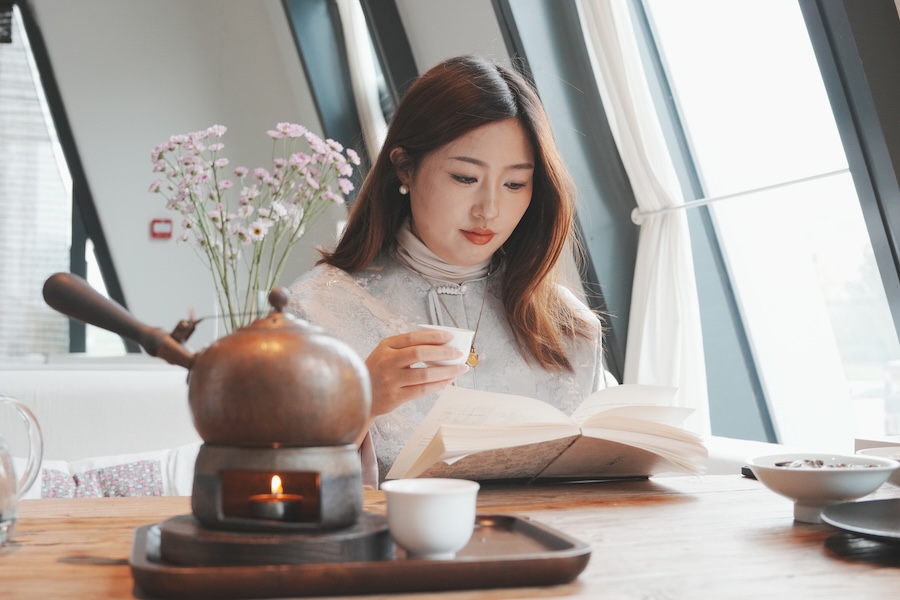
- Chinese skincare (中式护肤, ) draws on thousands of years of Traditional Chinese Medicine, treating skin health as an extension of overall well-being.
- C-beauty brands emphasize prevention over treatment, long-term nourishment over quick fixes, and ingredient-driven formulations backed by clinical research.
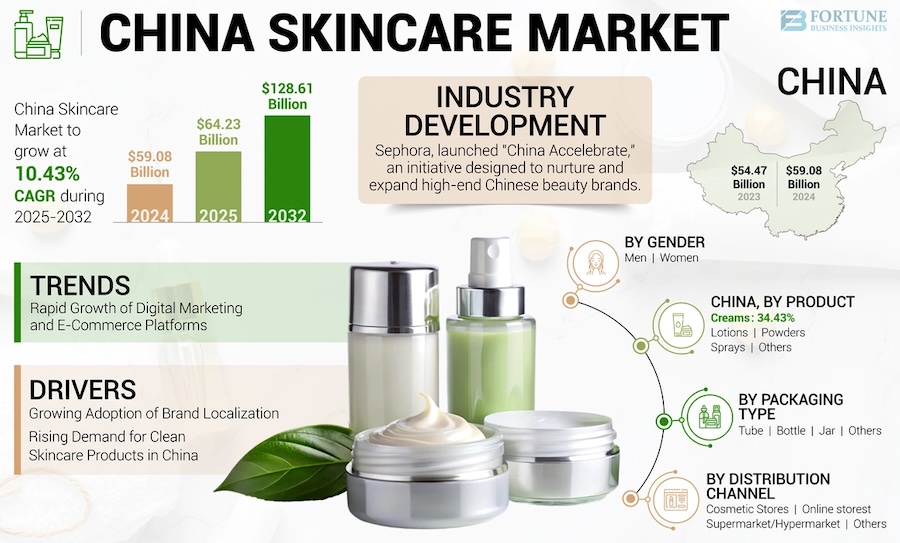
- China is now the world's second-largest cosmetic market (~$60 billion USD), and domestic brands account for over half of cosmetic retail sales.
- Unlike K-beauty's trend-driven, multi-step approach, Chinese skincare prioritizes internal balance, high-potency actives, and sustainable results.
- Brands like Winona, Proya, Florasis, and Herborist are expanding globally through Amazon, Sephora, and Southeast Asian platforms — exporting both formulations and cultural identity.
For years, global skincare innovation was dominated by Western brands alongside Korean (K-beauty) and Japanese (J-beauty) products. More recently, Chinese skincare — often referred to as C-beauty — has begun to gain serious international attention, and it's built on something most competitors can't replicate: a continuous beauty tradition spanning thousands of years.
As China's domestic beauty industry matures, local brands are moving beyond imitation and establishing their own research, ingredient strategies, and product philosophies. This shift reflects broader changes in China's consumer market and positions Chinese skincare as a distinct and increasingly influential category. C-beauty is getting easier to find outside China, and it's worth a closer look.
01 What Makes Chinese Skincare Unique?
Chinese skincare stands out because it is built on a continuous beauty tradition that spans thousands of years. Rather than separating beauty from health, Chinese culture has long treated skincare (护肤, ) as part of overall well-being.
History of Chinese Skincare and Beauty Practices
Ancient Chinese beauty standards emphasized clarity, balance (平衡, ), and vitality over dramatic alteration. Clear, even-toned skin was associated with good health, moral discipline, and social refinement, while excess ornamentation was often seen as compensating for imbalance. As a result, beauty practices focused on preserving youthfulness and preventing deterioration rather than masking flaws.
Rather than disappearing, these principles evolved over time. Modern Chinese skincare integrates contemporary dermatology and cosmetic science while retaining a preventative (预防, ) mindset: skin health is cumulative, long-term, and closely connected to lifestyle. This continuity between philosophy and practice forms the foundation of Chinese skincare today.
Traditional Chinese Medicine in Chinese Skincare
Chinese skincare is rooted in Traditional Chinese Medicine (中医, ), which emphasizes balance and prevention over quick fixes. The core belief is that skin mirrors what's happening inside the body, so topical products work best when paired with diet, sleep, and emotional balance.
Central to this approach is yin–yang (阴阳, ) balance: hydration and repair (修复, ) represent yin, while protection and vitality represent yang. When imbalance occurs, skincare is viewed as part of a broader corrective process rather than a standalone fix.
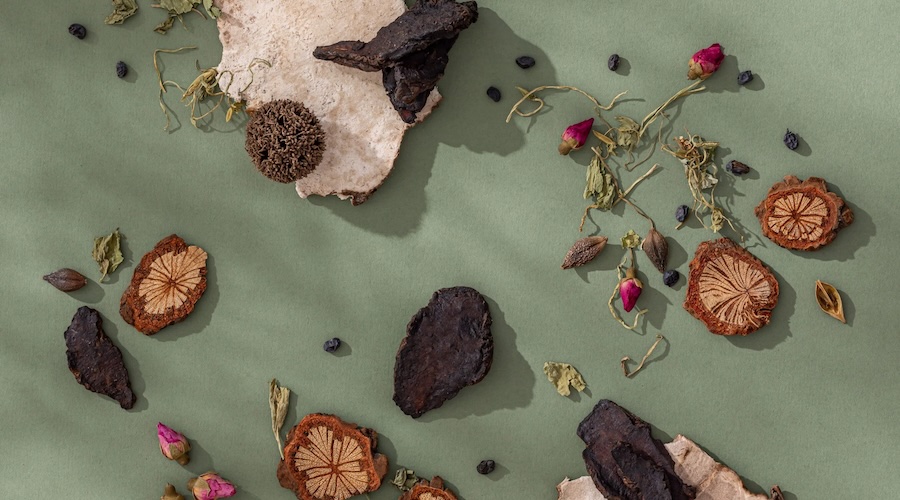
Drawing on centuries of herbal (草本, ) knowledge, modern brands incorporate common TCM ingredients such as ginseng, reishi, and angelica into formulations supported by contemporary cosmetic research. Some ingredients, like tea extracts, have crossed over from daily Chinese life into high-performance skincare actives. That blend of tradition and modern formulation is the appeal for a lot of people.
Chinese Beauty Philosophy: Prevention over Treatment
Rather than addressing skin concerns only after they become visible, Chinese skincare emphasizes early intervention and long-term nourishment. Consistent hydration, antioxidant (抗氧化, ) support, and sun protection are viewed as foundational practices, often encouraged from a young age.
This preventative philosophy treats skincare as a cumulative investment. By strengthening the skin barrier (皮肤屏障, ) and maintaining balance over time, the need for aggressive corrective treatments later in life is reduced.
02 China's Skincare Boom
China's skincare market (市场, ) has expanded rapidly in recent years, driven by rising consumer confidence and increased demand for premium (高端, ) products. Valued at approximately 60 billion USD, it is now the world's second-largest cosmetic market and continues to grow faster than the global average.
Beyond consumer sales, the industry supports broader innovation in biotechnology, dermatology research, and large-scale manufacturing. Chinese companies now operate across the full skincare supply chain, positioning the country as both a major market and a significant producer and innovator in global skincare development.
Domestic Innovation in Chinese Skincare Brands
Chinese skincare brands (品牌, ) have increasingly adopted an ingredient-first (成分, ) research approach, combining advances in biotechnology with knowledge drawn from traditional medicine.
Fermentation (发酵, ) technology has been a particular focus, enabling the development of active ingredients (活性成分, ) such as fermented red algae extracts and ergothioneine, a naturally occurring antioxidant produced through microbial processes. Through modern extraction and clinical research (临床研究, ), botanical ingredients once associated primarily with tradition have been repositioned as evidence-supported actives, reflecting a broader shift toward evidence-based skincare.
Global Expansion of Chinese Skincare and C-Beauty Brands
Chinese skincare brands are aggressively expanding globally through strategic acquisitions and direct retail entry. Domestic beauty groups (国货美妆, ) are snapping up established international brands for formulation expertise and supply chains, while C-beauty brands enter overseas markets through Amazon, Sephora, and major Southeast Asian platforms.
A lot of brands aren't trying to be the cheapest option. C-beauty brands emphasize efficacy and clinical integrity, carving out a premium space in the skincare domain. They're playing in the same league as luxury Western brands.
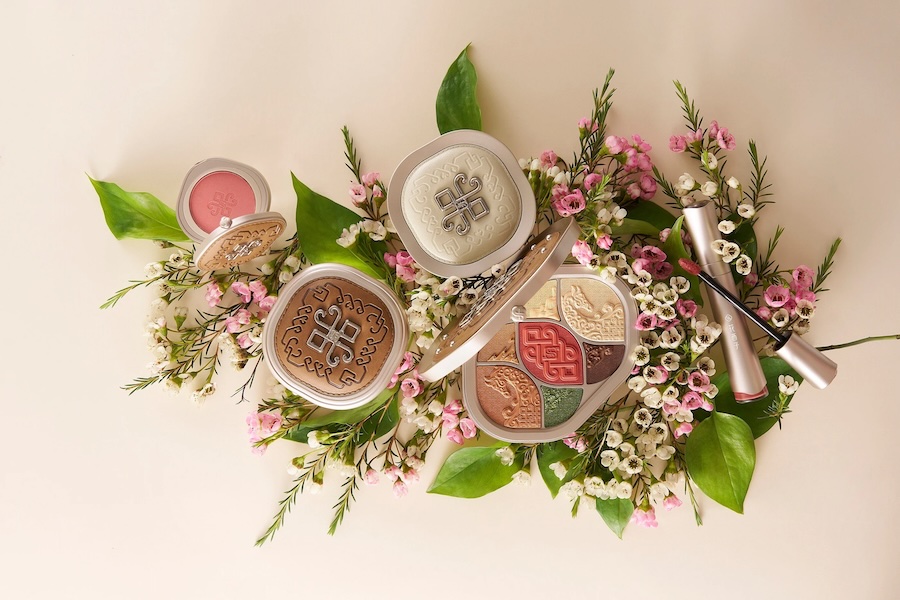
Beyond performance, Chinese brands are exporting culture through design and storytelling. Packaging inspired by traditional carving, ceramics, embroidery, and classical aesthetics — echoing the artistry found in Chinese calligraphy and traditional clothing — positions these products as "Eastern beauty," not Western imitations. This combination of modern formulation and culturally confident identity (文化认同, ) is a big reason why C-beauty is resonating with global consumers who are seeking both results and originality.
03 Chinese vs Korean Skincare: Key Differences
Across Asia, K-beauty remains the more established global force, and the two markets are now competing head-to-head for regional and international dominance. For a broader look at how these two cultures diverge, see our guide to Chinese vs Korean language and culture.
Korean skincare remains highly influential, known for multi-step routines, rapid visible results, and trend-driven innovation. Popular formats such as sheet masks, cushion compacts, and ampoules emphasize immediate hydration, brightness, and sensory appeal.
Chinese skincare takes a fundamentally different approach: internal regulation and prevention-focused care that emphasizes long-term skin health over quick fixes. You'll find high-concentration actives targeting specific concerns like brightening and anti-aging, but the philosophy prioritizes sustainable results that build a foundation for healthier skin over time.
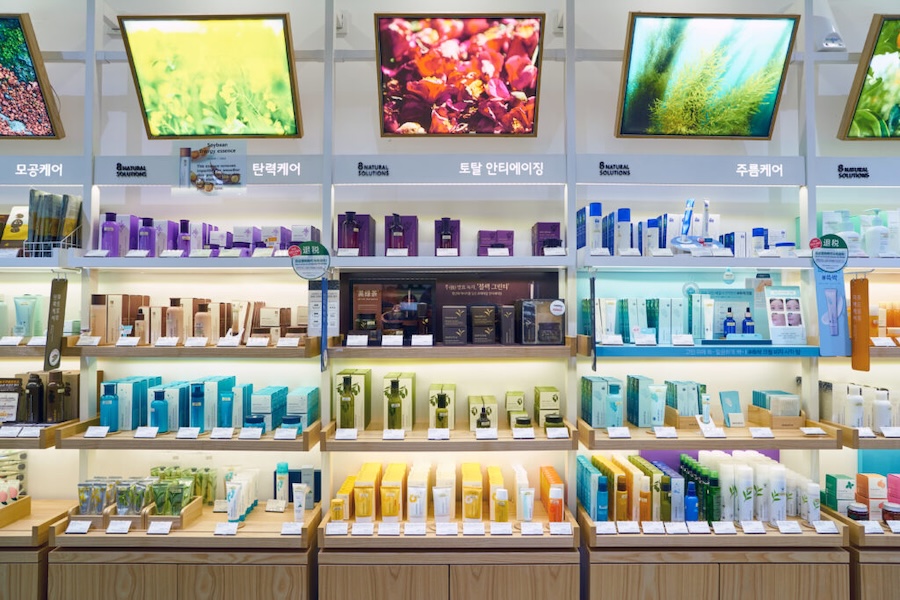
Can C-Beauty Compete with K-Beauty?
In China, rising cultural identity (文化认同, ) is transforming the landscape. While foreign brands still hold significant market share, domestic brands now account for over half of cosmetic retail sales — a massive shift from just a decade ago.
Chinese skincare may not dominate globally the way K-beauty does, at least not yet, but at home it's absolutely winning. Domestic brands like Florasis, Winona, and Proya are growing at nearly triple the rate of their foreign competitors. Younger generations, especially Gen-Z and Millennials, are driving this shift with unprecedented pride and trust in homegrown products.
The national pride movement known as 国潮 (guócháo) has transformed from a trend into a fundamental change in consumer behavior — younger Chinese consumers genuinely believe domestic skincare is better.
They're not just buying Chinese out of patriotism or budget. They genuinely believe it's better. In China's massive market, the momentum is real. The 国潮 (guócháo) movement — part of a broader shift in Chinese society — has transformed from a trend into a fundamental change in consumer behavior, amplified by Chinese social media platforms that give domestic brands direct access to hundreds of millions of consumers.
04 Popular Chinese Skincare Brands to Know in 2026
The following brands represent a cross-section of China's diverse skincare landscape, ranging from affordable heritage brands to premium, clinically-backed lines. They are some of the most trending and popular brands in China right now, each bringing something unique to the table.
Winona (薇诺娜, ) — Developed through clinical research at Kunming Medical University, Winona focuses primarily on sensitive skin (敏感肌, ). The brand established credibility through hospital dermatology partnerships and holds medical device certifications for several products.
Herborist (佰草集, ) — A premium herbal brand under Shanghai Jahwa, Herborist integrates TCM concepts with modern cosmetic science. It was the first Chinese skincare brand to enter Sephora France and remains known for its holistic formulation philosophy.
Florasis (花西子, ) — Known for its traditional Chinese aesthetics, intricate carvings, and porcelain-inspired packaging, Florasis has extended its refined aesthetic from makeup into skincare.
Proya (珀莱雅, ) — Proya has repositioned itself as a technology- and ingredient-focused skincare brand. Through collaboration with global suppliers and structured ingredient education, it has gained recognition for performance-driven formulations.
Forest Cabin (林清轩, ) — A standout in China's homegrown premium skincare scene, Forest Cabin centers its product development around camellia oil and skin barrier repair. The brand operates its own plantations and positions itself in the premium segment through controlled sourcing and direct consumer engagement.
Pechoin (百雀羚, ) — Founded in 1931, Pechoin has transitioned from a legacy brand into a modern herbal skincare line. By combining traditional ingredients with updated formulations and contemporary branding, it has regained relevance among younger consumers.
05 Where to Buy Chinese Skincare Products
Choosing the right channel is crucial when buying Chinese skincare. The safest bets are official brand channels: Tmall and JD flagship stores, brand websites or WeChat mini-programs, and offline counters or flagship stores for premium lines.
Authorized retailers like Sephora, Watsons, Mannings, and major department stores are also reliable for both mass-market and high-end brands.
Through advances in ingredient research, culturally grounded storytelling, and hyper-efficient digital distribution, China is building an integrated skincare ecosystem. C-beauty is carving out its own lane with a blend of ancient wisdom and cutting-edge science that's impossible to ignore. So next time you're shopping for skincare, why not give a C-beauty brand a try?

Discover Chinese Culture Firsthand
One of the best ways to gain a deeper understanding of Chinese skincare culture is to learn Chinese itself. Explore how language, tradition, and daily life intersect with a CLI teacher who understands the nuances.
06 Vocabulary About Chinese Skincare
| Chinese | Pinyin | English |
|---|---|---|
| 护肤 | skincare | |
| 中式护肤 | Chinese skincare | |
| 国货美妆 | domestic (Chinese) beauty brands | |
| 成分 | ingredient | |
| 抗氧化 | antioxidant | |
| 修复 | repair | |
| 预防 | prevention | |
| 平衡 | balance | |
| 中医 | Traditional Chinese Medicine | |
| 阴阳 | yin and yang | |
| 草本 | herbal | |
| 发酵 | fermentation | |
| 活性成分 | active ingredient | |
| 临床研究 | clinical research | |
| 敏感肌 | sensitive skin | |
| 皮肤屏障 | skin barrier | |
| 市场 | market | |
| 高端 | premium / high-end | |
| 品牌 | brand | |
| 文化认同 | cultural identity |