

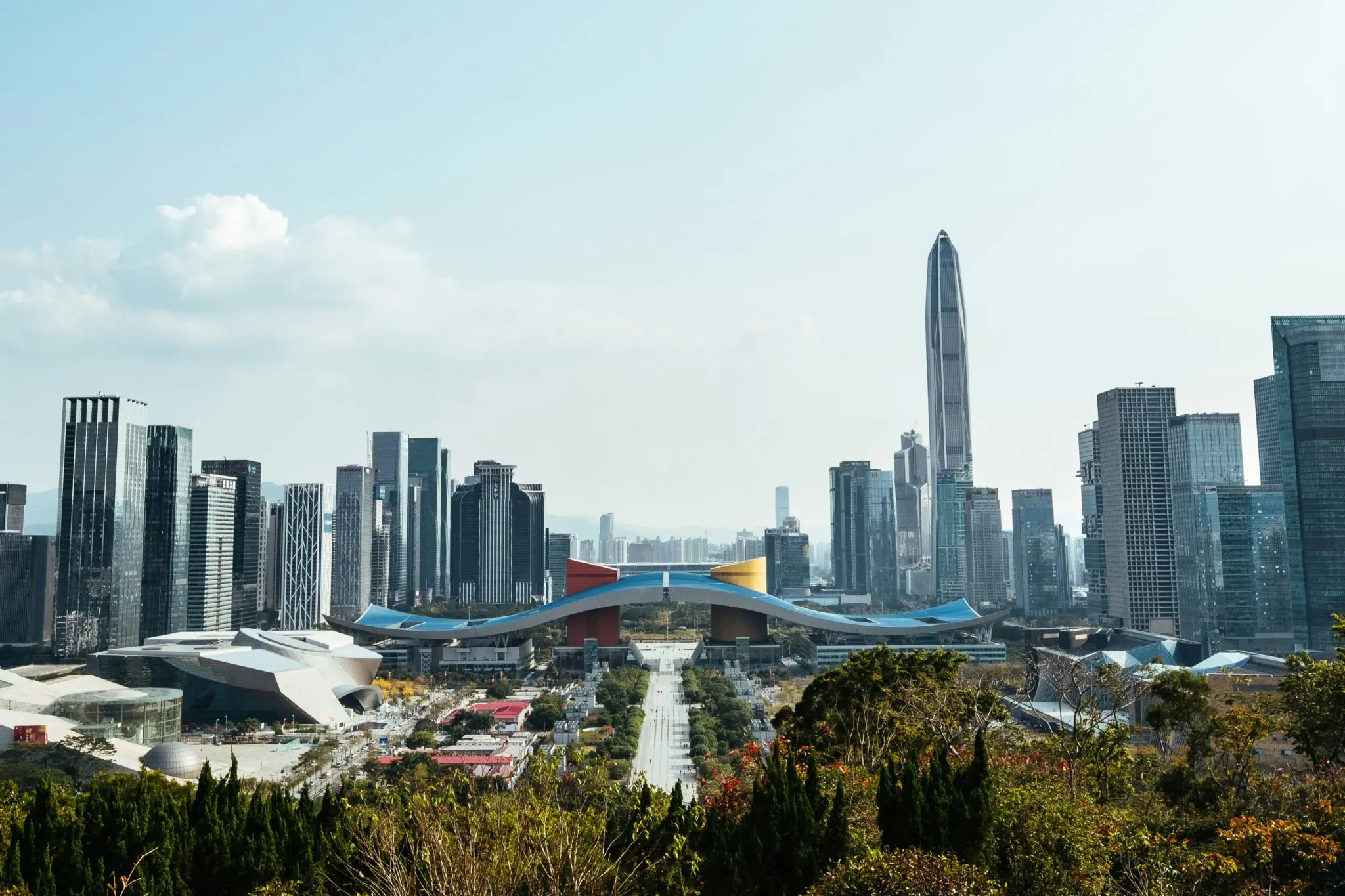
- Chinese Special Economic Zones (SEZs) were created in the late 1970s as part of Deng Xiaoping's "reform and opening-up" policy, marking China's first major integration with the global economy.
- The original four SEZs — Shenzhen, Zhuhai, Shantou, and Xiamen — proved so successful that China expanded the model nationwide through open coastal cities, free trade zones, and high-tech development areas.
- SEZ policies center on attracting foreign investment, promoting exports, and letting market forces drive economic activity within designated areas.
- Shenzhen's transformation from a fishing village to a global tech hub is the model's most dramatic success story, while Kashgar illustrates the challenges SEZs face in less developed regions.
- As of 2019, nearly 150 countries had established some form of SEZ, though whether the Chinese model can succeed without China's unique historical context remains an open question.
In the past 40 years, China has seen unparalleled economic success. The establishment of Chinese Special Economic Zones (SEZs) has been a major factor in China's decades-long boom — and understanding how they work offers a fascinating window into modern Chinese culture and society.
Find out how the creation of SEZs transformed China into an economic powerhouse and how their success has led to SEZ adoption around the world. If the topic inspires you to learn Chinese in China, understanding this history will give your studies valuable real-world context.
01 History
Economists (经济学家 jīngjìxuéjiā) throughout the world have marveled at modern China's impressive economic growth. China's economic might is especially noteworthy considering the mess that the country's economy was in as recently as the 1960s.
What Are Chinese Special Economic Zones?
Special Economic Zones (SEZs) are designated areas in China where market-oriented economic policies were first tested under state supervision.
Among the many economic reforms introduced during this period was the establishment of Chinese Special Economic Zones (经济特区 jīngjìtèqū). These are unique areas in which business and trade laws differ from those found in the rest of the country.
How "Reform and Opening-Up" Created the Conditions for SEZs
While there are many contributing factors to China's recent growth, a chain of events in the late 1970s is largely considered to have provided the impetus for China's economic miracle.
After the founding of the People's Republic in 1949, Chairman Mao (毛泽东 Máo Zédōng) led the country to follow a Soviet-style economic model that centered on agricultural collectivization. This system failed to industrialize China and resulted in 25 years of stagnant economic growth. For a broader look at the forces that shaped this era, our overview of Chinese history provides useful context.
Following Mao's death in 1976, the Chinese government decided to break with its Soviet-style economic policies and developed a model known as "reform and opening-up" (改革开放 gǎigé-kāifàng).
Deng Xiaoping (邓小平 Dèng Xiǎopíng), who led China during the 1980s, believed in gradually reforming the economy according to free-market principles combined with only moderate central government control.
This dramatic shift in economic policy was legitimized by the Chinese Communist Party and came to be represented by the phrase, "Socialism with Chinese Characteristics" (中国特色社会主义 Zhōngguó tèsè shèhuìzhǔyì).
These Special Economic Zones, commonly referred to as SEZs, served as China's first window into the global economy and brought about immense changes to Chinese society.

02 Characteristics of Chinese Special Economic Zones
Initially, the Chinese government created SEZs along the coast for the purpose of attracting foreign investment (外资 wàizī), boosting exports, and importing science and technology (科技 kējì) products.
However, after experiencing the success of the SEZ model, China not only expanded the SEZs into different locations but also continued to refine their functionality and purpose.
The Original Chinese SEZs
By the end of 1978, Xi Zhongxun (习仲勋 Xí Zhòngxūn), the father of current Chinese leader Xi Jinping (习近平 Xí Jìnpíng), had been appointed as the Party Secretary of Guangdong Province and tasked with developing the Guangdong economy.
Guangdong had long been struggling to compete with the booming global market in neighboring Hong Kong and had seen an exodus of its best and brightest to that city.
This was understandable considering the fact that daily wages in Guangdong at the time averaged only 0.70 yuan (元 yuán), about 1/100 of wages in Hong Kong! To learn more about how Chinese currency works, see our dedicated guide.
In 1979, Xi Zhongxun and other Guangdong officials traveled to Beijing to convince China's paramount leader, Deng Xiaoping, of the policy changes that Guangdong desperately needed in order to be competitive in the global economy.
Deng viewed economic liberation favorably but informed Xi that the central government had limited resources. Deng signaled his willingness to provide favorable policies to jump-start Guangdong's new economic direction.
Soon after, China's first SEZs were created in four cities: Shenzhen, Zhuhai, and Shantou in Guangdong Province and Xiamen in Fujian Province.
The success of the new SEZ policies was immediately apparent. Shenzhen's GDP reached 3.9 billion yuan in 1985, 14 times what it was in 1980.

Expansion of the SEZs
Building on the success of the early SEZs, in 1984, China incorporated 14 "Open Coastal Cities" (沿海开放城市 Yánhǎi Kāifàng Chéngshì) into the SEZ model.
The economic policies implemented in these cities were designed to stimulate economic growth by leveraging their geographic location and their already important place in the regional economy.
These cities served as experiments in market-oriented reform and acted as a magnet for the allocation of domestic and international resources.
Throughout the 1980s, the gradual experimentation that took place within the SEZs was described again and again by the use of one of Deng's favorite metaphors: "crossing the river by feeling the stones" (摸着石头过河 mōzhe shítou guò hé).
Building on the momentum of each successful phase of SEZ expansion, central and provincial authorities set up new areas in border cities and on key river deltas, even going so far as to designate the entire province of Hainan as an SEZ.

Currently, there are five areas in China that are classified as SEZs: Shenzhen, Zhuhai, Shantou, Xiamen, and Hainan Province.
In addition to these, China now boasts 21 free trade zones, 32 state-level economic and technological development zones, and 53 new and high-tech industrial development zones.
These additional areas have slightly different policies from the original SEZs, so they are referred to using different terminology.
Regardless, thanks to both the SEZs and the various other new economic zones, a multilevel, diversified pattern of opening and integrating coastal areas with river, border, and inland areas has been established throughout the country. Many of these regions are among the best places to visit in China today.
Key Economic Policies of Chinese SEZs
The governance and management of China's SEZs can seem unique considering the historical context of socialism in China, but in reality, they share many similarities with other cities that participate in the global economy.
Below are some of the key policies of Chinese SEZs:
| Policy Area | Description |
|---|---|
| Foreign Investment | SEZs primarily rely on attracting and utilizing foreign investment. |
| Business Ownership | Most businesses are Sino-foreign joint ventures and partnerships or wholly foreign-owned enterprises. |
| Export Orientation | SEZ products are primarily export-oriented. |
| Market Forces | SEZ economic activities are primarily driven by market forces. |

03 Two Case Studies
Let's examine the experience of two different cities, Shenzhen and Kashgar (喀什 Kāshí), to better understand the diverse paths that China's SEZs have taken.
Shenzhen
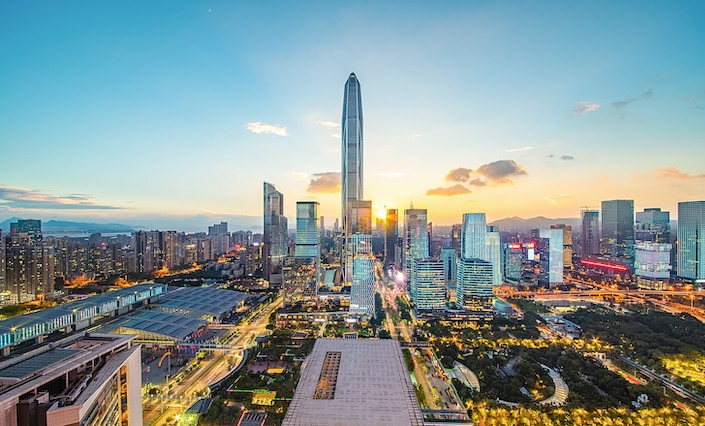
Many people are familiar with the meteoric rise of Shenzhen. In the 1970s, Shenzhen was just a cluster of small villages with less than 60,000 inhabitants near the border between mainland China (大陆 dàlù) and Hong Kong to the south.
Since its establishment as an SEZ in 1979, Shenzhen's population has grown to 17 million, making it the third most populous city in China.
Initially, the Shenzhen SEZ was defined by a mix of foreign investment, manufacturing, and favorable trade policies, all of which helped to result in an economic boom.
Today, Shenzhen boasts a dynamic, diversified economy and has even been dubbed the "Silicon Valley of the East" due to its many innovative science and technology companies.
Shenzhen's GDP reached 3.9 billion yuan in 1985 — 14 times what it was just five years earlier. Today, Shenzhen's GDP rivals that of many mid-sized countries, and the city is home to global technology leaders like Huawei, Tencent, and BYD.
Kashgar
The city of Kashgar has served as a trading post and strategically important city on the Silk Road (丝绸之路 Sīchóuzhī Lù) between China, the Middle East and Europe for over 2,000 years. Kashgar is a city in China's northwestern Xinjiang Province which borders Uzbekistan, Tajikistan and Pakistan.
It has a diverse population and roughly 85% of its residents are Uyghur (维吾尔族 Wéiwú'ěrzú), one of China's ethnic minority groups.
In 2010, Kashgar was established as the sixth Chinese SEZ. Like other SEZs before it, the Kashgar SEZ seeks to capitalize on foreign investment and international trade links. One of the major economic functions of Kashgar is to serve as a commercial terminus in the China-Pakistan Economic Corridor, formed in 2013.
Garments represent a significant share of Kashgar's exports, reflecting the region's focus on labor-intensive manufacturing.
The jury is still out on the success of the Kashgar SEZ. Economic growth has been hindered by ethnic tensions in Xinjiang Province, a disjointed beginning to the China-Pakistan Economic Corridor, and more recently, the COVID-19 pandemic.
Whether it will take its place among the ranks of China's SEZ success stories remains to be seen.

04 Analyzing China's Special Economic Zones
The goal of SEZs is to spur economic growth and promote foreign investment. When governments initiate an SEZ, they generally believe the pros outweigh the cons, but sometimes, that is a matter of perspective.
Pros
| Advantage | Description |
|---|---|
| Employment | Businesses are incentivized to participate in SEZs, generating new employment opportunities for the local community. |
| Innovation | SEZs provide tax credits and technological subsidies and attract enterprises that promote innovation. |
| Foreign Investment | Inflows of foreign investment allow for the transfer of technology and expertise into developing markets. |
| Specialized Zones | Targeted at specific economic activities like media or textiles, with infrastructure adapted accordingly, these zones can play a key role in industry development. |
Cons
| Disadvantage | Description |
|---|---|
| Economic Inequalities | Distinct socio-economic classes often emerge where businesses have tight control over earnings and employment. |
| Exploitation | Businesses have fewer incentives to protect workers' rights and may favor policies that promote economic growth at all costs. |
| Regional Inequalities | Development of an SEZ can cause an influx of capital and investment into certain regions, while others lag behind. |
| Pollution | Unchecked development without appropriate research on environmental impacts can lead to extensive environmental damage that is hard to reverse. |
| Corruption | SEZs often lead to an influx in capital, trade, and investment which, when combined with less governmental oversight, can lead to an increase in corrupt practices. |


Study Chinese in Guilin or Start Online
CLI offers personalized Chinese instruction built around your goals. Join our Immersion Program in Guilin or begin from anywhere with a free Chinese lesson .
05 Special Economic Zones Around the World
Free trade zones have been used for centuries to guarantee free storage and exchange along trade routes. Although most people today tend to think of China's Shenzhen when they think of SEZs, the modern SEZ was not invented in China.
In fact, Ireland created the first SEZ in 1959 with the establishment of the Shannon Free Trade Zone.
Since the establishment and subsequent success of the Chinese SEZs, their worldwide expansion has only grown as countries compete to push their economic growth as high as possible.
As of 2019, 147 countries had established some kind of SEZ, with the total number of SEZs worldwide nearing 5,400.
In 2013, China's Belt and Road Initiative (一带一路 Yīdài Yīlù) sought to provide finance and engineering expertise to build infrastructure across Eurasia and Africa, and Chinese-style SEZs have been one key export of this initiative.
While promoted as a viable option for developing markets, the jury is still out on whether Chinese-style SEZs can continue to promote impressive levels of growth without the help of central government planning and in the absence of the unique historical context in which they were developed in China.

06 Come to Guilin to Learn More!
While reading and learning about China's economy, society and language in English is great, it's more fun to do it in Chinese! We invite you to join CLI's expert Chinese teachers either in Guilin or online for in-depth, individualized Chinese classes.
CLI instructors are friendly, patient and experienced in helping students of all levels navigate the challenges of learning Chinese. Whether you want to brush up on your existing Chinese skills or take your first steps into the world of the Chinese language, CLI is for you! If you're wondering where to begin, our Chinese study plan can help you map out your first year of learning.
For those considering a deeper dive, studying abroad in China offers the chance to experience the economic and cultural transformation described in this article firsthand.
Frequently Asked Questions
What is a Special Economic Zone (SEZ)?
A Special Economic Zone is a designated area within a country where business and trade laws differ from those in the rest of the country. SEZs typically offer tax incentives, reduced tariffs, and other favorable policies designed to attract foreign investment and boost exports.
How many SEZs does China have?
China currently has five officially designated SEZs: Shenzhen, Zhuhai, Shantou, Xiamen, and the entire province of Hainan. In addition, the country has established dozens of free trade zones, economic and technological development zones, and high-tech industrial parks.
Why was Shenzhen chosen as China's first SEZ?
Shenzhen was chosen primarily because of its proximity to Hong Kong. Its location made it an ideal testing ground for market-oriented policies, enabling easy access to foreign capital, technology, and trade networks.
Did China invent the concept of Special Economic Zones?
No. Ireland created the first modern SEZ in 1959 with the Shannon Free Trade Zone. However, China's dramatic success with the model — particularly in Shenzhen — made SEZs globally famous and inspired their adoption in nearly 150 countries.
What does "reform and opening-up" mean?
"Reform and opening-up" (改革开放 gǎigé-kāifàng) refers to the set of economic policies introduced in China beginning in 1978 under the leadership of Deng Xiaoping. These policies shifted China away from a Soviet-style centrally planned economy toward one that embraced market forces, foreign investment, and global trade.
08 Useful SEZ Vocabulary
| Chinese | Pinyin | Translation |
|---|---|---|
| 经济特区 | Special Economic Zone | |
| 经济学家 | economist | |
| 改革开放 | reform and opening-up | |
| 外资 | foreign investment | |
| 科技 | science and technology | |
| 沿海开放城市 | Open Coastal City | |
| 丝绸之路 | Silk Road | |
| 一带一路 | Belt and Road Initiative | |
| 大陆 | mainland China | |
| 维吾尔族 | Uyghur ethnic group | |
| 中国特色社会主义 | Socialism with Chinese Characteristics | |
| 摸着石头过河 | crossing the river by feeling the stones |