
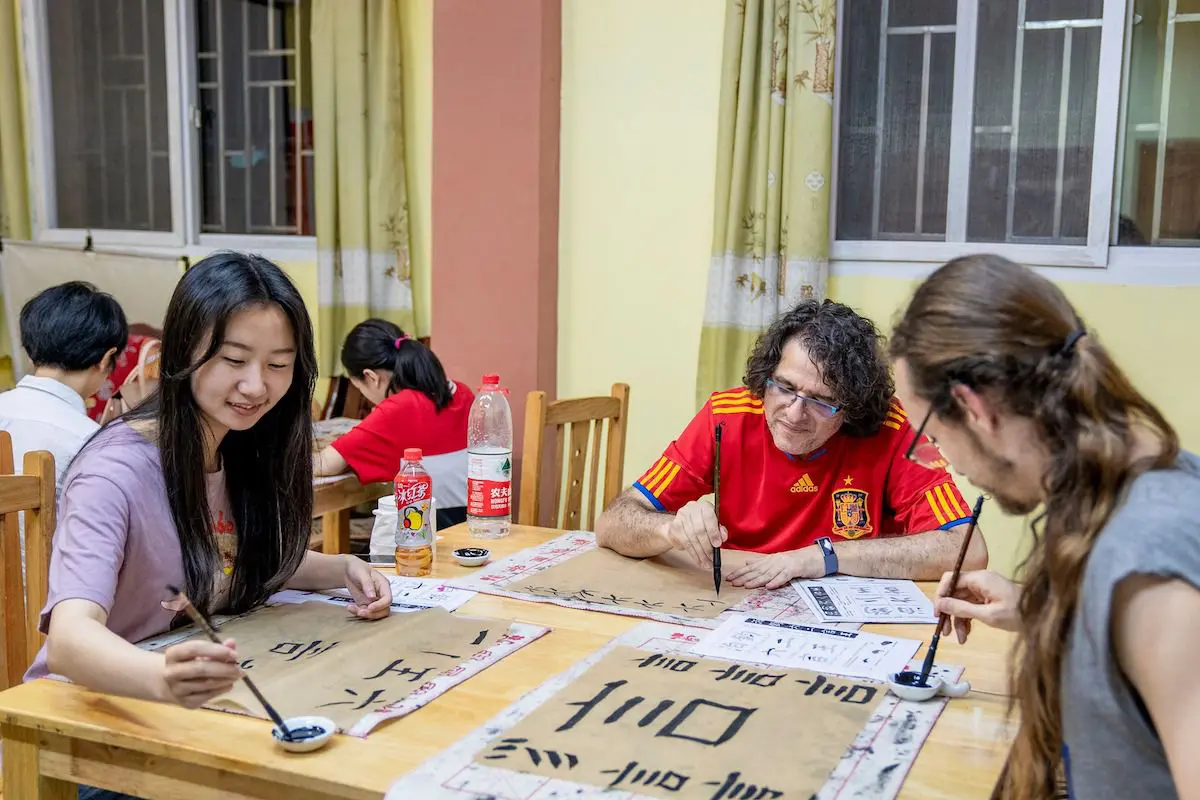
- Chinese calligraphy (书法, ) is the ancient art of Chinese handwriting, spanning thousands of years of cultural tradition.
- There are five main calligraphy scripts: Seal, Clerical, Regular, Running, and Cursive — each with a distinct aesthetic feel.
- Calligraphy etiquette covers specific brush-holding techniques, posture, and whole-body coordination.
- The Four Treasures of the Study (文房四宝) — brush, ink, paper, and inkstone — are the essential tools of the art.
- Mastering calligraphy takes years of disciplined practice, but learning the basics offers a powerful window into Chinese culture at any stage of your language-learning journey.
Ever wondered about the history of Chinese calligraphy or its many different styles? Calligraphy is an integral part of Chinese artistic culture, and calligraphic works are considered beautiful in their own right.
Read on for a deeper appreciation of this ancient art form through an exploration of its etiquette, tools, and history.
01 What is Chinese calligraphy?
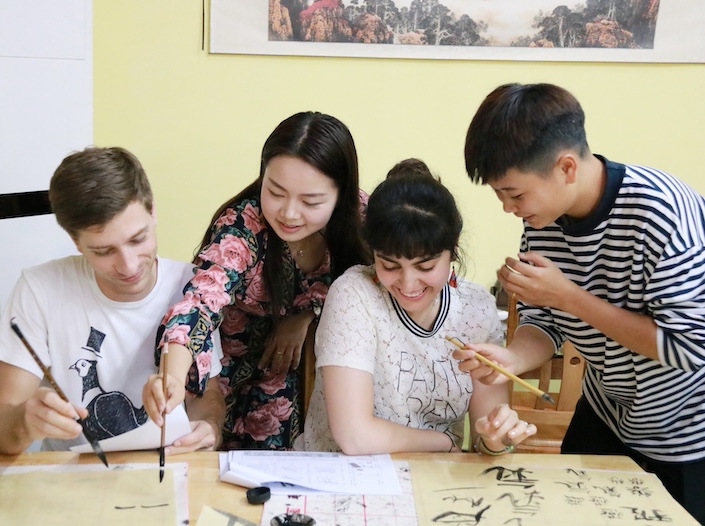
Chinese calligraphy (书法 ) is the ancient art of Chinese handwriting. It is an artistic way of writing Chinese characters that offers an important channel for appreciating traditional Chinese culture.
Calligraphy is traditionally rendered in traditional Chinese characters, and if you're new to Pinyin, our Pinyin chart is a helpful companion.
Chinese calligraphy conveys the thoughts and emotions of the calligrapher while revealing the abstract beauty of each character. It has a long history in Chinese culture, spanning thousands of years.
The history and origins of Chinese calligraphy
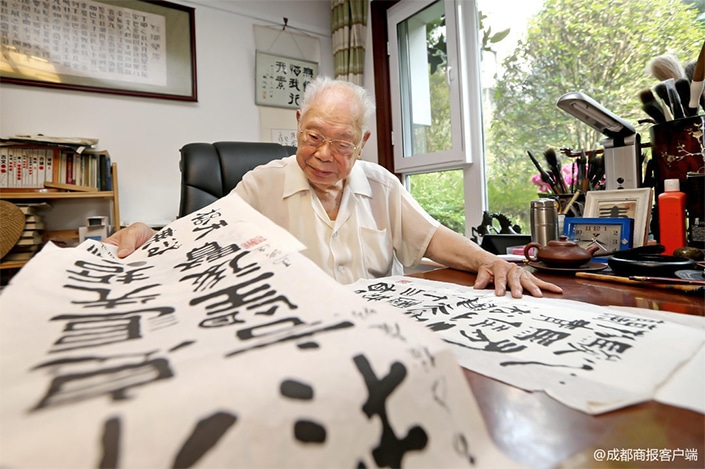
Today, calligraphy is most often practised as a meditative art form. In ancient China, however, it was far more than a hobby — it was an essential skill, much like handwriting letters in cursive once was before computers and email.
Chinese scholars and officials wrote government documents by hand, using what we now call calligraphy simply to render characters with a writing brush. Students in ancient China also used it to sit the famous imperial exams by hand.
Chinese calligraphy rose to prominence during the Han dynasty (206 BCE–220 CE). At first it was practised mainly by educated men and some noblewomen, since literacy was rare among ordinary people.
Over time, as it spread among the elite, the ability to render graceful, well-formed characters by hand became a mark of refinement and social prestige. The earliest Chinese characters began as simplified pictorial images, and exploring their Chinese etymology reveals why calligraphers treat every stroke as meaningful.
Soon, calligraphy was enshrined as one of the Six Arts (六艺 ) that formed the foundation of education in ancient China. Alongside calligraphy, these arts included ritual practice, music, archery, chariot driving, and mathematics.
The 5 scripts of Chinese calligraphy explained
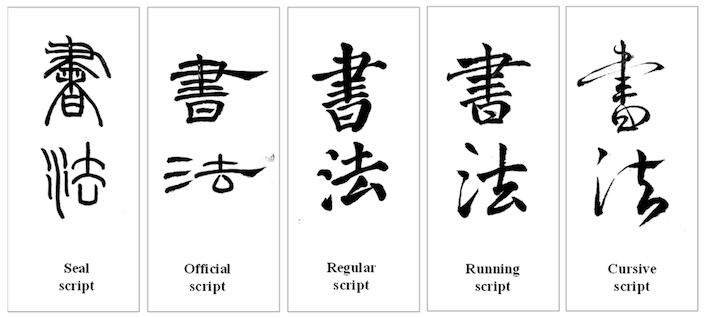
In Chinese calligraphy, characters can be written in five major styles or scripts: Seal (篆书 ), Clerical or Official (隶书 ), Regular (楷书 ), Running or Semi-Cursive (行书 ), and Cursive (草书 ).
Each script has its own aesthetic feel, so the style is chosen to suit the work the artist intends to create. Seal Script, for example, is an ancient style that many find hard to read, yet it is the oldest script still widely practised today.
Cursive Script is loose and flowing, creating a beautiful, almost abstract appearance. Regular Script, by contrast, is the clearest and most legible, which is why it appears so often in both print and digital media.
Because of its relative simplicity, Regular Script is usually the first style taught to beginners. It gives learners a solid foundation before they tackle the more advanced, flowing styles later.
Because Chinese characters also appear in other East Asian writing systems, you may enjoy our comparisons of Chinese vs Japanese and Chinese vs Korean.

Study Chinese in Guilin or Start Online
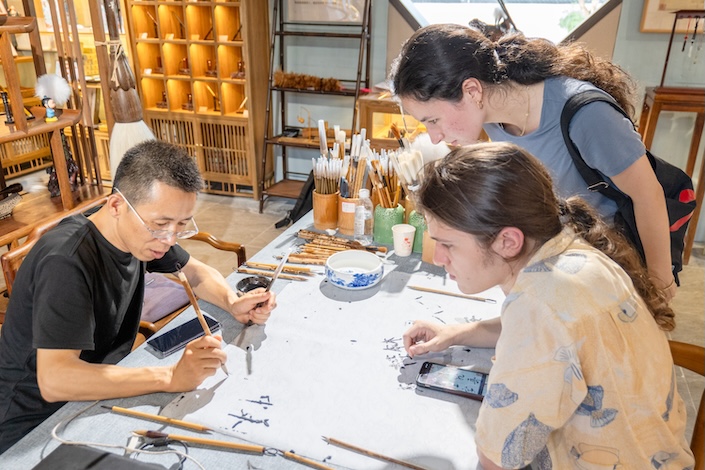
CLI offers personalized Chinese instruction built around your goals. Join our Immersion Program in Guilin or begin from anywhere with a free Chinese lesson.
02 Chinese calligraphy techniques and etiquette
Chinese calligraphy is not just about getting a character onto the page. The art comes with its own set of rules that modern calligraphers in China still observe and respect today.
How to hold a Chinese calligraphy brush
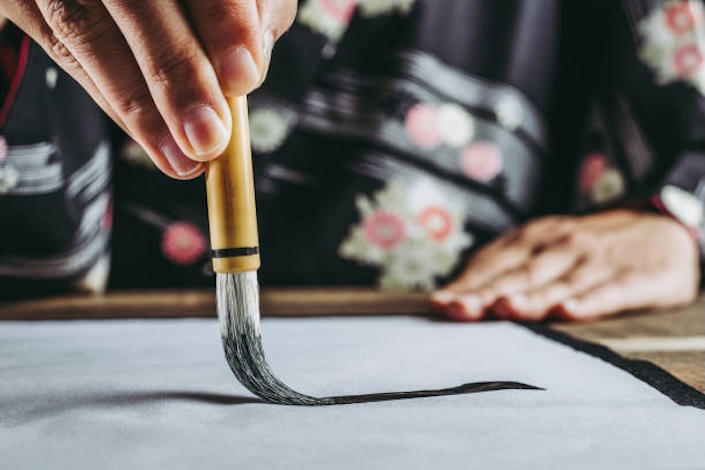
There are some basic rules for holding the calligraphy brush. In general, it should be held firmly in an open palm, with movement guided by turning and twisting the wrist rather than the arm.
Depending on the script you have in mind, the brush may be gripped near the top or closer to the bottom. There are several recognised brush-holding techniques:
- 枕腕 (): Writers rest their wrists on a table or on top of their non-writing hand. This technique is typically used by beginners.
- 提腕 (): Writers lift their wrists slightly while resting their forearms on the table.
- 悬腕 (): Writers hold their elbows and wrists suspended above the table with no support. This method is typically used by more experienced calligraphers and for cursive or running scripts.
Proper posture for Chinese calligraphy
Calligraphers also involve the whole body in creating their art. When seated, the head, neck, and shoulders stay relaxed, the torso upright and straight, and both feet flat on the ground.
If the calligrapher is standing, they usually rest the non-brush hand on the table for support. They then tilt forward slightly toward the writing surface.
03 Chinese calligraphy tools: The Four Treasures of the Study
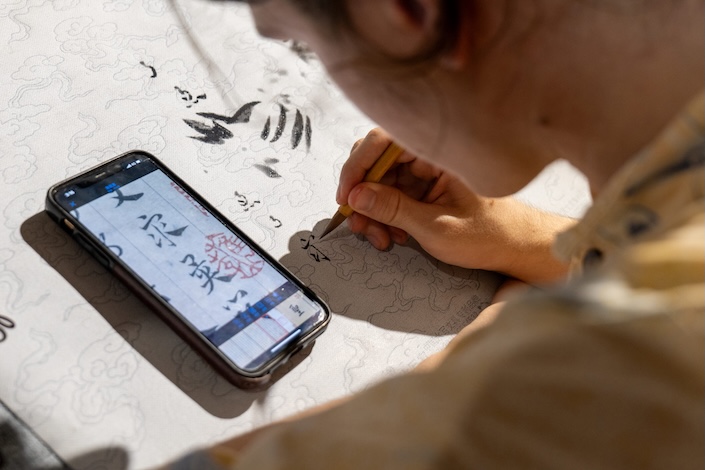
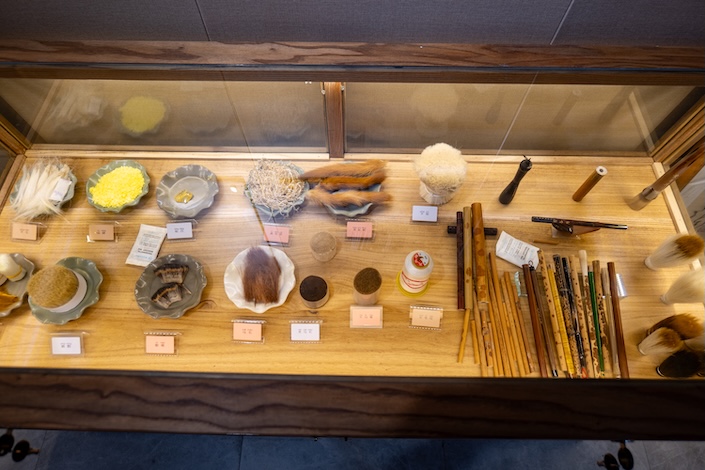
The materials used to create Chinese calligraphy are known as the Four Treasures of the Study (文房四宝 ). They are the brush (毛笔 ), ink (墨 ), paper (纸 ), and inkstone (砚 ).
Chinese calligraphy brushes
Traditionally, calligraphy brushes in ancient China were made from a mixture of different animal hairs. The oldest writing brush discovered so far dates back to the early Warring States Period (475–221 BCE) and was unearthed from a tomb in present-day Henan province.
Modern brushes are made mainly from goat, rabbit, or weasel hair, or a combination of the three. They are classed as soft (软毫 ), mixed (兼毫 ), or hard (硬毫 ).
Different brushes hold different amounts of ink, which produces different brushstroke styles. Brush handles are usually made from Chinese bamboo, though high-end brushes can be carved from bone or even jade.
Chinese calligraphy paper
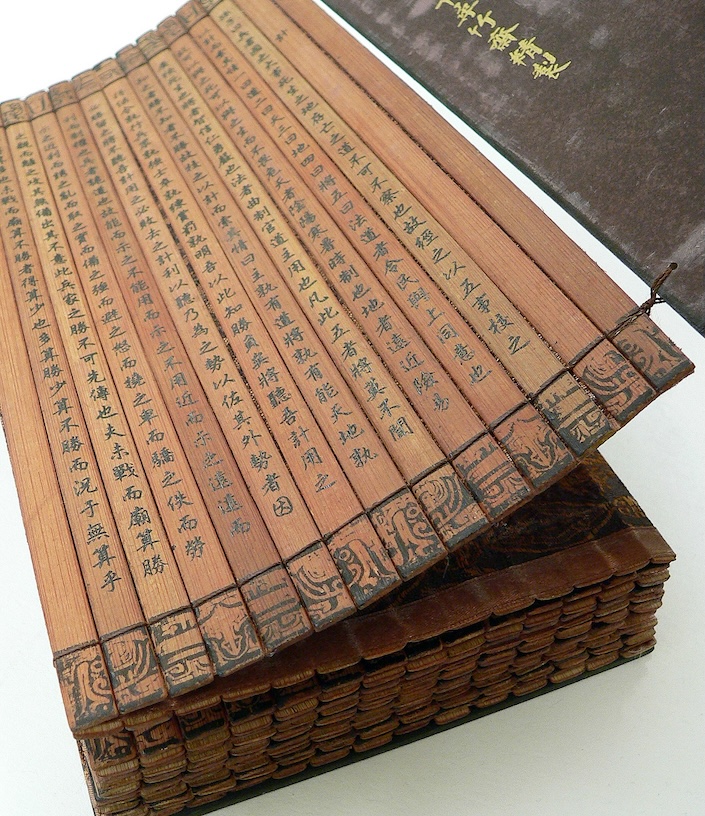
If you didn't know already, paper is one of the Four Great Inventions of ancient China. Before paper, one of the most widely used writing surfaces was actually bamboo — in fact, The Art of War was originally written on bamboo slips.
After paper was invented, calligraphers began using a variety of differently processed papers for their work. Today there is a wide range of calligraphy paper that varies in thickness and hardness, which affects how much ink is absorbed and how strokes render.
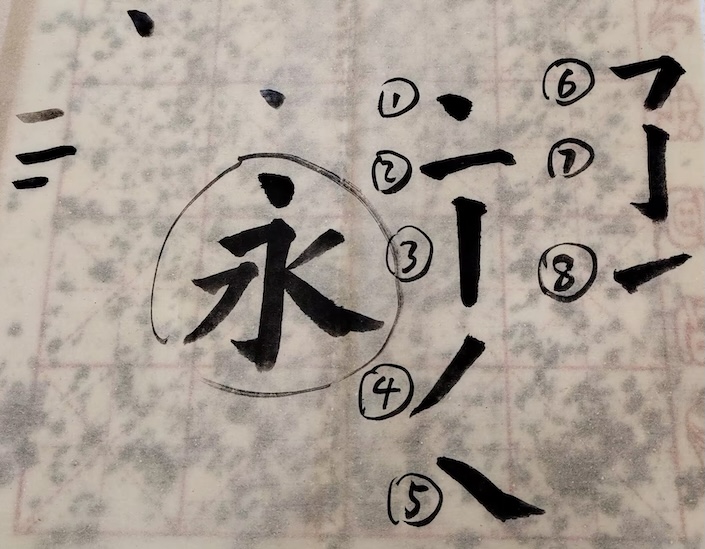
There is also a wide variety of training paper for calligraphy students. Practice sheets come printed with square boxes that help guide learners as they write.
Chinese ink and inkstone
Historically, calligraphy ink was made using soot (lampblack) for black inks and vermilion for red inks. Modern inks are mainly made from lacquer, oil, or pine soot mixed with glue.
Some inks include spices to give a pleasant aroma that enhances the experience, and the modern ink-making process generally takes about six weeks. Inks are sold either in liquid form or as dry ink sticks.
Inkstones are used to grind ink sticks into powder, after which slightly salty water is added to create a runny, ready-to-use ink. Over the years, intricately carved inkstones have become prized works of art in their own right.
04 Why Chinese calligraphy is considered an art form
Far from being a page of pretty "squiggles," each work of Chinese calligraphy is a piece of art demanding incredible brush control and attention to the whole composition. Both creating and appreciating it require an understanding of the philosophy and aesthetic behind the work.
Experienced calligraphers pay close attention to the position of each Chinese character on the page, the varying thickness of each stroke, and how stroke angles create depth and connection. Calligraphy also sits at the heart of classical Chinese literature, where the beauty of the writing was inseparable from the words themselves.
The practice carries its own rules and etiquette, giving it a sense of formality and reverence. Calligraphic couplets, for example, are still written by hand and displayed during Spring Festival, a holiday set by the traditional Chinese calendar.
05 How to learn Chinese calligraphy as a beginner
Chinese calligraphy is beautiful — and incredibly difficult, often taking artists years or even a lifetime to master. If you've ever wondered how long it takes to learn Chinese, the calligraphy dimension adds a whole new layer to that question.
The good news is that you don't need to be a master to benefit from practising this art. Even beginners who pick up a brush gain a deeper sense of stroke order and character structure — skills that reinforce broader language learning.
Whether you're studying Chinese at university or learning Chinese as an adult, calligraphy strengthens your connection to the characters in ways that flashcards and apps cannot. For faster progress, pairing calligraphy with intensive language immersion creates a powerful learning environment.
In a city like Guilin, where calligraphy appears everywhere from temple inscriptions to street signs to tea-house decorations, the art form comes alive in ways no textbook can match. If your goal is to Learn Chinese in China, immersing yourself in places where the brush is part of daily life makes every character more meaningful.
Many CLI students find that calligraphy sessions complement their one-on-one Chinese lessons by building muscle memory for character structure. The focused, meditative nature of brush writing also helps reinforce vocabulary retention — a benefit that carries over into reading and writing fluency.
To understand Chinese calligraphy more deeply, it helps to keep learning about the characters that make up this ancient art. We invite you to sign up for a free trial class today and start your Chinese learning journey with CLI.
06 Chinese calligraphy vocabulary with pinyin
| Chinese | Pinyin | Translation |
|---|---|---|
| 书法 | calligraphy | |
| 六艺 | Six Arts | |
| 篆书 | Seal Script | |
| 隶书 | Clerical Script | |
| 楷书 | Regular Script | |
| 行书 | Running Script | |
| 草书 | Cursive Script | |
| 枕腕 | rested wrist technique | |
| 提腕 | raised wrist technique | |
| 悬腕 | suspended wrist technique | |
| 文房四宝 | Four Treasures of the Study | |
| 毛笔 | writing brush | |
| 墨 | ink | |
| 纸 | paper | |
| 砚 | inkstone | |
| 软毫 | soft brush | |
| 兼毫 | mixed brush | |
| 硬毫 | hard brush |
07 Chinese calligraphy FAQ
What are the five scripts of Chinese calligraphy?
The five main scripts are Seal (篆书), Clerical (隶书), Regular (楷书), Running (行书), and Cursive (草书). Each developed at a different point in history and carries its own distinct aesthetic.
What are the Four Treasures of the Study?
The Four Treasures of the Study (文房四宝) are the brush, ink, paper, and inkstone. Together they form the essential toolkit for traditional Chinese calligraphy.
Is Chinese calligraphy hard to learn?
Reaching true mastery can take years or even a lifetime of disciplined practice. However, beginners can learn the basics relatively quickly and still gain real insight into character structure and stroke order.
Which calligraphy script is best for beginners?
Regular Script (楷书 kǎishū) is usually recommended for beginners. It is the clearest and most legible style, providing a strong foundation before moving on to flowing scripts like Running and Cursive.
What is the difference between Chinese calligraphy and Chinese painting?
The two arts share the same brush, ink, and many techniques, so they have always been closely related. Calligraphy focuses on the artistic writing of characters, while painting depicts images, though a single work often combines both.