

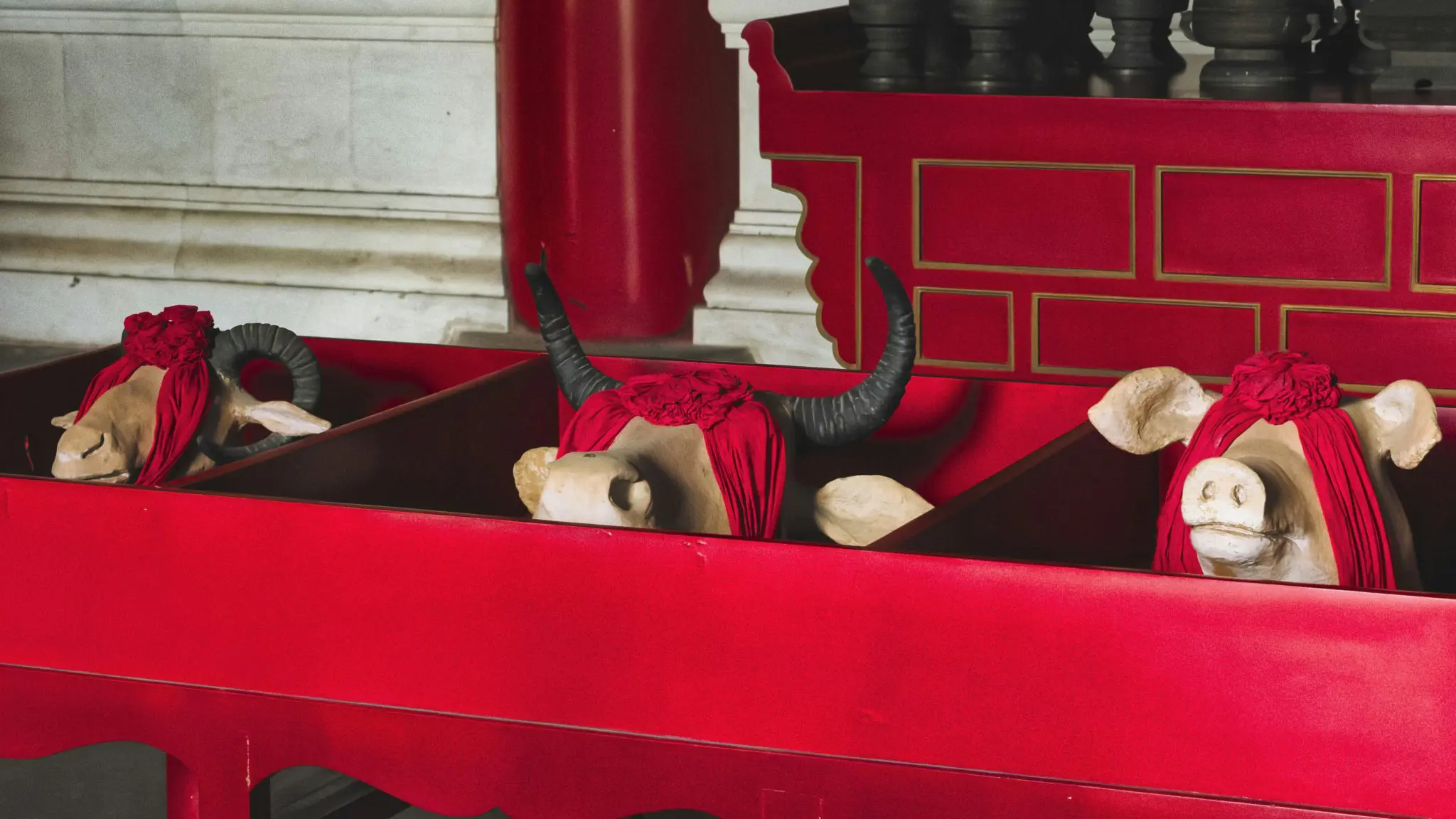
- The Ox is the second animal in the 12-year Chinese zodiac cycle, known in Chinese as 生肖 (shēngxiào).
- The Chinese word for ox is 牛 (niú), a broad term that can refer to several bovine animals.
- People born in Ox years are traditionally associated with reliability, diligence, honesty, patience, and resilience.
- Recent Ox years include 1937, 1949, 1961, 1973, 1985, 1997, 2009, and 2021.
- In Chinese astrology, an Ox year is also a 本命年 (běnmìngnián) for people born under the Ox sign.
Many people believe that the Chinese zodiac year in which you were born can influence personality, relationships, luck, and life path. The Year of the Ox, known in Chinese as 牛年 (niúnián), is one of the most respected signs in the zodiac cycle.
The Ox is associated with hard work, strength, patience, reliability, and quiet determination. In traditional Chinese culture, these qualities reflect the important role that oxen and other bovines played in farming, transport, and daily life.
The Chinese zodiac is closely connected with the traditional Chinese calendar. Because zodiac years follow the lunisolar calendar rather than the Gregorian calendar, each zodiac year begins and ends on different Gregorian dates.
For learners, zodiac culture is also a useful way to understand Chinese customs, greetings, family conversations, and holiday traditions. If your goal is to Learn Chinese in China, the Year of the Ox offers a meaningful doorway into both language and culture.
01 When is the Year of the Ox?
The Chinese zodiac operates on a 12-year cycle, with each year assigned to one of 12 zodiac animals. The Ox is the second animal in this cycle, following the Rat and coming before the Tiger.
Unlike the Gregorian calendar, which begins on January 1, Chinese zodiac years are based on the traditional Chinese lunisolar calendar. This means the start date of an Ox year usually falls in late January or February.
The most recent Year of the Ox began on February 12, 2021 and ended on January 31, 2022. People born during that period are traditionally said to have been born under the Ox sign.
| Ox year | Chinese element | Common name |
|---|---|---|
| 1937 | Fire | Fire Ox |
| 1949 | Earth | Earth Ox |
| 1961 | Metal | Metal Ox |
| 1973 | Water | Water Ox |
| 1985 | Wood | Wood Ox |
| 1997 | Fire | Fire Ox |
| 2009 | Earth | Earth Ox |
| 2021 | Metal | Metal Ox |
If you were born near the beginning of one of these Gregorian years, it is worth checking the exact Chinese New Year date for your birth year. Someone born in January 1997, for example, may still belong to the Rat year rather than the Ox year.

The Year of the Metal Ox
The year 2021 was not only the Year of the Ox. It was also the Year of the Metal Ox, or 辛丑年 (xīnchǒu nián).
This comes from the traditional 60-year cycle formed by combining the Ten Heavenly Stems with the Twelve Earthly Branches. These systems are also connected with the Five Elements: Wood, Fire, Earth, Metal, and Water.
In this system, 2021 corresponds to the 辛丑 (xīnchǒu) stem-branch combination. It is therefore commonly described as a Yin Metal Ox year.
02 The Ox in Chinese language and culture
In Chinese, the Year of the Ox is called 牛年 (niúnián). The character 牛 (niú) is often translated as “cow,” but it can refer more broadly to cattle, oxen, bulls, and other bovines.
This is why the English name “Year of the Ox” can feel a little confusing. A more literal translation might be “Year of the Bovine,” but “Year of the Ox” is the standard and more elegant English rendering.
| Chinese | Pinyin | Meaning | Notes |
|---|---|---|---|
| 牛 | Ox; cow; cattle | Broad term for bovine animals | |
| 牛年 | Year of the Ox | The second year in the zodiac cycle | |
| 水牛 | Water buffalo | Important animal in traditional agriculture | |
| 公牛 | Bull | Male bovine animal | |
| 母牛 | Cow | Female bovine animal |
Why “Year of the Ox” and not “Year of the Cow”?
The Chinese character 牛 is flexible and can refer to several related animals. This broad meaning is one reason English translations vary across contexts.
In zodiac writing, “Ox” has become the most common English translation. It also fits the traditional image of a strong, hardworking animal associated with farming and endurance.
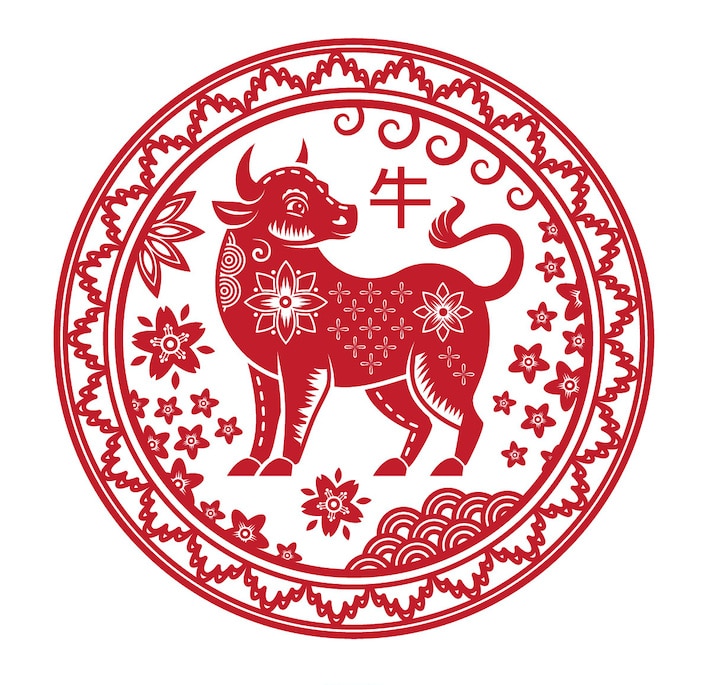
It’s good to be an Ox
Throughout Chinese history, oxen and related animals such as water buffalo played essential roles in agriculture, transport, and rural life. They were valued for their strength, endurance, and ability to support human communities.
Because of this, the Ox is traditionally seen as a symbol of hard work, diligence, reliability, and quiet contribution. These positive meanings also appear in modern Chinese expressions.
For example, the phrase 你很牛 (nǐ hěn niú) literally sounds like “you are very ox.” In everyday Chinese, however, it is a compliment meaning that someone is impressive, awesome, or really capable.
If you are building your Mandarin vocabulary, this is a useful reminder that Chinese animal words often carry cultural meanings beyond their literal definitions. CLI’s guide to Chinese idioms explores more expressions where compact phrases carry deeper meaning.
03 The Great Race and the origins of the Year of the Ox
One of the most famous stories explaining the Chinese zodiac is the Great Race. According to legend, the Jade Emperor declared that the first 12 animals to cross a mighty river would each receive a year in the zodiac cycle.
The Ox was strong, steady, and well suited to crossing the river. In many versions of the story, the Rat secretly rode on the Ox’s back and jumped ahead just before the finish line.
This trick allowed the Rat to finish first, while the Ox came second. That is why the Ox appears after the Rat in the traditional zodiac order.

The Great Race is a useful story for remembering the order of the zodiac animals. It also reflects the Ox’s symbolic role as strong, dependable, and patient, even when others act more cleverly or opportunistically.
04 Year of the Ox personality traits
People born in the Year of the Ox are traditionally believed to inherit qualities associated with the animal. They are often described as strong, reliable, patient, honest, conscientious, and hardworking.
Ox personalities are also associated with stability and integrity. They are thought to be down-to-earth people who prefer steady progress over dramatic change.
- Strengths: reliable, diligent, honest, patient, fair, persistent, responsible
- Challenges: stubborn, slow to change, uncompromising, reserved, opinionated
- Core theme: steady strength expressed through effort, loyalty, and perseverance
As with all zodiac signs, the Ox has both positive and negative associations. Its grounded nature can become stubbornness when taken too far.
People born under the Ox sign are sometimes said to speak little but hold strong views. They may dislike being challenged, especially when they believe they have already chosen the correct path.
Compatibility with other zodiac signs
In traditional zodiac compatibility, the Ox is often considered most compatible with the Snake, Rooster, and Rat. These signs are said to share or complement the Ox’s steady, goal-oriented nature.
The Ox is often considered less compatible with the Tiger, Dragon, Horse, and Goat. These pairings are traditionally seen as more likely to involve clashes in temperament or communication style.
These interpretations are part of folk tradition rather than fixed rules. They remain culturally visible in matchmaking, family discussions, wedding planning, and zodiac-themed entertainment.


Study Chinese in Guilin or Start Online
CLI offers personalized Chinese instruction built around your goals. Join our Immersion Program in Guilin or begin from anywhere with a free Chinese lesson .
05 The unlucky 本命年: your zodiac birth year
In Chinese astrology, your 本命年 (běnmìngnián) is your zodiac birth year. This occurs every 12 years, whenever the zodiac year matches the animal sign under which you were born.
If you were born in an Ox year, every later Ox year is your 本命年. For example, 2021 was a 本命年 for people born in 2009, 1997, 1985, 1973, and other Ox years.
Although this sounds lucky, traditional belief often treats 本命年 as a challenging year. It is commonly associated with caution, instability, and the need to avoid unnecessary risks.
Offending Tai Sui and bad luck
In Chinese astrology, Tai Sui, written 太岁 (tàisuì), is sometimes called the God of the Year. People are traditionally said to “offend Tai Sui” during their own zodiac year.
This belief is connected with older ideas about Jupiter, star cycles, and annual energies. In popular practice, it means that a person should be extra careful during their 本命年.

Some Chinese-language horoscopes describe a person’s 本命年 as a time to focus on self-development, health, and careful decision-making. These predictions should be understood as cultural and astrological traditions rather than factual guarantees.
Traditional remedies
One common way to ward off bad luck during 本命年 is to wear red. Red is considered an auspicious color in Chinese culture and is believed to repel misfortune.
Some people wear red clothing, red bracelets, or red underwear during their zodiac year. Others may wear or display a 貔貅 (píxiū) amulet, a mythical creature associated with protection and wealth.
Red also appears widely during Chinese New Year, from decorations to envelopes and lanterns. CLI’s guide to hóngbāo explains the cultural meaning of red envelopes during Chinese celebrations.

06 Celebrating the Year of the Ox
The Year of the Ox is a meaningful time to reflect on qualities such as steadfastness, resilience, patience, and diligence. These values are especially appropriate during Chinese New Year, one of the most important holidays in Chinese culture.
Chinese New Year is traditionally celebrated with family gatherings, festive meals, decorations, greetings, and gifts. Zodiac animals often appear on posters, paper cuttings, red envelopes, and holiday displays.
If you are celebrating an Ox year, you can learn Chinese New Year greetings, decorate with Ox imagery, or give a meaningful Chinese-style gift. You can also explore CLI’s broader guide to Chinese holidays to understand how the festival fits into the traditional calendar.

A common New Year greeting for an Ox year is 牛年大吉 (niúnián dàjí), meaning “great luck in the Year of the Ox.” You may also hear 新年快乐 (xīnnián kuàilè), meaning “Happy New Year.”
07 Year of the Ox vocabulary
The following vocabulary will help you discuss the Year of the Ox, zodiac signs, Chinese New Year, and related cultural ideas in Mandarin.
| Chinese | Pinyin | Meaning | Notes |
|---|---|---|---|
| 牛 | Ox; cow; cattle | The zodiac animal for the Year of the Ox | |
| 牛年 | Year of the Ox | The second year in the zodiac cycle | |
| 生肖 | Chinese zodiac | The 12-animal zodiac cycle | |
| 属牛 | Born in the Year of the Ox | Used when discussing someone’s zodiac sign | |
| 金牛 | Metal Ox | Associated with the 2021 Ox year | |
| 辛丑 | Xin-chou stem-branch combination | The traditional designation for 2021 | |
| 本命年 | Zodiac birth year | Occurs every 12 years | |
| 太岁 | Tai Sui; God of the Year | Associated with zodiac-year caution | |
| 勤劳 | Hardworking; diligent | A common Ox personality trait | |
| 可靠 | Reliable | Often associated with Ox personalities | |
| 固执 | Stubborn | A possible Ox weakness | |
| 牛年大吉 | Great luck in the Year of the Ox | Festive New Year greeting |
08 FAQ
What years are the Year of the Ox?
Recent Ox years include 1937, 1949, 1961, 1973, 1985, 1997, 2009, and 2021. Exact zodiac-year dates vary because they follow the traditional Chinese calendar.
What is the Chinese character for Ox?
The Chinese character for ox is 牛 (niú). It can also refer broadly to cattle, cows, bulls, or other bovine animals depending on context.
What personality traits are associated with the Ox?
People born in the Year of the Ox are traditionally associated with reliability, patience, diligence, honesty, stability, and perseverance. They may also be described as stubborn or slow to change.
What does 本命年 mean?
本命年 (běnmìngnián) means zodiac birth year. It occurs every 12 years when the current zodiac year matches the animal sign of your birth year.
Was 2021 the Year of the Ox?
Yes. The 2021 Year of the Ox began on February 12, 2021 and ended on January 31, 2022. It was specifically a Metal Ox year.
09 Final thoughts
The Year of the Ox brings together language, astrology, agriculture, folklore, and New Year tradition. Its associations with diligence, patience, reliability, and resilience make it one of the most respected signs in the Chinese zodiac.
For Chinese learners, the Ox is also a useful cultural and linguistic symbol. Understanding words like 牛, 牛年, 生肖, and 本命年 can make zodiac conversations, festival greetings, and cultural references much easier to follow.