


- Guan Zhong (管仲, Guǎn Zhòng) was a Spring and Autumn–period statesman credited with transforming the State of Qi into a powerful, well-organized state through pragmatic governance and economic policy.
- He is associated with the idea that good governance depends on repeatable institutions, administrative systems, and treating economic conditions as a core tool of political stability.
- Confucius praised Guan Zhong in the Analects for helping preserve Zhou cultural order — a notable endorsement from a thinker who prioritized moral cultivation.
- The Guanzi (《管子》), the classic text attributed to him, is widely regarded as a heterogeneous compilation rather than a single-author work, but it remains a key reference for early Chinese statecraft thinking.
In the long sweep of Chinese history, few advisors loom as large as Guan Zhong (管仲 Guǎn Zhòng) — a Spring and Autumn–period statesman remembered for turning the State of Qi (齐国 Qíguó) into a powerhouse of wealth, organization, and regional influence.
In this guide, we'll explain who Guan Zhong was, what ideas he's associated with, why Confucius praised him (controversially), and how the classic text Guanzi (《管子》 Guǎnzi) shaped later Chinese thinking about governance, economics, and statecraft — and what it means for those looking to learn Chinese in China through real cultural depth.
01 Who Was Guan Zhong?
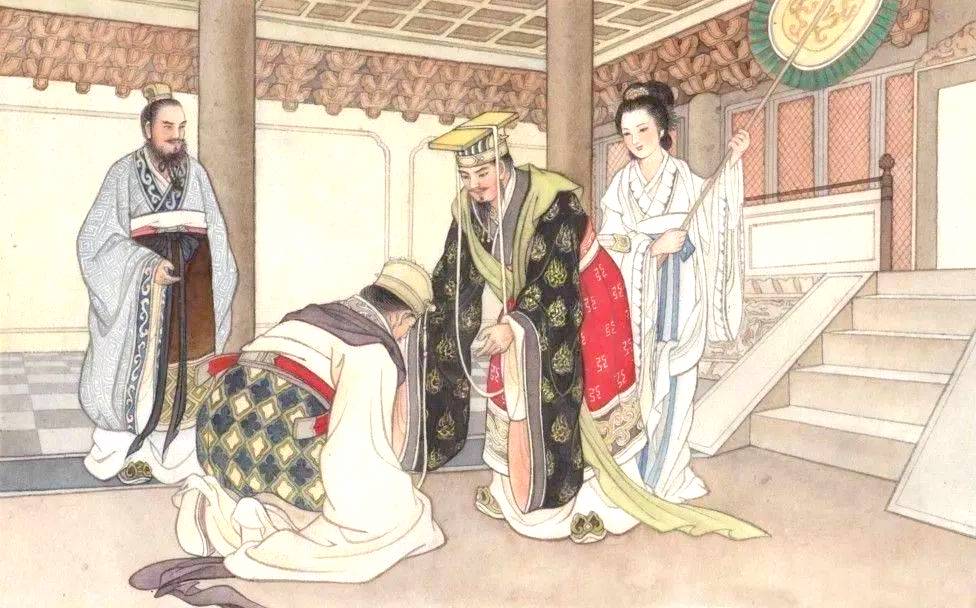
Guan Zhong (管仲) is traditionally remembered as the chief minister of Qi during the Spring and Autumn period (春秋时期 Chūnqiū shíqī). He is most closely associated with Duke Huan of Qi (齐桓公 Qí Huángōng), one of the era's dominant rulers.
In the broadest sense, Guan Zhong became famous for a simple (but difficult) agenda: make the state rich, organized, and governable. Later tradition credits him with strengthening institutions, improving administrative capacity, and treating economic policy as a core tool of governance — not a side issue.
If you're new to Chinese historical reading, it helps to orient your "map" of cultural material. Start with our Chinese culture collection, then use the Chinese literature guide to understand how classical texts (like the Analects and Guanzi) fit into the broader tradition.
02 Guan Zhong's "Legend": Why He Became a Symbol of Statecraft
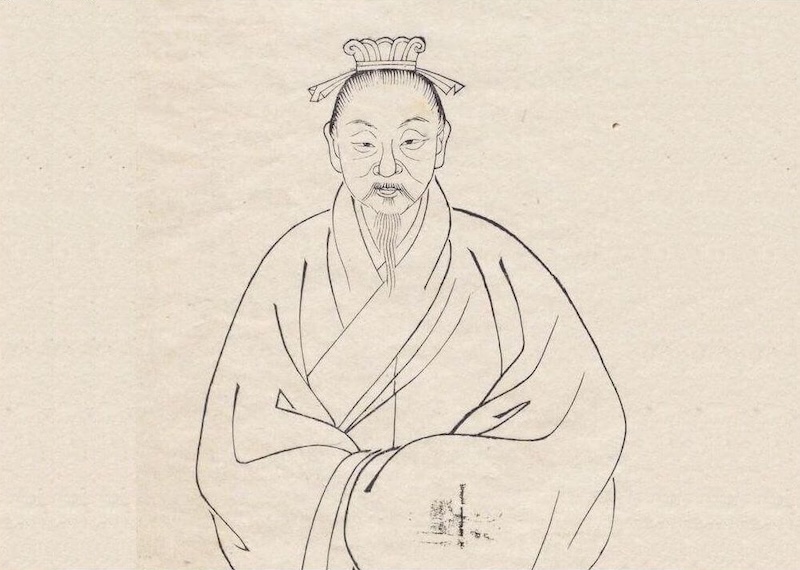
In Chinese historical memory, Guan Zhong represents a particular archetype: the high-capacity minister who builds systems that outlast personalities. When later thinkers argued about how to govern — whether through moral cultivation, strong institutions, clear incentives, or economic management — Guan Zhong was often invoked as an early exemplar of "practical" governance.
Governance as Systems, Not Slogans
A recurring theme in later discussions of Guan Zhong is that good government depends on repeatable structures: predictable rules, administrative routines, and coordination mechanisms that make a state coherent.
For modern readers, this matters because it reframes "leadership" as design. A ruler's vision is limited without implementation capacity — and Guan Zhong's reputation largely rests on building that capacity.
Economics as a Tool of Political Stability
Guan Zhong is also linked (especially through the Guanzi tradition) to the idea that economic conditions — prices, resource flows, production incentives, and household stability — are not "below politics." They are politics.
This is one reason his name is frequently associated with "statecraft" chapters in the Guanzi, including discussions that treat markets and material resources as levers of order. For broader context on how economic and political thought developed in China, see our overview of Chinese special economic zones.
03 Confucius on Guan Zhong: Praise That Surprised Later Readers
One of the most cited reasons Guan Zhong remains famous is that Confucius spoke positively about him in the Analects (《论语》 Lúnyǔ) — even though Guan Zhong is not usually framed as a "Confucian moralist." For a broader selection of Confucian thought, see our collection of Confucius quotes.
A Famous Line from the Analects
In one passage, Confucius credits Guan Zhong with helping Duke Huan bring order among the feudal lords "without weapons of war," and in another he adds a striking cultural claim: without Guan Zhong, "we would now be wearing our hair disheveled" and fastening our robes in the "barbarian" style (i.e., left-over-right).
Why does that matter? Because it shows what Confucius valued in this case: political stabilization that preserved Zhou cultural norms. Even for a thinker who prioritized moral cultivation, the prevention of disorder mattered — especially if disorder meant cultural breakdown.
For readers interested in how norms and social order relate, see Chinese society & family, which explores long-running cultural concepts (hierarchy, roles, social obligation) that shape how "order" is understood in different historical contexts.
04 What Is the Guanzi (《管子》), and Did Guan Zhong Write It?
The text most closely associated with Guan Zhong is the Guanzi (《管子》). But it's important to be precise: the Guanzi is widely treated in modern scholarship as a heterogeneous compilation rather than a single-author work.
A "Library," Not a Single Voice
The Guanzi contains material that later readers grouped under multiple philosophical tendencies — often including passages that feel "administrative," "economic," "ritual," or "cosmological." In other words, it reads less like one person's manifesto and more like a curated toolbox of statecraft ideas assembled over time.
This kind of compiled, attributed text is common in the classical Chinese tradition. Understanding how texts like this work is part of building broader Chinese literary literacy.
Why the Attribution Still Matters
Even if Guan Zhong did not author the entire text, attaching his name to the collection signals something about how later generations remembered him: as the emblem of practical governance and institutional design. The "Guan Zhong brand" became a way to label a certain kind of approach to ruling.
05 Why Guan Zhong Is Still Worth Reading About
Even if you never plan to read classical Chinese in the original, Guan Zhong remains useful for one big reason: he's a durable reference point for the idea that good governance is engineered — through institutions, incentives, and administrative clarity.
This is also a helpful lens for language learners. A lot of China-related vocabulary in English discussions — "state capacity," "reform," "order," "institutions," "administration," "policy" — maps onto Chinese terms that show up repeatedly across history, politics, and culture. Building familiarity with historical figures like Guan Zhong is one route into that vocabulary. If you're wondering how long that kind of reading ability takes to develop, see our guide on how long it takes to learn Chinese.

06 Key Terms and Vocabulary Related to Guan Zhong
If you want to read about figures like Guan Zhong in Chinese — even at a basic level — learning a few high-frequency historical and governance terms helps a lot. These words appear repeatedly in classical texts, historical writing, and modern discussions of Chinese political thought.
| Chinese | Pinyin | Meaning |
|---|---|---|
| 管仲 | Guan Zhong; the statesman this article is about | |
| 齐国 | The State of Qi; a major power in the Spring and Autumn period | |
| 齐桓公 | Duke Huan of Qi; the ruler most associated with Guan Zhong | |
| 春秋时期 | Spring and Autumn period; the era in which Guan Zhong lived | |
| 宰相 | Chief minister; the role Guan Zhong held under Duke Huan | |
| 治国 | To govern a state; a core concept in Guan Zhong's legacy | |
| 经济 | Economy; Guan Zhong's use of economic policy as a governance tool | |
| 制度 | Institution; system; central to Guan Zhong's approach to statecraft | |
| 论语 | The Analects; the Confucian text that contains praise of Guan Zhong | |
| 管子 | The Guanzi; the classic statecraft text attributed to Guan Zhong | |
| 霸主 | Hegemon; the dominant lord — the status Duke Huan achieved with Guan Zhong's help | |
| 诸侯 | Feudal lords; the regional rulers Guan Zhong helped Duke Huan bring to order |
To keep building from here, you might explore the basics of pinyin, our interactive pinyin chart, and our Chinese grammar guide. For character-level understanding, the guides on types of Chinese characters and Chinese character etymology are also useful context.

Learn Chinese with Cultural Context
CLI offers personalized Chinese instruction built around real language and culture. Join our Immersion Program in Guilin or start online with a free Chinese lesson.
Learn Chinese with Cultural Context (Online or in Guilin)
Reading about figures like Guan Zhong is a reminder that Chinese isn't just a language — it's a gateway into a civilization's debates about ethics, order, wealth, and human nature.
If you want to accelerate your progress, CLI's programs are built around high-feedback learning and daily practice:
- Chinese Immersion Program (study in Guilin with one-on-one instruction)
- Learn Chinese Online (one-on-one classes from anywhere)
- The CLI Center (Guilin) + Guilin travel guide (what it feels like to study here)
- Apply now (start dates, planning, and next steps)