

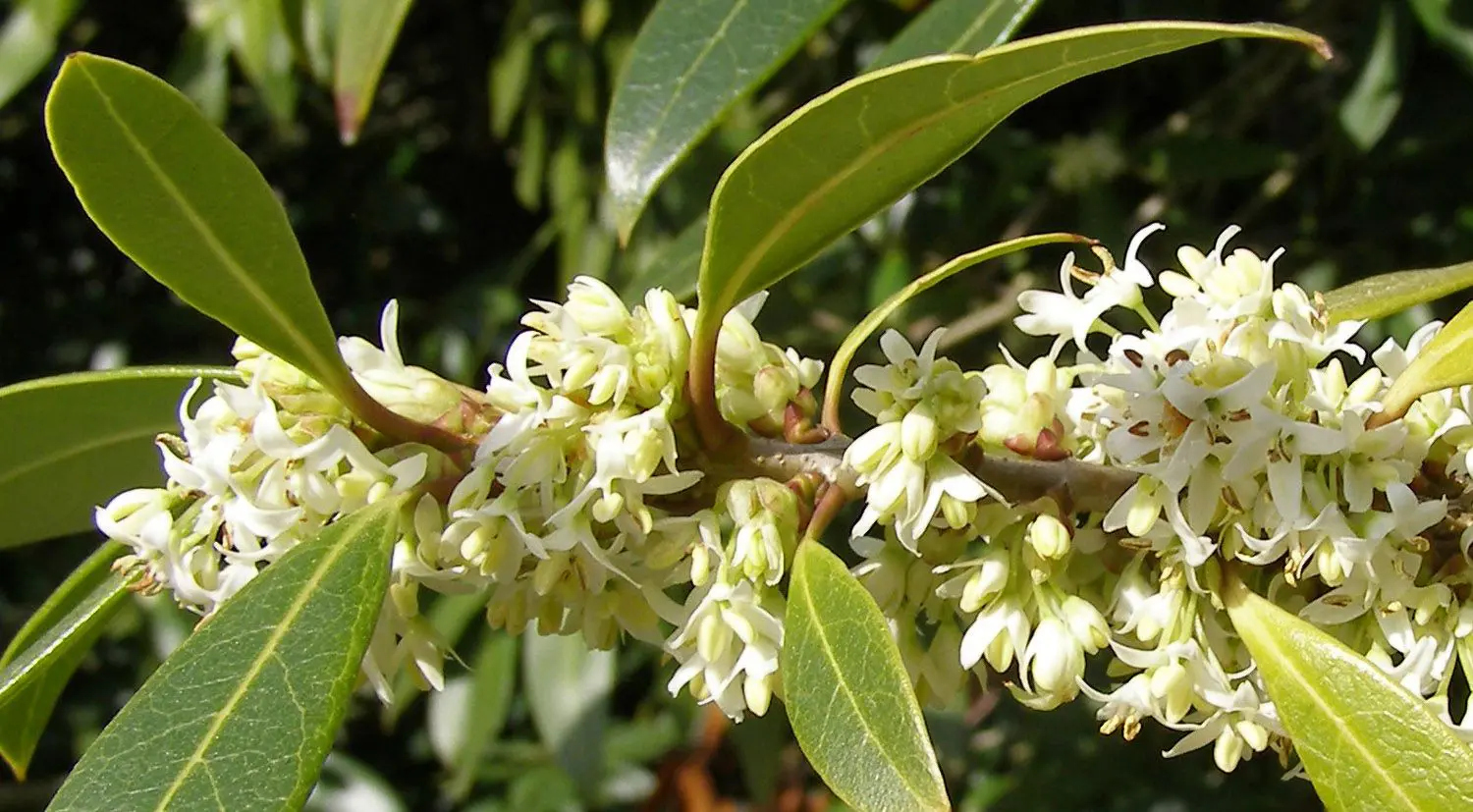
- Guilin (桂林, Guìlín) means "forest of sweet osmanthus" — a name that comes from the fragrant flowering trees planted throughout the city.
- The name breaks down into just two characters: 桂 (guì), the sweet osmanthus tree, and 林 (lín), forest or woods.
- Sweet osmanthus (桂花, guìhuā) blooms in late summer and autumn, filling Guilin's streets with a scent that locals describe as impossible to miss.
- The flowers are dried and brewed into osmanthus tea (桂花茶, guìhuā chá), sold everywhere in Guilin — from tea shops to ordinary convenience stores.
The names of Chinese cities often reflect physical features of the place they're in. Guilin 桂林, the home of CLI, is one of the clearest examples: its name means "Forest of Osmanthus."

The city is named after the countless osmanthus trees that line street after street in Guilin. Osmanthus is a fragrant flowering tree that blooms in autumn, and its off-white, yellow, and orange flowers 桂花 fill the air with a sweet perfume that puts just about everyone in a great mood.
Below, we break down the two characters in the city's name, look at the tree behind it, and explain how the flowers end up in your teacup. Along the way you'll pick up some useful vocabulary too.
01 What Does Guilin Mean?
Guilin (桂林, Guìlín) means "forest of sweet osmanthus." It is a short name with a simple structure, which makes it a good one for learners to take apart.
Breaking Down the Characters
The first character, 桂 (guì), is the sweet osmanthus tree. The second, 林 (lín), means forest or woods.
That second character is a nice illustration of how Chinese characters are built: 林 is simply the character for tree, 木 (mù), written twice. Two trees make a wood — and 森林 (sēnlín), the everyday word for forest, piles on a third.
The single character 桂 also stands in for Guangxi (广西, Guǎngxī), the autonomous region Guilin sits in, the way abbreviations shorten province names on license plates and in news headlines. According to our history of Guilin, the city was officially designated Guilin (桂林市, Guìlínshì) in 1940, though the name itself is far older.
Watch out for 桂 in isolation. Historically the character has referred to both the sweet osmanthus and cassia — the aromatic bark sold as Chinese cinnamon, which today is written 肉桂 (ròuguì).
In the city's name and in 桂花, though, osmanthus is what's meant.
How Chinese City Names Work
Guilin is far from unusual here. Plenty of Chinese city names describe geography, landmarks, or local features in plain terms.
Beijing 北京 means "Northern Capital." Hong Kong (Xianggang) 香港 means "Fragrant Port."
Foshan 佛山 means "Buddha Mountain," a name the city has carried since 628 CE, when villagers reportedly unearthed three bronze Buddha statues on a hill there.
Once you start noticing the pattern, city names become vocabulary practice rather than random syllables to memorize.
02 Meet the Sweet Osmanthus (桂花)
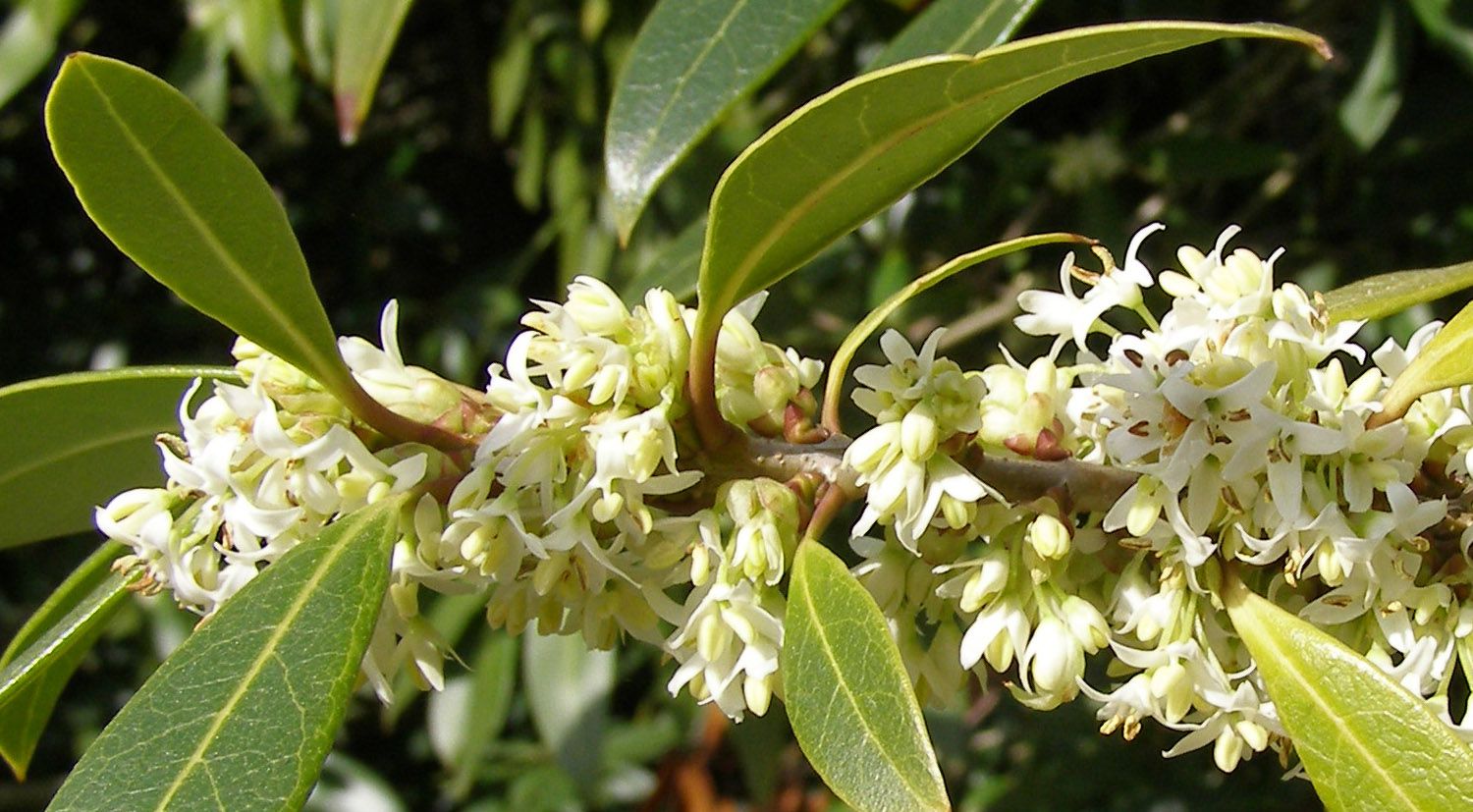
Sweet osmanthus (Osmanthus fragrans) belongs to the olive family, which is why English sometimes calls it sweet olive or tea olive. It grows as a shrub or small tree, generally somewhere between three and twelve meters tall.
The flowers themselves are unremarkable to look at: tiny four-petaled blooms in small clusters, ranging from off-white through pale yellow to orange. They appear in late summer and autumn, which is what makes September and October such a distinctive time of year in Guilin.
The scent is the whole point. It is sweet, slightly fruity, and strong enough that Chinese sometimes calls the plant 九里香 (jiǔ lǐ xiāng) — "fragrance for nine li" — roughly four and a half kilometers.
Walk through Guilin during peak bloom and you will smell the trees before you see them. It is the kind of sensory detail that sticks with people long after the karst peaks blur together.
If you want to experience the city living up to its name, plan around the bloom. Autumn is a good time to visit Guilin anyway — cooler than the humid summer and clearer than the spring rains — so check our Guilin travel guide when you're picking dates.
03 Osmanthus Tea and Other Local Flavors
Many locals collect the flowers and dry them in the sun. The dried blossoms are then brewed into a sweet, fragrant osmanthus tea, enjoyed on its own or mixed with Chinese tea.
Osmanthus tea 桂花茶 is so popular in Guilin that you can even buy bags of it in convenience stores. Blends with green tea or black tea leaves are common, and the flowers turn up in bottled drinks and milk teas as well.
The kitchen uses go well beyond tea. Osmanthus is folded into cakes and sweet soups, steeped into wine, and cooked down into a syrupy jam that gets spooned over desserts.
None of this makes osmanthus Guilin's only famous flavor — that title probably belongs to Guilin rice noodles. But the flowers are the one you can actually take home in your luggage.
Bottom line: if you visit Guilin, don't leave without sampling a cup of the city's namesake.
Ask for 我要一杯桂花茶 (wǒ yào yì bēi guìhuā chá) — "I'd like a cup of osmanthus tea." If you want the dried flowers to take home, 桂花 on its own is enough to get you pointed to the right shelf.
04 Osmanthus in Chinese Culture
Because osmanthus blooms in autumn, it is bound up with the Mid-Autumn Festival and, by extension, with the moon. Osmanthus wine and osmanthus cakes are traditional foods for the holiday.
Chinese mythology puts an osmanthus tree on the moon itself. In the legend of Wu Gang (吴刚), a man is banished there and set to chopping the tree down, only for it to heal after every stroke — an image of endless, futile effort.
The flower also carries a strong association with achievement. "Plucking osmanthus" (折桂, zhé guì) became a stock phrase for passing the imperial examinations, and it still turns up as a flourish for winning a top prize.
For learners, that layering is the interesting part. A single word can point at a tree, a scent, a festival food, a moon legend, and a metaphor for success all at once.

Study Chinese in Guilin or Start Online
CLI offers personalized Chinese instruction built around your goals. Join our Immersion Program in Guilin or begin from anywhere with a free Chinese lesson .
05 Useful Osmanthus and Guilin Vocabulary
The following words will help you talk about Guilin's name, its trees, and its tea.
| Chinese | Pinyin | Translation |
|---|---|---|
| 桂林 | Guilin (city name; "forest of sweet osmanthus") | |
| 桂花 | sweet osmanthus flower | |
| 桂树 | osmanthus tree | |
| 森林 | forest | |
| 树 | tree | |
| 桂花茶 | osmanthus tea | |
| 桂花酒 | osmanthus wine | |
| 桂花糕 | osmanthus cake | |
| 肉桂 | cassia; Chinese cinnamon | |
| 香 | fragrant; sweet-smelling | |
| 好香 | that smells great | |
| 开花 | to bloom; to blossom | |
| 秋天 | autumn; fall | |
| 中秋节 | Mid-Autumn Festival | |
| 月亮 | the moon | |
| 折桂 | to "pluck osmanthus"; to win top honors | |
| 广西 | Guangxi (Zhuang Autonomous Region) | |
| 桂林米粉 | Guilin rice noodles | |
| 便利店 | convenience store | |
| 北京 | Beijing ("Northern Capital") | |
| 香港 | Hong Kong ("Fragrant Port") | |
| 佛山 | Foshan ("Buddha Mountain") |
06 See Guilin for Yourself
Still curious about Guilin? Watch this video we produced called Guilin Is Beautiful.
A name only takes you so far, of course. Learn Chinese in China and words like 桂花 stop being flashcard entries and start being something you can smell on the walk to class.
That is much of the appeal of studying in Guilin: the vocabulary is standing right there on the street, waiting to be used.