


- The Year of the Dog (狗年 gǒunián) is the 11th year in the 12-year Chinese zodiac cycle.
- People born in 1946, 1958, 1970, 1982, 1994, 2006, 2018, and 2030 belong to the Year of the Dog.
- Dogs are known in Chinese astrology for being loyal, honest, and protective, but they can also be judgmental and pessimistic.
- The next Year of the Dog begins on February 3, 2030 and is associated with the Metal element.
- Dogs are most compatible with people born in the Year of the Rabbit, Horse, and Tiger.
In Chinese culture, each lunar year is associated with an animal that represents an astrological sign. Known for being loyal and honest, the dog is associated with year 11 in the cyclic 12-year Chinese zodiac calendar. Read on to learn more about the Year of the Dog and the importance of lunar astrology in the Middle Kingdom.

01 When is the Year of the Dog?
The Chinese Calendar is lunisolar, and each of its years is linked to one of 12 Chinese zodiac animals, which repeat every 12 years. These animals always appear in the same order.
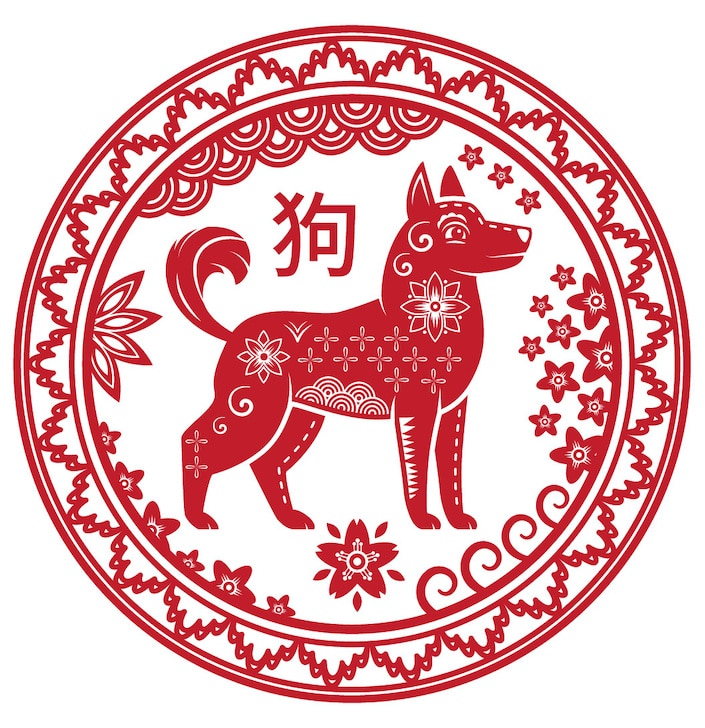
The Dog's position in the Chinese Zodiac
The 12 Chinese zodiac animals are the Rat, Ox, Tiger, Rabbit, Dragon, Snake, Horse, Goat, Monkey, Rooster, Dog and Pig. With each passing lunar year, the 12-year zodiac cycle rotates to the next animal in line.
The Chinese calendar is lunisolar: its months follow the moon, so the date of Chinese New Year (and the switch from one zodiac animal to the next) moves from year to year on the Western calendar. If you're planning ahead, the Chinese holidays calendar for 2030 lists the festival dates. China's official public-holiday schedule for a year is announced only late in the year before (the 2026 schedule came out on November 4, 2025).
According to ancient Chinese tradition, every person is represented by the zodiac animal of their birth year. Individuals born in 1946, 1958, 1970, 1982, 1994, 2006, 2018, 2030 belong to the Year of the Dog (狗年 gǒunián). If you were born in January or early February, check that year's Chinese New Year date, because anyone born before it takes the previous year's animal.
For all dogs and dog-lovers out there, note that the next Year of the Dog will begin on February 3, 2030. It will end on January 22, 2031.
Because the Chinese calendar is lunisolar, Chinese New Year (and each new zodiac year) falls on a different Gregorian date each year, always between January 21 and February 20. For a deeper look at how this works, see our guide to the traditional Chinese calendar.
02 2030: The Year of the Metal Dog
In addition to being associated with a zodiac animal, each new lunar year also aligns with one of the five traditional Chinese elements. These elements are known in Chinese as the 五行 (wǔxíng).
We won't go into the details of this part of zodiac philosophy here, but keep in mind that each lunar year pairs one of 10 heavenly stems (干 gān) with one of 12 earthly branches (支 zhī). The pairs run in a cycle of 60 stem-branch combinations.
Each combination is symbolized by one of the five elements (fire, water, wood, metal and earth). Stems, branches and elements are also the basis of traditional Chinese fortune-telling from a person's birth date and hour, a different system from Chinese numerology, which deals with lucky and unlucky numbers.
According to this system, 2030 is the Year of the Metal Dog. If you want to read more about the doctrines of Chinese astrology, there are plenty of resources online.

03 The dog in Chinese culture
The Dog sign makes more sense once you know how people in China think about dogs in general. Animals carry meaning outside the zodiac too: they turn up in feng shui and in everyday customs, where people use them to talk about personality and luck.
The myth of the dog
There are several myths used to explain the origins of the dog zodiac sign and how the dog came to represent the 11th year of this auspicious cycle. According to one well-known story, the Jade Emperor (the ruler of heaven in Chinese folk religion and Daoism) sought 12 animals to defend his palace.
In order to identify the most worthy animals for the task, he held a grand competition by inviting all animals on Earth to his palace for a festive banquet. Per the Emperor's decree, the 12 animals arriving first would be named as winners.
While on his way to the palace, the dog decided to stop for a quick bath in the river. This caused him to arrive late.
By the time he got to the palace, 10 animals had already arrived, so the dog ended up as number 11 on the zodiac, between the Rooster and Pig. The Year of the Dog is thus the eleventh year of the Chinese astrological calendar.

Characteristics of the dog
The dog is the ultimate symbol of loyalty, honesty and friendliness according to Chinese astrology. People with this astrological sign are thought to be reliable, genuine and forthright in their dealings with others.
Protective of those they love, dogs offer undying friendship and are willing to do anything for their friends. Dogs are also sensitive to their surroundings and possess a keen eye for detail.
However, dogs, like other zodiac animal signs, are also associated with several negative traits. They are known for being overly judgmental, self-righteous and pessimistic.
It can be difficult for dogs to compromise and they may come across as opinionated or difficult to please. Consumed by their quest to do what is right, they may become easily depressed, disappointed or emotionally insecure.

Compatibility with other zodiac animals
People born in the Year of the Dog are most compatible with those born in the Year of the Rabbit, Horse and Tiger. Horses and dogs often have deeply understanding and long relationships built on mutual respect and trust.
Kindness from tender rabbits helps dogs feel loved and supported. The protection offered by courageous tigers helps dogs feel safe and more willing to take risks.
However, as is the case with the animals associated with every sign on the Chinese zodiac, dogs are incompatible with some zodiac animals. Dogs and dragons, in particular, are known to have frequent personality conflicts due to their shared headstrong nature.
Also, dogs don't interact well with oxen or goats.

04 Celebrating the Year of the Dog
Understanding the Chinese zodiac, Chinese New Year and the importance of these customs in Chinese culture is a useful way to educate yourself about Chinese history and society. The best way to take in these traditions, though, is to learn Chinese in China and experience them first-hand.
Festivals, zodiac animals, seasonal foods, and family rituals all take on new meaning when you're immersed in the culture and language day to day. Check out this TED Talk by author and educator ShaoLan, who helps you understand more about how the zodiac affects life in China, and even the whole world, today.
Because Chinese New Year is the most important holiday in China and is observed all over the world by members of the Chinese diaspora, Chinese language students would be wise to educate themselves about the customs surrounding this important tradition. If you follow a Chinese study plan, the weeks around the festival are a good time to add its vocabulary and customs.
Consider traveling to China next Chinese New Year and immersing yourself in Chinese language and culture. You can take online Chinese lessons in the meantime!

Study Chinese in Guilin or Start Online
CLI offers personalized Chinese instruction built around your goals. Join our Immersion Program in Guilin or begin from anywhere with a free Chinese lesson .
05 Vocabulary for the Year of the Dog
The following terms will help you discuss the Year of the Dog, Chinese astrology, and zodiac-related topics in Mandarin. For more essential vocabulary, explore our full guide to basic Chinese words or sharpen your reading skills with our selection of Chinese zodiac graded readers.
| Chinese | Pinyin | Meaning |
|---|---|---|
| 狗年 | Year of the Dog | |
| 生肖 | Chinese zodiac | |
| 狗 | Dog | |
| 忠诚 | Loyal / loyalty | |
| 诚实 | Honest / honesty | |
| 五行 | Five elements | |
| 天干 | Heavenly Stems | |
| 地支 | Earthly Branches | |
| 农历 | Traditional Chinese (lunar) calendar | |
| 春节 | Spring Festival / Chinese New Year |
06 FAQ
What year is the Year of the Dog?
The most recent Year of the Dog was 2018. The next one begins on February 3, 2030. Other recent Dog years include 2006, 1994, 1982, and 1970.
What element is the 2030 Year of the Dog?
The 2030 Year of the Dog is associated with the Metal element, making it the Year of the Metal Dog. Each Dog year takes a different elemental designation as part of the traditional 60-year stem-branch cycle.
What are the personality traits of people born in the Year of the Dog?
People born in the Year of the Dog are considered loyal, honest, reliable, and protective. On the negative side, they can be overly judgmental, pessimistic, or difficult to please.
Who is compatible with the Dog in the Chinese zodiac?
Dogs are most compatible with those born in the Year of the Rabbit, Horse, and Tiger. They tend to clash with Dragons, Oxen, and Goats.
How can I learn more about Chinese zodiac culture?
The best way is to study Mandarin and engage directly with Chinese culture. Our immersion program in Guilin offers a deep dive into the language and the traditions behind it, including zodiac customs, festivals, and more.
07 Final thoughts
Learning one sign well, like the Dog, is a good way into the rest of the 12-animal cycle. If you were born in a Dog year, you now know what your sign is said to say about you. If you weren't, the zodiac will still come up every Chinese New Year, so it's worth knowing.
To go deeper, explore how the zodiac connects with the broader Chinese calendar system. You can also read about the Lantern Festival, one of the most visually spectacular celebrations that closes out the Chinese New Year period every year.