
China tiene siete días festivos oficiales en 2033. Los dos descansos largos son la Fiesta de la Primavera, del 30 de enero al 6 de febrero, y la Semana Dorada del Día Nacional, del 1 al 7 de octubre. El Año Nuevo chino cae el lunes 31 de enero y da inicio al Año del Buey de Agua 癸丑牛年. Estas fechas son las previstas.
Previsto
| Festividad | Celebración | Días libres previstos |
|---|---|---|
| Año Nuevo元旦 Yuándàn | sáb, 1 de ene | 1–3 de ene3 días, sáb a lun |
| Fiesta de la Primavera (Año Nuevo chino)春节 Chūnjié | lun, 31 ene | 30 ene–6 feb8 días, de dom a dom |
| Festival Qingming清明节 QīngmíngjiéDía de barrer las tumbas | lun, 4 abr | 2–4 abr3 días, sáb a lun |
| Día del Trabajo劳动节 Láodòngjié | dom, 1 de may | 1–5 may5 días, de dom a jue |
| Festival del Bote del Dragón端午节 Duānwǔjié | mié, 1 de jun | 1 de jun1 día, miércoles |
| Festival del Medio Otoño中秋节 Zhōngqiūjié | jue, 8 sep | 8–10 de sep3 días, de jue a sáb |
| Día Nacional (Semana Dorada)国庆节 Guóqìngjié | sáb, 1 de oct | 1–7 oct7 días, de sáb a vie |
Estas fechas son previstas. Se calcularon a partir del calendario lunar y de las reglas de días festivos vigentes desde 2025. El Consejo de Estado publica el calendario oficial, con sus días laborables de compensación 调休 tiáoxiū, alrededor de noviembre de 2032. Usa estos descansos para planificar y confírmalos antes de reservar.
Este gráfico muestra las mismas fechas que la tabla, mes por mes.
Día festivo oficial previsto
Año Nuevo
元旦 Yuándàn
El Año Nuevo del calendario. En China es un descanso corto; la gran celebración llega con la Fiesta de la Primavera.
Día festivo oficial previsto
Fiesta de la Primavera (Año Nuevo chino)
春节 Chūnjié
La fiesta más importante del año, con una cena de reunión familiar en la víspera de Año Nuevo, sobres rojos 红包 hóngbāo para los niños, fuegos artificiales donde están permitidos y el mayor movimiento de viajeros del año.
Día festivo oficial previsto
Festival Qingming
清明节 Qīngmíngjié
Las familias barren y arreglan las tumbas de sus antepasados, dejan ofrendas y salen a pasear en primavera 踏青 tàqīng.
Día festivo oficial previsto
Día del Trabajo
劳动节 Láodòngjié
Día Internacional de los Trabajadores. Se ha convertido en un feriado de cinco días y en una de las semanas con más viajes del año.
Día festivo oficial previsto
Festival del Barco del Dragón
端午节 Duānwǔjié
Carreras de botes dragón y 粽子 zòngzi, arroz glutinoso envuelto en hojas de bambú, en memoria del poeta Qu Yuan.
Día festivo oficial previsto
Festival del Medio Otoño
中秋节 Zhōngqiūjié
Una fiesta familiar bajo la luna llena, con pasteles de luna 月饼 yuèbing y una noche para contemplar la luna.
Día festivo oficial previsto
Día Nacional (Semana Dorada)
国庆节 Guóqìngjié
Conmemora la fundación de la República Popular China el 1 de octubre de 1949. La Semana Dorada es la semana con más viajes del otoño.
Festival tradicional
Festival Laba
腊八节 Làbājié
Las familias preparan gachas de laba 腊八粥 làbāzhōu con cereales, frijoles y frutos secos. Se dice que después de Laba, el Año Nuevo ya está en camino.
Festival tradicional
Festival de los Faroles
元宵节 Yuánxiāojié
La primera luna llena del año lunar, con faroles, acertijos y bolitas dulces de arroz 汤圆 tāngyuán. Cierra la temporada del Año Nuevo.
Día conmemorativo
Día Internacional de la Mujer
妇女节 Fùnǚjié
Las mujeres tienen media jornada libre en días laborales, y muchas empresas añaden flores, regalos o una salida por la tarde.
Día conmemorativo
Día del Árbol
植树节 Zhíshùjié
El día de la plantación de árboles en China, establecido en 1979 en el aniversario de la muerte de Sun Yat-sen. Escuelas y oficinas salen a plantar árboles.
Término solar
Equinoccio de primavera
春分 Chūnfēn
El día y la noche duran casi lo mismo. Una costumbre muy popular es intentar mantener un huevo en pie sobre su extremo 竖蛋 shù dàn.
Feriado regional en Guangxi
Festival Sanyuesan
三月三 Sānyuèsān
Festival del pueblo zhuang y de otros pueblos de Guangxi, con encuentros de canto popular y arroz glutinoso de cinco colores 五色糯米饭 wǔsè nuòmǐfàn.
Día conmemorativo
Día de la Juventud
青年节 Qīngniánjié
Conmemora el Movimiento del Cuatro de Mayo de 1919, liderado por estudiantes en Beijing.
Día conmemorativo
Día del Niño
儿童节 Értóngjié
Las escuelas organizan presentaciones y los padres sacan a sus hijos a pasear durante el día.
Término solar
Solsticio de verano
夏至 Xiàzhì
El día más largo del año. En el norte se comen fideos 夏至面 xiàzhì miàn.
Día conmemorativo
Día de la fundación del PCCh
建党节 Jiàndǎngjié
Conmemora la fundación del Partido Comunista de China en 1921.
Día conmemorativo
Día del Ejército
建军节 Jiànjūnjié
Conmemora la fundación del Ejército Popular de Liberación el 1 de agosto de 1927.
Festival tradicional
Festival Qixi (Día de San Valentín chino)
七夕节 Qīxījié
El Pastor de Vacas y la Tejedora, dos enamorados separados por la Vía Láctea, se encuentran una vez al año en un puente de urracas. Hoy es el Día de San Valentín de China.
Festival tradicional
Festival de los Fantasmas
中元节 Zhōngyuánjié
Se dice que en el séptimo mes lunar se abren las puertas del inframundo. Las familias hacen ofrendas y queman dinero de papel por sus antepasados.
Día conmemorativo
Día del Profesor
教师节 Jiàoshījié
Los estudiantes agradecen a sus profesores con tarjetas, flores y visitas. China celebra este día desde 1985.
Término solar
Equinoccio de otoño
秋分 Qiūfēn
El día y la noche vuelven a durar casi lo mismo. Desde 2018 es también el Festival de la Cosecha de los Agricultores 农民丰收节 Nóngmín Fēngshōujié.
Festival tradicional
Festival del Doble Nueve
重阳节 Chóngyángjié
La gente sube a las colinas, bebe vino de crisantemo y visita a los familiares mayores. También es el Día de los Mayores 老年节 Lǎoniánjié.
Festival de compras
Día de los Solteros
双十一 Shuāngshíyī
El 11 de noviembre se escribe 11/11, cuatro unos que representan a cuatro personas solas. Empezó en la década de 1990 como una broma entre estudiantes universitarios y se convirtió en el mayor festival de compras en línea de China.
Término solar y fiesta familiar
Solsticio de invierno
冬至 Dōngzhì
El día más corto del año. En el norte se comen dumplings, en el sur 汤圆 tāngyuán, y muchas familias se reúnen como en un pequeño Año Nuevo.
Estos son los festivales tradicionales, los términos solares y los días conmemorativos que se celebran en China. La mayoría no son días libres. Algunos dan medio día a un grupo concreto, y Guangxi, donde está CLI, da dos días libres por el Sanyuesan.
| Fecha | Festividad | Notas |
|---|---|---|
| sáb, 8 de ene | Festival Laba腊八节 Làbājié | Festival tradicional: las gachas de laba |
| lun, 14 de feb | Festival de los Faroles元宵节 Yuánxiāojié | Festival tradicional: cierra la temporada de Año Nuevo |
| mar, 8 mar | Día Internacional de la Mujer妇女节 Fùnǚjié | Medio día libre para las mujeres |
| sáb, 12 mar | Día del Árbol植树节 Zhíshùjié | Día de plantar árboles |
| dom, 20 mar | Equinoccio de primavera春分 Chūnfēn | Término solar |
| sáb, 2 abr | Festival Sanyuesan三月三 Sānyuèsān | Guangxi, donde se encuentra CLI, da dos días libres. Descanso previsto con el fin de semana y el Festival Qingming: del 1 al 5 de abril. Guangxi confirma las fechas cada año en febrero o marzo. |
| mié, 4 de may | Día de la Juventud青年节 Qīngniánjié | Media jornada libre para jóvenes de 14 años en adelante |
| mié, 1 de jun | Día del Niño儿童节 Értóngjié | Día libre para niños menores de 14 años |
| mar, 21 de jun | Solsticio de verano夏至 Xiàzhì | Término solar |
| Fecha | Festividad | Notas |
|---|---|---|
| vie, 1 de jul | Aniversario del Partido Comunista de China建党节 Jiàndǎngjié | Fundación del Partido Comunista de China, 1921 |
| lun, 1 de ago | Día del Ejército建军节 Jiànjūnjié | Medio día libre para el personal militar en servicio |
| lun, 1 de ago | Festival Qixi (San Valentín chino)七夕节 Qīxījié | Festival tradicional |
| mar, 9 de ago | Festival de los Fantasmas中元节 Zhōngyuánjié | Festival tradicional |
| sáb, 10 sep | Día del Profesor教师节 Jiàoshījié | Los estudiantes agradecen a sus profesores |
| Vie, 23 sep | Equinoccio de otoño秋分 Qiūfēn | Término solar; también Festival de la Cosecha de los Agricultores |
| sáb, 1 de oct | Festival del Doble Nueve重阳节 Chóngyángjié | Festival tradicional; Día del Adulto Mayor |
| vie, 11 de nov | Día del Soltero双十一 Shuāngshíyī | Festival de compras |
| mié, 21 de dic | Solsticio de invierno冬至 Dōngzhì | Término solar y fiesta familiar |
Video (2:22). Por qué un estudiante volvió a Guilin para seguir aprendiendo chino en CLI. El edificio con los faroles es el Centro CLI.
Chinese Language Institute (CLI) es una escuela de chino en Guilin, la ciudad de colinas kársticas y ríos del sur de China. Los estudiantes toman clases individuales con su propio equipo de profesores y viven el idioma fuera del aula.
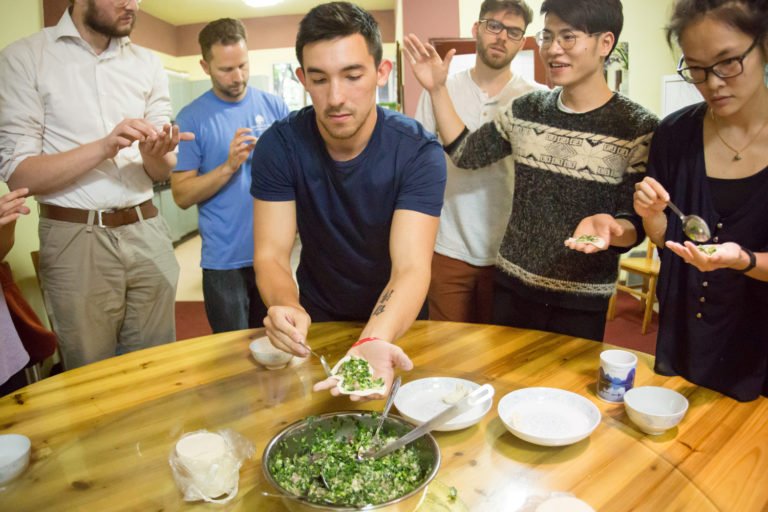
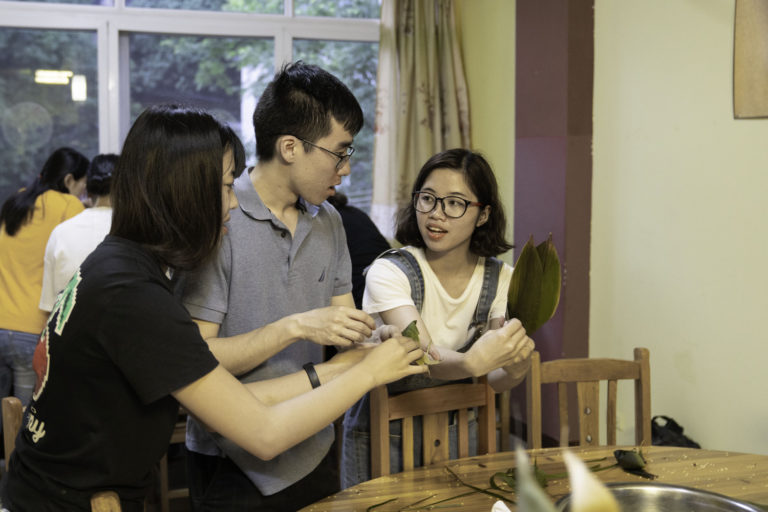
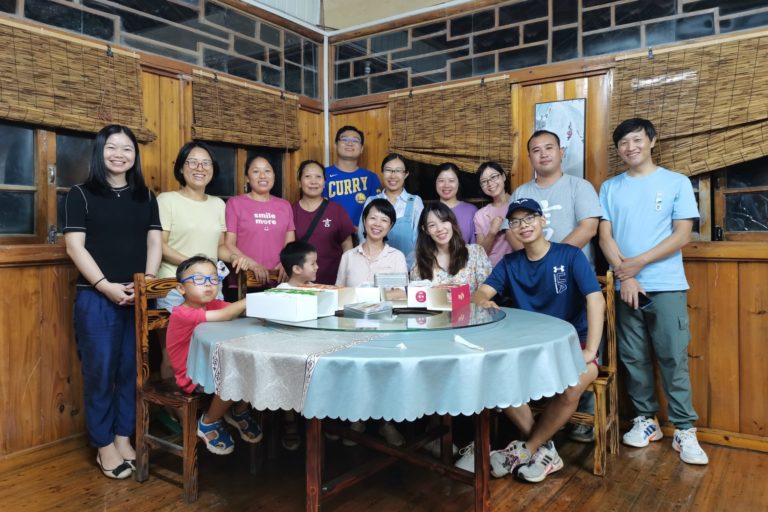
Los festivales de este calendario forman parte del año aquí. Antes de la Fiesta de la Primavera, los estudiantes preparan dumplings con sus profesores. Para el Festival del Bote del Dragón envuelven 粽子 zòngzi, arroz glutinoso en hojas de bambú, y en el Medio Otoño todos se sientan a cenar juntos.
Conoce el Programa de Inmersión O empieza en línea con una clase gratis
China tiene 13 días festivos legales al año, repartidos en siete celebraciones: un día por el Año Nuevo, cuatro por la Fiesta de la Primavera (la víspera del Año Nuevo lunar y los tres primeros días del año lunar), uno por Qingming, dos por el Día del Trabajo, uno por cada uno de los festivales del Bote del Dragón y del Medio Otoño, y tres por el Día Nacional.
Esos días se unen luego a los fines de semana para formar descansos más largos. Desde 2025, las reglas establecen para la Fiesta de la Primavera un descanso de ocho días a partir de la Nochevieja china (en 2026 fueron nueve, al incluir el domingo anterior a una Nochevieja en lunes, y esta página supone lo mismo para los años siguientes), siete días para el Día Nacional a partir del 1 de octubre (ocho cuando el Festival del Medio Otoño cae dentro de ese periodo) y cinco días para el Día del Trabajo. Los otros cuatro festivos se convierten en un fin de semana de tres días, salvo que el festivo caiga en miércoles, en cuyo caso solo se descansa ese día.
Las fechas de 2033 en esta página se obtienen a partir de esas reglas. Aplicadas a 2025 y 2026, dan exactamente los descansos que fijó el Consejo de Estado, pero un aviso futuro aún puede diferir en un día más o menos. Consulta el calendario oficial antes de reservar tu viaje.
El Día de Año Nuevo, el Día del Trabajo y el Día Nacional siguen el calendario occidental. La Fiesta de la Primavera, el Festival del Bote del Dragón y el Festival del Medio Otoño siguen el calendario lunar chino, por lo que se mueven hasta un mes de un año a otro. El Qingming sigue los términos solares y cae el 4 o el 5 de abril.
En 2033, la Nochevieja china 除夕 chúxī es el domingo 30 de enero, y el primer día del Año del Buey es el 31 de enero.
La Fiesta de la Primavera trae consigo la mayor migración anual del mundo, la 春运 chūnyùn (la temporada de viajes), que dura unos 40 días, aproximadamente del 16 de enero al 24 de febrero en 2033. Los boletos de tren para volver a casa se agotan en minutos. La Semana Dorada de octubre es la semana más concurrida del turismo interno, y lugares escénicos como el río Li de Guilin se llenan al máximo.
Las tiendas y los restaurantes casi siempre permanecen abiertos durante los festivos, salvo en los primeros días de la Fiesta de la Primavera, cuando muchos pequeños negocios cierran porque sus dueños regresan a casa. Las oficinas del gobierno y los bancos cierran durante todo el descanso.
El calendario de clases de CLI sigue los festivos nacionales, con algunas diferencias, y se fija cuando se publica el calendario oficial. Si tu programa coincide con un cierre, puedes recuperar cada día de clase perdido sin costo adicional: extendiendo tu programa, tomando las horas en línea o añadiendo horas a otros días. Si lo extiendes, el alojamiento de las noches adicionales cuesta 150 RMB por noche. Pregunta al equipo de admisiones de CLI por el calendario de tus fechas.
El Año Nuevo chino cae el lunes 31 de enero de 2033 y da inicio al Año del Buey de Agua. Se prevé que el periodo festivo oficial dure 8 días, del 30 de enero al 6 de febrero.
El Día Nacional es el 1 de octubre. Se espera que el descanso de la Semana Dorada dure 7 días, del 1 al 7 de octubre.
El Festival del Medio Otoño cae el jueves 8 de septiembre, el día 15 del octavo mes lunar.
Todavía no. El Consejo de Estado suele publicar el calendario del año siguiente a principios de noviembre, así que el aviso de 2033 se espera para noviembre de 2032. Las fechas de esta página siguen las reglas actuales y se actualizarán cuando salga.
CLI cierra en cada festivo público, pero su calendario no es igual al nacional. Algunos días libres nacionales son días de clase en CLI, y el cierre de la Fiesta de la Primavera puede ser más largo. Los días de clase perdidos se pueden recuperar sin costo adicional, y el alojamiento de los días añadidos al final de un programa cuesta 150 RMB por noche. Cómo maneja CLI los festivos.

El Chinese Language Institute (CLI) es un centro de estudios de la lengua y la cultura chinas con sede en Guilin, China. Fundado en 2009, CLI ha recibido a más de 5000 estudiantes de más de 50 países y mantiene una valoración de 4.95 sobre 5.00 en GoOverseas. CLI cuenta con un equipo de profesores de chino, coordinadores de programas y especialistas en China con posgrados en estudios chinos, enseñanza del chino como lengua extranjera, educación y campos afines. Los artículos publicados por el equipo de CLI se basan en la experiencia colectiva de este grupo, fruto de años diseñando e impartiendo programas de inmersión en chino en Guilin y en toda China.