
China hat 2036 sieben gesetzliche Feiertage. Die beiden langen Ferienzeiten sind das Frühlingsfest vom 27. Januar bis 3. Februar und die Golden Week zum Nationalfeiertag vom 1. bis 8. Oktober. Das chinesische Neujahr fällt auf Montag, den 28. Januar, und leitet das Jahr des Feuerdrachen 丙辰龙年 ein. Es handelt sich um voraussichtliche Termine.
Voraussichtlich
| Feiertag | Festtag | Voraussichtliche freie Tage |
|---|---|---|
| Neujahr元旦 Yuándàn | Di., 1. Jan. | 30. Dez.–1. Jan.3 Tage, So bis Di |
| Frühlingsfest (Chinesisches Neujahr)春节 Chūnjié | Mo., 28. Jan. | 27. Jan.–3. Feb.8 Tage, So bis So |
| Qingming-Fest清明节 QīngmíngjiéTag des Totengedenkens (Grabpflege) | Fr., 4. Apr. | 4.–6. Apr.3 Tage, Fr bis So |
| Tag der Arbeit劳动节 Láodòngjié | Do., 1. Mai | 1.–5. Mai5 Tage, Do bis Mo |
| Drachenbootfest端午节 Duānwǔjié | Fr., 30. Mai | 30. Mai–1. Juni3 Tage, Fr bis So |
| Mondfest (Mittherbstfest)中秋节 Zhōngqiūjié | Sa., 4. Okt. | Innerhalb der freien Tage zum Nationalfeiertag, 1.–8. Okt. |
| Nationalfeiertag (Golden Week)国庆节 Guóqìngjié | Mi, 1. Okt | 1.–8. Okt8 Tage, Mi bis Mi |
Es handelt sich um voraussichtliche Termine, die anhand des Mondkalenders und der seit 2025 geltenden Feiertagsregeln ermittelt wurden. Der Staatsrat veröffentlicht den offiziellen Plan samt den Ausgleichsarbeitstagen 调休 tiáoxiū, etwa im November 2035. Nutzen Sie diese Ferien zur Planung und prüfen Sie die Angaben, bevor Sie buchen.
Die gesetzlichen Feiertage 2036 zu Ihrem Kalender hinzufügen (.ics)
Diese Übersicht zeigt dieselben Termine wie die Tabelle, Monat für Monat.
Voraussichtlicher gesetzlicher Feiertag
Neujahr
元旦 Yuándàn
Der Jahreswechsel nach dem Kalender. In China gibt es nur eine kurze Pause, das große Fest folgt erst mit dem Frühlingsfest.
Voraussichtlicher gesetzlicher Feiertag
Frühlingsfest (Chinesisches Neujahr)
春节 Chūnjié
Der größte Feiertag des Jahres, mit einem Familienessen am Vorabend des Neujahrstags, roten Umschlägen 红包 hóngbāo für die Kinder, Feuerwerk, wo es erlaubt ist, und der größten Reisewelle des Jahres.
Voraussichtlicher gesetzlicher Feiertag
Qingming-Fest
清明节 Qīngmíngjié
Familien fegen und pflegen die Gräber ihrer Ahnen, legen Opfergaben nieder und machen einen Frühlingsspaziergang 踏青 tàqīng.
Voraussichtlicher gesetzlicher Feiertag
Tag der Arbeit
劳动节 Láodòngjié
Internationaler Tag der Arbeit. Daraus ist ein fünftägiger Feiertag geworden – eine der Wochen mit dem größten Reiseaufkommen des Jahres.
Voraussichtlicher gesetzlicher Feiertag
Drachenbootfest
端午节 Duānwǔjié
Drachenbootrennen und 粽子 zòngzi, in Bambusblätter gewickelter Klebreis, zum Gedenken an den Dichter Qu Yuan.
Voraussichtlicher gesetzlicher Feiertag
Mittherbstfest
中秋节 Zhōngqiūjié
Ein Familienfest unter dem Vollmond, mit Mondkuchen 月饼 yuèbing und einem Abend zum Betrachten des Mondes.
Voraussichtlicher gesetzlicher Feiertag
Nationalfeiertag (Golden Week)
国庆节 Guóqìngjié
Erinnert an die Gründung der Volksrepublik China am 1. Oktober 1949. Die Goldene Woche ist die Woche mit dem größten Reiseaufkommen im Herbst.
Traditionelles Fest
Laba-Fest
腊八节 Làbājié
Familien kochen Laba-Brei 腊八粥 làbāzhōu aus Getreide, Bohnen und Trockenfrüchten. Man sagt, nach Laba sei das Neujahrsfest nicht mehr weit.
Traditionelles Fest
Laternenfest
元宵节 Yuánxiāojié
Der erste Vollmond des Mondjahres, mit Laternen, Rätseln und süßen Reisbällchen 汤圆 tāngyuán. Er beschließt die Neujahrszeit.
Gedenktag
Internationaler Frauentag
妇女节 Fùnǚjié
Frauen bekommen an Arbeitstagen einen halben Tag frei, und viele Arbeitgeber legen Blumen, Geschenke oder einen Nachmittagsausflug drauf.
Gedenktag
Tag des Baumes
植树节 Zhíshùjié
Chinas Baumpflanztag, 1979 am Todestag von Sun Yat-sen eingeführt. Schulen und Büros ziehen zum Bäumepflanzen hinaus.
Solarterm
Frühlings-Tagundnachtgleiche
春分 Chūnfēn
Tag und Nacht sind fast gleich lang. Ein beliebter Brauch ist der Versuch, ein Ei aufrecht auf die Spitze zu stellen 竖蛋 shù dàn.
Regionaler Feiertag in Guangxi
Sanyuesan-Fest
三月三 Sānyuèsān
Fest der Zhuang und anderer Völker in Guangxi, mit Volksliedertreffen und fünffarbigem Klebreis 五色糯米饭 wǔsè nuòmǐfàn.
Gedenktag
Jugendtag
青年节 Qīngniánjié
Erinnert an die Bewegung des Vierten Mai von 1919, die von Studenten in Peking angeführt wurde.
Gedenktag
Kindertag
儿童节 Értóngjié
Schulen veranstalten Aufführungen, und Eltern unternehmen den Tag über etwas mit ihren Kindern.
Solarterm
Sommersonnenwende
夏至 Xiàzhì
Der längste Tag des Jahres. Im Norden isst man Nudeln 夏至面 xiàzhì miàn.
Gedenktag
Gründungstag der KPCh
建党节 Jiàndǎngjié
Erinnert an die Gründung der Kommunistischen Partei Chinas im Jahr 1921.
Gedenktag
Tag der Armee
建军节 Jiànjūnjié
Erinnert an die Gründung der Volksbefreiungsarmee am 1. August 1927.
Traditionelles Fest
Qixi-Fest (Chinesischer Valentinstag)
七夕节 Qīxījié
Der Kuhhirte und die Weberin, zwei Liebende, die die Milchstraße trennt, treffen sich einmal im Jahr auf einer Brücke aus Elstern. Heute ist es Chinas Valentinstag.
Traditionelles Fest
Geisterfest
中元节 Zhōngyuánjié
Im siebten Mondmonat sollen sich die Tore der Unterwelt öffnen. Familien bringen Opfergaben dar und verbrennen Papiergeld für ihre Ahnen.
Gedenktag
Tag der Lehrer
教师节 Jiàoshījié
Schüler und Studenten danken ihren Lehrern mit Karten, Blumen und Besuchen. China begeht den Tag seit 1985.
Solarterm
Herbst-Tagundnachtgleiche
秋分 Qiūfēn
Tag und Nacht sind wieder fast gleich lang. Seit 2018 ist es außerdem das Erntefest der Bauern 农民丰收节 Nóngmín Fēngshōujié.
Traditionelles Fest
Doppelneunfest
重阳节 Chóngyángjié
Die Menschen besteigen Hügel, trinken Chrysanthemenwein und besuchen ältere Verwandte. Es ist auch der Seniorentag 老年节 Lǎoniánjié.
Shopping-Festival
Single-Tag
双十一 Shuāngshíyī
Der 11. November wird 11/11 geschrieben, vier Einsen, die für vier Alleinstehende stehen. Er begann in den 1990er-Jahren als Scherz unter Studenten und wurde zu Chinas größtem Online-Shopping-Fest.
Solarterm und Familienfest
Wintersonnenwende
冬至 Dōngzhì
Der kürzeste Tag des Jahres. Im Norden isst man Teigtaschen, im Süden 汤圆 tāngyuán, und viele Familien kommen zusammen wie zu einem kleinen Neujahrsfest.
Dies sind die traditionellen Feste, Solarterme und Gedenktage, die in China begangen werden. Die meisten sind keine freien Tage. Einige geben einer Gruppe einen halben Tag frei, und in Guangxi, wo CLI ansässig ist, gibt es für Sanyuesan zwei freie Tage.
| Datum | Feiertag | Hinweise |
|---|---|---|
| Sa., 5. Jan. | Laba-Fest腊八节 Làbājié | Traditionelles Fest: Laba-Brei |
| Mo, 11. Feb. | Laternenfest元宵节 Yuánxiāojié | Traditionelles Fest: Abschluss der Neujahrszeit |
| Sa, 8. Mär | Internationaler Frauentag妇女节 Fùnǚjié | Halber Tag frei für Frauen; fällt dieses Jahr auf einen Samstag |
| Mi., 12. März | Tag des Baumpflanzens植树节 Zhíshùjié | Tag des Baumpflanzens |
| Do., 20. März | Frühlings-Tagundnachtgleiche春分 Chūnfēn | Solarterm |
| So., 30. März | Sanyuesan-Fest三月三 Sānyuèsān | Guangxi, wo CLI liegt, gewährt zwei freie Tage. Voraussichtliche Pause mit Wochenende: 28.–31. März. Guangxi bestätigt die Termine jeweils im Februar oder März. |
| So., 4. Mai | Tag der Jugend青年节 Qīngniánjié | Halber Tag frei für Jugendliche ab 14 Jahren; fällt dieses Jahr auf einen Sonntag |
| So., 1. Juni | Kindertag儿童节 Értóngjié | Frei für Kinder unter 14 Jahren; fällt dieses Jahr auf einen Sonntag |
| Sa., 21. Juni | Sommersonnenwende夏至 Xiàzhì | Solarterm |
| Datum | Feiertag | Hinweise |
|---|---|---|
| Di, 1. Jul | Gründungstag der KPCh建党节 Jiàndǎngjié | Gründung der Kommunistischen Partei Chinas, 1921 |
| Fr., 1. Aug. | Tag der Armee建军节 Jiànjūnjié | Halber Tag frei für aktive Soldaten |
| Do., 28. Aug. | Qixi-Fest (Chinesischer Valentinstag)七夕节 Qīxījié | Traditionelles Fest |
| Fr., 5. Sep. | Geisterfest中元节 Zhōngyuánjié | Traditionelles Fest |
| Mi., 10. Sept. | Lehrertag教师节 Jiàoshījié | Schüler bedanken sich bei ihren Lehrern |
| Mo., 22. Sept. | Herbst-Tagundnachtgleiche秋分 Qiūfēn | Solarterm; zugleich Erntefest der Bauern |
| Mo., 27. Okt. | Doppelneunfest重阳节 Chóngyángjié | Traditionelles Fest; Tag der Senioren |
| Di, 11. Nov | Singles’ Day双十一 Shuāngshíyī | Shopping-Festival |
| So., 21. Dez. | Wintersonnenwende冬至 Dōngzhì | Solarterm und Familienfest |
Video (2:22). Warum eine Studentin nach Guilin zurückkam, um bei CLI weiter Chinesisch zu lernen. Das Gebäude mit den Laternen ist das CLI-Zentrum.
Das Chinese Language Institute (CLI) ist eine Chinesischschule in Guilin, der Stadt der Karsthügel und Flüsse in Südchina. Die Studierenden haben Einzelunterricht bei ihrem eigenen Lehrerteam und erleben die Sprache auch außerhalb des Unterrichts.
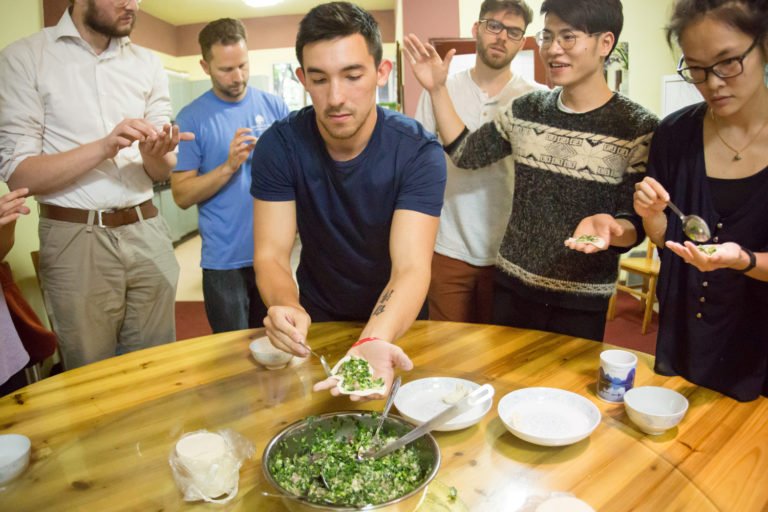
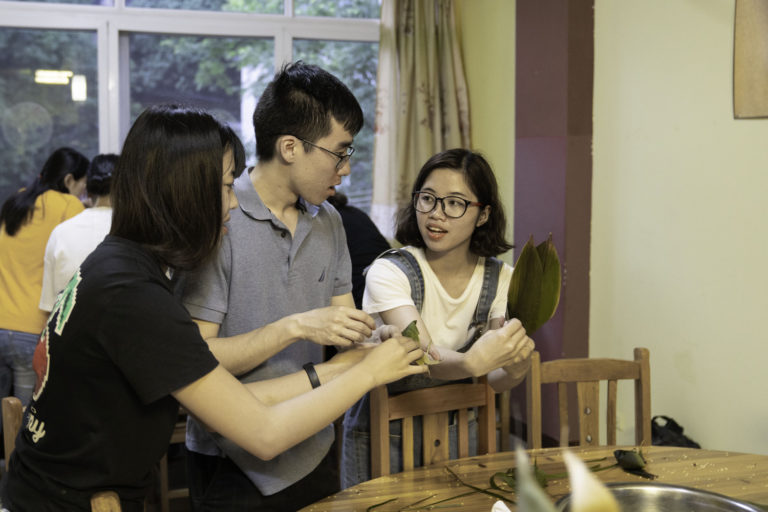
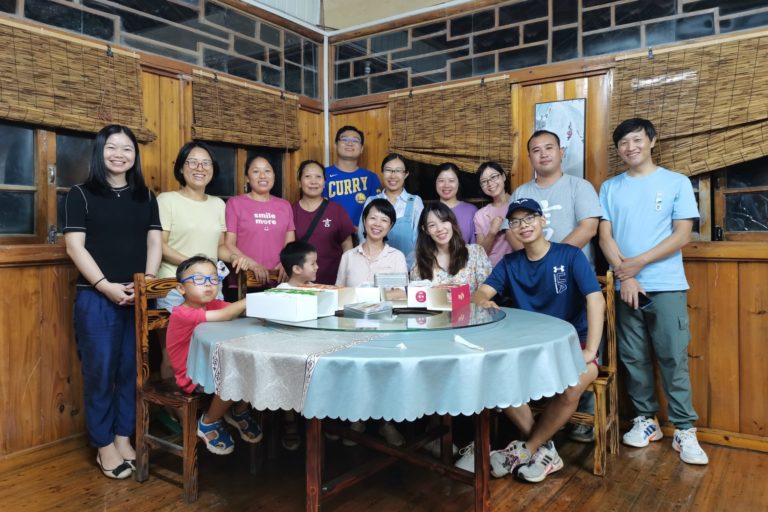
Die Feste in diesem Kalender gehören hier zum Jahreslauf. Vor dem Frühlingsfest falten die Studierenden mit ihren Lehrern Teigtaschen. Zum Drachenbootfest wickeln sie 粽子 zòngzi, Klebreis in Bambusblättern, und am Mittherbstfest sitzen alle gemeinsam beim Abendessen.
Das Immersionsprogramm entdecken Oder online starten mit einer kostenlosen Probestunde
China hat 13 gesetzliche freie Tage im Jahr, verteilt auf sieben Feiertage: ein Tag für Neujahr, vier für das Frühlingsfest (Silvester nach dem Mondkalender und die ersten drei Tage des neuen Mondjahres), einer für Qingming, zwei für den Tag der Arbeit, je einer für das Drachenbootfest und das Mittherbstfest sowie drei für den Nationalfeiertag.
Diese Tage werden dann mit Wochenenden zu längeren Pausen verbunden. Seit 2025 sehen die Regeln für das Frühlingsfest eine Pause von acht Tagen ab Silvester nach dem chinesischen Kalender vor (2026 waren es neun, weil der Sonntag vor einem Montag, der auf Silvester fiel, mit einbezogen wurde; diese Seite geht für spätere Jahre von derselben Regelung aus), für den Nationalfeiertag ab dem 1. Oktober sieben Tage (acht, wenn das Mondfest hineinfällt) und für den Tag der Arbeit fünf Tage. Aus den anderen vier Feiertagen wird ein verlängertes Wochenende von drei Tagen, es sei denn, der Feiertag fällt auf einen Mittwoch – dann ist nur dieser Tag frei.
Die Termine für 2036 auf dieser Seite ergeben sich aus diesen Regeln. Auf 2025 und 2026 angewendet, liefern sie genau die Pausen, die der Staatsrat festgelegt hat. Eine künftige Bekanntmachung kann aber um etwa einen Tag abweichen. Prüfen Sie den offiziellen Plan, bevor Sie eine Reise buchen.
Neujahr, der Tag der Arbeit und der Nationalfeiertag folgen dem westlichen Kalender. Das Frühlingsfest, das Drachenbootfest und das Mondfest folgen dem chinesischen Mondkalender und verschieben sich daher von einem Jahr zum nächsten um bis zu einen Monat. Qingming richtet sich nach den Sonnentermen und fällt auf den 4. oder 5. April.
2036 ist der Vorabend des chinesischen Neujahrs 除夕 chúxī am Sonntag, den 27. Januar, und der erste Tag des Jahres des Drachen ist der 28. Januar.
Zum Frühlingsfest findet die größte jährliche Wanderungsbewegung der Welt statt, der Reiseansturm 春运 chūnyùn, der etwa 40 Tage dauert, 2036 ungefähr vom 13. Januar bis 21. Februar. Zugtickets für die Heimreise sind innerhalb weniger Minuten ausverkauft. Die Goldene Woche im Oktober ist die Hauptreisezeit im chinesischen Inlandstourismus, und Sehenswürdigkeiten wie der Li-Fluss in Guilin sind dann besonders überlaufen.
Geschäfte und Restaurants bleiben über die Feiertage meist geöffnet, außer in den ersten Tagen des Frühlingsfests, wenn viele kleine Betriebe schließen, weil die Inhaber nach Hause fahren. Behörden und Banken bleiben während der gesamten Pause geschlossen.
Der Unterrichtskalender des CLI folgt den nationalen Feiertagen, mit einigen Abweichungen, und wird festgelegt, sobald der offizielle Plan vorliegt. Wenn sich Ihr Programm mit einer Schließzeit überschneidet, können Sie jeden ausgefallenen Unterrichtstag ohne Zusatzkosten nachholen: durch eine Verlängerung des Programms, durch Online-Stunden oder durch zusätzliche Stunden an anderen Tagen. Bei einer Verlängerung kostet die Unterkunft für die zusätzlichen Nächte 150 RMB pro Nacht. Fragen Sie das Aufnahmeteam des CLI nach dem Kalender für Ihre Reisedaten.
Das chinesische Neujahr fällt 2036 auf Montag, den 28. Januar. Es beginnt das Jahr des Feuerdrachen. Der gesetzliche Feiertag dauert voraussichtlich 8 Tage, vom 27. Januar bis 3. Februar.
Der Nationalfeiertag ist am 1. Oktober. Die Golden Week dauert voraussichtlich 8 Tage, vom 1. bis 8. Oktober, und schließt das Mittherbstfest ein.
Das Mondfest fällt auf Samstag, den 4. Oktober, den 15. Tag des achten Mondmonats. Es liegt innerhalb der Ferien zum Nationalfeiertag.
Noch nicht. Der Staatsrat veröffentlicht den Plan für das Folgejahr in der Regel Anfang November, die Bekanntmachung für 2036 wird also im November 2035 erwartet. Die Termine auf dieser Seite folgen den aktuellen Regeln und werden aktualisiert, sobald sie vorliegt.
Das CLI schließt an jedem gesetzlichen Feiertag, sein Kalender weicht aber vom nationalen ab. Manche landesweit freien Tage sind am CLI Unterrichtstage, und die Schließung zum Frühlingsfest kann länger dauern. Ausgefallene Unterrichtstage können ohne Zusatzkosten nachgeholt werden, und die Unterkunft für Tage, die ans Programmende angehängt werden, kostet 150 RMB pro Nacht. So geht das CLI mit Feiertagen um.

Das Chinese Language Institute (CLI) ist ein Zentrum für chinesische Sprache und Kulturstudien mit Sitz in Guilin, China. Seit der Gründung im Jahr 2009 hat das CLI über 5.000 Studierende aus mehr als 50 Ländern betreut und hält auf GoOverseas eine Bewertung von 4,95 von 5,00. Zum Team des CLI gehören Chinesischlehrkräfte, Programmverantwortliche und China-Experten mit Hochschulabschlüssen in Sinologie, Chinesisch als Fremdsprache, Pädagogik und verwandten Fächern. Artikel, die unter „The CLI Team“ erscheinen, stützen sich auf das gemeinsame Fachwissen dieser Gruppe und auf langjährige Erfahrung in der Konzeption und Durchführung von Chinesisch-Immersionsprogrammen in Guilin und ganz China.