
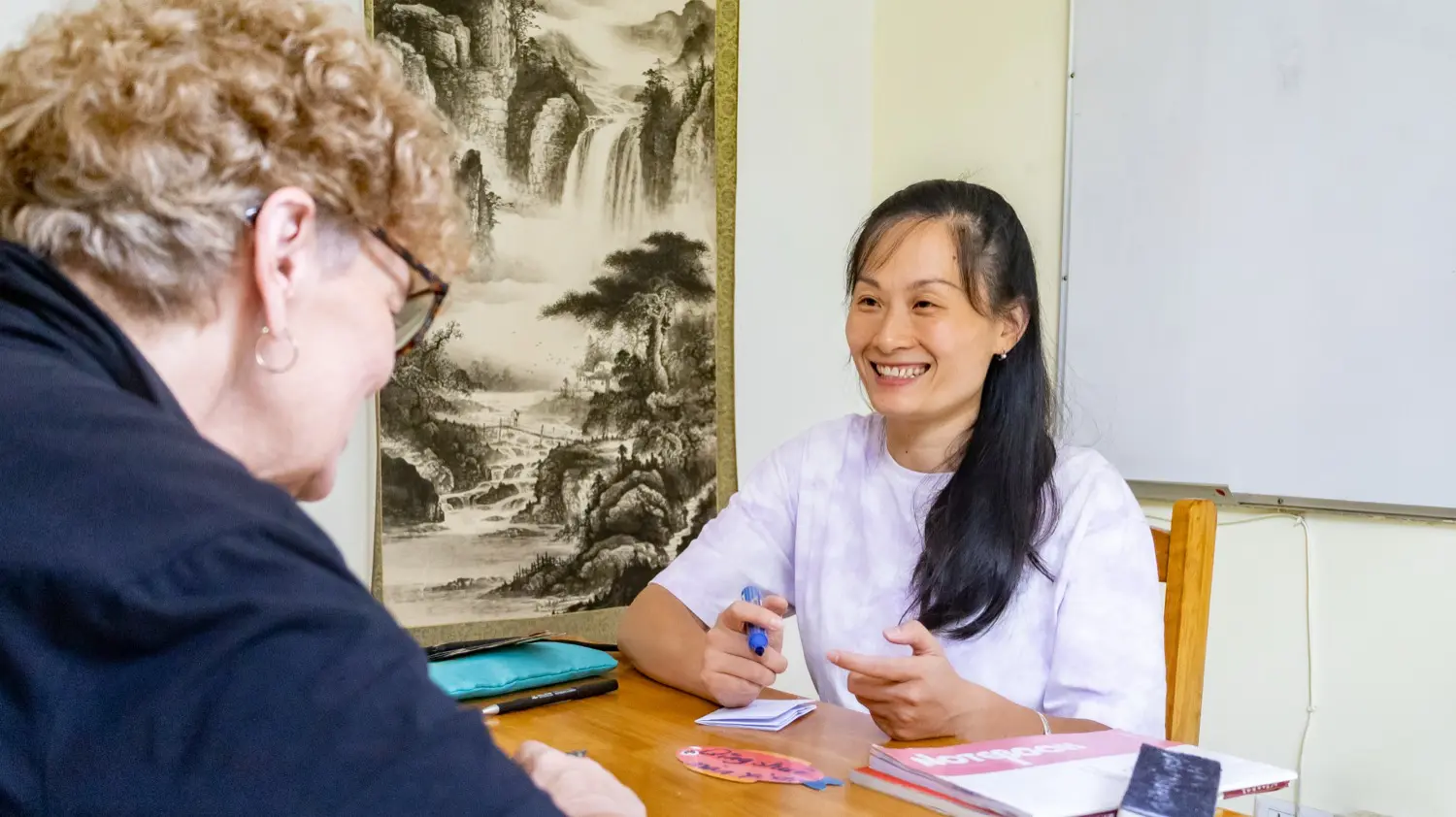
- Demonstrating Mandarin ability sets you apart from less China-savvy competitors when applying for jobs in China.
- Most Chinese interviews follow a predictable arc: introduce yourself, explain why you want the job, name your strengths, address a weakness, and close politely.
- Preparing key sentence patterns in advance is more effective than memorizing a long speech word for word.
- Chinese workplace etiquette tends to be formal: use job titles, hand over documents with two hands, and keep a modest tone.
- Personal questions about age, marital status, and family are common and considered normal in Chinese interviews.
Home to a rapidly growing economy and a range of burgeoning industries, China has quickly become a hub for global professionals building careers across many fields. If you hope to work in the Middle Kingdom, you may end up being invited to a Chinese-language interview.

This may seem intimidating at first, but there is no need to worry. In this guide we cover everything you need to prepare for a job interview in Chinese, from common questions to cultural etiquette.
01 Are you available for an interview… in Chinese?
So, you sent off your résumé and finally scored an interview for your dream job in China. Whether you hope to enter the workforce as an entry-level language teacher or an executive account manager, this is your chance to impress your future boss or colleagues.
Although it is not always necessary for foreigners to speak Chinese while working in China, a growing number of international candidates have added Mandarin proficiency to their list of accomplishments in recent years. Demonstrating your language skills strengthens your competitiveness and improves your chances of hearing those magic words.
你被雇佣了 (nǐ bèi gùyōng le) — “you’re hired!”
Most Chinese employers seek applicants who can assimilate into the company’s culture and navigate the nuances of business etiquette. Understanding the realities of working in China signals that you plan to stay put and grow with the company long-term.

02 Part 1: Introduce yourself
请自我介绍一下。
Qǐng zìwǒ jièshào yīxià.
Please introduce yourself.
This is typically the first task interviewees face in any country or language. Rather than memorizing a lengthy speech, aim to maintain a conversational tone and use the key talking points below to guide your narrative.
Start with a polite greeting. In Chinese culture it is especially important to address superiors or colleagues by their correct term of address.
Placing 女士 (nǚshì; Mrs./Ms.) or 先生 (xiānshēng; Mr.) after your interviewer’s surname is acceptable if you do not know their position. It is preferable, however, to use a job title such as 经理 (jīnglǐ; manager) after the surname when possible.
If you want to get the forms of address exactly right, it helps to understand how Chinese names and titles work. Once you have greeted your interviewer, move through your background, education, and work history using the patterns below.
| Chinese | Pinyin | Meaning |
|---|---|---|
| 您好,。。。女士/先生。 | Nínhǎo, … nǚshì / xiānshēng. | Hello, Mrs. / Mr. (name of interviewer). |
| 我来自。。。 | Wǒ láizì… | I’m from (country). |
| 我的母语是。。。 | Wǒ de mǔyǔ shì… | My native language is (language). |
| 我毕业于。。。 | Wǒ bìyè yú… | I graduated from (university). |
| 我学的专业是。。。 | Wǒ xué de zhuānyè shì… | I majored in… |
| 我。。。年毕业于。。。大学,获得。。。硕士/博士学位。 | Wǒ… nián bìyè yú… dàxué, huòdé… shuòshì / bóshì xuéwèi. | In (year) I graduated from (university) and received a (field) master’s / doctoral degree. |
| 我有。。。证书。 | Wǒ yǒu… zhèngshū. | I have (certification) certification. |
| 我曾在。。。负责。。。 | Wǒ céng zài… fùzé… | Previously at (company), I was responsible for (duty). |
| 从。。。年到。。。年在。。。担任。。。 | Cóng… nián dào… nián, zài… dānrèn… | From (year) to (year), at (company) I held the position of (title). |
A great moment to mention special training is right after your education, such as an HSK (汉语水平考试; Hànyǔ Shuǐpíng Kǎoshì) certificate. If you are unsure which level to cite, our overview of the HSK levels explains what each one represents.
您好,王经理。我叫张小梅,今年28岁,来自美国,母语是英文。2016年毕业于复旦大学,获得国际商业硕士学位。我有汉语水平考试六级证书,2016年曾在家家乐国际贸易公司负责销售工作;从2017年到2021年在亮亮国际贸易公司担任产品经理。
Nínhǎo, Wáng Jīnglǐ. Wǒ jiào Zhāng Xiǎoméi, jīnnián 28 suì, láizì měiguó, mǔyǔ shì yīngwén. 2016 nián bìyè yú Fùdàn Dàxué, huòdé guójì shāngyè shuòshì xuéwèi. Wǒ yǒu Hànyǔ Shuǐpíng Kǎoshì liù jí zhèngshū, 2016 nián céng zài Jiājiālè Guójì Màoyì Gōngsī fùzé xiāoshòu gōngzuò; cóng 2017 nián dào 2021 nián zài Liàngliàng Guójì Màoyì Gōngsī dānrèn chǎnpǐn jīnglǐ.
Hello, Manager Wang. My name is Zhang Xiaomei and I’m 28 years old. I’m from the USA and my first language is English. I graduated from Fudan University with a master’s degree in International Business in 2016. I have an HSK level 6 certificate. In 2016 I worked in sales at Jiajiale Trade Company, and from 2017 to 2021 I served as product manager at Liangliang International Trade Company.
Looking to craft a more advanced personal introduction? The video below offers further guidance on presenting yourself naturally in Chinese.

Learn Chinese with Cultural Context
CLI offers personalized Chinese instruction built around real language and culture. Join our Immersion Program in Guilin or start online with a free Chinese lesson.
03 Part 2: Why do you want the job?
你为何想申请这份工作?
Nǐ wèihé xiǎng shēnqǐng zhè fèn gōngzuò?
Why would you like to apply for this job?
Hopefully you have thought hard about this question before the interview. Whatever your reasons, prepare a thoughtful and earnest response to demonstrate your seriousness as an applicant.
A polite way to open is with 贵公司 (guì gōngsī), meaning “your company,” followed by a short statement of praise. Because of the importance of 面子 (miànzi; face, a metaphor for reputation) in Chinese professional settings, offering compliments positions you in a favorable light.
| Chinese | Pinyin | Meaning |
|---|---|---|
| 贵公司是。。。 | Guì gōngsī shì… | Your company is… |
| 我相信在贵公司可以学到新的技能。 | Wǒ xiāngxìn zài guì gōngsī kěyǐ xué dào xīn de jìnéng. | I believe I can learn new skills at this company. |
| 我具备贵公司需要的专长。 | Wǒ jùbèi guì gōngsī xūyào de zhuāncháng. | I have the skills that your company needs. |
| 这份工作可以让我尽其所长。 | Zhè fèn gōngzuò kěyǐ ràng wǒ jìnqísuǒcháng. | I’ll be able to put my skills to full use at this job. |

04 Part 3: Show your strengths
你最大的优点是什么?
Nǐ zuì dà de yōudiǎn shì shénme?
What’s your greatest strength?
This question is a perfect opportunity to highlight the competencies you are most confident in. Consider beforehand which talents are most relevant to the role so you can use your airtime wisely.
| Chinese | Pinyin | Meaning |
|---|---|---|
| 我是个很。。。和。。。的人。 | Wǒ shì gè hěn… hé… de rén. | I’m a very (adjective) and (adjective) person. |
| 我擅长。。。 | Wǒ shàncháng… | I’m adept at… |
Characteristics likely to be well received by Chinese employers include 热情 (rèqíng; enthusiasm), 负责任 (fùzérèn; responsible), 积极 (jījí; energetic), and 主动 (zhǔdòng; proactive).
Whether your expertise is in 团队管理 (tuánduì guǎnlǐ; team management), 营销 (yíngxiāo; marketing), or something in between, identifying your strengths and the matching vocabulary helps you answer this question with confidence.

05 Part 4: No one is perfect
你的弱点是什么?
Nǐ de ruòdiǎn shì shénme?
What are your weaknesses?
This question is notorious for making applicants clam up. Interviewers are not trying to torment you, however, but are gauging your self-awareness and potential for improvement.
| Chinese | Pinyin | Meaning |
|---|---|---|
| 我是个完美主义者。 | Wǒ shìgè wánměizhǔyìzhě. | I’m a perfectionist. |
| 我刚从学校毕业,没有很多社会经验。 | Wǒ gāng cóng xuéxiào bìyè, méiyǒu hěnduō shèhuì jīngyàn. | I graduated recently and don’t have much life experience. |
| 我重视陪家人的时间,所以恐怕周末不方便加班。 | Wǒ zhòngshì péi jiārén de shíjiān, suǒyǐ kǒngpà zhōumò bù fāngbiàn jiābān. | I value time with my family, so I’m afraid I can’t work overtime on weekends. |
| 我的中文不够好! | Wǒ de Zhōngwén bùgòu hǎo! | My Chinese isn’t good enough! |
Being expected to work overtime is very common in China, particularly in tech, where workers contend with “996 work culture” — 12-hour days from 9am to 9pm, six days a week. Research the company first: if weekend overtime is clearly expected, saying you are unavailable might cost you the job.
A tactful response that balances honesty with framing your strengths as weaknesses helps improve your credibility. It also proves your tenacity for growth to future employers.
06 Part 5: Wrapping things up
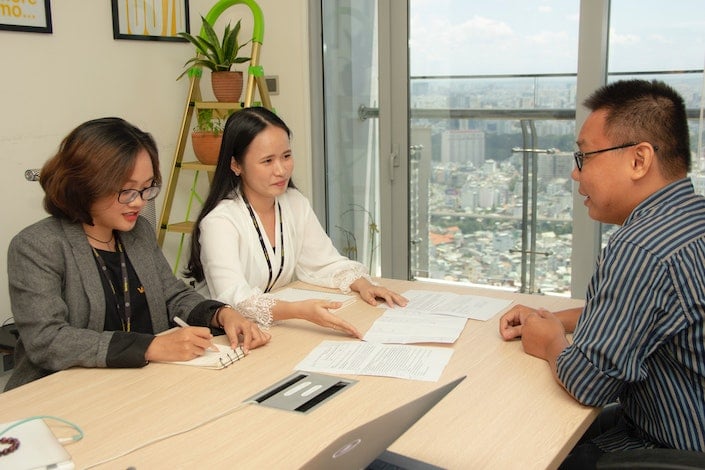
After the question-and-answer portion wraps up, you may sense the interview is coming to a close. At this stage you will probably hear a closing remark similar to the one below.
| Chinese | Pinyin | Meaning |
|---|---|---|
| 我们会在一个星期之内打电话通知您面试的结果! | Wǒmen huì zài yīgè xīngqí zhī nèi dǎ diànhuà tōngzhī nín miànshì de jiéguǒ! | We’ll notify you of your interview results within a week. |
| 感谢给我这次面试机会。 | Gǎnxiè gěi wǒ zhè cì miànshì jīhuì. | I appreciate this interview opportunity. |
Before shaking hands and bolting for the door, remember to graciously thank your interviewer for their time and the opportunity. Maintain a polite and professional demeanor all the way to the very end of your interview.

07 Chinese interview etiquette
Dazzling your interviewer with articulate replies is essential, but cultural finesse matters just as much. Keep these social guidelines in mind to leave your interviewer confident that you are the right person for the job.
Chinese workplace etiquette is often more formal and ceremonious than in the western world. Dress formally, use official job titles, and hand over documents like résumés and business cards with two hands as a sign of respect.
It also helps to recognize that in China it is often socially acceptable for new acquaintances to ask questions considered personal in western countries. Familiarity with broader Chinese etiquette and customs will help you read the room with confidence.
Don’t be surprised if your interviewer asks about your age, marital status, number of children, or family plans. Since it is normal to ask applicants for photos, save time by including this information and a professional headshot when you send off your résumé.
While it is not recommended to proactively ask about salary during a first interview, be prepared for your interviewer to ask what you earned in your previous job. Approach the topic calmly and let them lead.
08 Keep on improving
The best way to excel during your Chinese job interview is to make steady headway in your language and cultural skills. Your ability to speak Chinese and navigate Chinese society will shine through and help you stand out against less China-savvy competitors.
A clear roadmap keeps that progress on track, so it is worth building a structured Chinese study plan around your career goals. From there you can immerse yourself in China or weave online lessons into your normal school or work schedule.
If you want the deepest possible experience, you might even consider studying abroad in China. Whichever path you choose, the opportunity to Learn Chinese in China is one of the most rewarding ways to prepare for a career in the Middle Kingdom.

09 Chinese job interview vocabulary
The following terms appear throughout Chinese interviews, job postings, and workplace conversations. Reviewing them in advance will help you understand and respond with confidence.
| Chinese | Pinyin | Meaning |
|---|---|---|
| 面试 | Interview | |
| 自我介绍 | Self-introduction | |
| 经理 | Manager | |
| 贵公司 | Your company (polite) | |
| 面子 | Face; reputation | |
| 优点 | Strength; merit | |
| 弱点 | Weakness | |
| 热情 | Enthusiasm; passion | |
| 负责任 | Responsible | |
| 积极 | Energetic; positive | |
| 主动 | Proactive | |
| 团队管理 | Team management | |
| 营销 | Marketing | |
| 谦虚 | Modesty; humility | |
| 加班 | To work overtime | |
| 汉语水平考试 | HSK; standardized Chinese proficiency test |
10 FAQ
Do I need to speak Chinese to get a job in China?
Not always, but Mandarin ability makes you far more competitive. It signals that you can assimilate into the company culture and plan to stay long-term.
What questions are commonly asked in a Chinese job interview?
Expect to introduce yourself, explain why you want the job, describe your greatest strength, and discuss a weakness. Personal questions about age and family are also common.
How should I introduce myself in a Chinese interview?
Greet your interviewer using their title and surname, then move through your background, education, certifications, and work history. Prepared sentence patterns work better than a memorized speech.
Is it normal to be asked about my age or marital status?
Yes. In China it is often socially acceptable for new acquaintances and interviewers to ask questions that western applicants might consider personal.
How do I talk about my weaknesses without hurting my chances?
Choose an honest weakness and frame it constructively, ideally one that doubles as a strength. Be cautious about ruling out overtime, since long hours are common in many Chinese workplaces.