


- Chinese idioms are called 成语 (chéngyǔ), which roughly translates as "set phrases" or "already formed words."
- Most chengyu are exactly four characters long and condense an entire story, image, or moral into a single phrase.
- Depending on the source, there are between 5,000 and 20,000 Chinese idioms, and many remain common in everyday Mandarin.
- Many idioms come from classical literature and historical events, so a little background knowledge makes them far easier to understand.
- Learning chengyu makes your Chinese sound more natural and is required for advanced exams like HSK 6.
Chinese idioms, known as 成语 (chéngyǔ), are one of the most distinctive features of the Chinese language. These compact, mostly four-character phrases carry stories, history, and humor that ordinary vocabulary simply can't match.
In this guide, you'll find 28 common Chinese idioms with pinyin and English meanings, the famous stories behind several of them, and practical tips for using chengyu correctly. If you'd like to take your studies further and Learn Chinese in China, mastering a handful of idioms is one of the fastest ways to impress native speakers.
01 What Are Chinese Idioms? Chengyu (成语) Meaning Explained
The Chinese word for idiom, 成语 (chéngyǔ), can be translated literally as "already made words" or "formed words." In practice, chengyu are fixed expressions whose wording never changes.
These phrases were woven together over thousands of years from ancient myths, folktales, poetry, and philosophical writing, including the sayings of thinkers like Confucius. In this sense, chengyu are a living testament to the longevity and continuity of Chinese literature and culture.
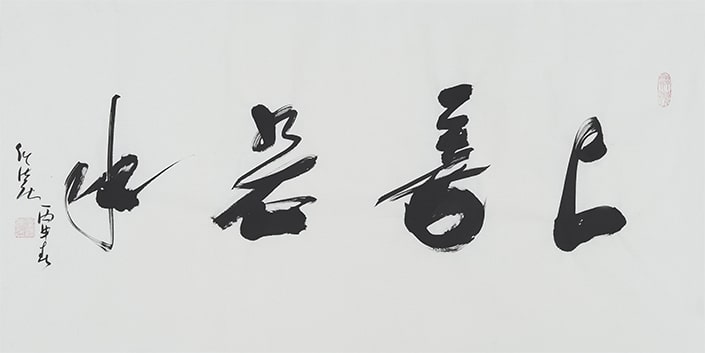
How many Chinese idioms are there?
Depending on which dictionary you consult, there are between 5,000 and 20,000 Chinese idioms. Although most are centuries old, a surprising number are still used in contemporary Mandarin every day.
New idiom-like expressions also continue to appear in Chinese online communities. You can explore these modern coinages in our guide to Chinese internet slang.
Why are most Chinese idioms four characters long?
The majority of chengyu are composed of exactly four characters. When an idiom refers to a myth or historical incident, those four characters succinctly paraphrase the most important elements of the story, acting as a kind of mnemonic device.
Over the course of their education, elementary and high school students in China memorize thousands of these idioms. For foreign learners, even a small working set of chengyu adds nuance that everyday vocabulary can't provide.
02 22 Common Chinese Idioms With Pinyin and English Meanings
Let's get straight to it. Here are 22 common Chinese idioms you can start using today, each with pinyin and an English translation.
| Chinese idiom | Pinyin | English meaning |
|---|---|---|
| 绘声绘色 | vivid and colorful; true to life | |
| 未雨绸缪 | lit. before it rains, bind around with silk; fig. to prepare for a rainy day | |
| 呕心沥血 | lit. to spit out one's heart and spill blood; fig. to work one's heart out | |
| 想入非非 | to indulge in fantasy | |
| 人声鼎沸 | lit. a boiling cauldron of voices; a noisy and overexcited reaction to something | |
| 祸不单行 | misfortune does not come singly; when it rains, it pours | |
| 息息相关 | closely bound up; closely related | |
| 灯红酒绿 | lit. lanterns red, wine green; fig. feasting and pleasure-seeking | |
| 一暴十寒 | lit. one day's sun and ten days' cold; fig. sporadic effort; to work for a day then slack off | |
| 出神入化 | to reach perfection; superb mastery | |
| 面面相觑 | to look at each other in dismay | |
| 小心翼翼 | cautious and solemn; with great care | |
| 敝帚自珍 | lit. to value the worn-out broom as one's own; fig. to treasure something because it is yours | |
| 天壤之别 | lit. as different as sky and earth; fig. worlds apart | |
| 振聋发聩 | lit. so loud that even the deaf can hear; fig. rousing even the apathetic | |
| 津津有味 | with great interest; with relish | |
| 琳琅满目 | lit. glittering jewels to delight the eyes; fig. a dazzling array | |
| 聚精会神 | to concentrate one's attention completely | |
| 蔚然成风 | to become a general trend | |
| 目不斜视 | lit. to not look sideways; fig. to be fully focused | |
| 如法炮制 | lit. to prepare herbal medicine by the prescribed method; fig. to follow a set pattern | |
| 老马识途 | lit. an old horse knows the way; fig. an experienced person knows what to do |
Download this list as a printable PDF, or view it in Google Sheets.
03 How Chinese Idioms Are Used in Everyday Conversation
After a few months of study, learners often grow confident in basic conversation. Then, suddenly and without warning, they're confronted by a curious phenomenon: the Chinese idiom.
Whether used to emphasize a point in an argument, encourage a friend not to quit, or show off knowledge of the classics, chengyu come up daily. If you don't learn at least a few, many of the nuances of conversation will pass you by.

人山人海 (rénshān-rénhǎi): "people mountain, people sea"
Imagine a student complaining to a Chinese colleague that the cafeteria is too crowded to get lunch in time. Her colleague nods and exclaims, "人山人海" (rénshān-rénhǎi).
Character for character, the phrase translates to "people mountain, people sea." Thinking she has misheard some local slang, the student asks her colleague to repeat it, only to end up more confused than before.
In fact, 人山人海 simply means "a sea of people" or "huge crowds." Her colleague was commiserating: "Yeah, the cafeteria is packed today."
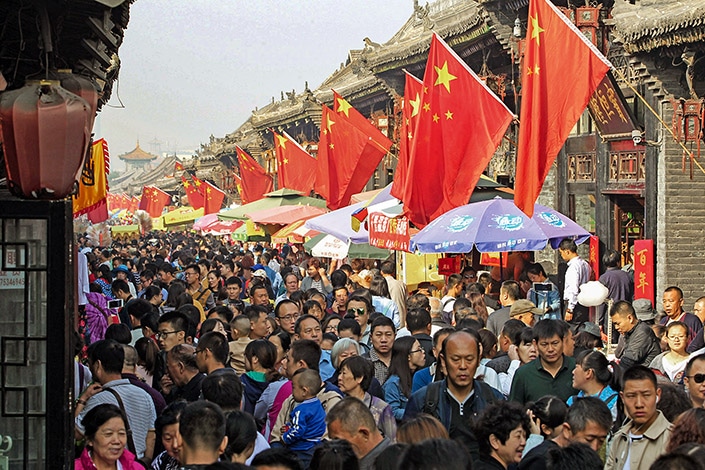
Why context matters when learning chengyu
A good Chinese dictionary app like Pleco will define 人山人海 as "huge crowds; a sea of people; a multitude." Once you know the definition, the idiom suddenly comes in handy everywhere, from packed metro stations to holiday crowds.
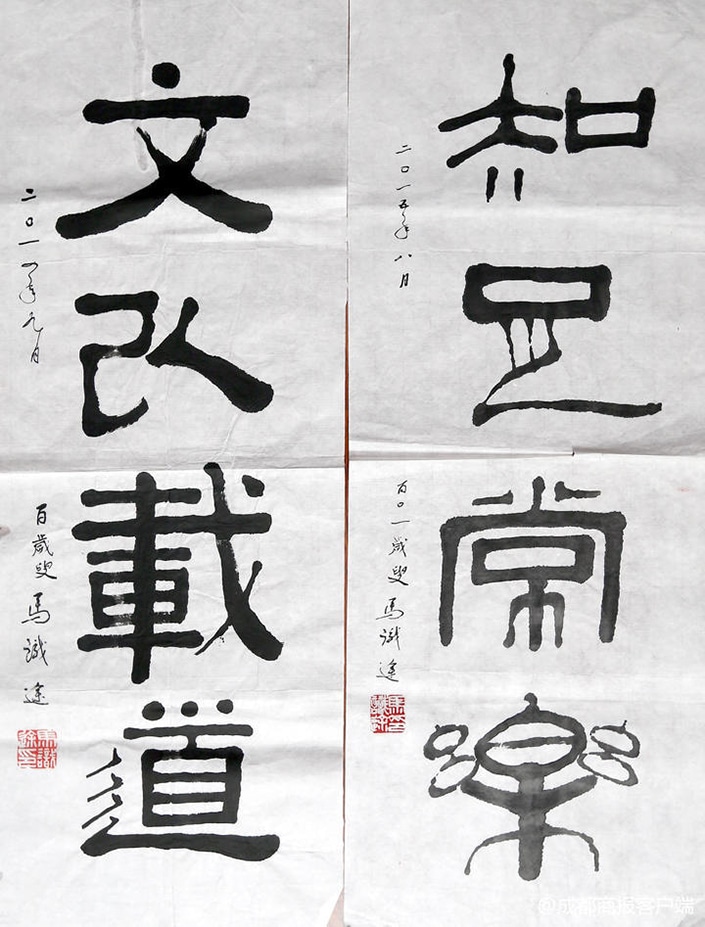
Not all chengyu are this transparent, however. Because their source material is usually classical Chinese, idioms often use rare characters, or use familiar common Chinese characters in ways that defy modern Chinese grammar.
04 Chinese Idiom Stories From History: 破釜沉舟 and the Fall of the Qin
The chengyu 破釜沉舟 (pòfǔ-chénzhōu) literally means "break the cauldrons and sink the boats," while 以一当十 (yǐyī-dāngshí) literally means "one against ten." Used in isolation, both would be nearly impossible to decipher.
With a little historical background, however, their meanings suddenly reveal themselves. Both idioms come from one of the most famous battles in Chinese history.
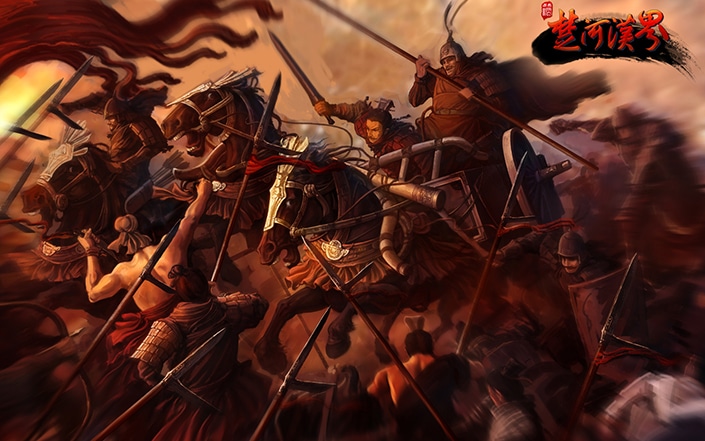
The story behind 破釜沉舟: Xiang Yu's rebellion against the Qin dynasty
In the bitterly cold winter of 207 BC, the commander Xiang Yu led a ragged force of roughly 50,000 rebels. Their enemy was the seemingly invincible imperial army of the Qin dynasty, more than 300,000 strong under general Zhang Han.
To the shock of his lieutenants, Xiang Yu chose to attack rather than wait to be hunted down. After crossing the Yellow River, he ordered his troops to sink their own ships, smash their cooking pots, and carry only three days of provisions.
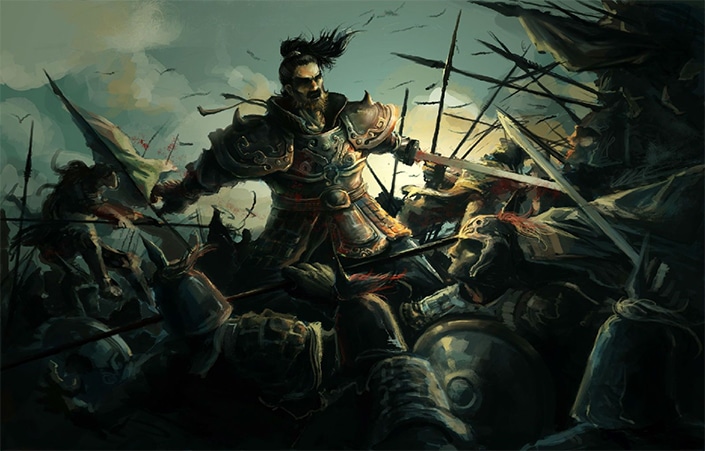
The message was clear: victory or death. In the nine engagements that followed, Xiang Yu's soldiers were each said to "have taken on ten foes," and after losing more than 100,000 men, Zhang Han's imperial troops turned and fled.
What 破釜沉舟 and 以一当十 mean today
With Xiang Yu's victory in mind, the meaning of 破釜沉舟 becomes clear: "to reach a point of no return; to stake everything on success." It is the Chinese equivalent of "burning your boats."
Equally self-evident is 以一当十 (yǐyī-dāngshí): "every one of us is worth ten ordinary people." Learning a little Chinese history is one of the best shortcuts to mastering chengyu.

05 6 Popular Chinese Idioms With Example Sentences
These six concise expressions come in handy in a wide variety of situations. Each entry includes the literal translation, the figurative meaning, and an example sentence.
| Chinese idiom | Pinyin | English meaning |
|---|---|---|
| 卧虎藏龙 | crouching tiger, hidden dragon; a place full of unnoticed talent | |
| 废寝忘食 | to skip sleep and forget meals; extremely hard-working | |
| 七嘴八舌 | seven mouths, eight tongues; everyone talking at once | |
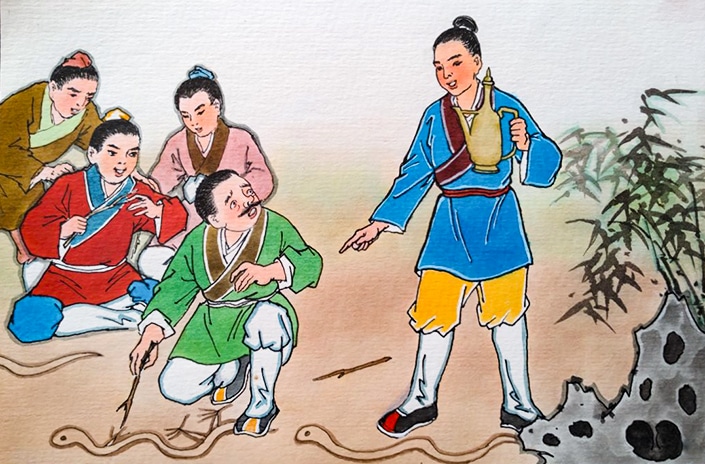
| 画蛇添足 | adding feet to a drawing of a snake; to ruin something with superfluous additions | |
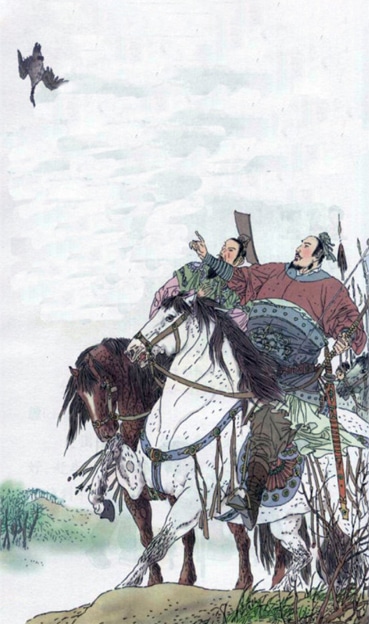
| 惊弓之鸟 | a bird startled by the twang of a bowstring; once bitten, twice shy | |
| 千山万水 | a thousand mountains and ten thousand rivers; a long and arduous journey |
Download this table as a printable PDF, or view it in Google Sheets.
1. 卧虎藏龙 (wòhǔcánglóng): crouching tiger, hidden dragon
- Literal translation: crouching tiger, hidden dragon
- Meaning: a place or situation full of people with unusual, hidden talents
- Example sentence: 那个小地方真是卧虎藏龙! | Nàgè xiǎo dìfāng zhēn shì wòhǔcánglóng! | That little place really has many talented people!

2. 废寝忘食 (fèiqǐn-wàngshí): to forget to sleep and eat
- Literal translation: fail to sleep and forget to eat
- Meaning: extremely diligent and hard-working; to skip meals for the sake of work
- Example sentence: 他总是为了工作废寝忘食。 | Tā zǒngshì wèile gōngzuò fèiqǐn-wàngshí. | For the sake of his job, he's always working extremely hard.

3. 七嘴八舌 (qīzuǐ-bāshé): everyone talking at once
- Literal translation: seven mouths, eight tongues
- Meaning: a situation or discussion in which everyone is talking at once
- Example sentence: 小声一点! 别七嘴八舌的! | Xiǎoshēng yīdiǎn! Bié qīzuǐ-bāshé de! | Quiet down! Don't everyone speak at once!

4. 画蛇添足 (huàshé-tiānzú): drawing feet on a snake
- Literal translation: adding feet when drawing a snake
- Meaning: to improve something unnecessarily; to ruin the effect by adding something superfluous
- Example sentence: 你们这是把时间浪费在画蛇添足上。 | Nǐmen zhè shì bǎ shíjiān làngfèi zài huàshé-tiānzú shàng. | You're wasting your time adding unnecessary stuff.
5. 惊弓之鸟 (jīnggōngzhīniǎo): once bitten, twice shy
- Literal translation: a bird startled by the mere twang of a bowstring
- Meaning: once bitten, twice shy; easily frightened by past trauma
- Example sentence: 每个人都成了惊弓之鸟。 | Měigèrén dōu chéng le jīnggōngzhīniǎo. | Everyone became frightened out of their wits.
6. 千山万水 (qiānshān-wànshuǐ): a long, arduous journey
- Literal translation: a thousand mountains and ten thousand waters
- Meaning: a long and tiring journey
- Example sentence: 他们跨过千山万水,终于来到了这里。 | Tāmen kuà guò qiānshān-wànshuǐ, zhōngyú lái dào le zhèlǐ. | They've gone through a lot to finally arrive here.


Study Chinese in Guilin or Start Online
CLI offers personalized Chinese instruction built around your goals. Join our Immersion Program in Guilin or begin from anywhere with a free Chinese lesson .
06 A Famous Five-Character Chinese Idiom: 山高皇帝远
Although most chengyu are four characters long, some are not. One common favorite is five characters long: 山高皇帝远 (shān gāo, huángdì yuǎn), "the mountains are high and the emperor is far away."
You may also encounter the even more widespread variant 天高皇帝远 (tiān gāo, huángdì yuǎn), "heaven is high and the emperor is far away." Both versions express the same mischievous idea.
The closest English equivalent might be "when the cat's away, the mice will play," though this doesn't quite capture the depth of mischievousness involved. It's used whenever people relax the rules because authority is out of sight.
When to use 山高皇帝远
- When you're having a girls' night out and everyone begins to gossip about their boyfriends: 山高皇帝远
- If you're on an international business trip and a colleague brazenly uses the company card to buy drinks: 山高皇帝远
- When you catch grandpa having a secret smoke behind the house, he smiles and says... yes, you guessed it: 山高皇帝远

07 How to Learn Chinese Idioms (and Why They Matter for the HSK)
The more idioms and sayings you learn, the more natural your spoken and written Chinese will become. Chengyu knowledge is also tested on Chinese proficiency exams like the HSK, and it's essential if you want to pass HSK 6.
A few practical tips: learn the story behind each idiom rather than memorizing characters in isolation, and start with high-frequency chengyu like the ones in this article. Folding a few idioms into your weekly Chinese study plan is far more effective than cramming hundreds at once.
Be careful, though: using a chengyu in the wrong context can cause confusion or unintended laughs. If you've ever wondered whether Chinese is hard to learn, idioms are a perfect example of something that seems daunting at first but becomes deeply rewarding with practice.
Beyond chengyu, Chinese contains a wealth of sayings on every topic, from proverbs about learning to proverbs about family. Each one you master deepens both your language ability and your cultural understanding.
08 FAQ: Chinese Idioms
What is a Chinese idiom called?
Chinese idioms are called 成语 (chéngyǔ), which translates roughly as "set phrases" or "already formed words." They are fixed expressions, usually four characters long.
How many Chinese idioms are there?
Estimates range from 5,000 to 20,000 depending on the dictionary. However, a few hundred high-frequency chengyu cover the vast majority of everyday usage.
Why are Chinese idioms four characters long?
The four-character format condenses a story, image, or moral into a compact, rhythmic phrase that is easy to remember. A small number of idioms, like 山高皇帝远, contain five or more characters.
What is the most common Chinese idiom?
人山人海 (rénshān-rénhǎi), meaning "a sea of people," is one of the most frequently heard chengyu. It comes up constantly when describing crowds in daily life.
Do I need to know chengyu for the HSK?
Yes, especially at advanced levels. HSK 6 in particular requires knowledge of idioms in both the reading and writing sections.
09 Final Thoughts
Chinese idioms are far more than vocabulary: they are a rich repository of myth, history, and cultural wisdom compressed into a few characters. Learning even a handful will unlock nuances of conversation that would otherwise pass you by.
Want to go deeper into chengyu and the Chinese language? Explore CLI's Chinese program options, or continue with our guides to Chinese measure words and the anatomy of Chinese characters.
10 Selected References
- Encyclopaedia Britannica: overview of the Qin dynasty (221–207 BCE), the first great Chinese empire. View source →
- Encyclopaedia Britannica: biography of Xiang Yu, leader of the rebel forces that overthrew the Qin dynasty. View source →
- ChinaKnowledge.de (Ulrich Theobald, University of Tübingen): historical reference on Xiang Yu and the fall of the Qin. View source →
- Note: Idiom translations can vary slightly between dictionaries. The English renderings above follow standard dictionary definitions and CLI's teaching materials.