


- A reliable Chinese dictionary is essential for learners at every level, from beginner to advanced.
- Online dictionaries are usually faster and more convenient than paper ones, though knowing how to use a paper dictionary is still a useful backup skill.
- Top dictionary apps include Pleco, Hanping, and Google Translate.
- Strong web-based options include MDBG, LINE Dict, and YellowBridge.
- Browser-based pop-up dictionaries make reading long Chinese texts on screen far easier.
Whether you are just getting started on your Chinese learning journey or have been an avid student of the language for years, one thing is certain: you will need a reliable online Chinese dictionary to help enrich your vocabulary.
Picking the right dictionary isn't a simple task. Fortunately, CLI has done the research for you, so read on to discover our top recommended Chinese dictionaries.

A good dictionary pairs naturally with the rest of your study toolkit. If your goal is to Learn Chinese in China, having instant access to accurate definitions makes real conversations, menus, and signs far less intimidating.
01 Why should you use a Chinese dictionary?
Picture this: you're watching TV with your Chinese friend and her family after a nice dinner at their house. When everyone bursts out laughing at the host's funny quip, you just don't get the joke.
Or imagine you're reading a Chinese news article on your phone and cruising right along. Suddenly you stumble upon a confusing combination of characters that throws you off track.
In either situation, having a trusted, accurate Chinese-English dictionary at your disposal lets you keep using Chinese without missing a beat. It also helps you enjoy daily life in China far more comfortably.
Beyond expanding your vocabulary, the process of using a dictionary is a study method in itself. The act of searching for words helps your mind retain the new information you look up.
For all these reasons, downloading a Chinese dictionary onto your smartphone or adding one to your browser is a necessary step toward fluency. It pairs especially well with steady efforts to learn basic Chinese words early in your studies.

02 Online vs. traditional dictionaries
As with most media in the 21st century, Chinese dictionaries come in two formats: physical and digital. While both versions have their benefits, online dictionaries are generally quicker and more convenient when it comes to getting the Mandarin knowledge you need, exactly when you need it.
Looking up Chinese characters the old-fashioned way
Before we dive into the world of online Chinese dictionaries, it's worth noting that looking up characters in a paper dictionary is a useful skill to have in a pinch. You never know when you'll be without technology in hand.
Additionally, if you ever plan to study at a university in China, you'll find that smartphones and laptops are often forbidden in classrooms. Paper dictionaries, on the other hand, are usually welcome.
In English and other phonetic languages, we simply look up words in alphabetical order according to their spelling. However, since Chinese is based on a detailed character system, looking up words in a paper dictionary can be tricky.
To find a character in a paper dictionary, you first identify the primary character radical (部首 or bùshǒu, the root component each character is based on). Then you count the number of remaining strokes, which makes a working knowledge of Chinese stroke order genuinely helpful.
Because this process can be time consuming for native and non-native speakers alike, paper dictionaries have become less popular since the arrival of online search tools. Knowing how to use one can still come in handy, though, so check out the demonstration in the video below and try it for yourself.
Utilizing an online dictionary
Using an online Chinese dictionary is one of the most convenient ways to quickly expand your Mandarin vocabulary. To look up a character or phrase, simply type the target text into the search bar using the pinyin or handwriting keyboard installed on your device.
If you're not quite sure how to type in Chinese yet, check out our article for complete instructions.
03 Top dictionary apps for your smartphone
Now that you've pinned down your word-search strategy, read on to discover our recommendations for the best Chinese dictionary apps.
Pleco
Pleco is one of the most popular English-Chinese dictionaries and is considered a sacred resource by CLI team members.
Featuring a clean and intuitive interface, Pleco lets users look up words by typing the English, Chinese characters, or pinyin (no tone marks necessary) into the search bar. A database of useful results appears, ranked in order of the most commonly used entries.
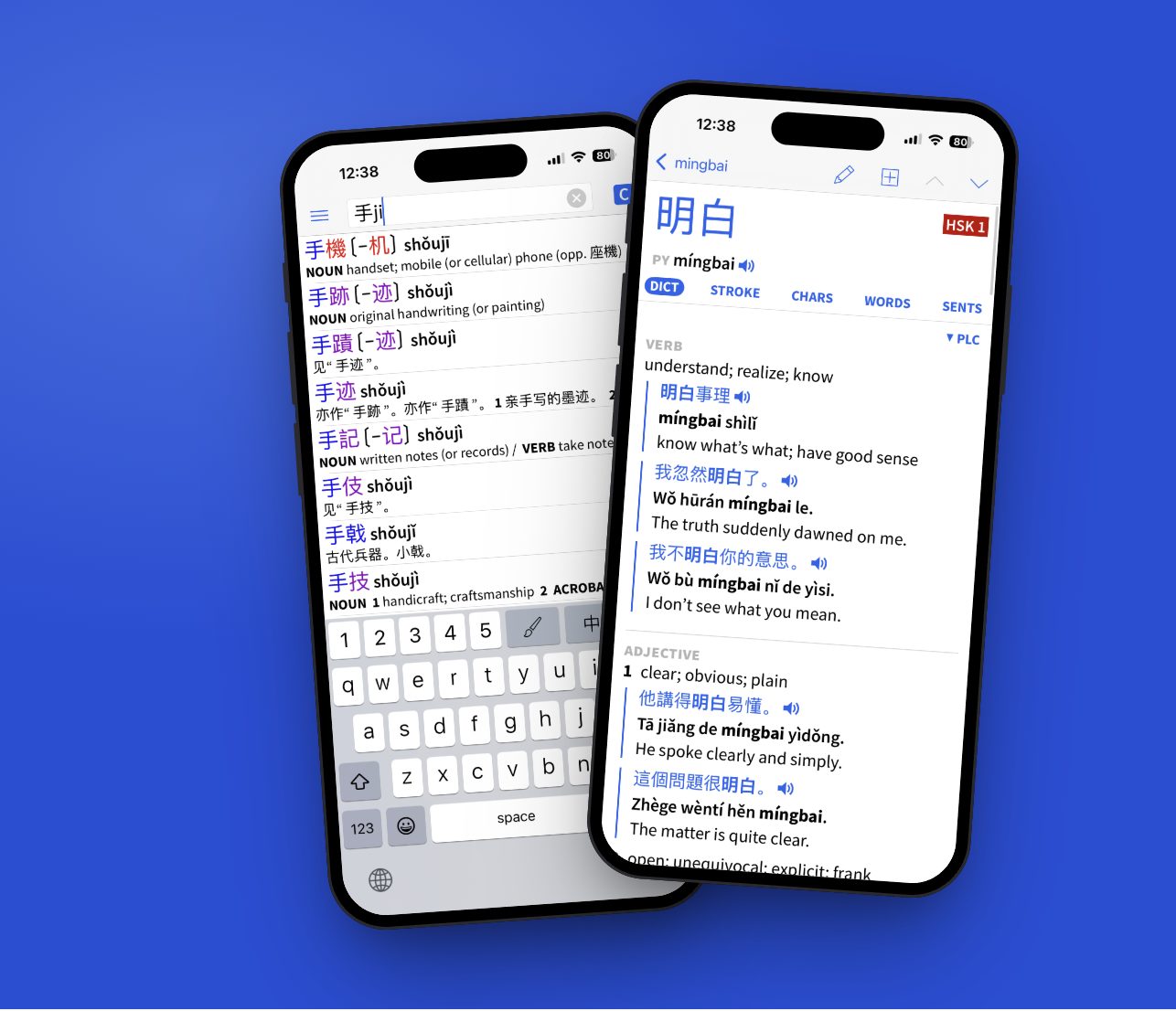
Beyond Pleco's basic dictionary function, some of its most useful elements live in the left-hand sidebar, such as the clipboard reader. To use it, just copy a chunk of text (from a WeChat message, for example) and paste it into the reader box.
Then, as you scan along, simply tap any characters you don't understand and the pinyin and definitions automatically pop up. While the basic version of Pleco is free, the app also offers several paid add-ons, including an OCR (optical character recognition) feature.
OCR allows users to point their phone's camera at real-world Chinese text, such as a menu or billboard, to scan and process the characters directly within the app.
Hanping
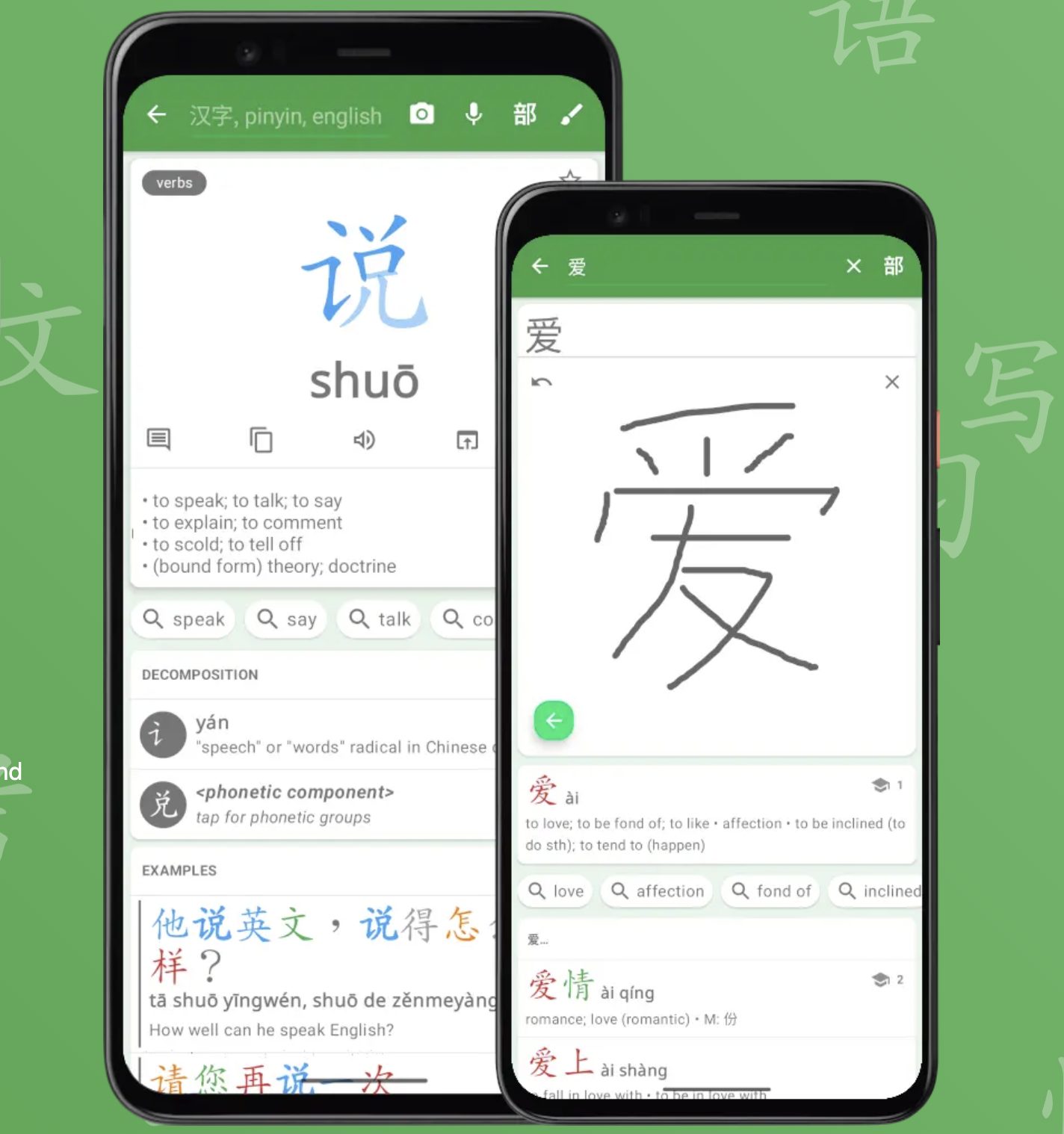
The Hanping Dictionary app, currently only available for Android users, is another helpful Chinese-English lexicon that's roughly comparable to Pleco.
In addition to a basic dictionary, the free version, known as "Hanping Lite," features a handwriting recognition tool, audio pronunciation by a native speaker, and an impressive database of example sentences for each word.
For a fee, the "Hanping Pro" version adds a tone-pair soundboard to help users practice pronouncing tones. It also supports flashcards through Anki, one of our favorite flashcard apps.
Google Translate
Google Translate is the multilingual dictionary of choice for foreigners and locals alike in Taiwan and other Chinese-speaking areas with internet freedom. This online dictionary is completely free and includes a complimentary handwriting tool.
Google Translate won't help you browse and compare words to find the most nuanced, accurate definition. It will, however, help you gain a quick, direct comprehension of the target text no matter how long or short.
Its search results are usually quite authentic, and the platform is worth mentioning for its utility in those time-sensitive "how do you say…" moments.
04 Top web dictionaries
It's often more convenient to look up new words using websites rather than smartphone apps, for example when you're reading an article on your computer or typing an email in Chinese. Fortunately, there are many top-notch online dictionary websites available to aid this process.
MDBG
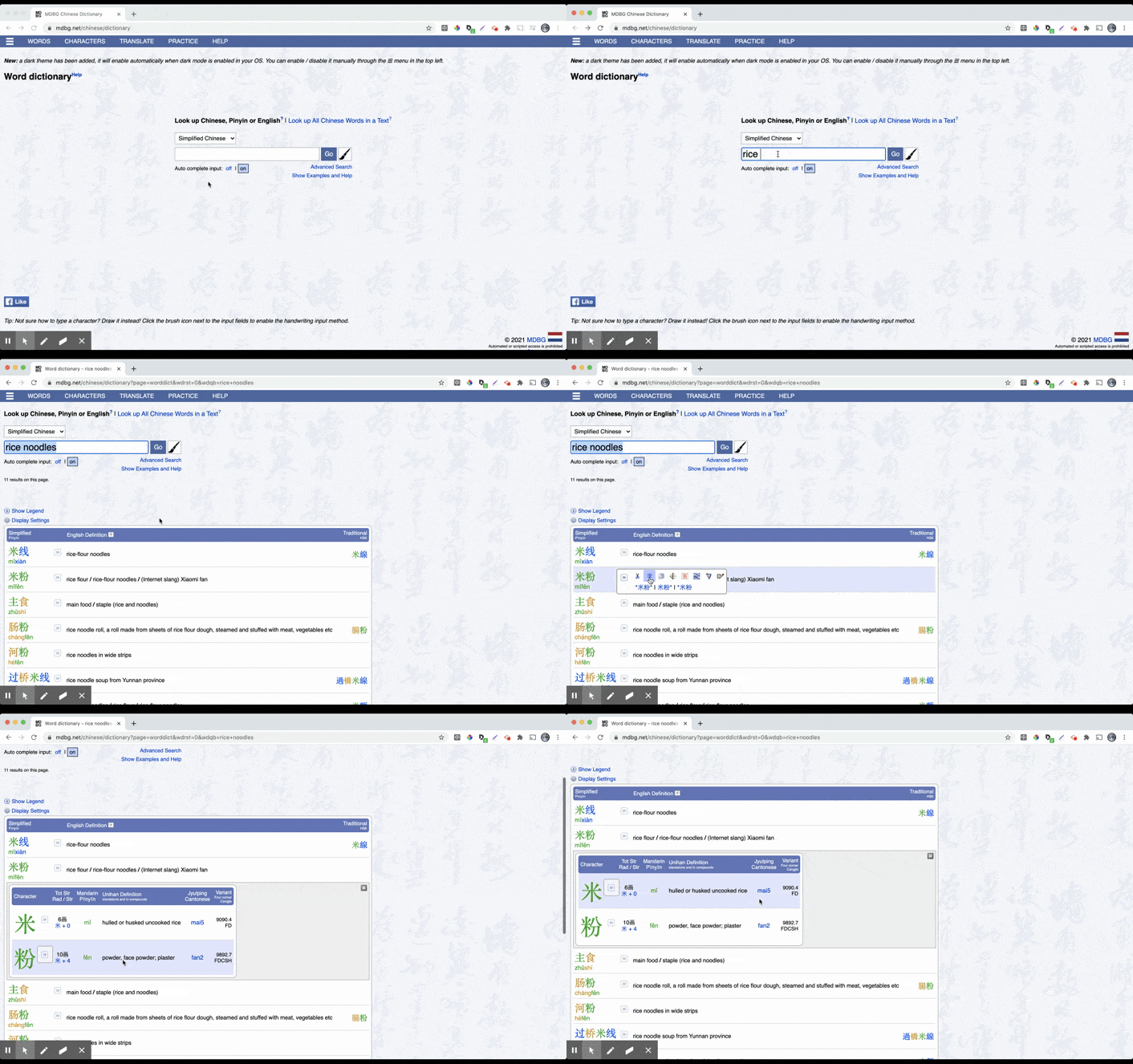
MDBG is a tried-and-tested Chinese-English online dictionary that boasts a no-frills interface, consistently accurate search results, and thorough definitions for each entry.
In addition to a handwriting function and a built-in translation tool for longer texts, the site includes a "practice" page that hosts online flashcards, quizzes, and an optional daily vocabulary web feed.
The "Character" option on the MDBG toolbar provides an in-depth introduction to the radical breakdown and stroke order of individual characters. As far as we're concerned, these are all added bonuses for anyone whose goal is to increase retention of new vocabulary.
LINE Dict
Formerly known as Nciku, LINE Dict is another web-based Chinese-English dictionary. It sets itself apart with its vast database of examples for each word and expression.
As all language learners know, understanding the definition of a word is only half the battle. Understanding how to use the word in context is equally important, and that's where LINE Dict comes in handy.
When looking up a word, choose to search for the word's definition or its usage examples. This brings up hundreds and sometimes even thousands of authentic example sentences, complete with audio to help aid your memory.
The LINE Dict homepage also features daily expressions, quotes, and 成语 (chéngyǔ, four-character Chinese idioms). This makes it even more convenient to learn new, genuine expressions without spending extra time seeking them out.

YellowBridge
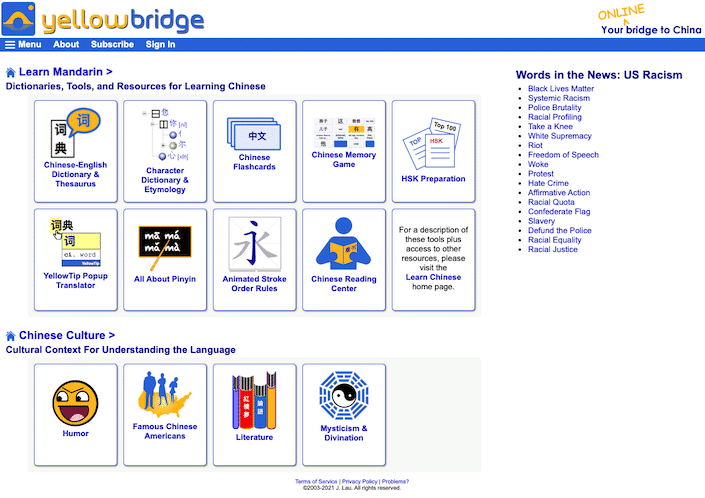
Although YellowBridge doesn't feature the most modern interface in the online dictionary world, it's nonetheless an extremely detailed option. The basic word search includes the ability to search by character or radical, and the site also features a helpful thesaurus.
YellowBridge also offers a character-etymology section, a trivia page with mini-educational articles related to Chinese culture and history, and a memory guessing game.
More than just a dictionary, YellowBridge is an ideal site for anyone passionate about expanding their knowledge of China. It's easy to spend hours surfing the site while continuing to deepen your understanding of Chinese language and culture.

Learn Chinese with Cultural Context
CLI offers personalized Chinese instruction built around real language and culture. Join our Immersion Program in Guilin or start online with a free Chinese lesson.
05 Improve your life with pop-up dictionaries
No article on online Chinese dictionaries would be complete without mentioning pop-up dictionaries. They will make your life as a Chinese language student significantly easier, especially if you often read long texts made up of Chinese characters on your screen.
Pop-up dictionaries are installed as internet browser extensions. When you hover over a given character as you read, its pronunciation and definition automatically pop up.
The Zhongwen Chinese-English Dictionary is an excellent, reliable pop-up Chrome extension to start with.
06 Online Chinese dictionary vocabulary
The following terms will help you navigate dictionaries, character lookups, and word-search conversations in Chinese.
| Chinese | Pinyin | Meaning |
|---|---|---|
| 词典 | Dictionary | |
| 字典 | Character dictionary | |
| 部首 | Radical | |
| 笔画 | Stroke | |
| 拼音 | Pinyin | |
| 生词 | New word | |
| 词汇 | Vocabulary | |
| 例句 | Example sentence | |
| 翻译 | To translate; translation | |
| 成语 | Four-character idiom |
07 FAQ
What is the best Chinese dictionary app?
Pleco is the most popular choice among CLI students and staff thanks to its clean interface, clipboard reader, and optional OCR feature. Hanping and Google Translate are strong alternatives.
Are online Chinese dictionaries free?
Many are completely free, including the basic versions of Pleco and Hanping, as well as MDBG and Google Translate. Some apps offer paid add-ons such as OCR or tone practice.
Do I still need to learn how to use a paper dictionary?
It is a useful backup skill. Many universities in China forbid phones and laptops in class but allow paper dictionaries, so knowing how to look up a character by radical and stroke count can help.
What is a pop-up dictionary?
A pop-up dictionary is a browser extension that shows a character's pronunciation and definition when you hover over it. Zhongwen for Chrome is a reliable option for reading Chinese on screen.
08 Keep growing your vocabulary
We hope this article helped you decide which online Chinese dictionary best suits your study process. If you plan to travel or study in China, a trusted dictionary is an absolute necessity for your packing list.
To keep improving, be sure to pair your self-study with plenty of interaction with native speakers. With a bit of hard work and focus, you'll find yourself relying on your dictionary less and less.
Remember, 学无止境 (xuéwúzhǐjìng): there's always something new to learn!