

- 新年快乐 (xīnnián kuàilè) sirve para cualquier Año Nuevo, y durante la Fiesta de la Primavera también se dice 过年好 (guònián hǎo) a cualquiera con quien te encuentres o hables por teléfono.
- 2027 es el Año de la Cabra y comienza el 6 de febrero, así que añade 羊年大吉 (yángnián dàjí) a tu saludo.
- Adapta el deseo a la persona: 身体健康 (shēntǐ jiànkāng, buena salud) para los mayores, 工作顺利 (gōngzuò shùnlì, trabajo sin contratiempos) para los colegas y 生意兴隆 (shēngyì xīnglóng, buenos negocios) para los clientes.
- Empieza un deseo con 祝 (zhù), y cuando alguien te desee un feliz Año Nuevo, puedes responder 你也是 (nǐ yě shì), «igualmente», o 您也是 (nín yě shì) a una persona mayor.
La forma más común de decir feliz Año Nuevo en chino es 新年快乐 (xīnnián kuàilè), a menudo escrito xin nian kuai le. Toca los caracteres para escuchar una voz de mujer y el pinyin para escuchar una de hombre. Durante la Fiesta de la Primavera oirás 过年好 (guònián hǎo) y 春节快乐 (Chūnjié kuàilè) con la misma frecuencia, y en un año de la Cabra la gente añade algunos saludos que solo funcionan por la cabra.

Esta página tiene 26 saludos, cada uno con audio. Ve a los 26 en una sola tabla.
01 Cómo decir feliz Año Nuevo en chino
新年快乐 se forma con palabras de HSK 2 y 3, así que hasta un principiante puede decirlo. 恭喜发财 y 万事如意 pertenecen al nivel avanzado de la lista, y la mayoría las aprende como frases hechas.
新年快乐 | xīnnián kuàilè | Feliz Año Nuevo
新年快乐 es la opción segura. Sirve el 1 de enero y en la Fiesta de la Primavera, hablado o escrito, con cualquiera, desde un compañero de clase hasta tu jefe. El 乐 aquí es lè, «feliz», y no yuè como en 音乐 (yīnyuè, música). Para convertirlo en un deseo, coloca 祝 (zhù) delante, luego la persona y después el deseo.
祝你新年快乐!
Zhù nǐ xīnnián kuàilè!
¡Te deseo un feliz Año Nuevo!
祝您和家人新年快乐!
Zhù nín hé jiārén xīnnián kuàilè!
¡Feliz Año Nuevo para ti y tu familia!
您 es el «usted» de cortesía, para mayores, profesores y clientes.
新年好 y 过年好
新年好 (xīnnián hǎo) es la versión de Año Nuevo de 你好. Se dice al encontrarte con alguien en los primeros días del año y sirve para ambos Años Nuevos. 过年好 (guònián hǎo) es propio de la Fiesta de la Primavera. 过年 significa «celebrar el Año Nuevo», y 过年好 es lo que le dices a cualquier persona que veas o llames durante la fiesta, desde los vecinos hasta tus abuelos. Es un poco más del norte, y en el sur mucha gente también dice 新年好 en la Fiesta de la Primavera.
叔叔阿姨,过年好!
Shūshu āyí, guònián hǎo!
¡Feliz Año Nuevo, tío y tía!
叔叔阿姨 («tío y tía») es como se saluda a los padres de un amigo o de tu pareja, aunque no sean familiares tuyos.
春节快乐 y 新春快乐
春节快乐 (Chūnjié kuàilè) significa «Feliz Fiesta de la Primavera», así que resérvalo para el Año Nuevo lunar. 新春快乐 (xīnchūn kuàilè), «Feliz Nueva Primavera», es su gemelo escrito, que se ve en tarjetas, mensajes de empresas y letreros de tiendas.
恭喜发财 | gōngxǐ fācái | te deseo prosperidad
Literalmente «felicidades, hazte rico», 恭喜发财 es el saludo más alegre de la fiesta, para amigos, familia y el dueño de tu local de fideos favorito. Los niños suelen añadir un travieso 红包拿来 (hóngbāo ná lái), con rima: «¡el sobre rojo, pásalo!». Es una broma de niños (a veces los jóvenes lo escriben en tono burlón en el chat familiar), y algunos padres prefieren que sus hijos ni lo digan. La grafía «Kung Hei Fat Choy» viene del cantonés, como explican las preguntas frecuentes.
Cómo responder a «Feliz Año Nuevo» en chino
Cuando alguien te diga 新年好 o 过年好, simplemente repítelo. Ante un deseo como 新年快乐, la respuesta más fácil es 你也是 (nǐ yě shì), «igualmente». En 你也是, 你 y 也 son ambos de tercer tono, así que 你 sube y se dice ní yě shì, como en las dos grabaciones. Nuestra guía sobre los cambios de tono en mandarín explica la regla. A una persona mayor, un profesor o un cliente, di mejor 您也是 (nín yě shì). También puedes poner 也 (también) delante de un deseo completo:
也祝你新年快乐!
Yě zhù nǐ xīnnián kuàilè!
¡Feliz Año Nuevo también para ti!
Si alguien te dice 恭喜发财, responde 恭喜恭喜 (gōngxǐ gōngxǐ).
02 Saludos para el Año de la Cabra (2027)
El Año de la Cabra comienza el sábado 6 de febrero de 2027, y la Nochevieja china es la noche anterior, el viernes 5 de febrero. 羊年 (yángnián) significa «Año de la Cabra». En el ciclo de 60 años del calendario chino, 2027 es 丁未 (dīngwèi): 丁 es uno de los dos troncos de fuego y 未 es la rama de la cabra, por eso se le llama Cabra de Fuego. Nuestra página sobre el calendario chino explica el ciclo, y los días festivos de China en 2027 enumeran los días libres.
¿Cabra, oveja o carnero? 羊 (yáng) los abarca a todos. Cuando los hablantes de chino necesitan ser precisos, dicen 山羊 (shānyáng) para la cabra y 绵羊 (miányáng) para la oveja, pero el animal del zodiaco es simplemente 羊, y las fuentes en inglés lo traducen de las tres maneras. Nosotros decimos Cabra, y nuestra página sobre el Año de la Cabra trata el lado del zodiaco.
羊年大吉 y 羊年吉祥
羊年大吉 (yángnián dàjí), «gran suerte en el Año de la Cabra», es el saludo que cambia cada año. El año pasado fue 马年大吉, por el Caballo. 羊年吉祥 (yángnián jíxiáng) significa casi lo mismo con un tono más suave, y queda muy bien en una tarjeta.
祝大家羊年大吉!
Zhù dàjiā yángnián dàjí!
¡Mucha suerte en el Año de la Cabra para todos!
La cabra también se esconde en 吉祥 (jíxiáng), «auspicioso». Su segundo carácter, 祥 (xiáng), tiene 羊 a la derecha, y 羊 le da su sonido. En un artículo explicativo de 2015, el Diario del Pueblo señaló que los textos antiguos a menudo escribían 吉祥 como 吉羊, con la cabra sola en lugar de la buena suerte.
三羊开泰 | sānyáng kāitài | tres cabras traen buena fortuna
Este es el juego de palabras del año de la Cabra. El dicho original es 三阳开泰 (sānyáng kāitài), del hexagrama 泰 del Libro de los cambios, donde tres líneas yang representan el primer mes lunar y el regreso de la primavera. 阳 (yáng), «yang» o «el sol», suena exactamente igual que 羊, así que en un año de la Cabra las tres líneas yang se convierten en tres cabras en tarjetas y recortes de papel. El artículo del Diario del Pueblo, escrito en el último año de la Cabra, calificó la grafía con la cabra de juego de palabras perdonable y añadió que 三阳开泰 en sí es apropiado para cualquier Año Nuevo.
喜气洋洋 | xǐqì yángyáng | lleno de alegría
喜气洋洋 significa «radiante de felicidad». Fíjate en 洋 (yáng), «océano»: agua a la izquierda y 羊 a la derecha, que se lee yáng como la cabra, así que en un año de la Cabra es una opción fácil.
大吉大利 | dàjí dàlì | gran suerte y grandes ganancias
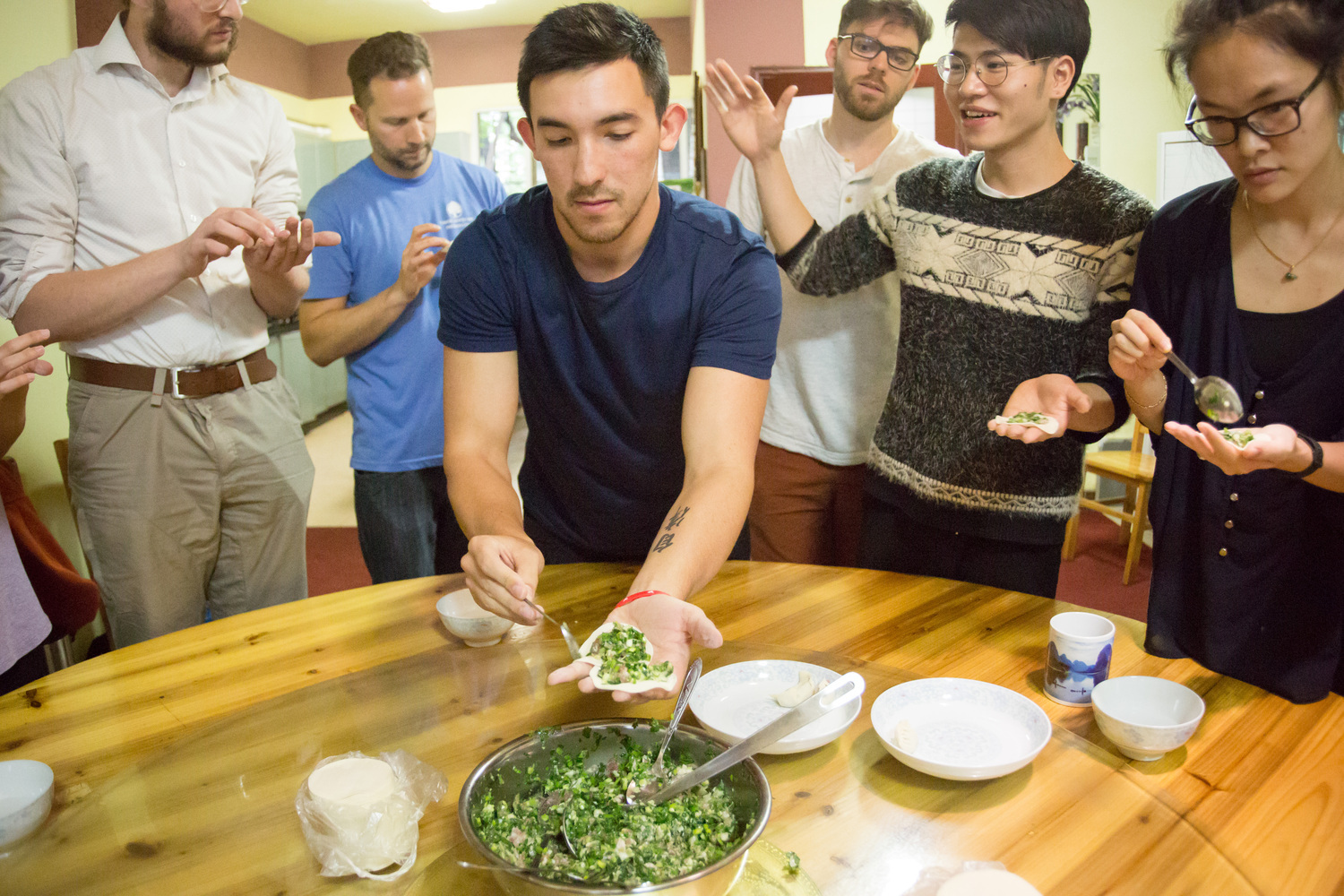
大吉大利 sirve para cualquier año y combina muy bien con 羊年大吉. Está impreso en dorado en los sobres rojos que sostienen nuestros estudiantes y miembros del equipo en la foto que aparece al inicio de esta página.
03 Saludos para familia, amigos, colegas y clientes
La mayoría de los deseos de Año Nuevo siguen un patrón: 祝, luego 您 o 你, y después un deseo de cuatro caracteres. Junta dos deseos y el mensaje suena completo.
| Chino | Pinyin | Significado | A quién decírselo |
|---|---|---|---|
| 身体健康 | shēntǐ jiànkāng | buena salud | Abuelos, mayores, familia |
| 健康长寿 | jiànkāng chángshòu | buena salud y larga vida | Abuelos y personas mayores |
| 万事如意 | wànshì rúyì | que todo salga como deseas | Cualquier persona; va bien con 身体健康 |
| 阖家幸福 | héjiā xìngfú | felicidad para toda tu familia | Una familia, en un mensaje formal (阖 significa entera) |
| 心想事成 | xīnxiǎng shìchéng | que se cumplan todos tus deseos | Cualquier persona |
| 工作顺利 | gōngzuò shùnlì | que tu trabajo vaya sin contratiempos | Colegas, tu jefe, cualquiera que trabaje |
| 步步高升 | bùbù gāoshēng | que asciendas paso a paso | Colegas, tu gerente |
| 生意兴隆 | shēngyì xīnglóng | que tu negocio prospere | Clientes, socios, dueños de tiendas |
| 财源广进 | cáiyuán guǎngjìn | que el dinero llegue de todas partes | Dueños de negocios |
| 学习进步 | xuéxí jìnbù | que te vaya bien en los estudios | Niños y estudiantes; el abuelo lo dice en el Diálogo 1 |
| 平安顺遂 | píng'ān shùnsuì | un año seguro y sin contratiempos | Mensajes formales y de trabajo |
Para abuelos y mayores
Con los familiares mayores, desea primero salud y usa siempre 您. 身体健康 combina de forma natural con 万事如意:
祝您身体健康,万事如意!
Zhù nín shēntǐ jiànkāng, wànshì rúyì!
¡Te deseo buena salud y que se cumpla todo lo que deseas!
祝爷爷奶奶健康长寿!
Zhù yéye nǎinai jiànkāng chángshòu!
¡Buena salud y larga vida, abuelo y abuela!
Para colegas y tu jefe
工作顺利 es una opción segura con cualquiera que trabaje. 步步高升, «que asciendas paso a paso», desea un ascenso. Puedes decírselo a tus colegas y también a tu propio gerente: los chats grupales de trabajo se llenan de 祝领导步步高升 cada año.
祝你工作顺利,步步高升!
Zhù nǐ gōngzuò shùnlì, bùbù gāoshēng!
¡Espero que el trabajo vaya sin contratiempos y sigas ascendiendo!
Pero si tu jefe es el dueño de la empresa, no tiene a dónde más subir, así que mejor deséale 生意兴隆. La frase que le va bien a cualquier jefe es esta:
祝您新年快乐,身体健康,万事如意!
Zhù nín xīnnián kuàilè, shēntǐ jiànkāng, wànshì rúyì!
¡Feliz Año Nuevo, buena salud y que todo salga como deseas!
Para clientes y dueños de tiendas
生意兴隆 y 财源广进 son la pareja de los negocios, para clientes y socios, o para la familia que atiende la tienda de tu esquina. Nuestra guía de frases de chino para negocios tiene más para el trabajo.
祝您生意兴隆,财源广进!
Zhù nín shēngyì xīnglóng, cáiyuán guǎngjìn!
¡Que tu negocio prospere y llegue el dinero a raudales!
Tres deseos en una sola línea
Una de nuestras organizaciones asociadas nos envió la misma frase de Año Nuevo en 2022, 2025 y 2026, cambiando solo el animal. Para 2027 queda así (ellos escriben 您, que va bien con un cliente o una persona mayor; nosotros usamos 你, para un colega o un amigo):
祝你新年快乐,羊年大吉,平安顺遂!
Zhù nǐ xīnnián kuàilè, yángnián dàjí, píng'ān shùnsuì!
¡Feliz Año Nuevo, mucha suerte en el Año de la Cabra y un año seguro y sin contratiempos!
平安顺遂 significa «un año seguro y sin contratiempos». Tiende a ser formal, así que va mejor en mensajes escritos y correos de trabajo.
04 Juegos de palabras de la suerte, el 福 al revés y cómo escribirlo
年年有余 | niánnián yǒu yú | que tengas abundancia cada año
余 (yú), «excedente», suena exactamente igual que 鱼 (yú), «pez», así que 年年有余 también suena a «que tengas pescado cada año». Por eso se sirve pescado en la cena de reunión de la víspera de Año Nuevo y aparece en las decoraciones de Año Nuevo. Nuestra guía del Año Nuevo chino cubre el resto del menú.
岁岁平安 | suìsuì píng'ān | paz año tras año
Se dice que romper algo en Año Nuevo trae mala suerte, así que si se rompe un tazón o un vaso, alguien dice 岁岁平安 de inmediato. 碎 (suì), «romper», suena como 岁 (suì), «año», lo que convierte el accidente en un deseo de paz. En internet también lo verás escrito 碎碎平安 (suìsuì píng'ān), con el carácter 碎 («roto») escrito a propósito, como una broma.
没事,岁岁平安!
Méishì, suìsuì píng'ān!
¡No pasa nada, paz año tras año!
Por qué 福 se cuelga al revés
福 (fú) significa «buena fortuna», y durante la fiesta lo verás en cuadrados de papel rojo en las puertas, a menudo al revés. Tradicionalmente, el de la puerta principal va derecho, y los que van al revés se ponen en las puertas interiores y en las alacenas. Al revés se dice 倒 (dào), que suena como 到 (dào), «llegar», así que un 福 colgado al revés dice 福到了 (fú dào le), «la buena fortuna ha llegado». Junto a la puerta principal se colocan los 春联 (chūnlián), unos pareados rojos de la Fiesta de la Primavera con un verso de buenos deseos a cada lado.
Cómo escribir Feliz Año Nuevo en chino
新年快乐 lleva 31 trazos: 13 para 新, 6 para 年, 7 para 快 y 5 para 乐. 福 tiene 13 trazos. Su lado izquierdo es una forma estrecha de 示 (shì), que a la izquierda de un carácter representa los altares y los espíritus, y su lado derecho le da al carácter su sonido, fú. 春 (chūn), «primavera», tiene 9 trazos. Toca los caracteres de la tabla para ver cómo se escribe cada uno trazo a trazo.
| Chino | Pinyin | Significado | Trazos |
|---|---|---|---|
| 福 | fú | buena fortuna | 13 |
| 春 | chūn | primavera | 9 |
| 羊 | yáng | cabra; oveja | 6 |
| 新年快乐 | xīnnián kuàilè | Feliz Año Nuevo | 31 |
| 恭喜发财 | gōngxǐ fācái | te deseo prosperidad | 34 |
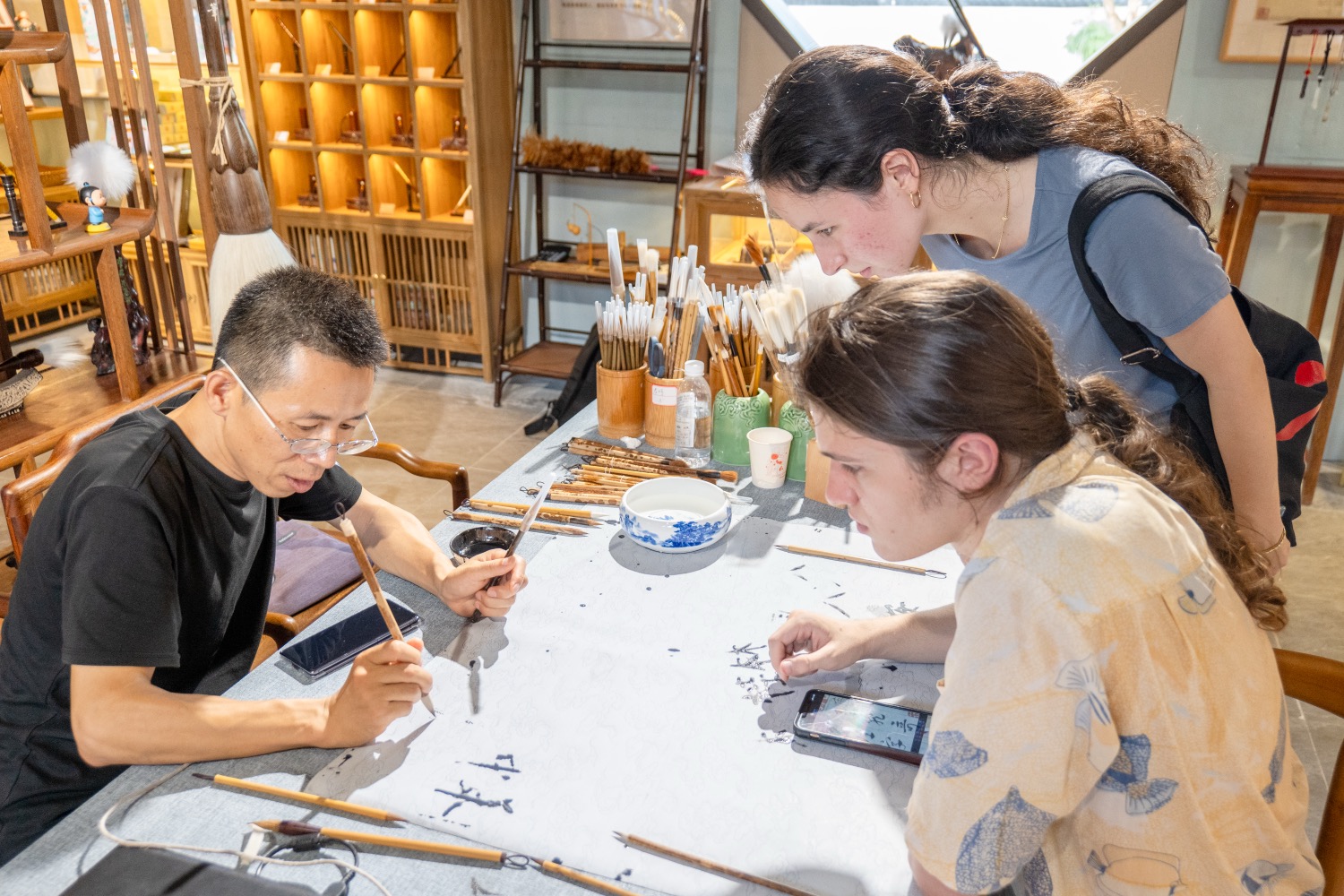
Nuestra guía sobre el orden de los trazos en chino explica las reglas, y si quieres probar con un pincel, empieza con la caligrafía china.
Dilo ante un profesor de verdad antes de la fiesta
Prueba estos saludos en voz alta en una clase en línea gratuita de 30 minutos con uno de nuestros profesores en Guilin, China. Tu profesor te dirá en qué tonos debes trabajar y todavía tendrás tiempo de practicar antes de la Fiesta de la Primavera.
05 Llamadas de Año Nuevo, mensajes de WeChat y sobres rojos
给您拜年了 | gěi nín bàinián le | te deseo un feliz Año Nuevo
拜年 (bàinián) es la visita de Año Nuevo: ir a ver o llamar por teléfono a familiares, profesores y amigos para desearles lo mejor. 给您拜年了 significa literalmente «te hago mi visita de Año Nuevo», y se dice al llamar o visitar a cualquier persona a quien te dirigirías como 您.
拜个早年 y 拜个晚年
拜个早年 (bài gè zǎonián) es un feliz Año Nuevo adelantado y 拜个晚年 (bài gè wǎnnián), uno tardío. Chen Lianshan, folclorista de la Universidad de Pekín, explicó a China Daily que un saludo adelantado es apropiado una vez que ha pasado el Pequeño Año Nuevo. Este cae el día 23 del último mes lunar (el 24 en el sur), alrededor de una semana antes de 除夕 (Chúxī), la Nochevieja china. En 2027, la víspera es el 5 de febrero. A partir del quinto día del Año Nuevo, añade, un saludo se considera tardío, y por eso la gente dice 拜个晚年 al encontrarse. Un antiguo dicho sostiene que un saludo sincero de Año Nuevo no es tardío hasta el día 15, el Festival de los Faroles.
给您拜个早年!
Gěi nín bài gè zǎonián!
¡Feliz Año Nuevo por adelantado!
También se dice a quienes no vas a volver a ver antes de la fiesta, en el último día de trabajo o en la última clase, incluso antes del Pequeño Año Nuevo.
Sobres rojos en WeChat
Un 红包 (hóngbāo) es dinero dentro de un sobre rojo. Desde 2014 también se envían por WeChat. En un grupo familiar, alguien va a 发红包 (fā hóngbāo), es decir, enviar un sobre rojo, y todos los demás corren a 抢红包 (qiǎng hóngbāo), o sea, a atraparlo, porque solo hay cierta cantidad de partes para repartir. Durante la Fiesta de la Primavera de 2019, del 4 al 9 de febrero, unos 823 millones de personas enviaron o recibieron sobres rojos digitales, según informó Xinhua.
En WeChat, escribe tu propio mensaje con el nombre de la persona, como 王叔叔、李阿姨,过年好! (Wáng shūshu, Lǐ āyí, guònián hǎo!, «¡Feliz Año Nuevo, tío Wang y tía Li!»). Toma diez segundos y se siente mucho más cálido que una imagen reenviada de una cabra.

Etiqueta de los sobres rojos
El dinero del sobre rojo de un niño es 压岁钱 (yāsuìqián), el dinero de Año Nuevo. Da y recibe los sobres rojos con ambas manos, usa billetes nuevos y crujientes, evita cualquier cantidad que lleve un 4 y no abras el sobre frente a quien te lo dio. Nuestra guía sobre el hongbao explica quién le da a quién, y cuando recibas uno, nuestra guía de cómo decir gracias en chino tiene formas más cálidas de agradecer.
06 Palabras que debes evitar en el Año Nuevo chino
Los primeros días del año marcan la pauta de los meses siguientes, así que la gente evita las palabras de mal agüero. Las principales son 死 (sǐ), «morir», y 病 (bìng), «enfermedad», y el número 四 (sì), cuatro, porque suena parecido a 死. Muchas personas también evitan hablar de deudas o prestar dinero durante la fiesta, y si algo se rompe, ya sabes que hay que decir 岁岁平安. Nuestra guía sobre la numerología china explica por qué el cuatro da mala suerte.
Hoy mucha gente se toma estas reglas con ligereza, y nadie espera que un amigo extranjero las conozca todas. Aun así, los familiares mayores sí se fijan, así que en una cena familiar habla de la salud, la comida y el año que viene.
07 Práctica: tres diálogos cortos y un cuestionario
Toca el ícono del altavoz después de una frase para escucharla y luego dila tú.
Diálogo 1: una videollamada con el abuelo
乖 (guāi), «bueno, obediente», es como los abuelos llaman a un niño que se porta bien, así que 乖孙女 significa «buena nieta».
Diálogo 2: el primer día de regreso al trabajo
姐 (hermana mayor) después de un apellido, como en 王姐, es una forma amistosa de dirigirse a una colega un poco mayor que tú.
El primer día laboral después de las vacaciones, la gente dice 开工大吉 (kāigōng dàjí), «un buen comienzo en el trabajo», y lo publica en el chat grupal del trabajo. Ese día, los jefes suelen repartir un 开工红包 (kāigōng hóngbāo), un sobre rojo de inicio de trabajo.
Diálogo 3: el grupo familiar de WeChat
舅舅 es el hermano de tu madre. Los hermanos de tu padre tienen otros nombres, así que conviene aprender los de tu propia familia.
Cuestionario: ¿qué dirías?
1. Estás en una videollamada con la abuela de tu amigo. ¿Qué le deseas?
(a) 红包拿来 hóngbāo ná lái (b) 身体健康 shēntǐ jiànkāng (c) 步步高升 bùbù gāoshēng
Respuesta
(b) 身体健康 shēntǐ jiànkāng. A una persona mayor se le desea salud, y se usa 您: 祝您身体健康,万事如意! Zhù nín shēntǐ jiànkāng, wànshì rúyì!
2. Se cae un vaso de la mesa durante la cena de la víspera del Año Nuevo chino. ¿Qué dirá alguien?
(a) 岁岁平安 suìsuì píng'ān (b) 新年好 xīnnián hǎo (c) 生意兴隆 shēngyì xīnglóng
Respuesta
(a) 岁岁平安 suìsuì píng'ān. 碎 (romper) suena como 岁 (año).
3. Tu cliente tiene un restaurante. ¿Qué deseo es el adecuado?
(a) 学习进步 xuéxí jìnbù (b) 生意兴隆 shēngyì xīnglóng (c) 健康长寿 jiànkāng chángshòu
Respuesta
(b) 生意兴隆 shēngyì xīnglóng, «que tu negocio prospere».
4. Es el 1 de febrero de 2027 y le escribes a tu profesor. ¿Qué escribes?
(a) 拜个早年 bài gè zǎonián (b) 拜个晚年 bài gè wǎnnián (c) 红包拿来 hóngbāo ná lái
Respuesta
(a) 拜个早年 bài gè zǎonián. La Víspera es el 5 de febrero, así que tu saludo es anticipado: ¡给您拜个早年! Gěi nín bài gè zǎonián!
5. Un amigo te dice ¡新年快乐! ¿Cómo respondes?
(a) 你也是 nǐ yě shì (b) 岁岁平安 suìsuì píng'ān (c) 拜个晚年 bài gè wǎnnián
Respuesta
(a) 你也是 nǐ yě shì. La versión más larga, ¡也祝你新年快乐! Yě zhù nǐ xīnnián kuàilè!, también funciona.
6. Entras a la casa de los padres de tu pareja el primer día del Año Nuevo chino. ¿Qué dices primero?
(a) 你也是 nǐ yě shì (b) 叔叔阿姨,过年好! Shūshu āyí, guònián hǎo! (c) 给您拜个早年! Gěi nín bài gè zǎonián!
Respuesta
(b) 叔叔阿姨,过年好! Shūshu āyí, guònián hǎo! Salúdalos primero como tío y tía. 拜个早年 solo se usa antes de la Víspera.
08 Saludos de Año Nuevo chino: lista de vocabulario
Aquí están los 26 saludos de esta guía. Las palabras relacionadas y las dos respuestas tienen sus propias tablas más abajo.
| # | Chino | Pinyin | Significado | Cuándo usarla | HSK |
|---|---|---|---|---|---|
| 1 | 新年快乐 | xīnnián kuàilè | Feliz Año Nuevo | Cualquier Año Nuevo | frase |
| 2 | 新年好 | xīnnián hǎo | Feliz Año Nuevo | Al encontrarte con alguien | frase |
| 3 | 过年好 | guònián hǎo | Feliz Año Nuevo (chino) | Cualquier persona, durante la Fiesta de la Primavera | frase |
| 4 | 春节快乐 | Chūnjié kuàilè | Feliz Fiesta de la Primavera | Fiesta de la Primavera | frase |
| 5 | 新春快乐 | xīnchūn kuàilè | Feliz Nueva Primavera | Tarjetas, pancartas | frase |
| 6 | 恭喜发财 | gōngxǐ fācái | te deseo prosperidad | Amigos, comerciantes | frase |
| 7 | 羊年大吉 | yángnián dàjí | mucha suerte en el Año de la Cabra | El año de la Cabra | frase |
| 8 | 羊年吉祥 | yángnián jíxiáng | que el Año de la Cabra sea propicio | Tarjetas de 2027 | frase |
| 9 | 三羊开泰 | sānyáng kāitài | tres cabras traen buena fortuna | Tarjetas del año de la Cabra | frase |
| 10 | 喜气洋洋 | xǐqì yángyáng | radiante de felicidad | En cualquier momento | frase |
| 11 | 大吉大利 | dàjí dàlì | gran suerte y grandes ganancias | Cualquier año | frase |
| 12 | 身体健康 | shēntǐ jiànkāng | buena salud | Mayores y familiares | frase |
| 13 | 健康长寿 | jiànkāng chángshòu | buena salud y larga vida | Abuelos | frase |
| 14 | 万事如意 | wànshì rúyì | que todo salga como deseas | Cualquier persona | frase |
| 15 | 阖家幸福 | héjiā xìngfú | felicidad para toda tu familia | Mensajes formales | frase |
| 16 | 心想事成 | xīnxiǎng shìchéng | que se cumplan todos tus deseos | Cualquier persona | 7–9 |
| 17 | 工作顺利 | gōngzuò shùnlì | que tu trabajo vaya sin contratiempos | Cualquier persona que trabaje | frase |
| 18 | 步步高升 | bùbù gāoshēng | que asciendas paso a paso | Colegas, tu gerente | frase |
| 19 | 生意兴隆 | shēngyì xīnglóng | que tu negocio prospere | Clientes, dueños de tiendas | frase |
| 20 | 财源广进 | cáiyuán guǎngjìn | que el dinero llegue de todas partes | Dueños de negocios | frase |
| 21 | 学习进步 | xuéxí jìnbù | que te vaya bien en los estudios | Niños y estudiantes | frase |
| 22 | 平安顺遂 | píng'ān shùnsuì | un año seguro y sin contratiempos | Mensajes escritos | frase |
| 23 | 年年有余 | niánnián yǒu yú | que tengas abundancia cada año | Cena de reencuentro | frase |
| 24 | 岁岁平安 | suìsuì píng'ān | paz año tras año | Cuando algo se rompe | frase |
| 25 | 给您拜年了 | gěi nín bàinián le | deseándote un feliz Año Nuevo | Llamadas a los mayores | frase |
| 26 | 拜个早年 | bài gè zǎonián | un feliz Año Nuevo anticipado | Antes de la Víspera | frase |
Palabras relacionadas
| Chino | Pinyin | Significado | HSK |
|---|---|---|---|
| 拜年 | bàinián | hacer una visita de Año Nuevo | 6 |
| 红包 | hóngbāo | sobre rojo | 4 |
| 压岁钱 | yāsuìqián | dinero de Año Nuevo para los niños | 5 |
| 除夕 | Chúxī | Víspera de Año Nuevo chino | 5 |
| 春联 | chūnlián | pareados de la Fiesta de la Primavera | no figura |
| 福 | fú | buena fortuna | 5 |
| 羊 | yáng | cabra; oveja | 3 |
| 山羊 | shānyáng | cabra | no figura |
| 绵羊 | miányáng | oveja | no figura |
Respuestas
| Chino | Pinyin | Significado | HSK |
|---|---|---|---|
| 你也是 | nǐ yě shì | igualmente | frase |
| 恭喜恭喜 | gōngxǐ gōngxǐ | felicidades (como respuesta a 恭喜发财) | frase |
Los niveles son de HSK 3.0 (7–9 es la banda avanzada). «Frase» significa que la lista no tiene una entrada para la frase completa, y «no aparece» significa que la palabra no figura en ella.
09 Preguntas frecuentes sobre los saludos de Año Nuevo chino
¿Cómo se dice feliz Año Nuevo en chino?
Di 新年快乐 (xīnnián kuàilè). Durante la Fiesta de la Primavera también oirás 过年好 (guònián hǎo) y 春节快乐 (Chūnjié kuàilè).
¿Qué se dice por el Año de la Cabra en 2027?
Di 羊年大吉 (yángnián dàjí), «mucha suerte en el Año de la Cabra». En las tarjetas también verás 三羊开泰 (sānyáng kāitài) y 喜气洋洋 (xǐqì yángyáng). El Año de la Cabra comienza el 6 de febrero de 2027.
¿Cómo se escribe feliz Año Nuevo en caracteres chinos?
Feliz Año Nuevo se escribe 新年快乐: cuatro caracteres con 31 trazos en total. La forma tradicional es 新年快樂.
¿Se dice Gong Xi Fa Cai o Kung Hei Fat Choy?
Ambos son el mismo saludo, 恭喜发财. Gōngxǐ fācái es la forma en mandarín, y «Kung Hei Fat Choy» es una grafía en inglés de cómo lo dicen los hablantes de cantonés (gung1 hei2 faat3 coi4 en Jyutping, la romanización habitual del cantonés). La forma tradicional es 恭喜發財. Nuestra guía sobre mandarín vs cantonés explica en qué se diferencian.
¿Puedes decir 新年快乐 el 1 de enero?
Sí. 新年快乐 y 新年好 sirven para ambos Años Nuevos, mientras que 过年好 y 春节快乐 son solo para la Fiesta de la Primavera.
¿Qué no se debe decir en el Año Nuevo chino?
Evita las palabras relacionadas con la muerte y la enfermedad, y el número cuatro, que suena parecido a la palabra «muerte». Si algo se rompe, di 岁岁平安 (suìsuì píng'ān), «paz año tras año».
10 Sigue adelante
Empieza con 新年快乐 y 过年好, y luego elige un deseo para cada persona a la que vayas a saludar este año. Si eres nuevo en el chino, nuestro curso de chino gratuito tiene seis lecciones cortas de mandarín para principiantes absolutos. Para probar tus saludos con una persona real antes de la Fiesta de la Primavera, reserva una clase de prueba gratuita de 30 minutos con uno de nuestros profesores.
Y si quieres escuchar chino a tu alrededor todos los días, ven a estudiar con nosotros en Guilin en nuestro Programa de Inmersión.