

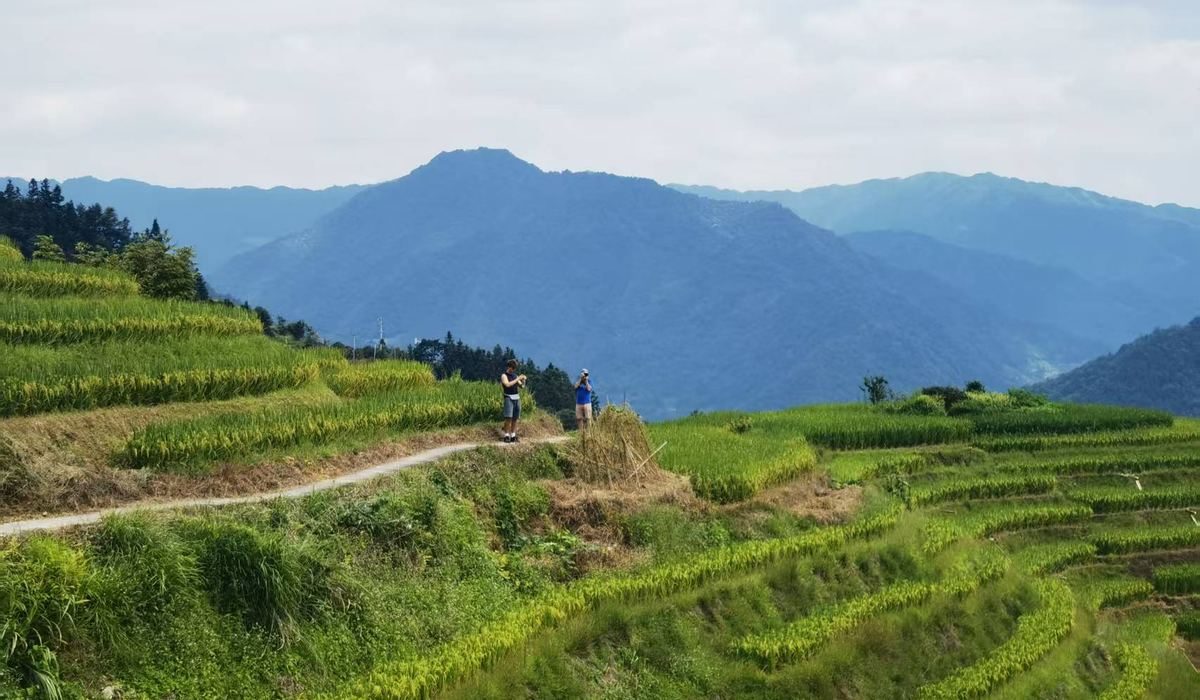
The rice around Guilin is almost ready to cut, so on the first two Saturdays of the fall semester we took students out of the city. On September 12 we went north to the Longji rice terraces (龙脊梯田 Lóngjǐ Tītián) in Longsheng County. A week later we went south to the Yangshuo countryside for a morning on bikes and an afternoon on bamboo rafts.
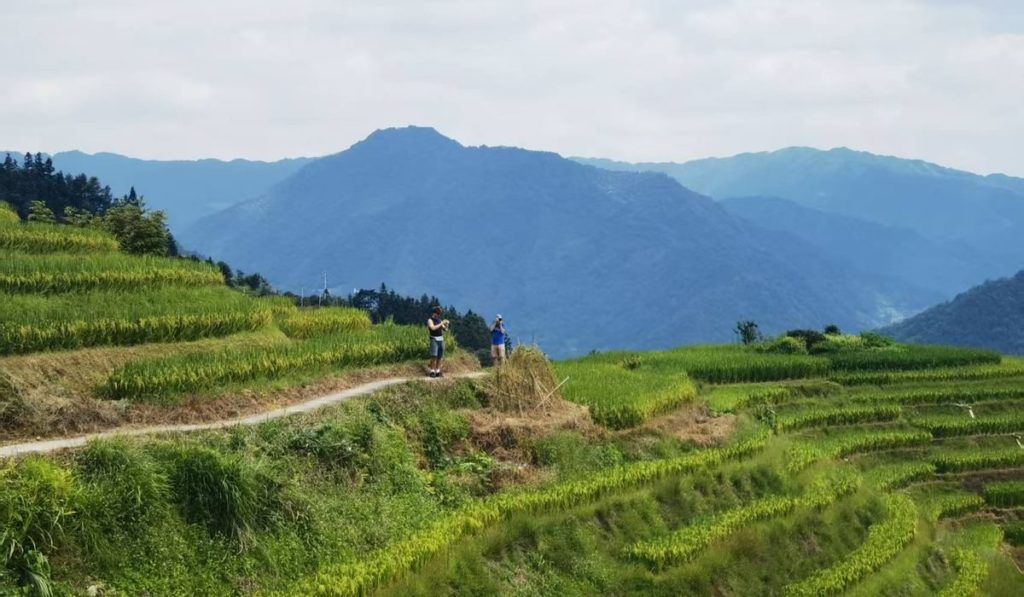
Longji, September 12
We met in the CLI lobby at 8:50 in the morning. Lunch was included, so the packing list was short: good walking shoes, sunscreen or a hat, water and a passport. One new student signed up before even arriving in China, so the terraces were the first full day of the stay.
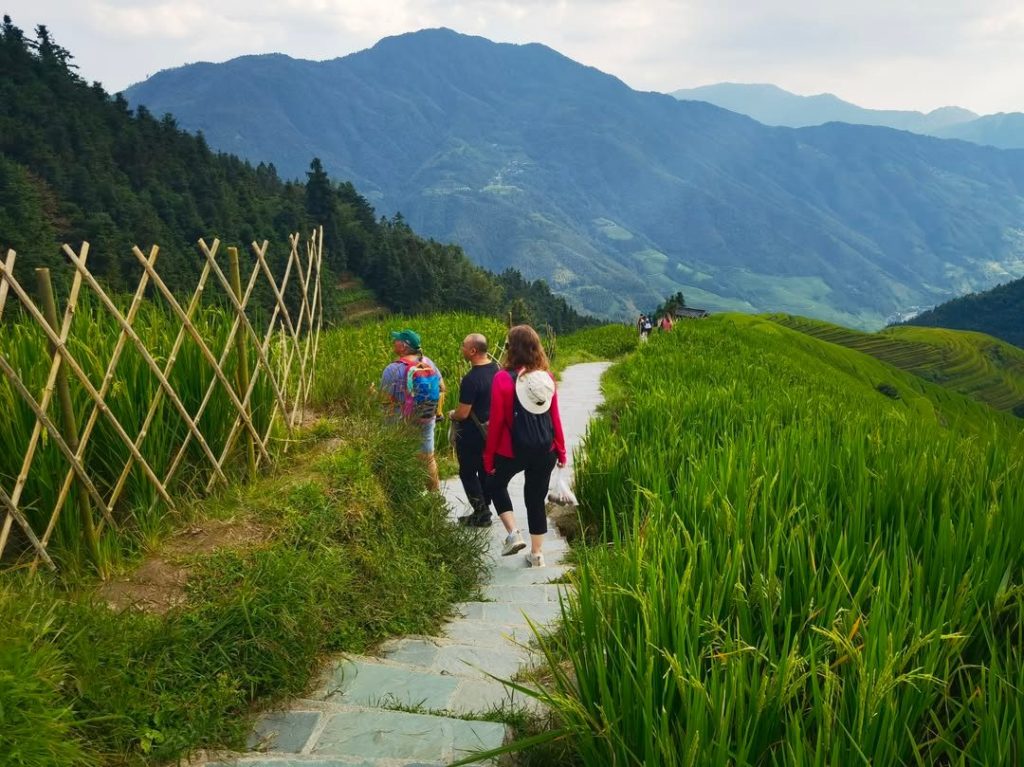
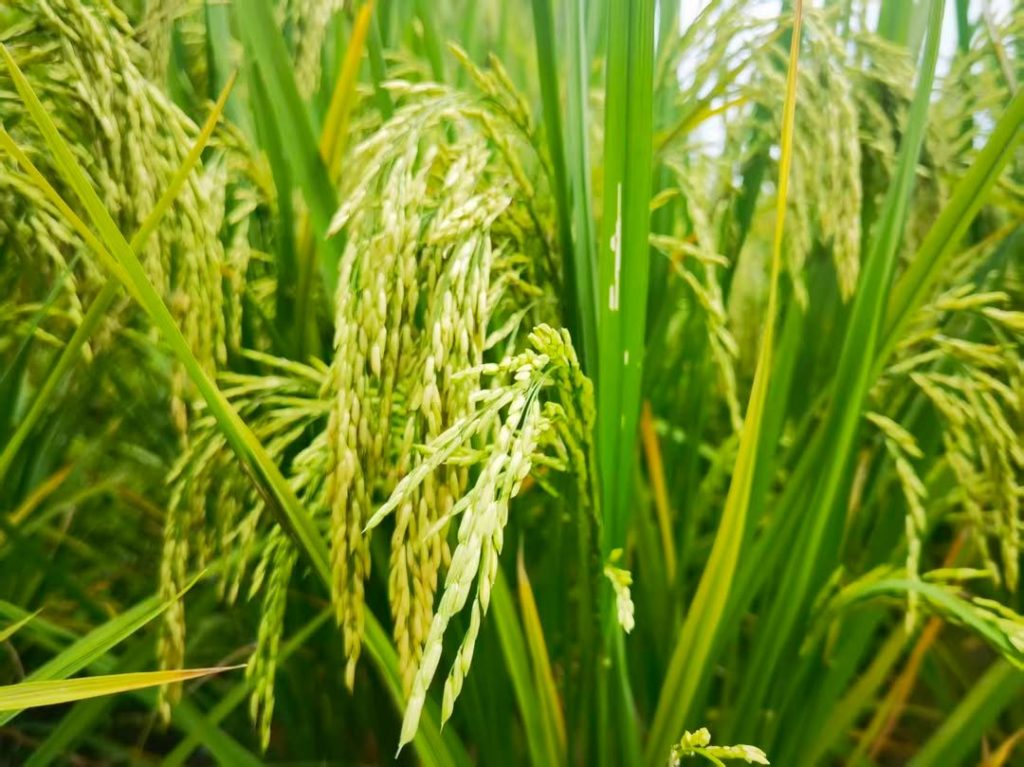
In mid-September the rice is still mostly green, with the first gold just showing at the tips. The day was warm and hazy. Most of the way up from the village is worn stone steps and narrow paths along the edge of the paddies, with the rice close enough to touch.
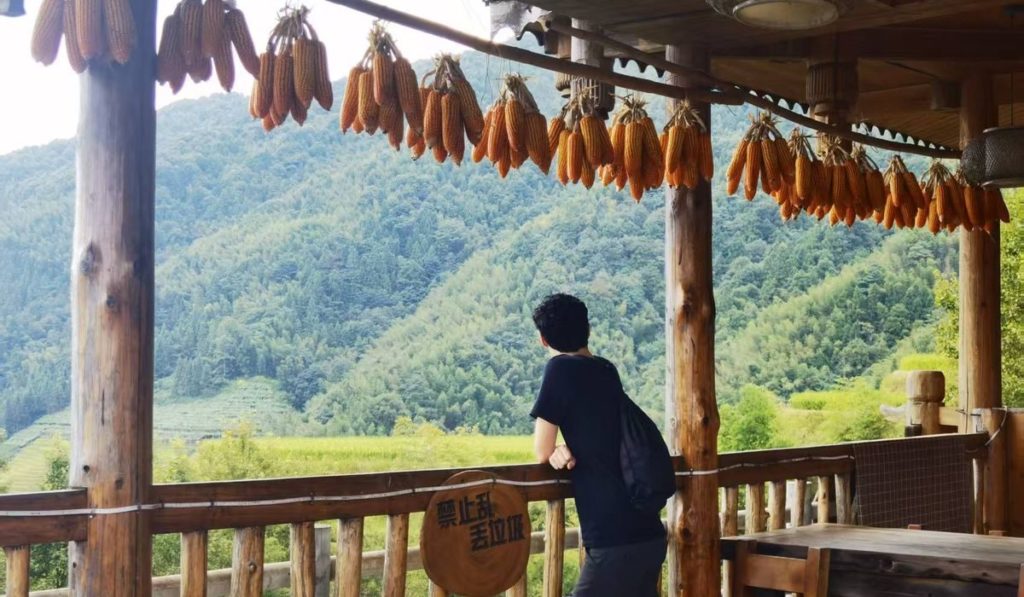
Near the top we stopped at a wooden café with ears of corn hung up to dry along the eaves. From the lookouts you can see the whole village of dark wooden houses, with the fields curving around it.
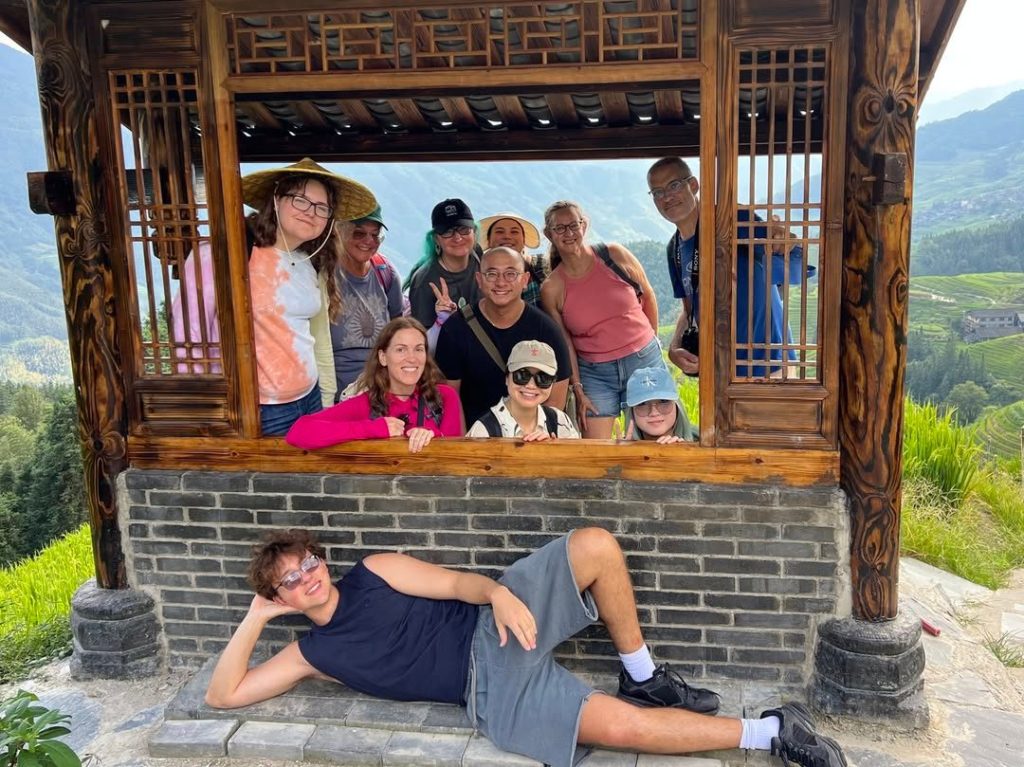
At one lookout, eleven of us squeezed into a carved wooden window frame for a group photo, with one lying across the ledge in front. Someone still had to stand outside it to take the picture. Our teachers spent the day on the words of the season, including these:
- 初秋 chūqiū: early autumn
- 梯田 tītián: terraced fields, literally "ladder fields"
- 稻田 dàotián: rice paddy
- 丰收 fēngshōu: a good harvest
- 金黄色 jīnhuángsè: golden yellow
Yangshuo, September 19
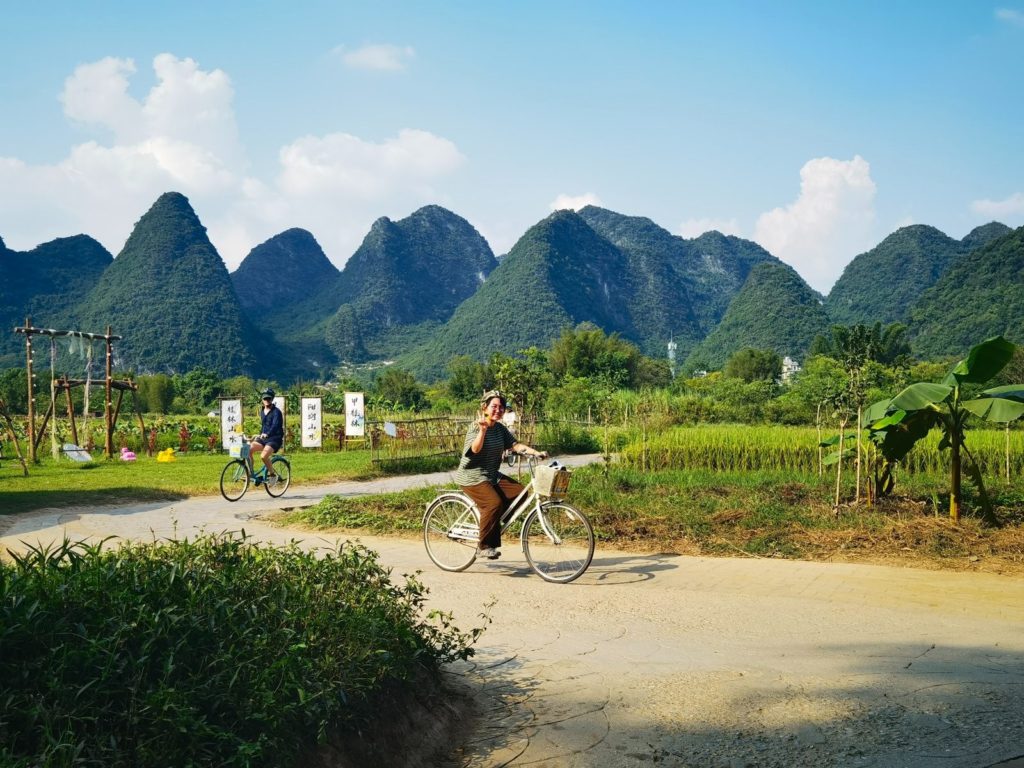
A week later it was bikes. The land between Yangshuo's karst peaks is surprisingly flat, so you can ride for hours on farm roads without much climbing. We rode past rice fields and roadside flowers with the mountains lined up behind them. It was sunny and hot, and everyone got plenty of practice with 骑自行车 qí zìxíngchē, to ride a bike.
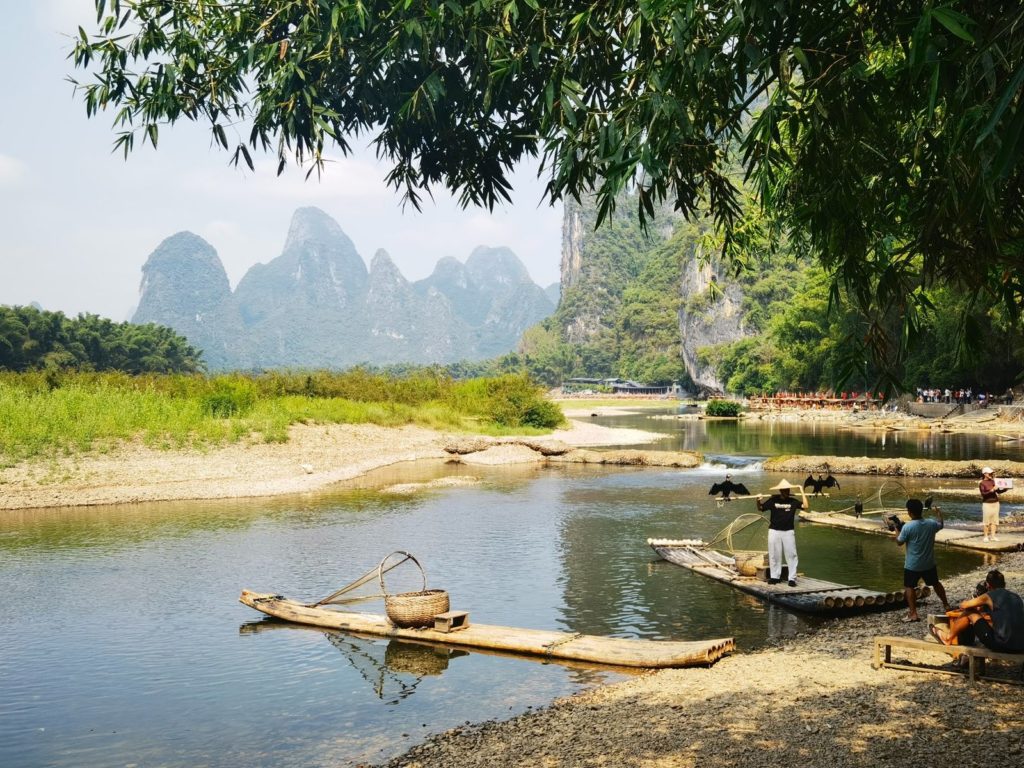
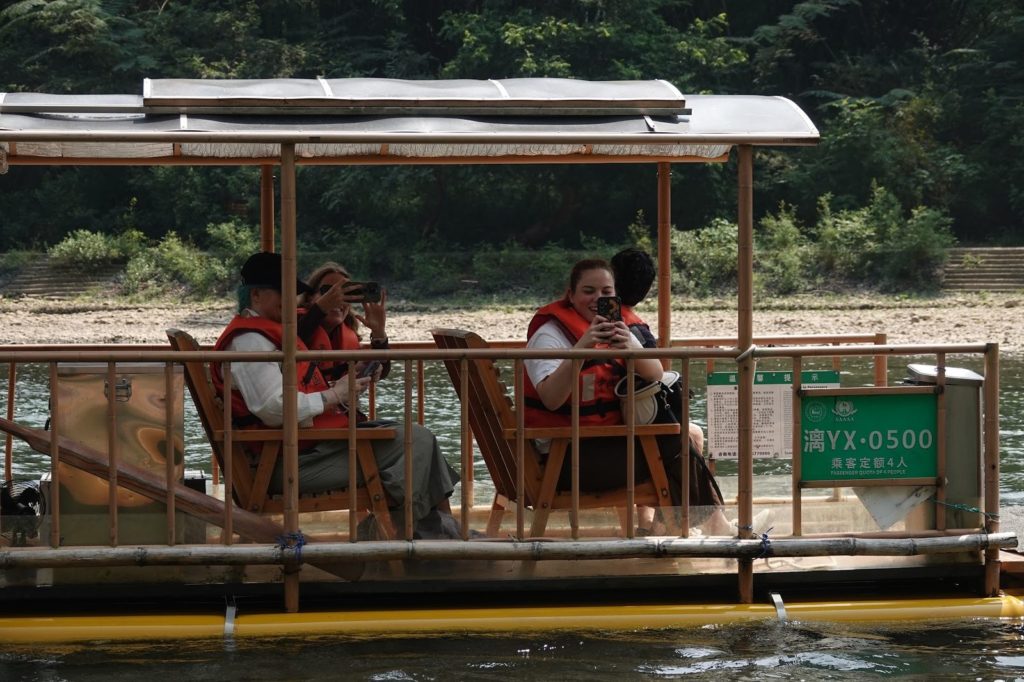
After the ride we traded the bikes for bamboo rafts (竹筏 zhúfá) on the Li River. On the riverbank a fisherman had his cormorants (鸬鹚 lúcí) perched on a pole.
The rafts are covered, with deck chairs and a green plate on the back, and ours made a good reading exercise. It starts with 漓 lí for the Li River, then says 乘客定额4人 chéngkè dìng'é sì rén, a limit of four passengers. After that the raft just drifts (漂流 piāoliú) between the peaks.
Before heading home there was time to look at the stalls selling carved bamboo tubes and red beads with gold characters. The word for the day's scenery is 山水 shānshuǐ, literally "mountains and water", the same 山水 as in 山水画 shānshuǐhuà, a Chinese landscape painting.