


- Business Chinese is not just workplace vocabulary — it is knowing what to say, when to say it, and how to sound appropriately professional in context.
- Beginners make faster progress when they learn phrases together with etiquette for introductions, meetings, WeChat follow-up, and business meals.
- In many mainland China business settings, titles, hierarchy, face, and relationship-building still shape how people communicate.
- WeChat is often central to day-to-day business communication, but business cards, formal titles, and email still matter in the right situations.
- You do not need a huge word list to start — a smaller set of high-value phrases will take you much further.
Business Chinese is not just "work vocabulary in Mandarin." In practice, it means knowing what to say, when to say it, and how to avoid sounding too blunt, too casual, or oddly textbook-like.
That is why beginners often struggle. The words themselves are not always the hardest part. The harder part is using them in a way that fits the situation.
In China, professional communication is often shaped by hierarchy, relationship-building, and a preference for smoother, less confrontational language. Formal meetings may begin with the senior host speaking first, introductions often follow rank, and business cards are still treated respectfully even though many professionals now move quickly to WeChat.
At the same time, Weixin/WeChat remains central to everyday business communication at scale. For a broader look at communication norms in China, see CLI's overview of Chinese society.
So if you want to sound professional in Chinese, memorizing random business terms is not enough. You need scenario-based language tied to real etiquette.
In this guide, we focus on the highest-impact situations foreign professionals run into most often: introductions, exchanging business cards, meetings, WeChat follow-up, meals, toasts, and polite disagreement.
The goal is not to teach you every possible business term. It is to give you the phrases and cultural rules that help you avoid obvious mistakes and communicate with more confidence. If you are considering learning Chinese for career reasons, CLI's guide to why learn Chinese is a useful starting point.
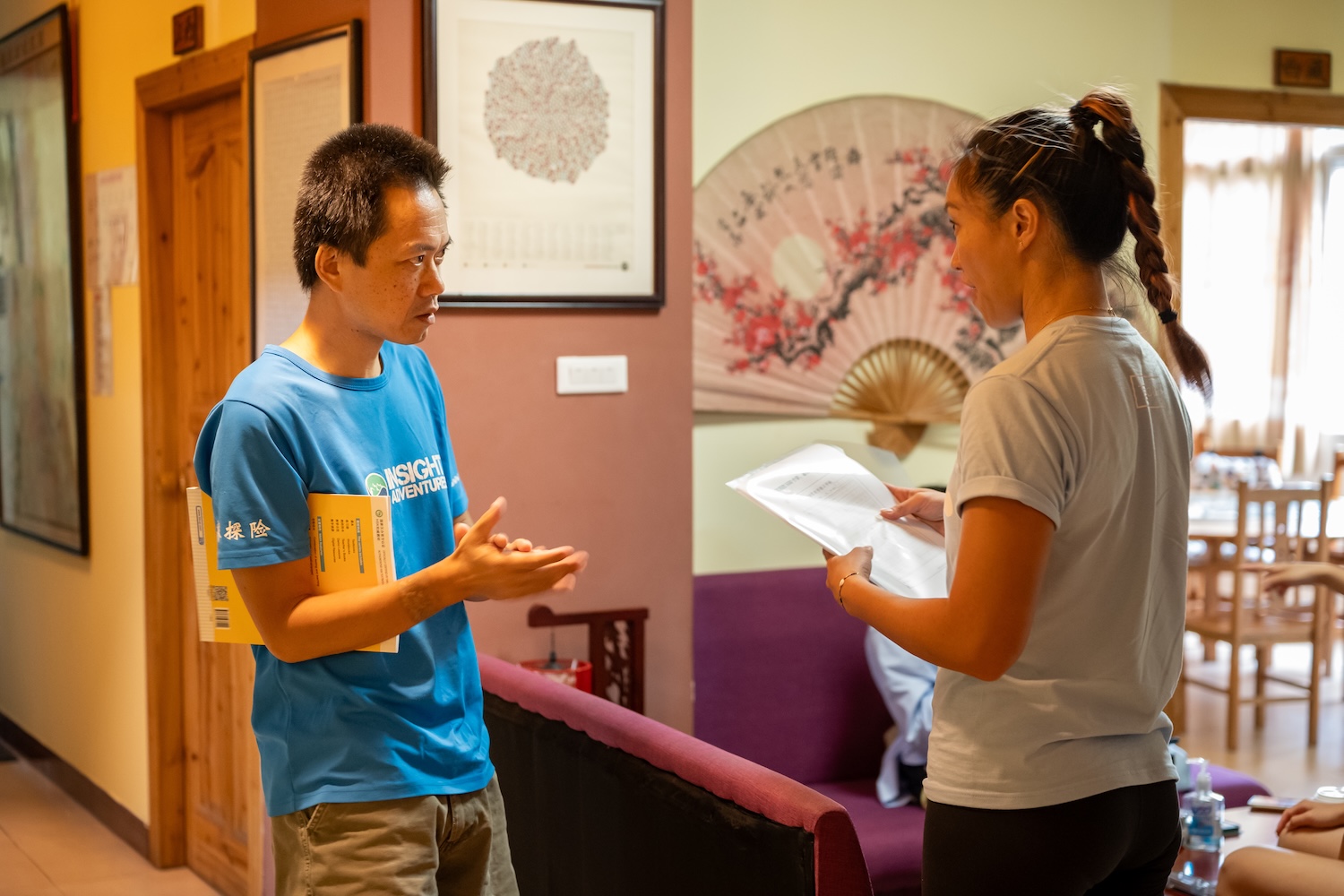
01 What "Business Chinese" Actually Means
At the beginner level, Business Chinese means learning a smaller set of useful, repeatable language for professional situations.
That includes things like greeting people formally, introducing yourself with your company and role, addressing people by the right title, handing over a business card correctly, softening disagreement in meetings, thanking a host at a meal, and following up naturally on WeChat.
This is also very close to how CLI frames its own Business Chinese study option. CLI's online Chinese lessons can be tailored to practical communication goals, and its one-on-one format is especially well suited to learning specialized language in context rather than as a flat vocabulary list.
For learners wondering whether Chinese is hard to learn, Business Chinese is actually one of the more accessible entry points because it revolves around a limited set of high-frequency phrases. If you already know some basic Chinese words, many of them — like greetings and polite expressions — carry directly into professional settings.
02 Why Vocabulary and Etiquette Need to Be Learned Together
A phrase can be grammatically correct and still feel wrong in context.
For example, many learners first reach for a direct translation of "I disagree." That may be understandable, but in a Chinese business setting it can sound more abrupt than you intend, especially in a formal meeting or with someone senior.
In many contexts, it is safer to use softer wording such as "Perhaps we can consider another option" or "We may need to discuss this internally first."
That is the core principle behind this article: do not learn Business Chinese as a flat word list. Learn it as language-in-situation. Understanding Chinese culture more broadly can help you interpret these situations more naturally.
At this stage, you do not need to worry about highly technical industry jargon, contract-law vocabulary, deep finance or manufacturing specialization, or highly formal banquet speechmaking. Long memorized scripts that you cannot use naturally are also not worth your time yet. Focus instead on the high-value phrases below.
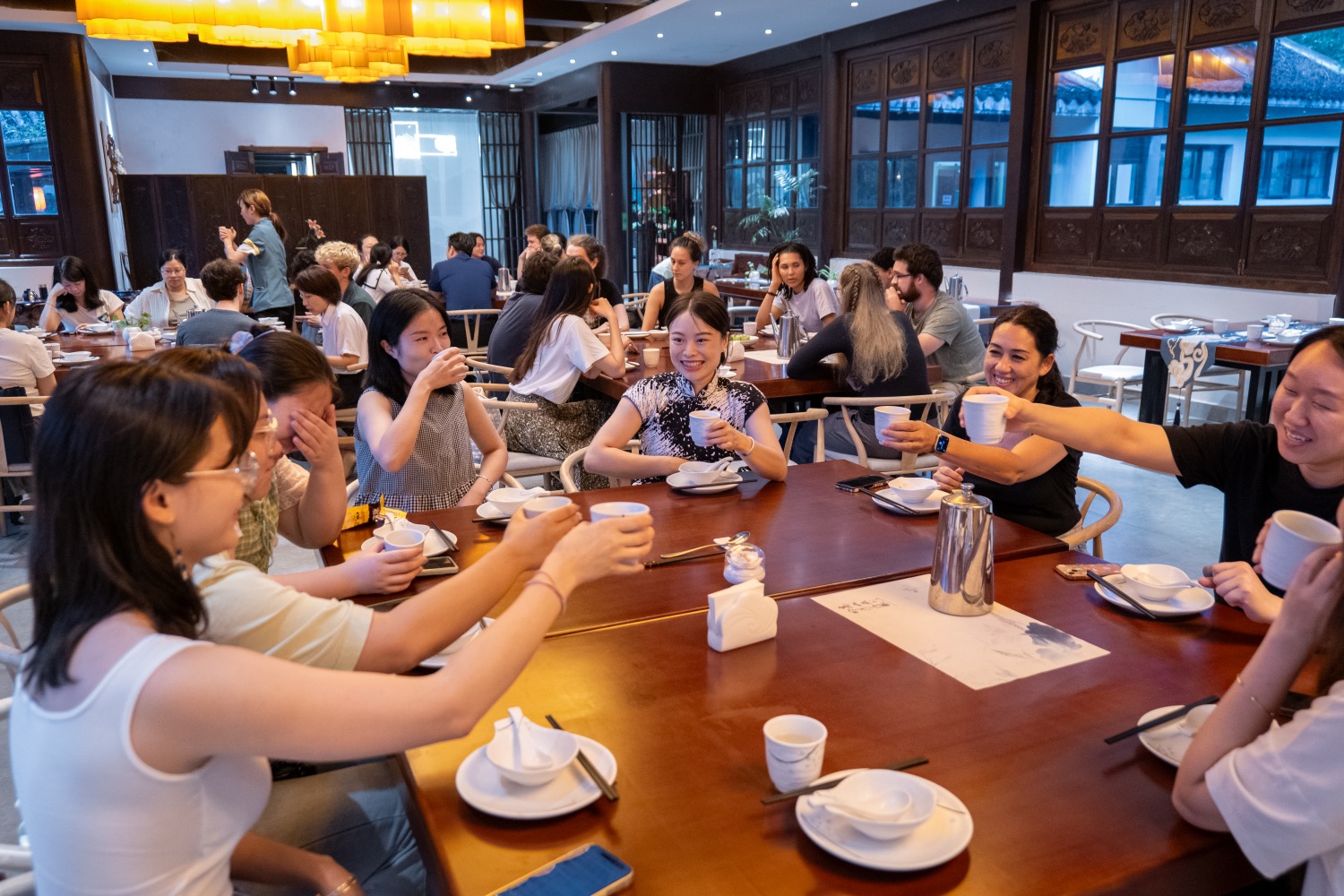
03 Scenario 1: Introductions and Greetings
First meetings in Chinese business settings are usually more formal than casual introductions among friends. People often foreground company, department, and title earlier than English speakers do.
A simple, safe opening is:
- 您好。
Nín hǎo.
Hello.
Using 您 instead of 你 makes the greeting more polite and professional. For a broader look at ways to say hello, see CLI's article on saying hi in Chinese.
After that, a common line is:
- 很高兴认识您。
Hěn gāoxìng rènshi nín.
Very pleased to meet you.
If you are introducing yourself, keep it modest and clear:
- 我姓 Smith,您可以叫我 Anna。
Wǒ xìng Smith, nín kěyǐ jiào wǒ Anna.
My surname is Smith; you can call me Anna. - 我在 ABC 公司工作。
Wǒ zài ABC gōngsī gōngzuò.
I work at ABC Company. - 我负责市场推广。
Wǒ fùzé shìchǎng tuīguǎng.
I'm responsible for marketing.
Titles matter too. In more formal contexts, surname plus title is often safer than jumping straight to a first name. If you are curious about how Chinese names work, understanding name order and family-name conventions will help you avoid common missteps:
- 王总
Wáng zǒng
President Wang / General Manager Wang - 李经理
Lǐ jīnglǐ
Manager Li - 陈老师
Chén lǎoshī
Teacher Chen
Even if your Chinese is limited, using someone's title correctly makes a strong impression. It signals respect and helps you avoid sounding overly casual.

04 Scenario 2: Exchanging Business Cards and Adding WeChat
Business cards still matter in China, even though digital contact exchange is now extremely common. In many professional settings, it is still good form to offer and receive cards with both hands, take a moment to look at the card, and avoid shoving it straight into a pocket without acknowledging it.
Useful phrases:
- 这是我的名片。
Zhè shì wǒ de míngpiàn.
This is my business card. - 这是我的微信。
Zhè shì wǒ de Wēixìn.
This is my WeChat. - 我可以加您微信吗?
Wǒ kěyǐ jiā nín Wēixìn ma?
May I add you on WeChat? - 方便交换联系方式吗?
Fāngbiàn jiāohuàn liánxì fāngshì ma?
Would it be convenient to exchange contact details?
This is one area where older etiquette advice can feel dated. Business cards have not disappeared, but WeChat should not be treated as a side note.
In many mainland business settings, especially for ongoing coordination, WeChat is central. For a deeper look at how platforms like WeChat shape daily life, see CLI's guide to social media in China.
Practical beginner rule: be ready for both. Bring a proper card, but also expect the conversation to move to WeChat quickly.
Use WeChat for: quick follow-up, scheduling, short clarifications, and day-to-day coordination.
Use email for: formal records, longer summaries, attachments, documentation, and messages that need a clearer paper trail.
05 Scenario 3: Meetings and Negotiations
In Chinese business meetings, sounding calm, respectful, and collaborative usually matters more than sounding forceful.
This does not mean people never disagree. It means disagreement is often expressed more carefully, especially when hierarchy or relationship-building is in play.
Having a solid grasp of Chinese grammar helps here, since even small structural choices — like softening a verb with 一下 (yíxià) — can shift your tone from blunt to diplomatic.
Useful phrases:
- 我明白。
Wǒ míngbai.
I understand. - 我补充一下。
Wǒ bǔchōng yíxià.
Let me add something. - 我们需要内部讨论一下。
Wǒmen xūyào nèibù tǎolùn yíxià.
We need to discuss this internally. - 我们再考虑一下。
Wǒmen zài kǎolǜ yíxià.
Let's think about it a bit more. - 也许我们可以考虑另一种方案。
Yěxǔ wǒmen kěyǐ kǎolǜ lìng yì zhǒng fāng'àn.
Perhaps we can consider another option. - 这个问题很重要。
Zhège wèntí hěn zhòngyào.
This issue is very important. - 谢谢您的意见。
Xièxie nín de yìjiàn.
Thank you for your input.
Notice the pattern: these phrases buy time, reduce friction, and keep the interaction constructive.
That fits many real-world meeting dynamics in China. In more formal settings, the most senior person may lead discussion, introductions may proceed by rank, seating can reflect seniority, and junior staff may speak less unless invited.
For more workplace context, see CLI's guide to working in China and its practical article on how to prepare for a job interview in Chinese.

06 The Cultural Core: Face, Guanxi, and Hierarchy in Plain English
Face (面子 miànzi)
"Face" is not just pride.
In business terms, it helps explain why public embarrassment, blunt contradiction, or openly cornering someone can damage a relationship. If you make another person look incompetent in front of colleagues, the problem is not only the content of your criticism. It is also the public loss of status.
For beginners, the practical lesson is simple: correct gently, disagree softly, and do not force a hard "yes or no" moment too early if the relationship is still new.
Guanxi (关系 guānxì)
Guanxi does not just mean "networking."
A better beginner explanation is long-term trust built through relationships, reciprocity, and ongoing mutual obligation. This helps explain why meals, introductions through trusted contacts, and consistent follow-up can matter so much.
In some contexts, the relationship is not separate from the business process. It is part of the business process.
Hierarchy
Hierarchy should not be treated as a stereotype or cliché. It is still a practical organizing rule in many Chinese professional settings, especially more traditional or formal ones.
For beginners, this means paying attention to titles, noticing who leads, and not assuming a highly participatory, first-name, free-for-all meeting style.
07 Scenario 4: Business Meals, Toasts, and Baijiu
Meals still matter in Chinese business culture. They often do relationship work that a meeting alone cannot do. This is one reason why table manners, hosting language, and polite toasts are useful parts of Business Chinese.
Useful phrases:
- 谢谢您的招待。
Xièxie nín de zhāodài.
Thank you for your hospitality. - 我敬您一杯。
Wǒ jìng nín yì bēi.
Let me offer you a toast. - 干杯!
Gānbēi!
Cheers! - 我以茶代酒。
Wǒ yǐ chá dài jiǔ.
I'll use tea instead of alcohol. - 我今天不能喝酒。
Wǒ jīntiān bù néng hē jiǔ.
I can't drink alcohol today. - 不好意思,我酒量不太好。
Bù hǎoyìsi, wǒ jiǔliàng bú tài hǎo.
Sorry, I'm not very good with alcohol.
A common misconception is that accepting heavy drinking is always mandatory. That is too simplistic. Baijiu may still appear in business banquets, and toasts can still be important, but norms vary by region, generation, company culture, and context.
For beginners, the safest rule is this: participate politely, but do not pretend to agree to more drinking than you can handle. A calm, early explanation is usually better than an awkward refusal later.
If you are offered tea instead, that carries its own cultural weight — tea in Chinese culture has deep roots in both social and business life.
For broader dining context, see CLI's guide to Chinese table manners.

08 Gift-Giving: What Is Safe, What Is Risky, and What Is Outdated
Gift-giving is one area where a lot of online advice is stale.
Older articles sometimes make it sound as if impressive gifts are expected. That is risky advice now. In modern professional settings, especially where compliance concerns exist, modest and appropriate is far safer than expensive or overly symbolic.
It also helps to understand Chinese numerology, since certain numbers carry strong positive or negative associations that can affect how a gift is received. For more general guidance on choosing gifts, CLI's article on Chinese gift ideas offers broader cultural context.
As a general rule, keep gifts modest and avoid anything that could look like pressure or bribery. It helps to know the company context beforehand, and you should be extra careful if government-linked entities are involved. Do not assume a gift is necessary at a first meeting — in many cases, it is not.
So yes, gift-giving still exists. But it is best understood as restrained, contextual, and sometimes sensitive rather than automatically expected.
09 WeChat vs. Email: Which Channel to Use When
For many foreign professionals, this is one of the most useful practical questions.
In mainland China, WeChat is often the default channel for ongoing coordination once contact has been established. It is fast, convenient, and far more embedded in daily professional life than many outsiders expect.
In broad terms:
- Use WeChat for: quick follow-up, scheduling, relationship maintenance, short clarifications, and day-to-day coordination.
- Use email for: formal records, longer summaries, external introductions, attachments, documentation, and messages that need a more structured paper trail.
This is not a hard rule. It is a practical tendency.
A good beginner follow-up line on WeChat is:
- 今天见到您很高兴。
Jīntiān jiàndào nín hěn gāoxìng.
It was a pleasure meeting you today. - 以后请多关照。
Yǐhòu qǐng duō guānzhào.
A polite professional formula roughly meaning "I look forward to your guidance/support going forward."
That last phrase often sounds warmer and more natural in professional Chinese than a very literal translation of "Let's stay in touch."
10 The Most Useful Business Chinese Phrases to Learn First
Here is a compact starter list organized by scenario rather than alphabetically.
| Chinese | Pinyin | Meaning |
|---|---|---|
| 您好 | Hello. | |
| 很高兴认识您 | Very pleased to meet you. | |
| 我姓 Smith | My surname is Smith. | |
| 我在 ABC 公司工作 | I work at ABC Company. | |
| 我负责市场推广 | I'm responsible for marketing. | |
| 这是我的名片 | This is my business card. | |
| 请多关照 | A polite formula roughly meaning "I look forward to working with you / please take care of me." | |
| 我可以加您微信吗 | May I add you on WeChat? | |
| 方便交换联系方式吗 | Would it be convenient to exchange contact details? | |
| 我明白 | I understand. | |
| 我补充一下 | Let me add something. | |
| 谢谢您的意见 | Thank you for your input. | |
| 这个问题很重要 | This issue is very important. | |
| 我们需要内部讨论一下 | We need to discuss this internally. | |
| 我们再考虑一下 | Let's think about it a bit more. | |
| 也许我们可以考虑另一种方案 | Perhaps we can consider another option. | |
| 谢谢您的招待 | Thank you for your hospitality. | |
| 我敬您一杯 | Let me offer you a toast. | |
| 干杯! | Cheers! | |
| 我以茶代酒 | I'll use tea instead of alcohol. | |
| 我今天不能喝酒 | I can't drink alcohol today. | |
| 不好意思,我酒量不太好 | Sorry, I'm not very good with alcohol. | |
| 今天见到您很高兴 | It was a pleasure meeting you today. | |
| 我们保持联系 | Let's stay in touch. | |
| 以后请多关照 | A polite professional formula roughly meaning "I look forward to your guidance/support going forward." |
Some of the most common missteps include addressing senior people too casually too early, handing over a business card one-handed without looking at it, and writing off WeChat as unprofessional. It is also risky to assume that silence means agreement, to criticize someone bluntly in front of colleagues, to treat drinking as always compulsory, or to bring an expensive gift without considering compliance or context.
Also, avoid speaking as if all Chinese business settings work exactly the same way. China is large, and norms vary by city, industry, company type, age group, and level of formality.
The safest framing is "often" or "in many business settings," not "Chinese people always."

Study Chinese in Guilin or Start Online
CLI offers personalized Chinese instruction built around your goals. Join our Immersion Program in Guilin or begin from anywhere with a free Chinese lesson.
11 Learn Business Chinese with Real-World Context
The fastest way to improve is not to memorize longer lists. It is to practice shorter, higher-value phrases until they feel natural.
That is especially true in business contexts, where tone, timing, and etiquette shape how your Chinese is received.
If you want structured help, CLI's one-on-one programs are a strong fit for this kind of learning. CLI's online Chinese lessons offer flexible, personalized instruction, while the Chinese Immersion Program in Guilin is built around intensive one-on-one study for learners who want deeper in-country practice.
For those thinking about how long it takes to learn Chinese, focused Business Chinese study can produce usable results much faster than a general approach. Building a Chinese study plan around real professional scenarios is one of the most effective ways to stay on track.
If you are preparing for a standardized benchmark, the HSK can help you measure progress and set concrete goals alongside your business-focused study.
A good Business Chinese course should not just teach you how to translate professional English into Mandarin. It should teach you how to sound appropriate in real situations.
That is the difference between knowing words and knowing what to do with them. We invite you to learn Chinese in China with CLI's expert teachers — either in Guilin or online — for in-depth, individualized classes that connect language to real professional life.

12 FAQ
Business Chinese is not a separate language. It refers to the vocabulary, phrases, and communication style used in Chinese professional settings — including meetings, introductions, negotiations, emails, WeChat messages, and business meals.
It also includes understanding the etiquette and cultural norms that shape how people communicate at work in China.
No. Even a small set of well-chosen phrases — greetings, titles, toasts, and polite follow-up lines — can make a strong impression and build goodwill. Fluency helps, but it is not a prerequisite for respectful, effective professional interaction.
Yes. In many mainland Chinese business settings, WeChat (微信) is the primary channel for day-to-day coordination, scheduling, and quick follow-up.
Email is still used for formal records and longer documents, but WeChat is often where relationships are maintained between meetings.
Very important in more formal contexts. Using someone's surname plus their title (e.g., 王总 Wáng zǒng, 李经理 Lǐ jīnglǐ) signals respect and awareness of hierarchy.
Jumping to first names too quickly can feel overly casual. When in doubt, use the more formal option.
Not necessarily. Norms around drinking vary by region, industry, and generation. A polite early explanation — such as 我以茶代酒 (Wǒ yǐ chá dài jiǔ, "I'll use tea instead of alcohol") — is generally accepted.
The key is to participate respectfully in the toast ritual, not to match everyone drink for drink.
13 Useful Business Chinese Vocabulary
| Chinese | Pinyin | Translation |
|---|---|---|
| 名片 | business card | |
| 微信 | ||
| 公司 | company | |
| 会议 | meeting | |
| 合作 | cooperation; collaboration | |
| 面子 | face (reputation, dignity) | |
| 关系 | relationship; connections | |
| 经理 | manager | |
| 总经理 | general manager | |
| 市场 | market | |
| 招待 | hospitality; to host | |
| 干杯 | cheers (lit. "dry cup") | |
| 酒量 | alcohol tolerance | |
| 意见 | opinion; input | |
| 方案 | plan; proposal; option |
Sources
- Tencent: 2025 annual and fourth quarter results release, including Weixin/WeChat monthly active account figures
- Asialink Business: China business culture guidance covering communication style, hierarchy, business cards, WeChat, relationships, and face
- China Briefing: practical guidance on Chinese business etiquette, banquets, hierarchy, and gift-giving