

- China has seven statutory public holidays: New Year's Day, Spring Festival, Qingming Festival, Labor Day, Dragon Boat Festival, Mid-Autumn Festival, and National Day.
- Four of the seven follow the Chinese lunisolar calendar, which is why their Gregorian dates shift by several weeks from one year to the next.
- In 2026 these holidays add up to 13 statutory days off, and the General Office of the State Council extends several of them into longer breaks by swapping in weekend workdays.
- Spring Festival and National Day produce the two "Golden Week" travel peaks, when trains, flights, and hotels fill up weeks in advance.
- For language learners, holidays are one of the easiest ways into Chinese culture, and one of the best reasons to Learn Chinese in China rather than only from a textbook.
Chinese holidays (节日, jiérì) are the best time for an outsider to see how Chinese families celebrate. At Spring Festival hundreds of millions of people travel home at once and cities fill with red decorations, so a visitor that week sees more of the culture than at any other time.
China observes seven statutory public holidays each year, plus a long list of festivals that are culturally important but do not close offices. This guide covers all seven in order, along with the official 2026 dates, how long each break actually lasts, and what stays open while the country celebrates.
Alongside the seven, China also marks occasions such as International Women's Day, Children's Day, Qixi (Chinese Valentine's Day), the Ghost Festival, and Army Day. None of these is a national day off, so the focus below stays on the seven that are.
01 Chinese Holidays Explained: Ancient Origins and Shifting Dates
China is one of the world's oldest continuous civilizations, and several of its festivals grew out of ancient agricultural and ancestral rites. Some were already established observances by the time of the Qin dynasty (221–207 BCE), the first dynasty of a unified Chinese empire.
Most of these festivals look very different today than they did two thousand years ago. Ritual observance has thinned in places, while travel, shopping, and family reunions have taken on a much larger role.
Why Chinese Holiday Dates Change Every Year
Three of the seven holidays sit on fixed Gregorian dates: New Year's Day, Labor Day, and National Day. The other four follow the Chinese lunisolar calendar, so their Gregorian dates move by up to several weeks each year.
That is why Spring Festival can land anywhere from late January to late February. It is also why the Chinese zodiac animal changes on Spring Festival rather than on January 1.
Never plan travel from a previous year's holiday calendar. The General Office of the State Council publishes the next year's official dates between late October and early December (the 2026 notice came out on November 4, 2025), and the exact days off change every time.
02 What Are the 7 Major Chinese Public Holidays?
The seven holidays below are the only ones that close government offices nationwide. They appear here in calendar order, starting on January 1.
1. New Year's Day in China (元旦, Yuándàn) — January 1
The first Chinese holiday of the year is the same one much of the world marks: New Year's Day, on January 1. Some people call it "International New Year" to distinguish it from the lunar new year that follows weeks later.
Based on the Gregorian calendar, Yuándàn is the least traditional of the seven. It has nonetheless grown into a commercial occasion, with malls decorated and major discounts on offer.
2. Chinese New Year / Spring Festival (春节, Chūnjié) — February 17, 2026
Chinese New Year, known in China as Spring Festival, is the most important holiday of the year by a wide margin. Because it follows the lunisolar calendar, it usually falls between late January and late February.
In 2026 it begins on February 17, opening the Year of the Horse. New Year's Eve (除夕, Chúxī) falls the evening before, on February 16.
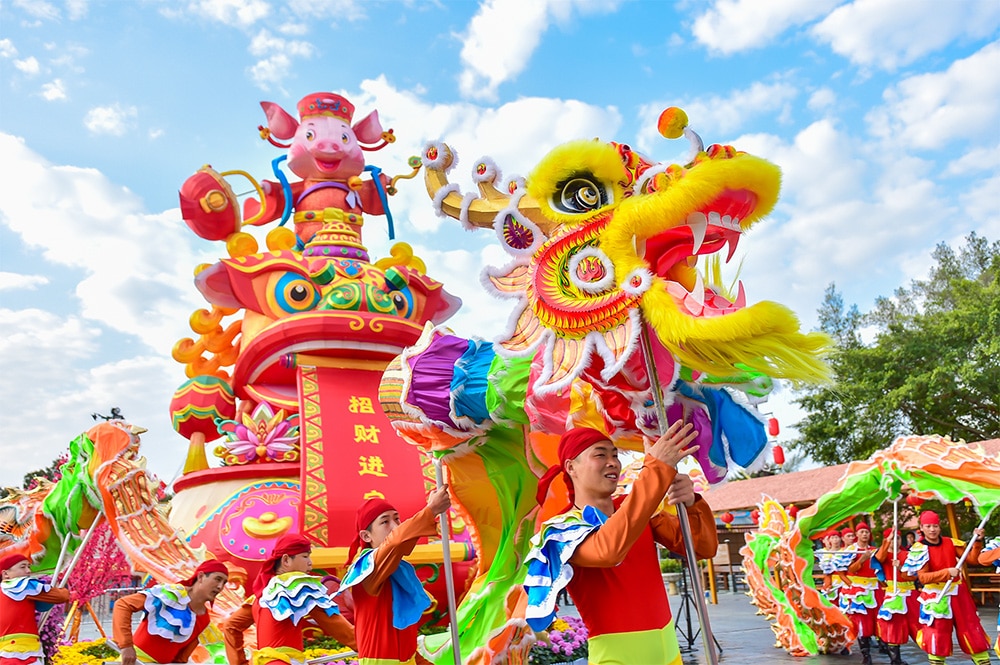
The festival's roots reach back thousands of years, and it is now celebrated across much of Asia, including in Vietnam and Singapore. Red dominates the visual palette, since Chinese culture treats it as both lucky and festive.
Red envelopes, or hongbao (红包, hóngbāo), change hands throughout the holiday. They are typically given by married adults to children and unmarried relatives. Our guide to Chinese New Year greetings has what to say when you give or receive one.
The Nian Monster and the Color Red
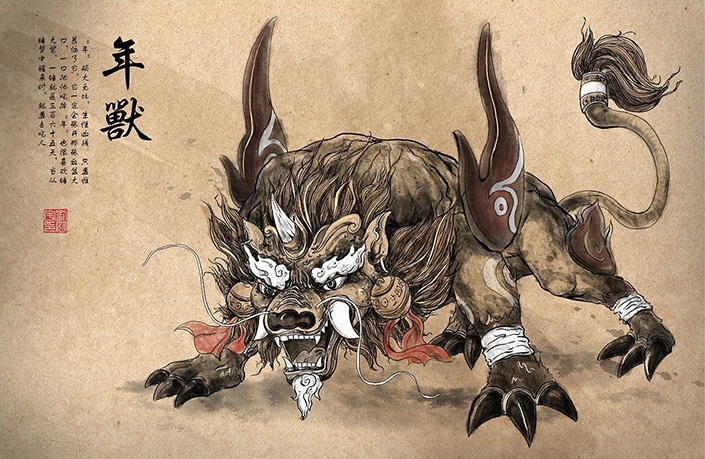
According to folklore, a beast called the Nian (年兽, Niánshòu) once emerged at the turn of the year to raid villages for food. Wearing red was said to drive it off and invite good fortune for the year ahead.
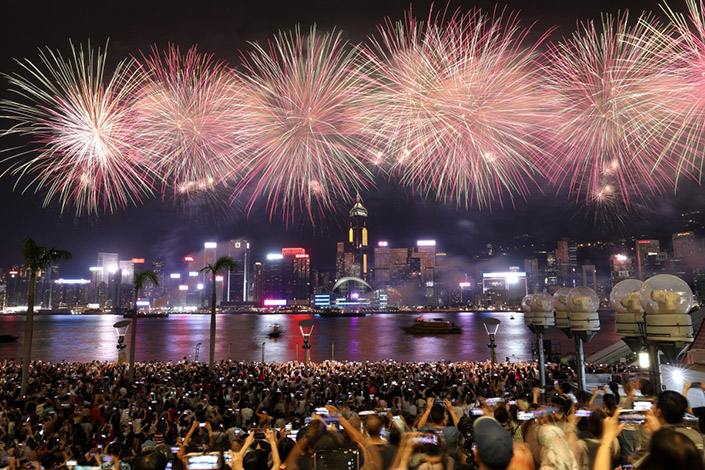
The Nian was also described as terrified of loud noise, which is one traditional explanation for setting off firecrackers. Many large Chinese cities now restrict or ban private fireworks on air-quality and safety grounds.
Spring Festival Superstitions and Taboos
Much of the holiday's etiquette is organized around securing good luck for the coming year. Negative talk is discouraged, and references to death or illness are avoided entirely.
The number four (四, sì) is also avoided, because it sounds close to the word for death (死, sǐ). Traditionally the wider festival period does not end until the Lantern Festival, on the 15th day of the first lunar month.
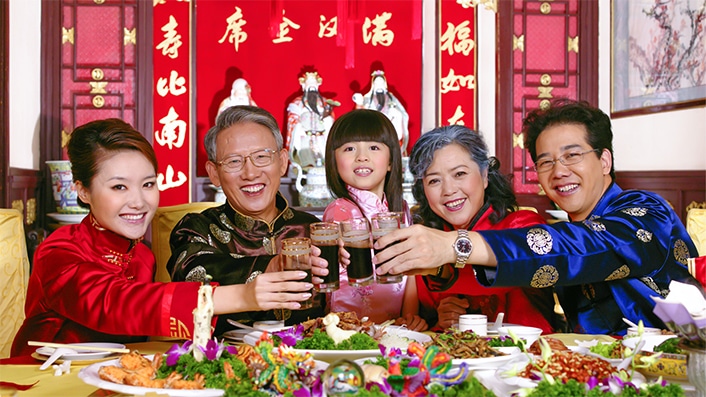
3. Tomb Sweeping Day / Qingming Festival (清明节, Qīngmíngjié) — April 5, 2026
The third public holiday is the Qingming Festival, also translated as Pure Brightness Festival or Tomb Sweeping Day. It expresses one of the most durable values in Chinese culture: respect for ancestors.
Qingming falls on the 15th day after the spring equinox, which places it on April 4, 5, or 6 depending on the year. In 2026 the festival falls on April 5, with an official break from April 4 to 6.
The observance is ancient. Britannica traces tomb maintenance and ancestral worship on this date to the Zhou dynasty, notes that Emperor Xuanzong of the Tang made it an official holiday in 732 CE, and records that the People's Republic restored it as a public holiday in 2008.
Families visit ancestral graves to clear weeds and sweep the stone. Many also burn imitation paper money so that relatives can make purchases in the afterlife.
Despite the solemn framing, Qingming is not a day of mourning alone. Once the tomb sweeping is finished, families often spend the rest of the day on outings, picnics, and kite flying.
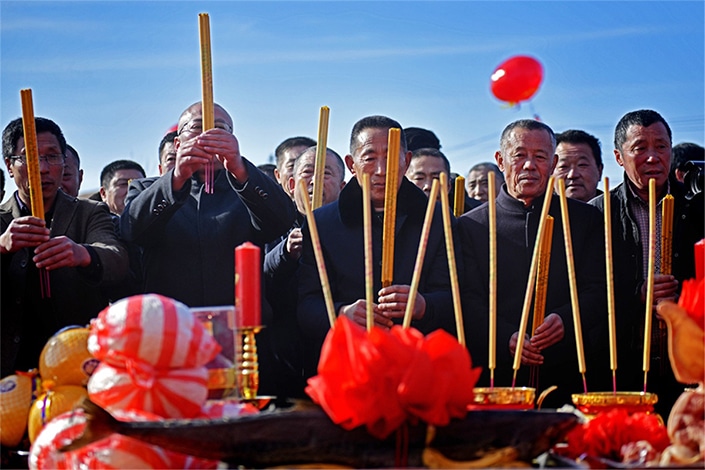
4. Labor Day in China (劳动节, Láodòngjié) — May 1
China's fourth public holiday is Labor Day, which coincides with International Workers' Day on May 1. It is also known as May Day, or 五一节 (Wǔyījié).
Labor Day now carries two statutory days off, and the State Council routinely bridges it into a longer break. In 2026 that break runs from May 1 to May 5, with Saturday, May 9 designated as a make-up workday.
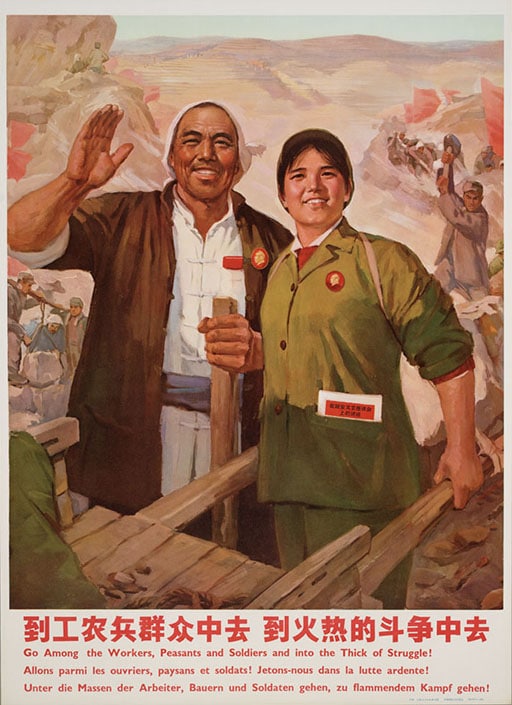
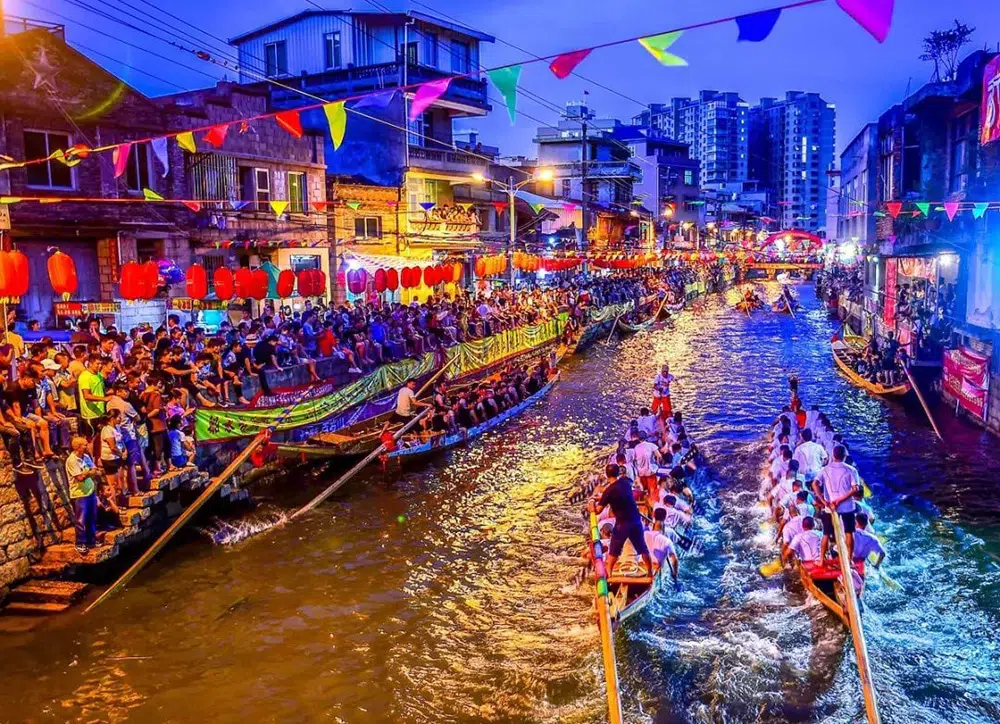
5. Dragon Boat Festival (端午节, Duānwǔjié) — June 19, 2026
The fifth public holiday is the Dragon Boat Festival, held on the fifth day of the fifth lunar month. On the Gregorian calendar that usually means late May or June — in 2026, June 19.
Britannica dates the festival back at least 1,500 years and groups it with Chinese New Year and Mid-Autumn as one of the three "festivals of the living." It also carries more folk superstition (迷信, míxìn) than almost any other Chinese holiday.
Two Origin Stories
The fifth lunar month was traditionally considered unlucky, and its fifth day the most dangerous of all. One explanation for the festival is therefore protective: it exists to drive off illness and malign spirits.
The better-known account is historical. It commemorates Qu Yuan (c. 340–278 BCE), a poet and statesman of the state of Chu.
By legend, Qu Yuan was accused of treason, banished from office, and drowned himself in despair in the Miluo River. Local people who admired him raced out in boats to save him, or at least to recover his body.
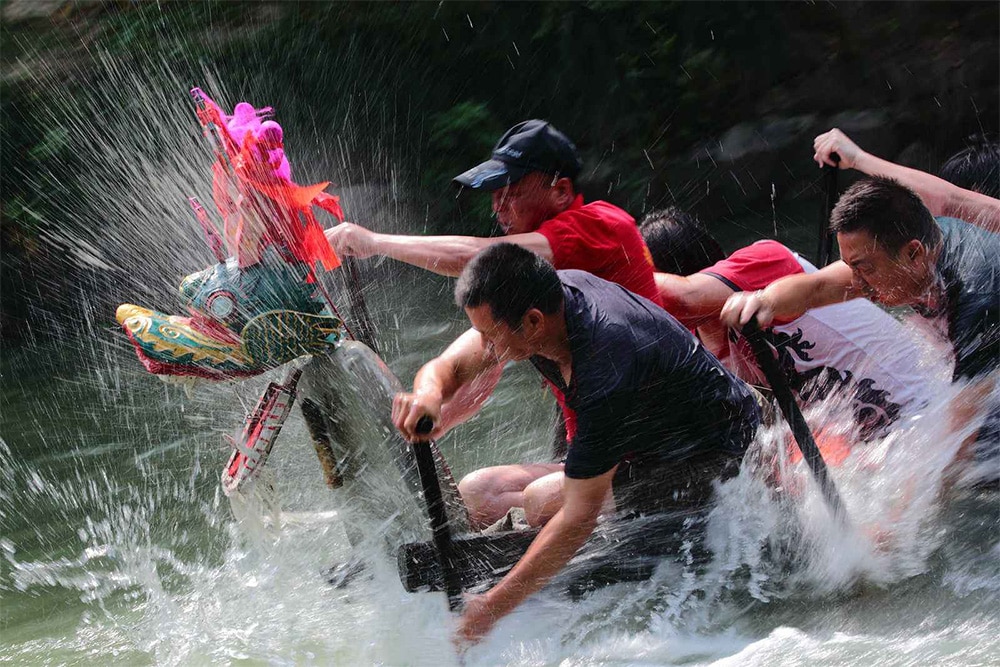
That rescue is the origin story behind the festival's signature event: dragon boat racing. The boats themselves connect to the wider symbolism of Chinese dragons as bringers of water and good fortune.
What People Eat and Hang on the Door
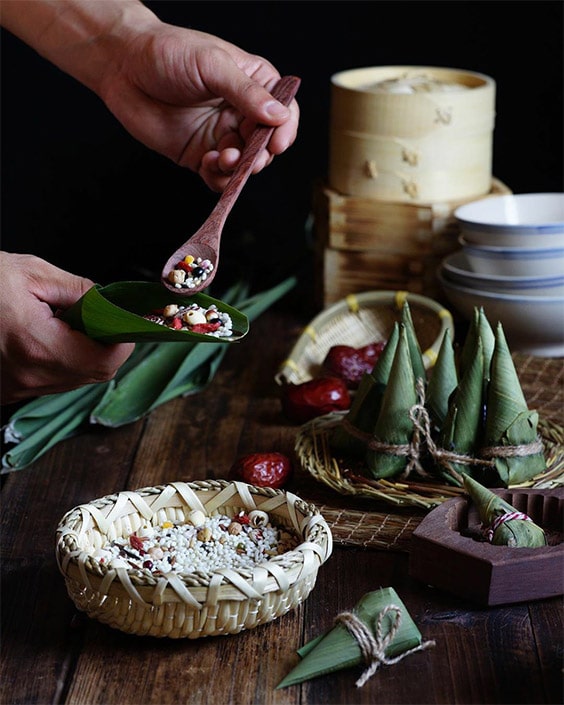
The defining food is zongzi (粽子, zòngzi), pyramid-shaped sticky rice dumplings wrapped in bamboo leaves. Realgar wine is the traditional accompaniment, though it is rarely consumed today.
Households also hang mugwort and calamus over doorways and carry scented pouches. Both customs are meant to repel insects and, by extension, disease.
6. Mid-Autumn Festival (中秋节, Zhōngqiūjié) — September 25, 2026
The sixth public holiday is the Mid-Autumn Festival, held on the 15th day of the eighth lunar month, when the moon is full. In 2026 it falls on September 25.
Mid-Autumn is China's harvest celebration, and family reunions are its core. The comparison to American Thanksgiving is imperfect but useful: relatives gather, eat together, and give thanks for a good year.
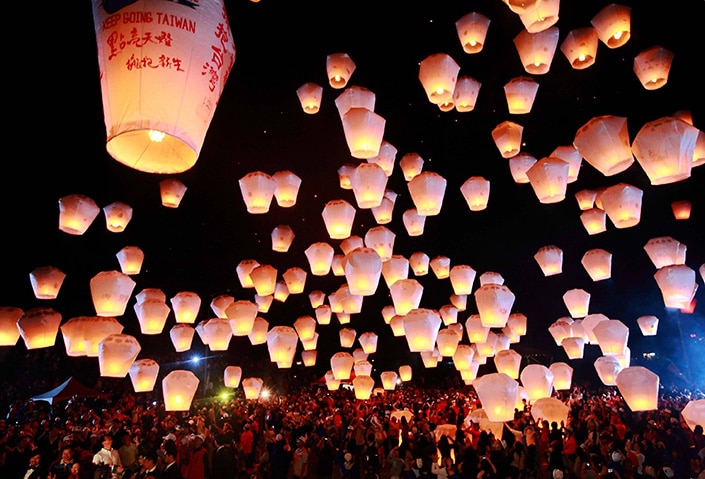
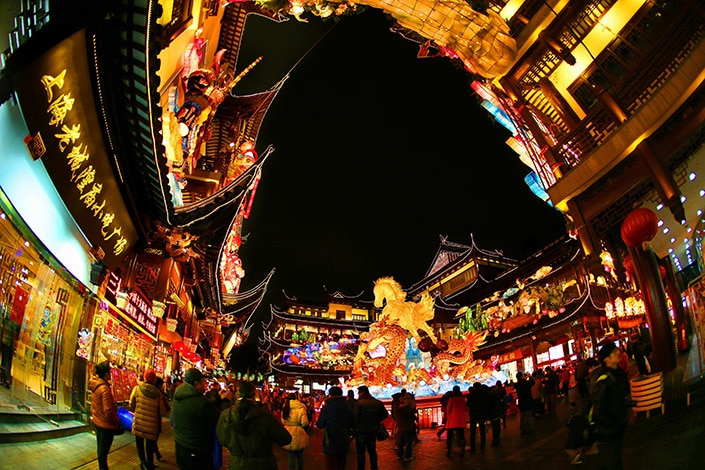
Paper Chinese lanterns are the festival's most photographed feature. Some are carried, while floating versions are released into the sky.
The other icon is the mooncake (月饼, yuèbǐng). Britannica describes the traditional form as a thin, lightly sweet pastry around a lotus seed paste filling, often with a salted egg yolk standing in for the moon.
Boxed mooncakes are exchanged with colleagues, clients, friends, and neighbors in the run-up to the festival. If you will be in China at the time, it is worth reading up on Chinese gift-giving etiquette first.
7. China National Day (国庆节, Guóqìngjié) — October 1
The seventh and final public holiday is National Day, on October 1. It marks the founding of the People's Republic of China on October 1, 1949.
The government stages concerts, fireworks displays, and a national flag-raising ceremony in Tiananmen Square. Large-scale civil and military parades are held in milestone anniversary years rather than annually.
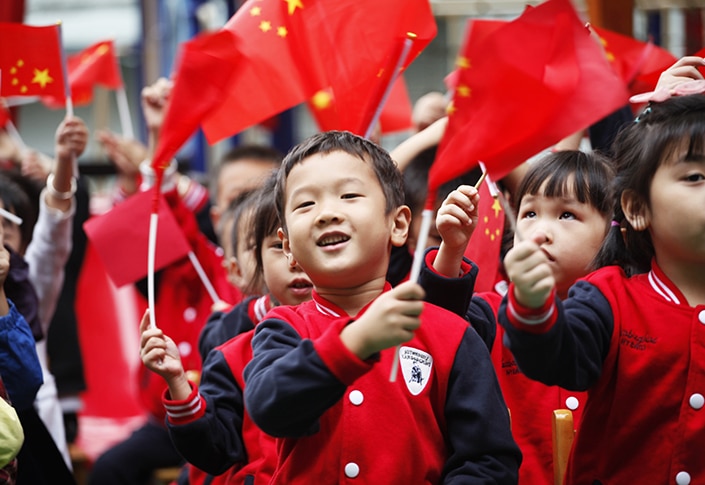
Patriotic decorations go up nationwide, and the seven-day break makes this the year's second great travel wave. It is the reason the phrase "Golden Week" is most often used.
03 Chinese Public Holiday Dates in 2026 (Official Schedule)
The General Office of the State Council published China's 2026 holiday arrangement on November 4, 2025. The seven holidays add up to 13 statutory days off, extended into longer breaks by rescheduling nearby weekends.
| Holiday | 2026 Festival Date | Official Days Off | Make-Up Workdays |
|---|---|---|---|
| New Year's Day | January 1 | January 1–3 (3 days) | January 4 |
| Spring Festival | February 17 | February 15–23 (9 days) | February 14, February 28 |
| Qingming Festival | April 5 | April 4–6 (3 days) | None |
| Labor Day | May 1 | May 1–5 (5 days) | May 9 |
| Dragon Boat Festival | June 19 | June 19–21 (3 days) | None |
| Mid-Autumn Festival | September 25 | September 25–27 (3 days) | None |
| National Day | October 1 | October 1–7 (7 days) | September 20, October 10 |
The 2026 Spring Festival break is the longest in the history of the People's Republic, at nine consecutive days. Mid-Autumn and National Day fall close together but stay separate this year, rather than merging into a single extended Golden Week as they did in 2025.
Year-by-year breakdowns are published separately for planning further ahead. See 2026 Chinese holidays, 2027 Chinese holidays, 2028 Chinese holidays, 2029 Chinese holidays, and 2030 Chinese holidays. Calendars for earlier years are still online: 2021, 2022, 2023, 2024 and 2025.
Studying at CLI over a holiday? CLI closes for the public holidays, and the classes you miss are made up free: added to the end of your program, taken as online lessons, or spread over your other class days. If you add days to the end, housing for those extra nights is 150 RMB per night.

Experience Chinese Holidays for Yourself
CLI offers personalized Chinese instruction built around your goals, in a city where festivals are still celebrated the traditional way. Join our Immersion Program in Guilin or begin from anywhere with a free Chinese lesson .
04 How Long Do Chinese Holidays Last? Golden Week Explained
Holiday length in China is not fixed by the festival itself. It depends on how many statutory days that holiday carries and how the State Council arranges the surrounding weekends.
Statutory Days vs. Actual Days Off
The 13 statutory days in 2026 are distributed unevenly: four for Spring Festival, three for National Day, two for Labor Day, and one each for New Year's Day, Qingming, Dragon Boat, and Mid-Autumn. Those numbers are the legal minimum, not the length of the break people actually take.
To turn a one-day holiday into a three-day weekend, the government shifts rest days around. The mechanism is called tiaoxiu (调休), and it is the single most confusing feature of the Chinese holiday calendar for newcomers.
What Is Golden Week in China?
"Golden Week" (黄金周, huángjīnzhōu) refers to the week-long breaks built around Spring Festival and National Day. These are the only two periods long enough for most people to travel far from home.
Spring Festival's 40-day travel season is often called the largest annual human migration on earth. In both weeks, trains and flights sell out weeks ahead and hotel prices in popular cities climb.
If your dates are flexible, build a buffer of at least five days on either side of Spring Festival and National Day. Traveling in the shoulder period gets you the same destinations at a fraction of the crowding and cost.
Make-Up Workdays and Six-Day Weeks
Long breaks are partly paid for in advance. A Saturday or Sunday next to the holiday is reclassified as a normal working day, which can produce a six- or even seven-day working stretch.
In 2026, February 14 and February 28 were both designated workdays to offset the nine-day Spring Festival break. Company and school schedules can deviate from the national calendar, so confirm directly if a deadline depends on it.
05 Is China Closed for Chinese Holidays? Shops, Banks, and Offices
Visitors often assume a national holiday means a shuttered country. In practice the opposite is true: holidays are among the busiest and most commercially active periods of the Chinese year.
What Stays Open
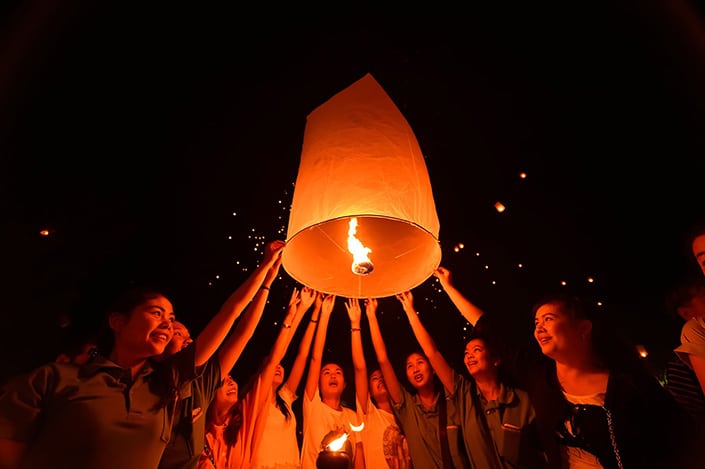
Tourism, restaurants, malls, and attractions all thrive during major holidays, especially around Chinese New Year. Expect long queues at famous sites rather than locked gates.
Small family-run shops are the main exception. Some close for several days over Spring Festival while the owners travel home.
What Closes
Government offices, courts, customs, and visa bureaus shut for the full duration of the break. This matters most during Golden Week, when a closure can run seven or nine days.
Banks mostly close too, though central branches often keep limited hours. Your best chance of finding an open branch is a city's main financial district.
Planning a Trip Around Chinese Holidays
If you are heading to China, check the holiday calendar before booking anything. Our guide to the best places to visit in China pairs well with a look at current entry rules in the China visa-free travel guide.
A little language goes a long way when the whole country is on the move. Learning a handful of Chinese travel phrases makes ticket counters and crowded stations far less stressful.
06 Does China Celebrate Christmas and Thanksgiving?
Neither Christmas nor Thanksgiving is a public holiday in China, and neither is traditionally celebrated there. Their status today is quite different, though.
Thanksgiving in China
Thanksgiving (感恩节, Gǎn'ēnjié) is essentially a North American observance and is not celebrated in China. The nearest cultural equivalent is the Mid-Autumn Festival, which shares the themes of family reunion and gratitude for the harvest.
Christmas in China
Christmas (圣诞节, Shèngdànjié) has gained real commercial traction in recent years, particularly among younger people drawn to Western culture. It functions more as a shopping and date-night occasion than a religious one.
One custom is distinctly Chinese: gifting red apples on Christmas Eve. The word for Christmas Eve (平安夜, Píng'ānyè) opens with the same sound as the word for apple (苹果, píngguǒ), and the wordplay stuck.
There is much more on how the holiday is observed in our full guide to Christmas in China. For a traditional Chinese observance with no Western counterpart, see the Chinese winter solstice.

07 Chinese Holiday Vocabulary in Mandarin
The words below cover the seven holidays plus the practical vocabulary you will hear around them. They are useful whether you are reading a holiday notice or wishing a neighbor well.
| Chinese | Pinyin | Translation |
|---|---|---|
| 节日 | holiday, festival | |
| 元旦 | New Year's Day (January 1) | |
| 春节 | Spring Festival, Chinese New Year | |
| 除夕 | Chinese New Year's Eve | |
| 清明节 | Qingming Festival, Tomb Sweeping Day | |
| 劳动节 | Labor Day | |
| 端午节 | Dragon Boat Festival | |
| 中秋节 | Mid-Autumn Festival | |
| 国庆节 | National Day | |
| 元宵节 | Lantern Festival | |
| 黄金周 | Golden Week | |
| 调休 | rescheduled rest day, make-up workday | |
| 放假 | to have time off, to be on holiday | |
| 假期 | holiday period, vacation | |
| 团圆饭 | family reunion dinner | |
| 红包 | red envelope containing money | |
| 烟花 | fireworks | |
| 月饼 | mooncake | |
| 粽子 | sticky rice dumpling in bamboo leaves | |
| 龙舟 | dragon boat | |
| 灯笼 | lantern | |
| 扫墓 | to sweep a tomb, to visit a grave | |
| 祖先 | ancestors | |
| 迷信 | superstition | |
| 新年快乐 | Happy New Year | |
| 节日快乐 | Happy holidays |
08 Chinese Holidays FAQ
What is the biggest holiday in China?
Spring Festival, or Chinese New Year, is by far the largest. It carries the most statutory days off, the longest total break, and the heaviest travel volume of any holiday in the world.
How many public holidays does China have?
China has seven statutory public holidays. In 2026 they total 13 statutory days off, which the State Council extends into longer breaks by rescheduling weekends.
What does "Golden Week" mean in China?
Golden Week describes the week-long breaks around Spring Festival and National Day. Both are national travel peaks, so book transport and accommodation well in advance or avoid them altogether.
Why do Chinese holiday dates change every year?
Four of the seven holidays follow the Chinese lunisolar calendar rather than the Gregorian one. Their dates therefore shift annually, sometimes by several weeks.
Is it a bad idea to visit China during a public holiday?
It depends on your priorities. Holidays offer unmatched cultural atmosphere, but expect crowds, higher prices, and closed government offices — so leave a buffer around Golden Week if your schedule allows.
09 Plan Your Trip Around Chinese Holidays
Chinese holidays are among the oldest continuously observed celebrations anywhere, and they are one of the most rewarding ways to encounter the culture directly. A single Spring Festival reunion dinner will teach you more about Chinese family life than a chapter of any textbook.
Timing decides how much of a holiday you get to see. Travel on the peak days of Golden Week and a good part of the trip goes to queues at stations, so check the official calendar before you book and aim for the days just before or after.