
La Chine compte sept jours fériés en 2034. Les deux longues pauses sont la fête du Printemps, du 18 au 25 février, et la Golden Week de la fête nationale, du 1er au 7 octobre. Le Nouvel An chinois tombe le dimanche 19 février et ouvre l'année du Tigre de Bois 甲寅虎年. Ces dates sont prévisionnelles.
Prévu
| Fête | Jour de fête | Jours de congé prévus |
|---|---|---|
| Jour de l'An元旦 Yuándàn | dim. 1er janv. | 31 déc.–2er janv.3 jours, du samedi au lundi |
| Fête du Printemps (Nouvel An chinois)春节 Chūnjié | dim. 19 févr. | 18–25 févr.8 jours, de sam. à sam. |
| Fête de Qingming清明节 QīngmíngjiéJour du balayage des tombes | mer. 5 avr. | 5 avr.1 jour, mercredi |
| Fête du Travail劳动节 Láodòngjié | Lun 1 mai | 1er–5 mai5 jours, de lun. à ven. |
| Fête des bateaux-dragons端午节 Duānwǔjié | mar. 20er juin | 18–20 juin3 jours, de dim. à mar. |
| Fête de la Mi-Automne中秋节 Zhōngqiūjié | Mer 27 sept. | 27 sept.1 jour, mercredi |
| Fête nationale (Golden Week)国庆节 Guóqìngjié | Dim 1 oct. | 1er–7 oct.7 jours, du dim. au sam. |
Ces dates sont prévisionnelles. Elles sont calculées d'après le calendrier lunaire et les règles sur les jours fériés en vigueur depuis 2025. Le Conseil des affaires d'État publie le calendrier officiel, avec ses jours de rattrapage travaillés 调休 tiáoxiū, vers novembre 2033. Servez-vous de ces congés pour vous organiser, et vérifiez avant de réserver.
Ce graphique reprend les mêmes dates que le tableau, mois par mois.
Jour férié prévu
Jour de l'An
元旦 Yuándàn
Le nouvel an du calendrier grégorien. En Chine, c'est un court congé : les grandes célébrations sont réservées à la fête du Printemps.
Jour férié prévu
Fête du Printemps (Nouvel An chinois)
春节 Chūnjié
La plus grande fête de l'année, avec le dîner de réveillon en famille, les enveloppes rouges 红包 hóngbāo offertes aux enfants, des feux d'artifice là où ils sont autorisés, et la plus grande vague de déplacements de l'année.
Jour férié prévu
Fête de Qingming
清明节 Qīngmíngjié
Les familles balaient et entretiennent les tombes de leurs ancêtres, déposent des offrandes et font une promenade printanière 踏青 tàqīng.
Jour férié prévu
Fête du Travail
劳动节 Láodòngjié
Journée internationale des travailleurs. Elle est devenue un congé de cinq jours et l'une des semaines de voyage les plus chargées de l'année.
Jour férié prévu
Fête des bateaux-dragons
端午节 Duānwǔjié
Courses de bateaux-dragons et 粽子 zòngzi, du riz gluant enveloppé dans des feuilles de bambou, en mémoire du poète Qu Yuan.
Jour férié prévu
Fête de la mi-automne
中秋节 Zhōngqiūjié
Une fête familiale sous la pleine lune, avec des gâteaux de lune 月饼 yuèbing et une soirée pour admirer la lune.
Jour férié prévu
Fête nationale (Golden Week)
国庆节 Guóqìngjié
Commémore la fondation de la République populaire de Chine le 1er octobre 1949. La Golden Week est la semaine de voyage la plus chargée de l'automne.
Fête traditionnelle
Fête de Laba
腊八节 Làbājié
Les familles préparent la bouillie de laba 腊八粥 làbāzhōu avec des céréales, des haricots et des fruits secs. On dit qu'après Laba, le Nouvel An approche.
Fête traditionnelle
Fête des Lanternes
元宵节 Yuánxiāojié
La première pleine lune de l'année lunaire, avec des lanternes, des devinettes et des boulettes de riz sucrées 汤圆 tāngyuán. Elle clôt la période du Nouvel An.
Journée commémorative
Journée internationale des droits des femmes
妇女节 Fùnǚjié
Les femmes ont une demi-journée de congé les jours ouvrables, et de nombreux employeurs ajoutent des fleurs, des cadeaux ou une sortie l'après-midi.
Journée commémorative
Journée de l'arbre
植树节 Zhíshùjié
Journée de l'arbre en Chine, instaurée en 1979 à la date anniversaire de la mort de Sun Yat-sen. Écoles et bureaux sortent planter des arbres.
Terme solaire
Équinoxe de printemps
春分 Chūnfēn
Le jour et la nuit ont presque la même durée. Une coutume très appréciée consiste à essayer de faire tenir un œuf debout 竖蛋 shù dàn.
Fête régionale au Guangxi
fête du Sanyuesan
三月三 Sānyuèsān
Fête des Zhuang et d'autres peuples du Guangxi, avec des rassemblements de chants populaires et du riz gluant aux cinq couleurs 五色糯米饭 wǔsè nuòmǐfàn.
Journée commémorative
Journée de la jeunesse
青年节 Qīngniánjié
Commémore le Mouvement du 4 Mai 1919, mené par des étudiants à Pékin.
Journée commémorative
Journée des enfants
儿童节 Értóngjié
Les écoles organisent des spectacles, et les parents emmènent leurs enfants en sortie pour la journée.
Terme solaire
Solstice d'été
夏至 Xiàzhì
Le jour le plus long de l'année. Dans le nord, on mange des nouilles 夏至面 xiàzhì miàn.
Journée commémorative
Anniversaire de la fondation du PCC
建党节 Jiàndǎngjié
Commémore la fondation du Parti communiste chinois en 1921.
Journée commémorative
Journée de l'Armée
建军节 Jiànjūnjié
Commémore la fondation de l'Armée populaire de libération le 1er août 1927.
Fête traditionnelle
Fête de Qixi (Saint-Valentin chinoise)
七夕节 Qīxījié
Le Bouvier et la Tisserande, deux amants séparés par la Voie lactée, se retrouvent une fois par an sur un pont de pies. Aujourd'hui, c'est la Saint-Valentin chinoise.
Fête traditionnelle
Fête des fantômes
中元节 Zhōngyuánjié
Au septième mois lunaire, les portes des Enfers s'ouvriraient. Les familles font des offrandes et brûlent du papier-monnaie pour leurs ancêtres.
Journée commémorative
Fête des professeurs
教师节 Jiàoshījié
Les élèves remercient leurs professeurs avec des cartes, des fleurs et des visites. La Chine célèbre cette journée depuis 1985.
Terme solaire
Équinoxe d'automne
秋分 Qiūfēn
Le jour et la nuit ont de nouveau presque la même durée. Depuis 2018, c'est aussi la fête des récoltes des agriculteurs 农民丰收节 Nóngmín Fēngshōujié.
Fête traditionnelle
Fête du Double Neuf
重阳节 Chóngyángjié
On grimpe sur les collines, on boit du vin de chrysanthème et on rend visite aux proches âgés. C'est aussi la Fête des aînés 老年节 Lǎoniánjié.
Festival du shopping
Fête des célibataires
双十一 Shuāngshíyī
Le 11 novembre s'écrit 11/11, quatre « 1 » qui représentent quatre personnes seules. Cette fête est née dans les années 1990 comme une plaisanterie entre étudiants et est devenue le plus grand festival de shopping en ligne de Chine.
Terme solaire et fête de famille
Solstice d'hiver
冬至 Dōngzhì
Le jour le plus court de l'année. Dans le nord, on mange des raviolis ; dans le sud, des 汤圆 tāngyuán, et beaucoup de familles se réunissent comme pour un petit Nouvel An.
Voici les fêtes traditionnelles, les termes solaires et les jours commémoratifs que l'on marque en Chine. La plupart ne sont pas fériés. Quelques-uns accordent une demi-journée à un groupe précis, et le Guangxi, où se trouve CLI, accorde deux jours de congé pour Sanyuesan.
| Date | Fête | Notes |
|---|---|---|
| ven. 27er janv. | Fête de Laba腊八节 Làbājié | Fête traditionnelle : la bouillie de laba |
| Dim 5 mars | Fête des lanternes元宵节 Yuánxiāojié | Fête traditionnelle : elle clôt la saison du Nouvel An |
| mer. 8 mars | Journée internationale des femmes妇女节 Fùnǚjié | Demi-journée de congé pour les femmes |
| Dim 12 mars | Journée de l'arbre植树节 Zhíshùjié | Journée de plantation d'arbres |
| lun. 20 mars | Équinoxe de printemps春分 Chūnfēn | Terme solaire |
| ven. 21 avr. | Fête du Sanyuesan三月三 Sānyuèsān | Le Guangxi, où se trouve CLI, accorde deux jours de congé. Pause prévue avec le week-end : du 20 au 23 avril. Le Guangxi confirme les dates chaque année en février ou mars. |
| jeu 4 mai | Journée de la jeunesse青年节 Qīngniánjié | Demi-journée de congé pour les jeunes de 14 ans et plus |
| jeu. 1 juin | Fête des enfants儿童节 Értóngjié | Jour de congé pour les enfants de moins de 14 ans |
| mer. 21 juin | Solstice d'été夏至 Xiàzhì | Terme solaire |
| Date | Fête | Notes |
|---|---|---|
| sam 1er juil. | Anniversaire de la fondation du PCC建党节 Jiàndǎngjié | Fondation du Parti communiste chinois, 1921 |
| mar. 1 août | Journée de l'Armée建军节 Jiànjūnjié | Demi-journée de congé pour les militaires d'active |
| dim. 20er août | Fête du Qixi (Saint-Valentin chinoise)七夕节 Qīxījié | Fête traditionnelle |
| lun. 28 août | Fête des fantômes中元节 Zhōngyuánjié | Fête traditionnelle |
| dim. 10 sept. | Fête des enseignants教师节 Jiàoshījié | Les élèves remercient leurs professeurs |
| sam. 23 sept. | Équinoxe d'automne秋分 Qiūfēn | Terme solaire ; aussi Fête des récoltes des agriculteurs |
| ven. 20er oct. | Fête du double neuf重阳节 Chóngyángjié | Fête traditionnelle ; Journée des aînés |
| sam 11 nov. | Fête des célibataires双十一 Shuāngshíyī | Festival du shopping |
| ven. 22 déc. | Solstice d'hiver冬至 Dōngzhì | Terme solaire et fête de famille |
Vidéo (2:22). Pourquoi un étudiant est revenu à Guilin pour continuer à apprendre le chinois à CLI. Le bâtiment aux lanternes est le centre CLI.
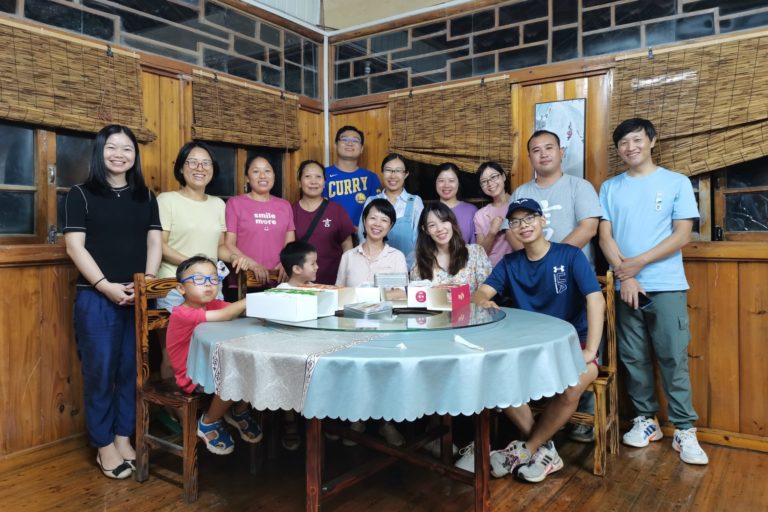
Le Chinese Language Institute (CLI) est une école de chinois à Guilin, la ville des collines karstiques et des rivières du sud de la Chine. Les étudiants suivent des cours individuels avec leur propre équipe de professeurs et vivent la langue en dehors des cours.
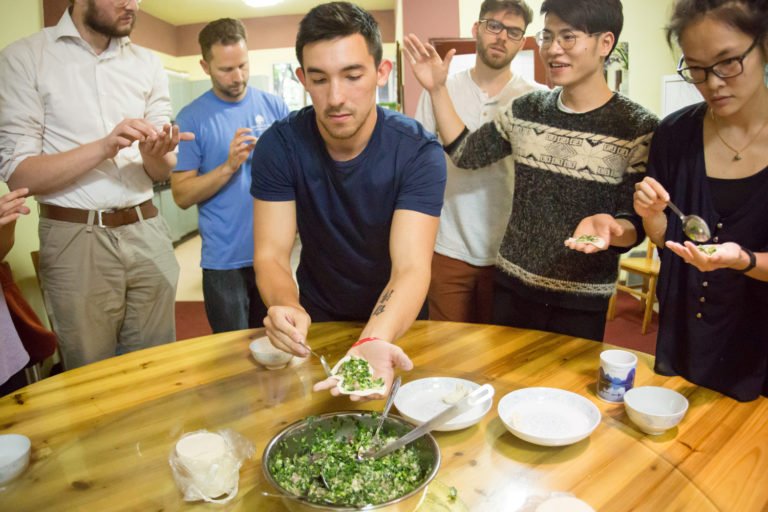
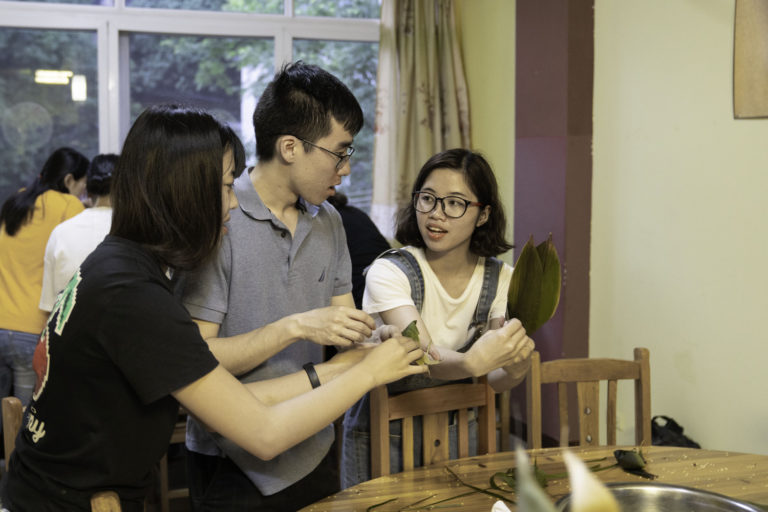
Les fêtes de ce calendrier rythment l'année ici. Avant la Fête du Printemps, les étudiants préparent des raviolis avec leurs professeurs. Pour la Fête des bateaux-dragons, ils enveloppent des 粽子 zòngzi, du riz gluant dans des feuilles de bambou, et à la Fête de la mi-automne, tout le monde dîne ensemble.
Découvrir le programme d'immersion Ou commencer en ligne avec un cours gratuit
La Chine compte 13 jours fériés légaux par an, répartis sur sept fêtes : un jour pour le Nouvel An, quatre pour la Fête du Printemps (la veille du Nouvel An et les trois premiers jours de l'année lunaire), un pour Qingming, deux pour la Fête du Travail, un chacun pour la Fête des bateaux-dragons et la Fête de la mi-automne, et trois pour la Fête nationale.
Ces jours fériés sont ensuite accolés aux week-ends pour former des congés plus longs. Depuis 2025, les règles prévoient pour la fête du Printemps huit jours de congé à partir du réveillon du Nouvel An chinois (en 2026, il en a compté neuf, car il incluait le dimanche précédant un réveillon tombant un lundi, et cette page applique le même principe aux années suivantes), sept jours pour la fête nationale à partir du 1er octobre (huit lorsque la fête de la Mi-Automne tombe pendant cette période) et cinq jours pour la fête du Travail. Les quatre autres jours fériés donnent lieu à un week-end de trois jours, sauf s’ils tombent un mercredi : dans ce cas, seul ce jour est chômé.
Les dates de 2034 indiquées sur cette page découlent de ces règles. Appliquées à 2025 et 2026, elles donnent exactement les congés fixés par le Conseil des affaires d’État, mais un futur avis peut encore différer d’un jour environ. Vérifiez le calendrier officiel avant de réserver votre voyage.
Le jour de l’An, la fête du Travail et la fête nationale suivent le calendrier occidental. La fête du Printemps, la fête des Bateaux-Dragons et la fête de la Mi-Automne suivent le calendrier lunaire chinois ; elles peuvent donc se décaler jusqu’à un mois d’une année à l’autre. Qingming suit les termes solaires et tombe le 4 ou le 5 avril.
En 2034, la veille du Nouvel An chinois 除夕 chúxī tombe le samedi 18 février, et le premier jour de l'année du Tigre est le 19 février.
La fête du Printemps donne lieu à la plus grande migration annuelle au monde, la ruée des voyageurs 春运 chūnyùn, qui dure environ 40 jours, à peu près du 4 février au 15 mars en 2034. Les billets de train pour rentrer chez soi s'arrachent en quelques minutes. La Golden Week d'octobre est la semaine la plus chargée pour le tourisme intérieur, et les sites touristiques comme la rivière Li à Guilin sont alors bondés.
Les commerces et les restaurants restent pour la plupart ouverts pendant les fêtes, sauf lors des premiers jours de la fête du Printemps, quand beaucoup de petits commerçants ferment pour rentrer chez eux. Les administrations et les banques ferment pendant toute la durée des congés.
Le calendrier des cours du CLI suit les jours fériés nationaux, avec quelques différences, et il est fixé une fois le calendrier officiel publié. Si votre programme chevauche une fermeture, vous pouvez rattraper chaque jour de cours manqué sans frais supplémentaires, en prolongeant votre programme, en suivant les heures en ligne ou en ajoutant des heures sur d’autres jours. Si vous prolongez, l’hébergement des nuits supplémentaires coûte 150 RMB par nuit. Demandez à l’équipe des admissions du CLI le calendrier correspondant à vos dates.
Le Nouvel An chinois tombe le dimanche 19 février 2034. Il ouvre l'année du Tigre de Bois. Le jour férié devrait durer 8 jours, du 18 au 25 février.
La fête nationale a lieu le 1er octobre. Le congé de la Golden Week devrait durer 7 jours, du 1er au 7 octobre.
La fête de la Mi-Automne tombe le mercredi 27 septembre, soit le 15e jour du huitième mois lunaire.
Pas encore. Le Conseil des affaires d’État publie généralement le calendrier de l’année suivante début novembre ; l’avis pour 2034 est donc attendu en novembre 2033. Les dates de cette page suivent les règles actuelles et seront mises à jour dès sa publication.
Le CLI ferme à chaque jour férié, mais son calendrier n’est pas identique au calendrier national. Certains jours de congé nationaux sont des jours de cours au CLI, et la fermeture de la fête du Printemps peut être plus longue. Les jours de cours manqués peuvent être rattrapés sans frais supplémentaires, et l’hébergement pour les jours ajoutés à la fin d’un programme coûte 150 RMB par nuit. Comment le CLI gère les jours fériés.

Le Chinese Language Institute (CLI) est un centre d'études de la langue et de la culture chinoises basé à Guilin, en Chine. Fondé en 2009, le CLI a accueilli plus de 5 000 étudiants venus de plus de 50 pays et affiche une note de 4,95 sur 5,00 sur GoOverseas. L'équipe du CLI réunit des professeurs de chinois, des responsables de programmes et des spécialistes de la Chine titulaires de diplômes supérieurs en études chinoises, en didactique du chinois langue étrangère, en sciences de l'éducation et dans des domaines connexes. Les articles publiés sous la signature « L'équipe CLI » s'appuient sur l'expertise collective de ce groupe, fruit de nombreuses années d'expérience dans la conception et la mise en œuvre de programmes d'immersion en chinois à Guilin et dans toute la Chine.