
- The traditional Chinese calendar is lunisolar, not purely lunar.
- Months begin around the new moon, while solar terms help keep the calendar aligned with the seasons.
- Leap months, known as 闰月 (rùn yuè), are added roughly every two to three years.
- The Gregorian calendar is used for official life in modern China, but the Chinese calendar still determines many traditional festivals.
- The calendar is closely connected with the Chinese zodiac, the 60-year stem-branch cycle, and auspicious-date selection.
How much do you know about the traditional Chinese calendar? Often called the “Chinese lunar calendar” in English, this ancient system is more accurately described as a lunisolar calendar: it follows the phases of the moon while also using solar markers to stay aligned with the seasons.
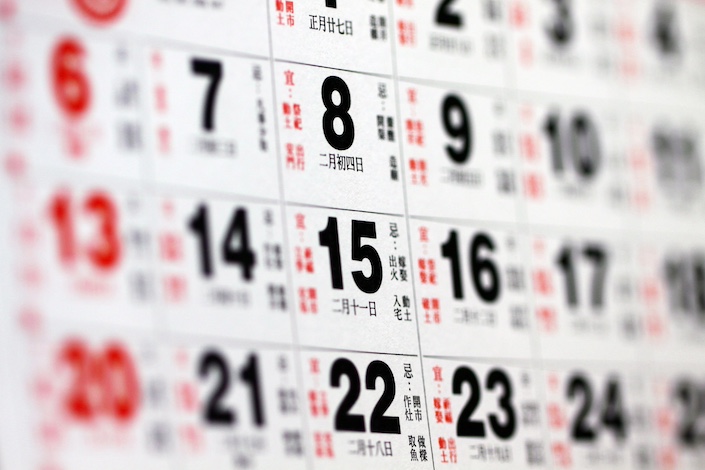
Although modern China uses the Gregorian calendar for official, business, and everyday civil purposes, the traditional Chinese calendar still plays an important role in cultural life. It determines the dates of major festivals such as Chinese New Year, the Lantern Festival, Dragon Boat Festival, and Mid-Autumn Festival, and it remains closely connected with birthdays, ancestral rituals, Chinese astrology, and the selection of auspicious dates.
For learners, the calendar is also a useful doorway into Chinese culture. Festivals, zodiac animals, seasonal foods, family rituals, and traditional almanacs all become easier to understand once you know how this calendar works. If your goal is to Learn Chinese in China, understanding these cultural systems can make real-life conversations and festival experiences much more meaningful.
01 What is the Chinese calendar?
The Chinese calendar, known in Chinese as 农历 (nónglì), is a traditional calendar system that combines lunar months with solar-year adjustment. The word 农历 is often translated as “agricultural calendar,” reflecting the calendar’s long historical connection with farming, seasonal change, and ritual life.
In modern Chinese, you may also hear people refer to it as the 阴历 (yīnlì), or “lunar calendar.” This term is common in everyday speech, but technically the Chinese calendar is not purely lunar. A purely lunar calendar follows the moon without trying to stay aligned with the solar year. The Chinese calendar, by contrast, uses both moon phases and solar markers.
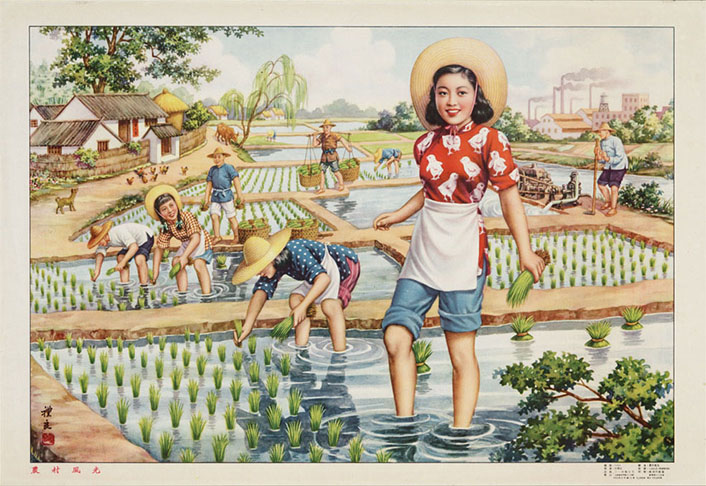
Lunar vs. solar vs. lunisolar calendars
To understand how the Chinese calendar works, it helps to compare three types of calendars:
| Calendar type | How it works | Example |
|---|---|---|
| Solar calendar | Tracks the earth’s orbit around the sun and stays aligned with the seasons. | The Gregorian calendar |
| Lunar calendar | Tracks the phases of the moon. A 12-month lunar year is about 354 days, so it drifts against the solar seasons unless adjusted. | A purely lunar religious calendar |
| Lunisolar calendar | Uses lunar months but adds adjustments to keep the calendar aligned with the solar year. | The traditional Chinese calendar |
A lunar month is based on the moon’s cycle from one new moon to the next, which lasts about 29.5 days. Twelve lunar months add up to roughly 354 days, about 11 days shorter than a solar year of about 365 days. Without adjustment, lunar months would gradually move out of sync with the seasons.
The Chinese calendar solves this problem through a lunisolar system. Months follow the moon, while solar terms and occasional leap months keep the calendar broadly aligned with the agricultural and seasonal year.
02 How does the Chinese calendar work?
In the Chinese calendar, each month begins around the new moon. A normal year has 12 lunar months, while a leap year has 13 lunar months. The extra month is called a 闰月 (rùn yuè), or leap month.
Leap months are not simply added every third year on a fixed schedule. More accurately, they occur roughly every two to three years. Traditional Chinese calendar rules use solar terms to decide when a leap month is needed, helping the lunar calendar remain aligned with the solar year and the seasons.
Chinese New Year falls on the first day of the first lunar month, known as 正月初一 (zhēngyuè chūyī). Because lunar dates shift against the Gregorian calendar, Chinese New Year falls on a different Gregorian date each year, usually between late January and mid-February.
Important month names
The first lunar month is called 正月 (zhēngyuè). This is the month of Chinese New Year and the beginning of the traditional festival cycle.
The twelfth lunar month is commonly called 腊月 (làyuè). It is associated with the end of the lunar year, preparations for Spring Festival, ancestral rituals, and year-end customs.
What does 旬 mean?
Traditional Chinese date language can divide a month into three ten-day periods called 旬 (xún). These are not “weeks” in the modern seven-day sense. They are better understood as three approximate sections of the month:
- 上旬 (shàngxún): the first part of the month, roughly days 1–10
- 中旬 (zhōngxún): the middle part of the month, roughly days 11–20
- 下旬 (xiàxún): the final part of the month, usually day 21 to the end of the month
03 The 60-year cycle: Heavenly Stems and Earthly Branches
The Chinese calendar is also connected with the traditional sexagenary cycle, a repeating 60-part cycle formed by combining the 十天干 (shí tiāngān), or Ten Heavenly Stems, with the 十二地支 (shí’èr dìzhī), or Twelve Earthly Branches.
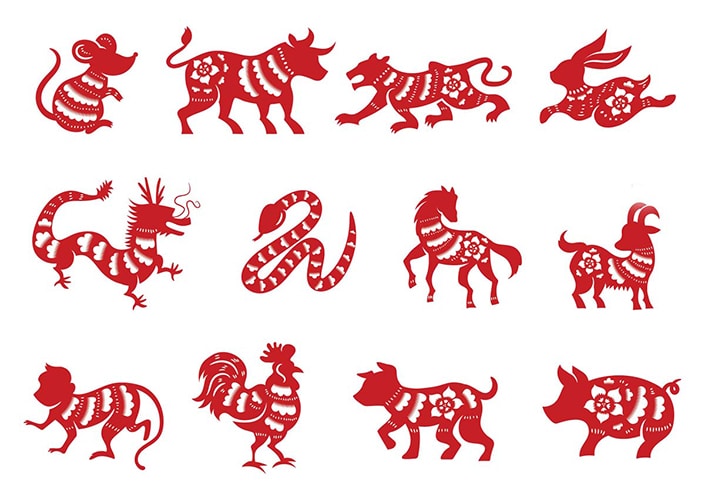
The Twelve Earthly Branches are also associated with the 12 Chinese zodiac animals: Rat, Ox, Tiger, Rabbit, Dragon, Snake, Horse, Goat, Monkey, Rooster, Dog, and Pig. This is why each Chinese year is commonly linked to a zodiac animal, such as the Year of the Dragon, Year of the Snake, or Year of the Horse.
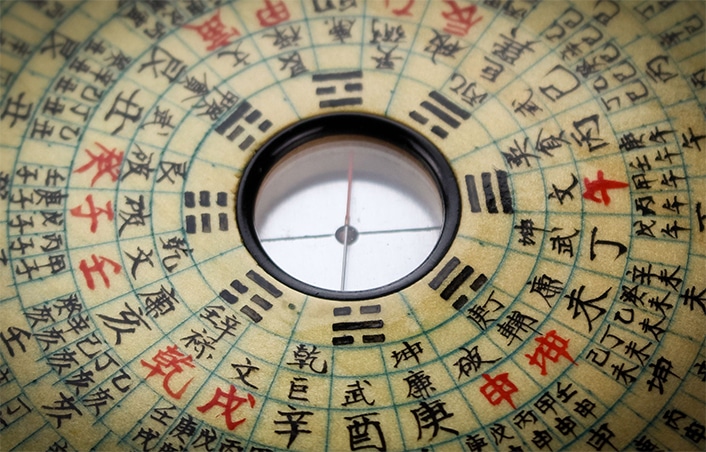
The stem-branch system can be used to mark years, months, days, and even hours in traditional timekeeping. It also plays an important role in Chinese astrology, fortune-telling, and traditional almanacs.
04 The 24 solar terms
One of the most important solar elements of the Chinese calendar is the system of 二十四节气 (èrshísì jiéqì), or the 24 solar terms.
The 24 solar terms divide the sun’s annual motion into 24 segments. These terms mark seasonal turning points and natural patterns such as the beginning of spring, grain rain, summer solstice, white dew, frost descent, and winter solstice. They were especially important in agricultural society because they helped people organize farming, seasonal work, and ritual life.
The solar terms also help explain why the Chinese calendar is lunisolar rather than purely lunar. Lunar months are based on moon phases, but solar terms connect the calendar to the solar year and the changing seasons. This seasonal logic also appears in many Chinese holidays, including the Winter Solstice Festival and Qingming Festival.
| Solar term | Pinyin | Meaning | Approx. Gregorian date |
|---|---|---|---|
| 立春 | Beginning of Spring | Feb. 3–5 | |
| 雨水 | Rain Water | Feb. 18–20 | |
| 惊蛰 | Awakening of Insects | Mar. 5–7 | |
| 春分 | Spring Equinox | Mar. 20–22 | |
| 清明 | Clear and Bright | Apr. 4–6 | |
| 谷雨 | Grain Rain | Apr. 19–21 | |
| 立夏 | Beginning of Summer | May 5–7 | |
| 小满 | Lesser Fullness of Grain | May 20–22 | |
| 芒种 | Grain in Ear | Jun. 5–7 | |
| 夏至 | Summer Solstice | Jun. 21–22 | |
| 小暑 | Minor Heat | Jul. 6–8 | |
| 大暑 | Major Heat | Jul. 22–24 | |
| 立秋 | Beginning of Autumn | Aug. 7–9 | |
| 处暑 | End of Heat | Aug. 22–24 | |
| 白露 | White Dew | Sep. 7–9 | |
| 秋分 | Autumn Equinox | Sep. 22–24 | |
| 寒露 | Cold Dew | Oct. 8–9 | |
| 霜降 | Frost Descent | Oct. 23–24 | |
| 立冬 | Beginning of Winter | Nov. 7–8 | |
| 小雪 | Minor Snow | Nov. 22–23 | |
| 大雪 | Major Snow | Dec. 6–8 | |
| 冬至 | Winter Solstice | Dec. 21–23 | |
| 小寒 | Minor Cold | Jan. 5–7 | |
| 大寒 | Major Cold | Jan. 20–21 |
05 Is the Chinese calendar still used today?
Yes, but not in the same way as the Gregorian calendar. In the People’s Republic of China, the Gregorian calendar is used for official, legal, business, school, and administrative purposes. Public holidays such as Labor Day, National Day, Women’s Day, and New Year’s Day follow Gregorian dates.
The traditional Chinese calendar remains important for cultural and religious life. It is used to determine the dates of many traditional festivals, including:
- Chinese New Year, which begins on the first day of the first lunar month
- Lantern Festival, which falls on the 15th day of the first lunar month
- Dragon Boat Festival, which falls on the fifth day of the fifth lunar month
- Mid-Autumn Festival, which falls on the 15th day of the eighth lunar month
- Qixi Festival, which falls on the seventh day of the seventh lunar month
- Double Ninth Festival, which falls on the ninth day of the ninth lunar month
Qingming Festival is slightly different. It is not dated by a lunar month and day in the same way as Chinese New Year or Mid-Autumn Festival. Instead, it is tied to the solar term 清明 (Qīngmíng), which usually falls around April 4–6 on the Gregorian calendar.
06 The Chinese calendar, zodiac, and fortune-telling
The Chinese calendar is closely connected with the Chinese zodiac, Yin-Yang theory, and the Five Elements, known in Chinese as 五行 (wǔxíng). These systems are often used together in Chinese astrology and traditional fortune-telling.
In everyday cultural practice, people may consult the Chinese calendar or a traditional almanac when choosing dates for important events such as weddings, funerals, business openings, house moves, or major purchases. Similar symbolic thinking appears in other areas of Chinese culture too, from Chinese numerology to feng shui and traditional wedding customs.
Not everyone in modern China takes astrology or auspicious-date selection literally, but these traditions remain culturally visible. You may see calendar-based recommendations printed in traditional almanacs, displayed in apps, or mentioned around weddings, holidays, and major family decisions.
For Chinese learners, this is one reason cultural context matters. Vocabulary like 农历, 生肖, 节气, and 吉日 appears in real conversations, holiday greetings, family discussions, and traditional customs. Building this background knowledge can make your Chinese feel more connected to daily life, especially if you are also working through a broader Chinese study plan.

Study Chinese in Guilin or Start Online
CLI offers personalized Chinese instruction built around your goals. Join our Immersion Program in Guilin or begin from anywhere with a free Chinese lesson .
07 Useful Chinese calendar vocabulary
The following terms will help you understand Chinese calendar references in festival articles, almanacs, zodiac discussions, and everyday conversations.
| Chinese | Pinyin | Meaning |
|---|---|---|
| 农历 | Traditional Chinese calendar; agricultural calendar | |
| 公历 | Gregorian calendar; civil calendar | |
| 阴历 | Lunar calendar; common everyday term for the traditional calendar | |
| 阳历 | Solar calendar; often used to refer to the Gregorian calendar | |
| 正月 | First lunar month | |
| 腊月 | Twelfth lunar month | |
| 闰月 | Leap month | |
| 节气 | Solar term | |
| 二十四节气 | The 24 solar terms | |
| 天干 | Heavenly Stems | |
| 地支 | Earthly Branches | |
| 生肖 | Chinese zodiac | |
| 吉日 | Auspicious day |
08 FAQ
Is the Chinese calendar lunar or lunisolar?
The Chinese calendar is lunisolar. Its months are based on moon phases, but it also uses solar terms and leap months to stay aligned with the solar year and the seasons.
Why does Chinese New Year fall on a different date each year?
Chinese New Year follows the Chinese calendar, not the Gregorian calendar. It begins on the first day of the first lunar month, so its Gregorian date changes from year to year.
How often does the Chinese calendar have a leap month?
A leap month is added roughly every two to three years. The exact placement depends on traditional calendar rules involving lunar months and solar terms.
Is Qingming Festival based on the lunar calendar?
Qingming Festival is tied to the solar term 清明 (Qīngmíng), not to a fixed lunar month and day. This is why Qingming usually falls around April 4–6 on the Gregorian calendar.
Do people in China still use the traditional calendar?
Yes, but mainly for cultural, festival, religious, family, and astrological purposes. The Gregorian calendar is used for official and civil life.
09 Final thoughts
The traditional Chinese calendar is more than a way to count days. It brings together astronomy, agriculture, seasonal change, family ritual, festivals, zodiac symbolism, and traditional ideas about auspicious timing.
For Chinese learners, understanding the calendar can make many cultural references easier to understand. It explains why holidays shift from year to year, why zodiac animals matter, why dates like 正月初一 and 八月十五 appear so often in festival culture, and why the traditional calendar remains meaningful even in a modern society that uses the Gregorian calendar for everyday official life.
10 Selected References
- Encyclopaedia Britannica: overview of the Chinese calendar and its lunisolar structure. View source →
- UNESCO: the Twenty-Four Solar Terms as knowledge and practices developed through observation of the sun’s annual motion. View source →
- Hong Kong Observatory: explanation and table of the 24 solar terms. View source →
- Hong Kong Observatory: explanation of the traditional Chinese calendar year and sexagenary-cycle year naming. View source →
- Timeanddate: overview of the Chinese calendar, lunar months, leap months, and festival dating. View source →
- Note: Festival dates, public-holiday arrangements, and calendar interpretations can vary by year and region. Always confirm specific holiday dates with an official calendar before planning travel or events.