China has seven public holidays in 2030. The two long breaks are Spring Festival, February 2 to 9, and National Day Golden Week, October 1 to 7. Chinese New Year falls on Sunday, February 3, and begins the Year of the Metal Dog 庚戌狗年. These are expected dates.
Expected
| Holiday | Festival day | Expected days off |
|---|---|---|
| New Year's Day元旦 Yuándàn | Tue, Jan 1 | Dec 30–Jan 13 days, Sun to Tue |
| Spring Festival (Chinese New Year)春节 Chūnjié | Sun, Feb 3 | Feb 2–98 days, Sat to Sat |
| Qingming Festival清明节 QīngmíngjiéTomb-Sweeping Day | Fri, Apr 5 | Apr 5–73 days, Fri to Sun |
| Labor Day劳动节 Láodòngjié | Wed, May 1 | May 1–55 days, Wed to Sun |
| Dragon Boat Festival端午节 Duānwǔjié | Wed, Jun 5 | Jun 51 day, Wednesday |
| Mid-Autumn Festival中秋节 Zhōngqiūjié | Thu, Sep 12 | Sep 12–143 days, Thu to Sat |
| National Day (Golden Week)国庆节 Guóqìngjié | Tue, Oct 1 | Oct 1–77 days, Tue to Mon |
These are expected dates, worked out from the lunar calendar and the holiday rules in force since 2025. The State Council publishes the official schedule, with its make-up working days 调休 tiáoxiū, around November 2029. Use these breaks to plan, and confirm before you book.
This chart shows the same dates as the table, month by month.
Expected public holiday
New Year's Day
元旦 Yuándàn
The calendar New Year. In China it is a short break, and the big celebration waits for Spring Festival.
Expected public holiday
Spring Festival (Chinese New Year)
春节 Chūnjié
The biggest holiday of the year, with a reunion dinner on New Year's Eve, red envelopes 红包 hóngbāo for children, fireworks where they are allowed, and the largest travel rush of the year.
Expected public holiday
Qingming Festival
清明节 Qīngmíngjié
Families sweep and tidy their ancestors' graves, leave offerings, and go out for a spring walk 踏青 tàqīng.
Expected public holiday
Labor Day
劳动节 Láodòngjié
International Workers' Day. It has grown into a five-day holiday and one of the busiest travel weeks of the year.
Expected public holiday
Dragon Boat Festival
端午节 Duānwǔjié
Dragon boat races and 粽子 zòngzi, sticky rice wrapped in bamboo leaves, in memory of the poet Qu Yuan.
Expected public holiday
Mid-Autumn Festival
中秋节 Zhōngqiūjié
A family festival under the full moon, with mooncakes 月饼 yuèbing and an evening of moon viewing.
Expected public holiday
National Day (Golden Week)
国庆节 Guóqìngjié
Marks the founding of the People's Republic of China on October 1, 1949. Golden Week is the busiest travel week of the autumn.
Traditional festival
Laba Festival
腊八节 Làbājié
Families cook laba porridge 腊八粥 làbāzhōu from grains, beans and dried fruit. People say that after Laba, the New Year is on its way.
Traditional festival
Lantern Festival
元宵节 Yuánxiāojié
The first full moon of the lunar year, with lanterns, riddles and sweet rice balls 汤圆 tāngyuán. It closes the New Year season.
Commemorative day
International Women's Day
妇女节 Fùnǚjié
Women get a half day off on workdays, and many employers add flowers, gifts or an afternoon outing.
Commemorative day
Arbor Day
植树节 Zhíshùjié
China's tree-planting day, set in 1979 on the anniversary of Sun Yat-sen's death. Schools and offices go out to plant trees.
Solar term
Spring Equinox
春分 Chūnfēn
Day and night are nearly the same length. A favorite custom is trying to stand an egg on its end 竖蛋 shù dàn.
Regional holiday in Guangxi
Sanyuesan Festival
三月三 Sānyuèsān
Festival of the Zhuang and other peoples of Guangxi, with folk song gatherings and five-color sticky rice 五色糯米饭 wǔsè nuòmǐfàn.
Commemorative day
Youth Day
青年节 Qīngniánjié
Marks the May Fourth Movement of 1919, led by students in Beijing.
Commemorative day
Children's Day
儿童节 Értóngjié
Schools hold performances, and parents take their children out for the day.
Solar term
Summer Solstice
夏至 Xiàzhì
The longest day of the year. In the north people eat noodles 夏至面 xiàzhì miàn.
Commemorative day
CPC Founding Day
建党节 Jiàndǎngjié
Marks the founding of the Communist Party of China in 1921.
Commemorative day
Army Day
建军节 Jiànjūnjié
Marks the founding of the People's Liberation Army on August 1, 1927.
Traditional festival
Qixi Festival (Chinese Valentine's Day)
七夕节 Qīxījié
The Cowherd and the Weaver Girl, two lovers kept apart by the Milky Way, meet once a year on a bridge of magpies. Today it is China's Valentine's Day.
Traditional festival
Ghost Festival
中元节 Zhōngyuánjié
In the seventh lunar month the gates of the underworld are said to open. Families make offerings and burn paper money for their ancestors.
Commemorative day
Teachers' Day
教师节 Jiàoshījié
Students thank their teachers with cards, flowers and visits. China has marked the day since 1985.
Solar term
Autumn Equinox
秋分 Qiūfēn
Day and night are nearly the same length again. Since 2018 it has also been the Farmers' Harvest Festival 农民丰收节 Nóngmín Fēngshōujié.
Traditional festival
Double Ninth Festival
重阳节 Chóngyángjié
People climb hills, drink chrysanthemum wine and visit older relatives. It is also Seniors' Day 老年节 Lǎoniánjié.
Shopping festival
Singles' Day
双十一 Shuāngshíyī
November 11 is written 11/11, four ones that stand for four people on their own. It began in the 1990s as a joke among university students and grew into China's biggest online shopping festival.
Solar term and family festival
Winter Solstice
冬至 Dōngzhì
The shortest day of the year. In the north people eat dumplings, in the south 汤圆 tāngyuán, and many families gather as if for a small New Year.
These are the traditional festivals, solar terms and commemorative days people mark in China. Most are not days off. A few give a half day to one group, and Guangxi, where CLI is, gives two days off for Sanyuesan.
| Date | Holiday | Notes |
|---|---|---|
| Fri, Jan 11 | Laba Festival腊八节 Làbājié | Traditional festival: laba porridge |
| Sun, Feb 17 | Lantern Festival元宵节 Yuánxiāojié | Traditional festival: ends the New Year season |
| Fri, Mar 8 | International Women's Day妇女节 Fùnǚjié | Half day off for women |
| Tue, Mar 12 | Arbor Day植树节 Zhíshùjié | Tree-planting day |
| Wed, Mar 20 | Spring Equinox春分 Chūnfēn | Solar term |
| Fri, Apr 5 | Sanyuesan Festival三月三 Sānyuèsān | Guangxi, where CLI is, gives two days off. Expected break with the weekend and Qingming Festival: Apr 4–8. Guangxi confirms the dates each February or March. |
| Sat, May 4 | Youth Day青年节 Qīngniánjié | Half day off for young people aged 14 and over; falls on a Saturday this year |
| Sat, Jun 1 | Children's Day儿童节 Értóngjié | Day off for children under 14; falls on a Saturday this year |
| Fri, Jun 21 | Summer Solstice夏至 Xiàzhì | Solar term |
| Date | Holiday | Notes |
|---|---|---|
| Mon, Jul 1 | CPC Founding Day建党节 Jiàndǎngjié | Founding of the Communist Party of China, 1921 |
| Thu, Aug 1 | Army Day建军节 Jiànjūnjié | Half day off for active military |
| Mon, Aug 5 | Qixi Festival (Chinese Valentine's Day)七夕节 Qīxījié | Traditional festival |
| Tue, Aug 13 | Ghost Festival中元节 Zhōngyuánjié | Traditional festival |
| Tue, Sep 10 | Teachers' Day教师节 Jiàoshījié | Students thank their teachers |
| Mon, Sep 23 | Autumn Equinox秋分 Qiūfēn | Solar term; also Farmers' Harvest Festival |
| Sat, Oct 5 | Double Ninth Festival重阳节 Chóngyángjié | Traditional festival; Seniors' Day |
| Mon, Nov 11 | Singles' Day双十一 Shuāngshíyī | Shopping festival |
| Sun, Dec 22 | Winter Solstice冬至 Dōngzhì | Solar term and family festival |
Video (2:22). Why one student came back to Guilin to keep learning Chinese at CLI. The building with the lanterns is the CLI Center.
The Chinese Language Institute (CLI) is a Chinese school in Guilin, the city of karst hills and rivers in southern China. Students take one-on-one lessons with their own team of teachers and live the language outside class.
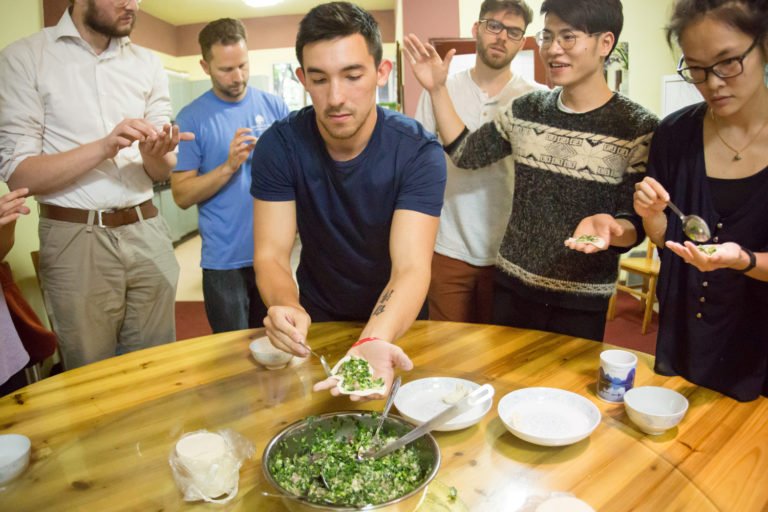
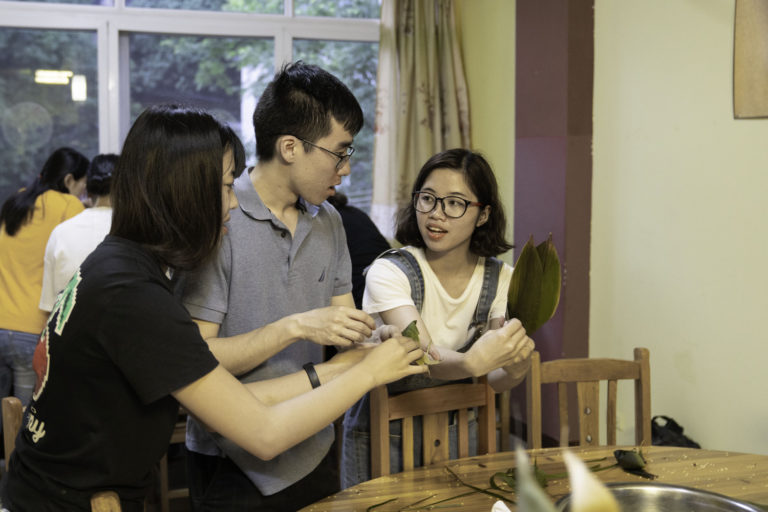
The festivals on this calendar are part of the year here. Before Spring Festival, students fold dumplings with their teachers. For the Dragon Boat Festival they wrap 粽子 zòngzi, sticky rice in bamboo leaves, and at Mid-Autumn everyone sits down to dinner together.
Explore the Immersion Program Or start online with a free lesson
China has 13 statutory days off a year, spread over seven holidays: one day for New Year's Day, four for Spring Festival (New Year's Eve and the first three days of the lunar year), one for Qingming, two for Labor Day, one each for the Dragon Boat and Mid-Autumn festivals, and three for National Day.
Those days are then joined to weekends to make longer breaks. Since 2025 the rules give a Spring Festival break of eight days from New Year's Eve (in 2026 it ran nine, taking in the Sunday before a Monday Eve, and this page assumes the same for later years), seven days for National Day from October 1 (eight when the Mid-Autumn Festival falls inside it) and five days for Labor Day. The other four holidays become a three-day weekend, unless the holiday falls on a Wednesday, when only that day is off.
The 2030 dates on this page come from those rules. Applied to 2025 and 2026, they give exactly the breaks the State Council set, but a future notice can still differ by a day or so. Check the official schedule before you book travel.
New Year's Day, Labor Day and National Day follow the Western calendar. Spring Festival, the Dragon Boat Festival and the Mid-Autumn Festival follow the Chinese lunar calendar, so they move by up to a month from one year to the next. Qingming follows the solar terms, and falls on April 4 or 5.
In 2030, Chinese New Year's Eve 除夕 chúxī is Saturday, February 2, and the first day of the Year of the Dog is February 3.
Spring Festival brings the world's largest yearly migration, the travel rush 春运 chūnyùn, which runs for about 40 days, roughly January 19 to February 27 in 2030. Train tickets home sell out within minutes. Golden Week in October is the busiest week for domestic tourism, and scenic spots such as Guilin's Li River are at their most crowded.
Shops and restaurants mostly stay open over the holidays, apart from the first days of Spring Festival, when many small businesses close while their owners go home. Government offices and banks close for the whole break.
CLI's class calendar follows the national holidays, with a few differences, and is set once the official schedule is out. If your program overlaps a closure, you can make up each missed class day at no extra cost, by extending your program, taking the hours online, or adding hours to other days. If you extend, housing for the extra nights is 150 RMB per night. Ask CLI's admissions team for the calendar for your dates.
Chinese New Year falls on Sunday, February 3, 2030. It begins the Year of the Metal Dog. The public holiday is expected to run 8 days, from February 2 to 9.
National Day is October 1. The Golden Week break is expected to run 7 days, from October 1 to 7.
The Mid-Autumn Festival falls on Thursday, September 12, the 15th day of the eighth lunar month.
Not yet. The State Council usually publishes the next year's schedule in early November, so the 2030 notice is expected in November 2029. The dates on this page follow the current rules and will be updated when it is out.
CLI closes for each public holiday, but its calendar is not the same as the national one. Some national days off are class days at CLI, and the Spring Festival closure can run longer. Missed class days can be made up at no extra cost, and housing for days added to the end of a program is 150 RMB per night. How CLI handles holidays.

The Chinese Language Institute (CLI) is a center for Chinese language and cultural studies based in Guilin, China. Founded in 2009, CLI has hosted over 5,000 students from more than 50 countries and maintains a 4.95 out of 5.00 rating on GoOverseas. CLI's team includes Chinese language educators, program managers, and China specialists holding advanced degrees in Chinese studies, teaching Chinese as a foreign language, education, and related fields. Articles published under The CLI Team draw on the collective expertise of this group, informed by years of experience designing and delivering Chinese language immersion programs in Guilin and across China.