


- The next Year of the Rat runs from February 11, 2032 to January 30, 2033. It is a Water Rat year, the first since 1972.
- The Rat comes first because it belongs to 子 (), the first earthly branch, and that sequence was already in use on Shang oracle bones by about 1200 BCE.
- There is no cat in the zodiac because domestic cats reached China centuries after the list of animals was first written down.
- Much of the Rat's bad reputation comes from English. 鼠 () covers mice as well as rats, and Chinese never turned it into a word for an informer.
- Compatibility comes from real classical astrology and depends on the whole chart. The personality profile and the lucky numbers are mostly modern.
Look up your Chinese zodiac animal, find out that you are a Rat, and you may feel a little let down. There are twelve animals in the cycle, and you seem to have drawn the one that gets into the grain store.
Before you resign yourself to that, it helps to know how much of the Rat's image problem comes from English. The character at the center of it, 鼠 (), doesn't split rats from mice the way English does, and it never picked up the sense that makes calling someone "a rat" sting.
As for why the Rat comes first, the famous race has almost nothing to do with it. It is a fact about the Chinese calendar, and it is older than the animals themselves.
Below we go through the dates and the language first, then the folk customs and the astrology, and we say as we go which parts are documented history and which arrived much later. Once you keep those apart, the Rat turns out to be one of the more interesting signs in the Chinese zodiac.
01 When is the Year of the Rat?
The next Year of the Rat (鼠年, ) runs from February 11, 2032 to January 30, 2033. It is a Water Rat year, written 壬子 () in stem-and-branch notation, and the first since 1972.
The dates below come from the Hong Kong Observatory's Gregorian–lunar conversion tables. Keep an eye on the 立春 (, "start of spring") column, because it matters more than you might expect (the next section explains why).
| Rat year | Stem-branch | Element | Lunar year runs | 立春 |
|---|---|---|---|---|
| 1924 | 甲子 | Wood | Feb 5, 1924 – Jan 23, 1925 | Feb 5 |
| 1936 | 丙子 | Fire | Jan 24, 1936 – Feb 10, 1937 | Feb 5 |
| 1948 | 戊子 | Earth | Feb 10, 1948 – Jan 28, 1949 | Feb 5 |
| 1960 | 庚子 | Metal | Jan 28, 1960 – Feb 14, 1961 | Feb 5 |
| 1972 | 壬子 | Water | Feb 15, 1972 – Feb 2, 1973 | Feb 5 |
| 1984 | 甲子 | Wood | Feb 2, 1984 – Feb 19, 1985 | Feb 4 |
| 1996 | 丙子 | Fire | Feb 19, 1996 – Feb 6, 1997 | Feb 4 |
| 2008 | 戊子 | Earth | Feb 7, 2008 – Jan 25, 2009 | Feb 4 |
| 2020 | 庚子 | Metal | Jan 25, 2020 – Feb 11, 2021 | Feb 4 |
| 2032 | 壬子 | Water | Feb 11, 2032 – Jan 30, 2033 | Feb 4 |
| 2044 | 甲子 | Wood | Jan 30, 2044 – Feb 16, 2045 | Feb 4 |
Both gaps (twelve years between Rat years, sixty between Water Rat years) come from the same mechanism. Years in the Chinese calendar are labeled by pairing ten heavenly stems with twelve earthly branches, a system called 干支 ().
The two wheels turn together, one notch a year, so a given pair doesn't come round again for sixty years. Because the animal goes with the branch, it returns every twelve years, while the element goes with the stem, which is why the Water Rat only comes back every sixty.
I was born in January or February: am I really a Rat?
This is where zodiac tables most often go wrong, and it catches anyone born between about January 20 and February 20.
Two conventions compete over when a zodiac year begins. Popular practice starts it at Lunar New Year, while traditional four pillars fortune-telling, or 八字 (), starts it at 立春 (), the solar term falling on February 4 or 5.
Chinese academics and folklorists disagree about which is right. The clearest example we found is in a mathematician's study of the Chinese calendar, and it happens to use a Rat year.
In 1960, Chinese New Year fell on January 28 while lì chun fell on February 5. If you were born on February 1, you would not be considered a rat, but a pig!Helmer Aslaksen, Department of Mathematics, National University of Singapore
In 1936, 1960, 1984 and 2020, Lunar New Year came first, so anyone born in the gap counts as a Rat popularly but as a Pig under the four pillars convention.
The error reverses in 1948, 1972, 1996, 2008 and again in 2032, when 立春 () comes first: anyone born between February 4 and February 10, 2032 is already a Water Rat under four pillars while the popular count still says Pig.
Mozart is the classic casualty. Lists call him a Rat because 1756 was a Rat year, but the Rat year did not begin until January 31 and he was born on January 27, which makes him a Pig either way.
Is being born in a Rat year bad news?
No, and the language itself shows it.
Open 漢典 (), or any other of the online Chinese dictionaries worth keeping bookmarked, at 鼠 () and the zodiac meaning is a numbered sense of its own, separate from the figurative "petty person" and "cowardly." Chinese keeps the animal insult and the calendar label in different drawers.
In folk art the rat is a festive figure, and Korea's national folk museum links the same first sign with fecundity and wealth, and with the north.
It is true that the Rat has less glamour than the Dragon, and you can measure the gap, since Chinese Dragon years show birth spikes of hundreds of thousands. That is a fact about the Dragon, though, not about the Rat.
02 Why is the Rat first in the Chinese zodiac?
It comes down to 子 (). Stem-and-branch notation was used to count days in the earliest Chinese writing we have, and a complete cycle of sixty signs appears in Shang oracle-bone inscriptions by around 1200 BCE.
The animals were added later to match branch names that already existed. The Rat is first because it goes with 子 (), the first branch, and nobody ordered that list with animals in mind.
Every explanation of why it is a rat in particular (the midnight hour, the toe counts, the great race) is a later attempt to make sense of a pairing that was already fixed.
The archaeology agrees. Qin dynasty bamboo slips from a tomb dated to 217 BCE, excavated at Shuihudi in Hubei, carry a divination manual whose branch-and-animal list is recognizably the zodiac, though not quite.
子 () is paired with 鼠 () exactly as it still is, but a deer sits in the Horse's slot and the horse one place later, in the Goat's, 酉 () has a pheasant instead of a rooster, the Dog's slot holds an old sheep, and 辰 () is blank (probably because the scribe left out the dragon). At least five slots differ from the modern list while the Rat was already fixed, which is just what you would expect if the animals were fitted onto an older list.
Those Qin animals are also day animals, used to guess a thief's appearance from the day of the theft. A birth-year zodiac in the modern sense is first attested only in the fifth or sixth century CE.
Take the midnight rat. The double hour 子时 (), 11pm to 1am, is real enough, but the idea that it belongs to the rat because rats are busiest then is first traced to a Ming dynasty text. The earliest surviving justification, in Wang Chong's first-century CE Lunheng, argues from the five elements instead.
What about the Great Race?
In the story, the Jade Emperor calls the animals to a race and the first twelve to arrive are given the years. The Rat cannot swim well, so it crosses the river on the ox's back and leaps off at the bank to arrive first, shoving the cat into the water on the way in some versions.
It is a good story, told all over East Asia, and there's no reason not to enjoy it. But it comes from folklore, and none of the sources we consulted could date it or name its earliest recorded version.
The three pre-modern texts we found that try to explain the order come from the Song dynasty (one) and the Ming (two). They reason from five-element theory and from yin and yang (one even counts the animals' toes), and none of them mentions a race across a river or the Jade Emperor.
Why is there no cat in the Chinese zodiac?
Here the evidence is unusually good, and it comes from archaeology: domestic cats had probably not arrived in China yet.
Ancient DNA research from Peking University, published in 2025, concludes that the domestic cat most likely reached China no earlier than about 1,400 years ago. Before that, leopard cats, a different species entirely, had lived alongside Chinese farmers for about 3,500 years, until around 150 CE, and the study finds a gap of several centuries before the earliest known domestic cat, dated to about 730 CE.
Put that next to the Shuihudi slips. The list of animals had been written down by 217 BCE, roughly a thousand years before the earliest known domestic cat in China.
Vietnam's zodiac does have a Cat, in the Rabbit's fourth position. The usual explanation is phonetic, since the Sino-Vietnamese reading of 卯 () resembles mèo, "cat," though no source we found documents it, so treat it as a good guess.

03 The Rat in Chinese: 鼠 (), 老鼠 () and 耗子 ()
If you are learning Chinese, this is the most useful part, because the Rat's vocabulary is more irregular than it looks.
The zodiac says 鼠年 () and 属鼠 (, "to belong to the Rat"). If a rodent runs across your kitchen floor, though, you would not shout 鼠 (). You would shout 老鼠 ().
The zodiac is using the older, shorter word that everyday Chinese has largely replaced. Research based on the Chinese dialect atlas dates 老鼠 () to the Tang dynasty and finds it dominant across 79% of surveyed dialect points.
The 老 () here doesn't mean "old." It is a prefix that turns a one-syllable word into a two-syllable one, as it also does in 老虎 (, tiger) and 老鹰 (, eagle).
Then there is 耗子 (), which learner resources usually call "the northern word." That isn't quite right: data from across China's dialect map puts it in the northeast and, separately, in the southwest.
The word's origin is our favorite fact about the Rat. 耗子 () descends from a Ming dynasty tax term, 鼠耗 (), a grain surcharge that notionally covered what the rats ate.
The tax was named after the rat, and then the rat took its name back from the tax.
What Chinese idioms say about rats
Chinese has roughly a hundred four-character idioms (成语, ) built on 鼠 (), and nearly all of the ones people actually use are unflattering (the exception is the Zhuangzi one at the end of the table, about needing very little, and the Shijing "big rat" in the table is a two-character classical term). We checked every entry against 漢典 () or the idiom dictionary of the Ministry of Education in Taiwan.
| Idiom | Pinyin | Meaning | Classical source |
|---|---|---|---|
| 胆小如鼠 | Utterly cowardly ("timid as a rat") | Qing: Niehaihua | |
| 鼠目寸光 | Short-sighted, with no foresight (a rat's eyes see only an inch) | Qing: Jiang Shiquan | |
| 抱头鼠窜 | To flee in humiliating disorder | Song: Su Shi | |
| 首鼠两端 | Vacillating, unable to decide (not "two-faced") | Shiji, ch. 107 | |
| 投鼠忌器 | Held back from striking at a harm for fear of the damage | Hanshu, ch. 48 | |
| 城狐社鼠 | A petty villain protected by powerful friends | Jinshu | |
| 鼠窃狗盗 | Petty pilfering; small-time banditry | Shiji | |
| 獐头鼠目 | Mean and shifty-looking | Jiu Tangshu, ch. 126 | |
| 贼眉鼠眼 | Furtive, visibly up to no good | Qing: Sanxia Wuyi | |
| 硕鼠 | A rapacious, extortionate official | Shijing, "Shuoshu" | |
| 偃鼠饮河 | To need very little | Zhuangzi |
Two are routinely mistranslated. 首鼠两端 () means hesitating between two options, not being "two-faced." And 投鼠忌器 () is about restraint: you want to throw something at the rat, but the rat is sitting next to your good crockery.
The oldest layer is 硕鼠 (), "the big rat," and it is political. In the Shijing poem of that name, the big rat is told to stop eating the speaker's millet, and the rat in question is the tax collector.
Is it the Year of the Rat or the Year of the Mouse?
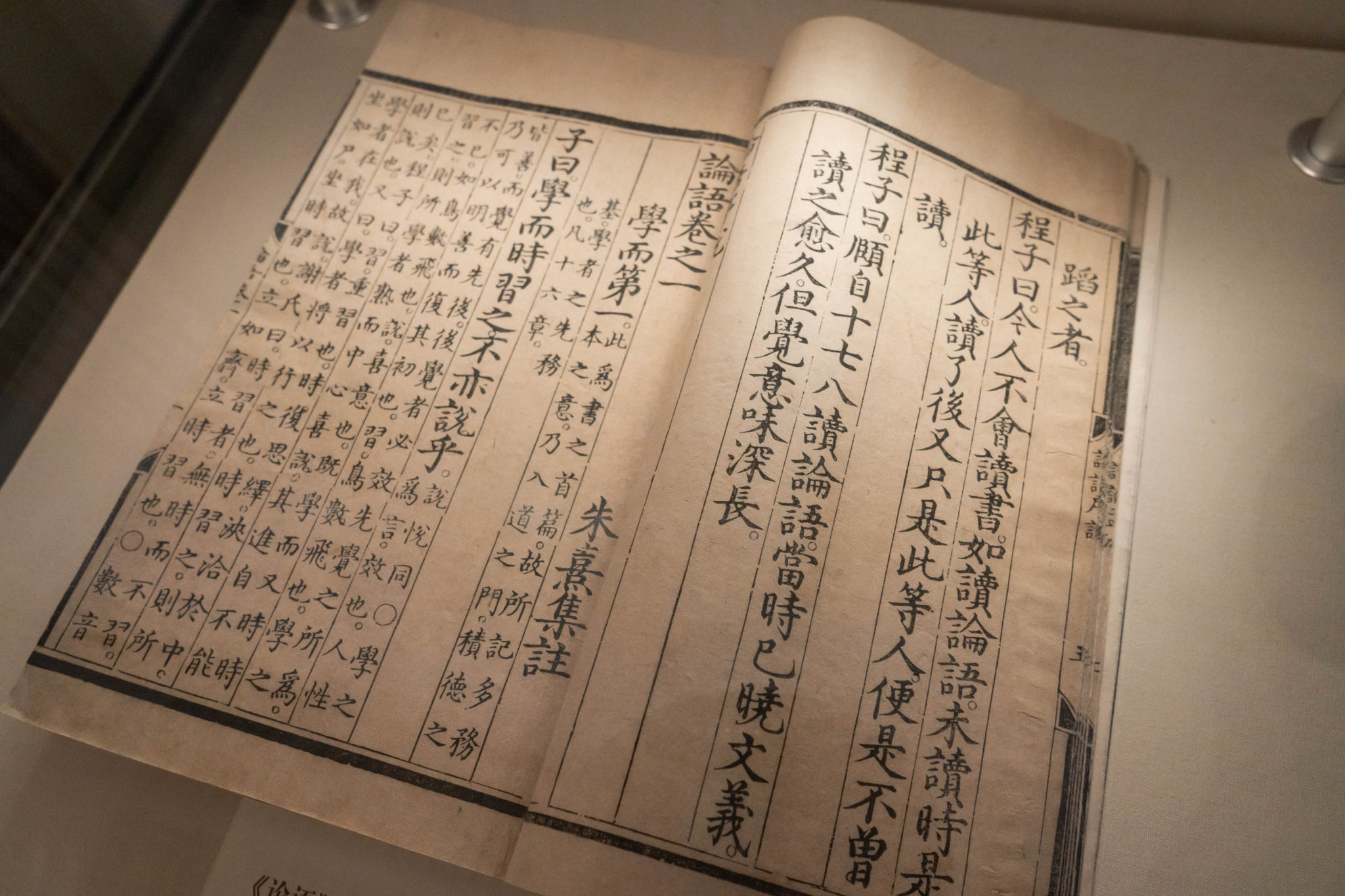
It is both. English splits rats from mice and Chinese doesn't, because 鼠 () names a body shape and a set of habits, and it stretches a long way.
It gives us 松鼠 (, squirrel), 仓鼠 (, hamster), 田鼠 (, vole) and 鼠标 (, computer mouse), along with 袋鼠 (), which is a kangaroo and therefore not a rodent at all. That breadth goes back to the character's oldest recorded definition: the Han dynasty Shuowen Jiezi, the founding text of Chinese character etymology, glosses it as the general name for burrowing creatures.
Chinese gets specific when it needs to, with 大鼠 () and 小鼠 (), but the default word covers both. Even the Hong Kong Observatory's English tables call it "year of the Mouse."
Two pronunciation traps
By third-tone sandhi the first becomes a rising second tone, so 老鼠 () comes out sounding like láoshǔ, while the spelling stays . We have a separate guide to tone changes in Mandarin if you want the full picture.
属鼠 () is two different characters sharing a syllable and a tone, so the same sandhi applies, giving something like shú shǔ. Note the reading too: in the zodiac sense 属 is rather than , and 我属鼠 () is the ordinary way to say "I was born in the Year of the Rat."

04 老鼠嫁女 (): the wedding of the mouse's daughter
Chinese folk tradition has a whole observance about rats, and English-language zodiac pages rarely mention it.
老鼠嫁女 (, "the rat marries off her daughter") is one of the most widespread folk customs in China, found across the Yellow and Yangtze river basins, and one of the subjects most often painted in New Year woodblock prints.
There isn't one date for it. County records put it on the tenth day of the first lunar month in Pingyao, Zixing and Zhenjiang, the seventeenth in Ningyuan, and the twenty-fifth in parts of the north, where it coincides with the granary festival.
All of those dates fall in the busy first lunar month, which also has the Lantern Festival on the fifteenth, while New Year celebrations are still going on.
What people do is more consistent. In most accounts the household keeps quiet and leaves the lamps unlit, so as not to offend the rats on their big night, and puts out salt and rice, cakes and sweets.
The reasoning is simple enough. If you disturb them for one night, they will disturb you for a year.
The prints are the best part. They draw the procession as a full human wedding, with the bride in red in a flower sedan chair, the groom on horseback and musicians and gift-carriers behind, while a cat lies in wait along the route. One version even shows the cat accepting a bribe.
The folk-art historian Wang Shucun had a practical explanation for the custom. The weeks after 立春 () are when rats breed and stored grain is at risk, so the prints, the granary-filling festival 填仓节 () and the unlit lamps worked together to get the children to bed early and the rats out into the open, where the cats could deal with them.
The Rat as a symbol of children
Abundance and full granaries are a hard sell for an animal whose classic image, 硕鼠 (), is eating the peasant's millet. The well-documented positive meaning of the rat is children, and the logic is a pun.
子 (), the Rat's branch, is the same character as "child," while melons and grapes are prized in decorative art for being full of seeds, 籽 (), a homophone. Rodent plus melon therefore reads as 多子 (), "many offspring."
The clearest imperial example is Bitter Gourd and Rats, painted by the Ming emperor Xuanzong in 1427, which scholars read as a prayer for the safe birth of an heir.
This often gets stated the wrong way round. The classic grapes motif pairs a squirrel with grapes, not a rat, and the rat's own version of the rebus uses the gourd.

05 What the tradition actually says about Rat personality
You probably already know the list: quick-witted, adaptable, thrifty, sociable, observant, a little acquisitive and a little prone to gossip. It turns up in American zodiac handbooks from the 1970s and in popular Chinese sources today in very similar words, so it is a real cultural object: a widely shared stereotype.
Classical doctrine is a different story. Sanming Tonghui, the great Ming compendium of Chinese fate calculation, has a whole chapter on the branches and the zodiac animals, which is exactly where you would expect a personality-by-birth-animal doctrine if the tradition had one.
It has no such doctrine. The chapter argues instead about why each animal is paired with each branch, and it reads character from configurations across the whole chart, not from the birth animal.
Practitioners today say much the same: in four pillars reckoning your birth-year animal is only one of eight characters, and personality is read from the chart as a whole with the day pillar as the reference point.
The modern English profile also comes from a hybrid source, since the publisher of the standard 1979 handbook describes it as combining the Eastern lunar calendar with Western solar-based astrology across 144 relationship combinations. A twelve-by-twelve grid of pairings is a newspaper-horoscope format, while the classical texts work from the whole chart.
Enjoy the trait list by all means. Just read it as popular culture, and keep it apart from what the classical tradition says.
06 Rat compatibility: the five classical relations
Compatibility is the part of zodiac lore with the deepest classical roots. The Rat's relations with the other signs come from five named relationships between the earthly branches, each with its own chapter in Sanming Tonghui and the same membership in Ming texts as in modern reference works.
Don't read it as a prediction about your real relationships, though. It describes traditional astrological relations between the branches.
| Relation | The Rat's counterpart | What the tradition holds | The mechanism |
|---|---|---|---|
| 三合 , triple harmony | Monkey 申 () + Dragon 辰 () | The three fuse into a single water formation; mutually reinforcing | Water is born at 申 (), peaks at 子 (), is stored at 辰 () |
| 六合 , six unions | Ox 丑 () | One yang branch joined to one yin; their energies combine of themselves | 子 () is yang, 丑 () is yin |
| 六冲 , six clashes | Horse 午 () | Direct collision; the strongest oppositional relation | 午 () is the seventh branch counting from 子 (), directly opposite it on the circle |
| 六害 , six harms | Goat 未 () | One branch overbears another; grudging and corrosive | The strong earth of 未 () over the strong water of 子 () |
| 相刑 , mutual punishment | Rabbit 卯 () | Water generates wood, so the two stand as mother and child, and afflicting each other violates proper order | Overlaying the water triad on the eastern trio of branches |
The classical text is clear that compatibility is conditional: the triple harmony only forms if all three characters are present, and if one is missing, the book says, no formation transforms at all.
Two people born in Rat years are not "compatible" simply by virtue of both being Rats. The relation depends on the rest of the chart.
Popular lists usually add the Rooster 酉 () to the avoid column by way of a sixth relation, 相破 (), which has no chapter of its own in Sanming Tonghui and is less well attested.
Otherwise the popular 宜配 () and 忌配 () lists map exactly onto those classical relations. So of all the popular zodiac material, compatibility is the part with a real classical pedigree.

Learn the language behind the zodiac
Almost everything on this page comes down to Chinese characters and words. At CLI your lessons are one-on-one, and you can take them online or in person in Guilin.
07 Lucky numbers, colors and directions
The Rat's link to north and to black or dark blue is a real tradition, and its logic runs through the five elements (五行, ). 子 () is the water branch, water is the north, water's color is black, and in the Hetu numerology water's numbers are one and six.
The lucky numbers and colors on popular astrology sites have no such logic behind them. They flatly contradict each other, and one site's lucky direction turns up on another's list of directions to avoid.
08 Your 本命年 () in 2032
If you were born in a Rat year, 2032 is your 本命年 (), the year every twelfth when the cycle returns to your own sign.
Popular belief says this is an unlucky year for you, because you "offend 太岁 ()," the star-deity who presides over the year in China's older religious traditions. The folk formula runs that when Taisui sits overhead, if there is not joy there will be trouble.
The usual countermeasure is to wear red: a red waist sash or red underwear, and in some places a strip of red cloth tied to your clothing. In Taiwan there is also a temple rite, 安太歲 (), where you register at a temple and Daoist priests chant, with offerings made on the fifteenth of the lunar month.

09 2020, and the year everyone talked about 庚子 ()
2020 was a 庚子 () year, the yang Metal Rat, sharing its designation with 1960, 1900, 1840, 1780 and 1720. That summer, Chinese social media filled up with the claim that 庚子 () years bring disaster.
Chinese historians and fact-checkers took the claim apart at the time. Go back two more 庚子 () years, to 1780 and 1720, and you land in a Qing dynasty golden age with no great disaster to show, which is why the list always starts at 1840.
The same debunking made a subtler point. In classical thought a stem-branch pair carried no good or bad fortune of its own, and whether it was auspicious depended on the occasion and the month.
One Qing prophetic almanac, the Dimu Jing, does forecast calamity for 庚子 () years. A Qing collection on medicine, the Wuyi Huijiang, holds that epidemics arise in yang years with six years excepted, and 庚子 () is one of the six.
10 Learning Chinese in the Year of the Rat
The Rat is a fine sign to have if you enjoy the language. It hands you a character broader than any English word for it, a hundred idioms that nearly all lean the same way, a dialect word descended from a tax, and a pronunciation trap you will meet in your first month of study.
If you can explain why 老鼠 () is pronounced láoshǔ but written , you are already ahead of most zodiac pages on the internet. You can do the same with the rest of Chinese culture once you can read the sources in Chinese.
We think the fastest way to get there is to learn Chinese in China, where you hear the idioms and dialect words every day and see the folk customs for yourself.
If you want to spend Chinese New Year in Guilin, plan around the holiday itself. Mira, our Admissions Manager, tells students that many of our teachers take time off over Chinese New Year and that our activities and meals stop for the break, so she suggests starting before or after it. Classes can continue through the holiday, though you may have a substitute teacher, and students who would rather travel for those days can make up the classes at the end of their program. It is a quiet stretch at the school, and one student wrote in their program evaluation that they wished there had been more activities for students during Chinese New Year. If you want the New Year customs as well as the lessons, our advice is to start a few weeks before the break, so you already have some Chinese to use when the holiday arrives.
If you would like to work on your Chinese with a teacher, CLI runs one-on-one lessons both online and in person in Guilin, and offers a free trial lesson if you want to see how it feels first.
11 Year of the Rat vocabulary
These are the Chinese terms used above, in the order they appear. CLI's HSK 4 graded reader on Chinese zodiac animals covers the whole cycle if you would like the same vocabulary inside a story.
| Chinese | Pinyin | Translation |
|---|---|---|
| 鼠 | rat; mouse | |
| 鼠年 | Year of the Rat | |
| 壬子 | the Water Rat stem-branch pair | |
| 立春 | "start of spring," a solar term on February 4–5 | |
| 干支 | the stem-and-branch (sexagenary) cycle | |
| 子 | the first earthly branch; also "child" | |
| 八字 | four pillars of destiny | |
| 子时 | the double-hour from 11pm to 1am | |
| 属鼠 | to be born in the Year of the Rat | |
| 老鼠 | rat; mouse (the everyday word) | |
| 老虎 | tiger | |
| 老鹰 | eagle | |
| 耗子 | rat; mouse (regional) | |
| 鼠耗 | a Ming-dynasty grain-loss surcharge | |
| 首鼠两端 | vacillating, unable to decide | |
| 投鼠忌器 | held back for fear of collateral damage | |
| 硕鼠 | "the big rat"; an extortionate official | |
| 松鼠 | squirrel | |
| 仓鼠 | hamster | |
| 田鼠 | vole | |
| 鼠标 | computer mouse | |
| 袋鼠 | kangaroo | |
| 我属鼠 | I was born in the Year of the Rat | |
| 老鼠嫁女 | "the rat marries off her daughter" | |
| 填仓节 | the granary-filling festival | |
| 籽 | seed | |
| 多子 | many offspring | |
| 本命年 | one's own zodiac year, every twelfth | |
| 太岁 | Taisui, the star-deity presiding over the year | |
| 庚子 | the Metal Rat stem-branch pair | |
| 五行 | the five elements |
12 FAQ
Which years are Rat years, and when is the next one?
Rat years recur every twelve years: 1924, 1936, 1948, 1960, 1972, 1984, 1996, 2008 and 2020. The next is 2032, running from February 11, 2032 to January 30, 2033.
Why is the Rat first in the Chinese zodiac?
Because it is attached to 子 (), the first of the twelve earthly branches, a sequence used to count days on Shang oracle bones by about 1200 BCE, long before any animals were written beside it.
Every story about why the rat, the great race included, came afterwards.
Is "rat" an insult in Chinese, and is it rat or mouse?
Chinese does have an unflattering rat, and the idioms all lean that way, but the dictionary keeps the zodiac meaning as a separate sense and Chinese has no equivalent of English's "rat" as an informer. As for rat versus mouse, 鼠 () covers both, along with squirrels and hamsters, and even kangaroos.
I was born in late January or February: which animal am I?
It depends which convention you use, and the answer flips depending on the year. Popular practice starts the zodiac year at Lunar New Year, while four pillars practice starts it at 立春 () on February 4–5, so check your birth date against both.
Which signs is the Rat compatible with, and does it mean anything?
In the tradition the Rat forms a triple harmony with the Dragon and Monkey and a six-union pair with the Ox. Its difficult relations are the clash with the Horse, the harm with the Goat and the punishment with the Rabbit. Those relations really are classical, but even within the tradition they depend on the whole chart, not on the birth animal alone.
What should I know about my 本命年 () in 2032?
Popular belief treats your own zodiac year as risky rather than lucky, and the customary response is to wear red. In Taiwan many people also register at a temple for the 安太歲 () rite.
13 Final thoughts
If you take one practical thing from this page, make it the dates. Anyone born between about January 20 and February 20 should check their birthday against both conventions before trusting a zodiac table.
And if you are a Rat and still a little disappointed, the Chinese word for your sign also covers squirrels and hamsters, which is better company than English gives you.
14 Sources
- Hong Kong Observatory. Gregorian–lunar calendar conversion tables; per-year files give the exact first day of each lunar year, the stem-branch designation and the English animal name ("year of the Mouse"). View source →
- Aslaksen. The mathematics of the Chinese calendar. Department of Mathematics, National University of Singapore. View study →
- Hu (2015). Is the zodiac reckoned from lichun or from Spring Festival? Academics are split too. Modern Express, via China News Service. View source →
- Zhang (2020). The Chinese 60-day/year and Mesoamerican 260-day calendars: a comparative study of cyclical calendrical systems and cosmology. Sino-Platonic Papers No. 305, University of Pennsylvania. View study →
- Chen (2025). From "day signs" to "birth signs": re-examining the source material on the origin of the Chinese zodiac. Chinese Intangible Cultural Heritage, via the China Intangible Cultural Heritage Network. View study →
- Cell Genomics (2025). The late arrival of domestic cats in China via the Silk Road after 3,500 years of human–leopard cat commensalism. Cell Genomics. Research led by Luo Shujin, Peking University School of Life Sciences. View study →
- Xiang (2021). The distribution and origins of the dialect words for "rat" (laoshu, haozi, laochong). Tsing Hua Journal of Chinese Literature. View study →
- Handian (zdic.net). Entry for 鼠 (): dictionary senses (zodiac animal; petty person or treacherous official; cowardly), the Shuowen Jiezi definition, and the common compounds. View source →
- Handian (zdic.net). Entry for 老 (): the prefix sense, whose function is word-formation. View source →
- Ministry of Education, Taiwan. Dictionary of Chinese Idioms: 首鼠兩端 (), defined as indecision, with antonyms meaning "to decide on the spot." View source →
- Ministry of Education, Taiwan. Dictionary of Chinese Idioms: 投鼠忌器 (), with the Hanshu source, quoted there as a village proverb. View source →
- Merriam-Webster. "rat": the noun sense "one who betrays or deserts friends or associates," and the verb "to betray, desert, or inform on one's associates." View source →
- Zheng (2025). Tone sandhi: tone changes in context, in Mastering Mandarin Sounds. University of Iowa Pressbooks. View source →
- National Art Museum of China (2024). "The rat marries off her daughter," from the museum's 60th-anniversary collection series. View source →
- Guangming Online (2020). The aesthetics of daily life in the folk-art subject "the rat marries off her daughter": regional distribution and Wang Shucun's pest-control reading. View source →
- Intangible Cultural Heritage China (2025). County-level dates and practices for 老鼠嫁女 () (Pingyao, Zixing, Ningyuan), via Tencent News. View source →
- Wenhui Bao (2020). Images of the rat in cultural artefacts: the rat-and-melon rebus for "many children." View source →
- Zhu (2018). On Ming Xuanzong's Bitter Gourd and Rats. China Art News. View source →
- Metropolitan Museum of Art. Ornament with Squirrels and Grapes, acc. 24.80.97; the museum label states the fertility rebus. View source →
- National Folk Museum of Korea. The rat in the Korean zodiac: fecundity, wealth and the north. View source →
- Wan Minying (Ming dynasty). Sanming Tonghui, juan 2: chapters on the zodiac animals and on the five branch relations, including the completeness rule for the triple harmony. View source →
- Lau & Lau (2019). The Handbook of Chinese Horoscopes: 40th Anniversary Edition. North Atlantic Books. Publisher description: combines the Eastern lunar calendar with Western, solar-based astrology; 144 relationship combinations. View source →
- Mocan & Yu (2017). Can superstition create a self-fulfilling prophecy? School outcomes of dragon children in China. NBER Working Paper No. 23709, summarized in the NBER Digest. View study →
- Zheng & Hu (2014). The culture of one's zodiac year: a plain folk custom's hope for happiness. Chinese Traditional Culture. View study →
- Zhang (2020). A history of gengzi years: are they really full of disaster? People's Forum, August 10, 2020. View source →
- Penny (2020). "2020: a gengzi year," in China Story Yearbook 2020: Crisis. Australian Centre on China in the World, Australian National University. View source →