CLI Turns Four!
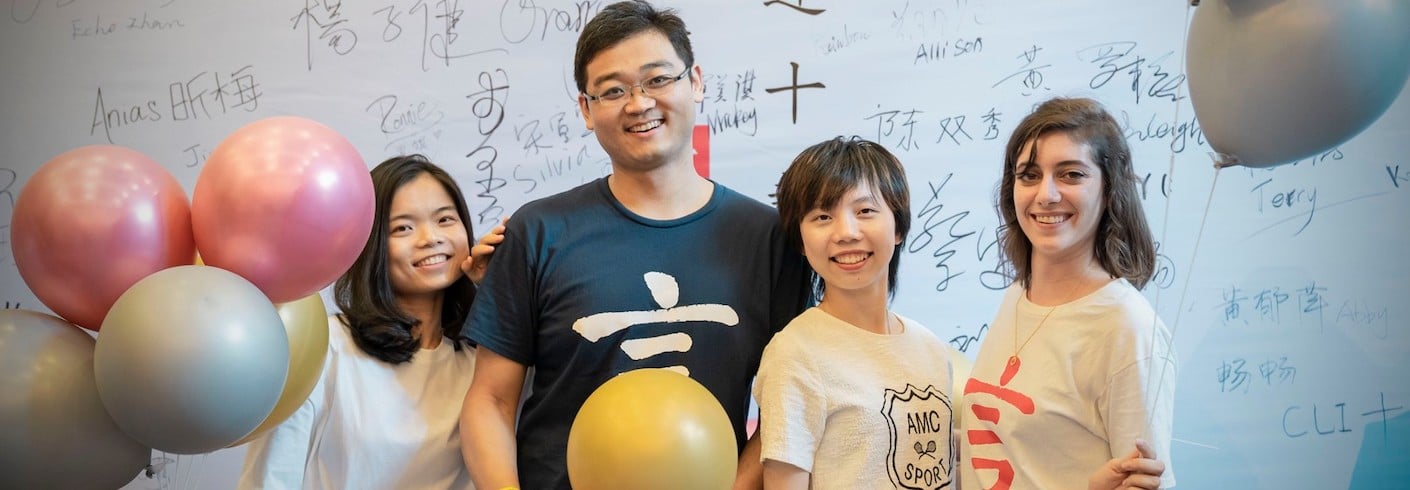
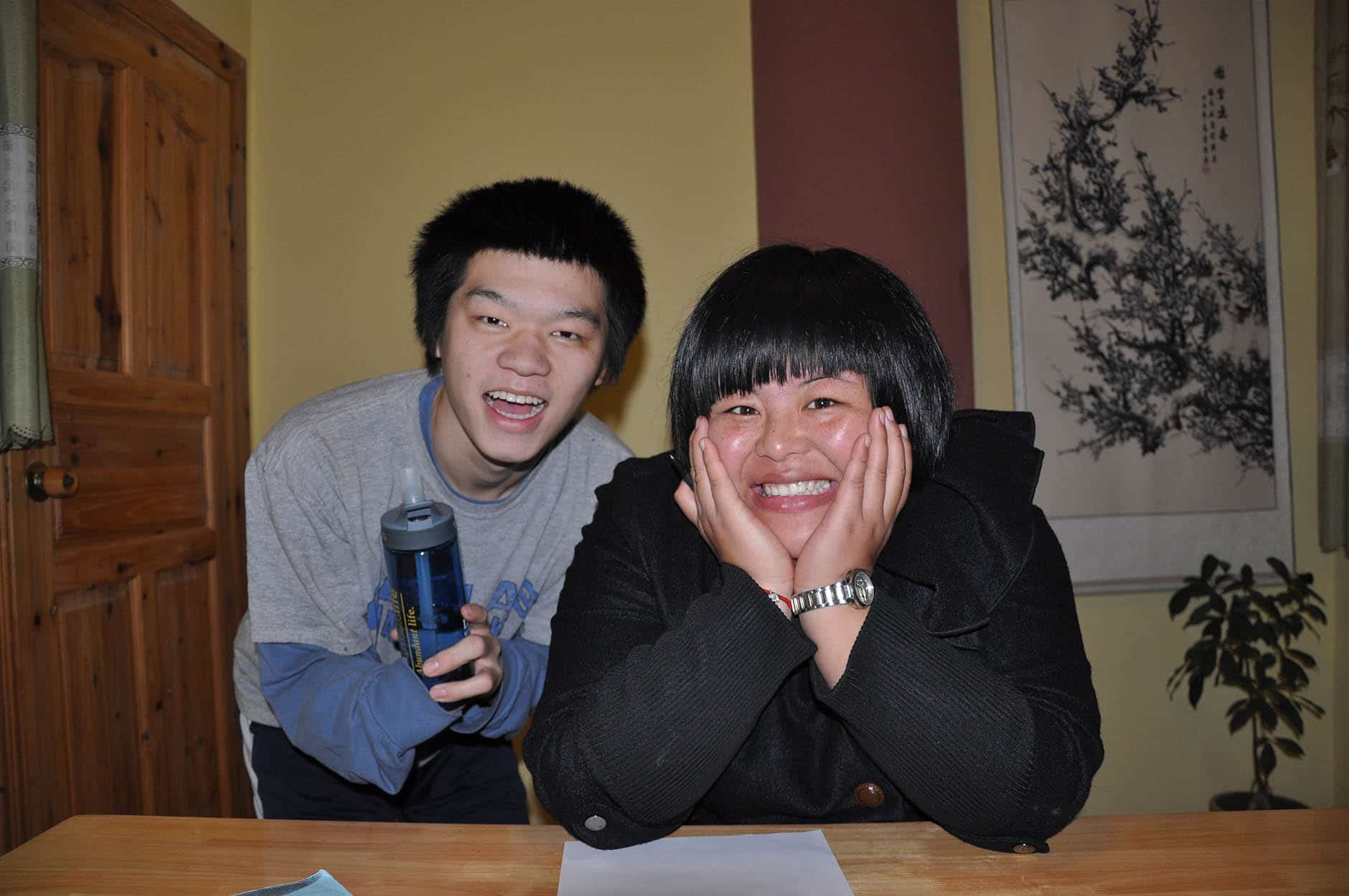
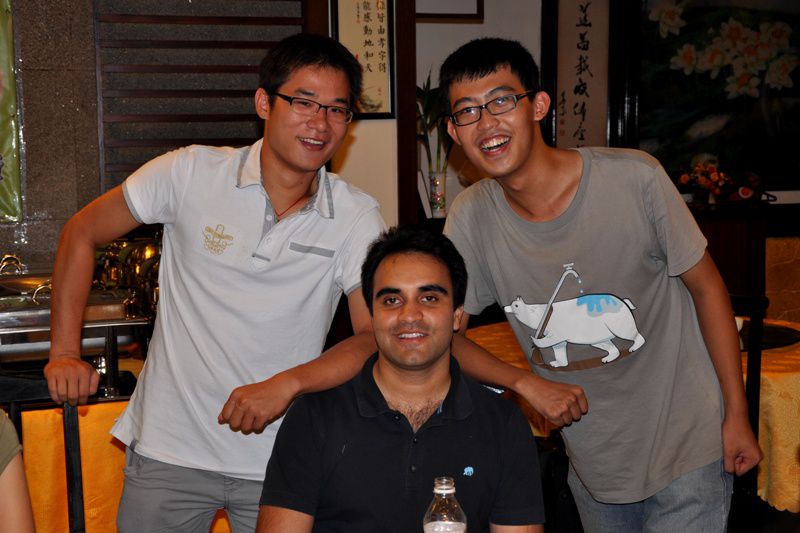
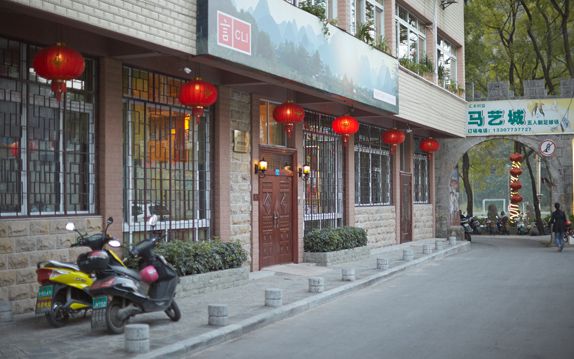
After 1460 days of fun, hard work and dedication, the CLI community came together this weekend to celebrate its four-year anniversary! Over the past four years, we have welcomed an unforgettable spectrum of friends and family to our home in Guilin, and we look forward to elevating our impact to new heights throughout our fifth year and beyond.
Year four at CLI witnessed great press coverage from the likes of Frommer’s and the China Daily, formed new strategic partnerships with educational institutions, enjoyed the addition of several talented new team members, and celebrated the completion of a comprehensive renovation to our 5-story learning center.
To celebrate CLI’s anniversary we bypassed pin the tail on the donkey, pointy birthday hats and piñatas for a cave dinner inside one of Guilin’s beautiful mountains. The cave had a magical atmosphere with a calm lake outside, red lanterns hanging overhead, sizzling Chinese cuisine, and most importantly, the warm sound of conversation and laughter.
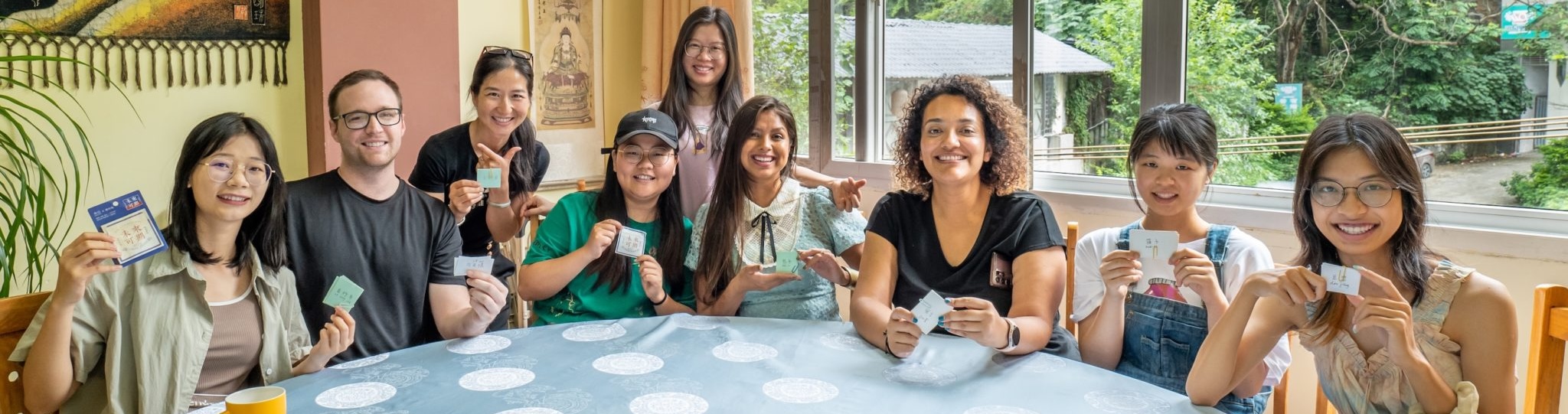
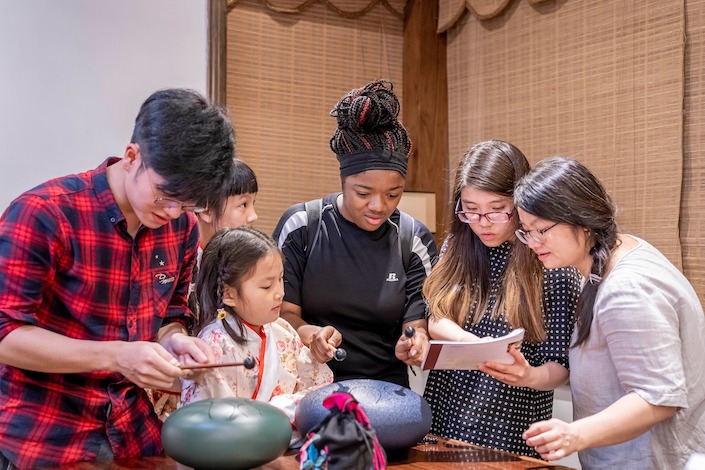
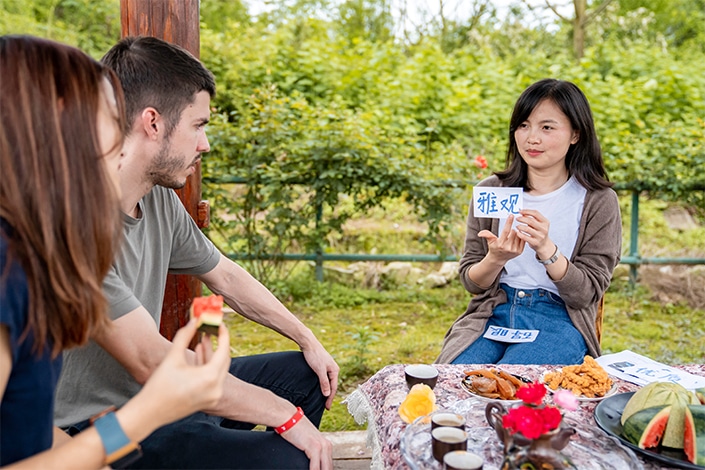
The anniversary party continued on Sunday with a vegetarian feast. CLI welcomed over 250 Guilin residents for an afternoon of great food, traditional Chinese music, paper cutting, and educational lectures. CLI strives to be a positive and integral part of the Guilin community, providing local and international students alike the opportunity to seamlessly immerse themselves within Chinese language and culture. For many locals it was their first time interacting with Mandarin-speaking foreigners – and boy were they taken back by our students’ Mandarin language ability!
As CLI continues to grow and expand its network throughout China and abroad, there is one thing that will always remain constant – our dedication to delivering a highly personalized cultural and language experience. We would also like to extend a big 谢谢 (xièxiè) to all former and current students, partner institutions, and all those who have put their trust in CLI. Without you CLI would not be possible.
CLI Perspectives #15
Bryan Herbert, CLI Immersion student, first came to China through James Madison University on a three month study tour. However, after the three months were over he felt something was missing. He had a hunger for more culture, more language, and more of a local experience. Bryan writes in this week’s CLI Perspectives how that hunger drove him to return to China where he now lives, works, and studies.
From Wuhan to Guilin: A Tale of Living in China
By Bryan Herbert, CLI Immersion student
Backpacking through China had been a dream of mine all throughout college. I wanted to see the beauty of China’s landscape and all the country’s unique faces. A dream, that while still in your head, seems like a wonderful, relaxing vacation, but once you put that dream on paper and purchase a plane ticket you begin to doubt yourself. Is this really what I want to do? I will be on the complete and utter opposite side of the planet!
I first came to China with James Madison University. I studied Chinese business and traveled for three glorious months. I can officially say that I have seen more of China than I have of the United States. But, after three months of having seen most of the country, and being spoon fed practically every step of the way, I was still left with a certain dissatisfaction in my heart, an emptiness that needed to be filled. I guess the adventure I was hoping to have was replaced by a lab experiment, where observations could only be made from behind a one way mirror and interaction with my environment was limited and difficult. Not to say I didn’t enjoy my summer seeing this wonderful place, but my hunger pains for adventure were uncurbed.
After a short return to America, I signed a teaching contract at a small private university in Wuhan, Hubei China. When asked why I chose to teach in Wuhan opposed to say Shanghai or Beijing, my answer was, “Have you ever heard of Wuhan?!” This was the adventure I had been waiting for. Most friends and family assumed I was going to a small town or even a village, but no. I was going into the jungle, and a concrete jungle at that. Wuhan, although not well-known outside the boarders of China, is a big, filthy, industrial city in the heart of China with about 12 million people. That’s right, 12 million! This is the REAL China. This isn’t the highly westernized regions on the coast of the China Sea, where life for a foreigner is certainly easy and lavish. This was the lifestyle that your average Chinese was used to. That is what I wanted.
After my arrival and the initial few days of regret, I was starting to warm up to my new home. Wuhan, lacking in a much needed system of metro lines, is quite the task to explore. That being said, after six months living here, I still have not seen half the city. A Wuhan specialty, hot dry noodles, has stolen my heart. A mixture of sesame paste, soy sauce and vinegar served over flash boiled noodles with pickled vegetables quickly became my meal of choice for breakfast, lunch or dinner – sometimes all three. This “working class” meal can be found all over the city with everyone claiming to have the best recipe. While competition is fierce, the art of making hot dry noodles is highly respected. For a taste of this commonplace working man’s breakfast, one must venture into the heart of Wuhan. No other city in China does it quite the same.
During the bitter cold winter in Wuhan I decided to retreat south to Guilin for a month of relaxation, warmth and intense Chinese language studying. In comparison to Wuhan, Guilin has quite the delectable staple noodle dish as well. Guilin rice noodles are a force to be reckoned with. They are a sauce mixture of savory and sour with mouth watering pork slices – this meal can also be enjoyed at any point of the day. Although the two cities of Guilin and Wuhan share equally delicious foods, they are quite different as cities. Guilin is a wonderful combination of local yet urban, Chinese yet cosmopolitan, and fantasy yet reality. The majestic mountain ranges that seem to be straight from a J.R. Tolkien novel are seamlessly woven throughout the city.
The city provides many local parks which are great for day hikes to the top of these peaks – you will want to climb as many peaks as possible as each one provides a unique view of the city. You don’t have to go too far from your door to find landscapes that leave you questioning the busy world around. After my stay in Guilin, it was a grueling wake-up call to return to the place I had been calling home, Wuhan. I will surely be going back to Guilin soon, as the strides I was able to make in my Chinese language ability were off the charts.
As for the people of Wuhan, the subtleties of their daily lives are certainly foreign and largely varied. From one side of the city to the other, as well as from lower class, day worker to the upper class, government official one can see there is something that inherently makes everyone Whuanese, and, in parallel, something that makes them all so different. The simplistic life that so many people embrace is strange given the fast paced, ever-growing city they live in. For example: the hundreds of men and women who scatter the city to independently sell roasted sweet potatoes, day-in and day-out, from recycled 55 gallon drums. But, those who have risen to the occasion and already reached the top can easily be spotted in their flashy cars and overpriced clothing. The struggle of those trying to climb the social ladder at an insurmountable pace is from time to time saddening. However, you almost always see a hint of a smile on their faces as routine work, no matter what it may be, does not keep them from enjoying the pleasures of life.
I hope to return to Wuhan sometime in the future, expecting to see a city quite different city from the one I lived in. I will miss this place when I go, but I will take with me the memories of the things I have seen, the people I have met, and the lessons I have learned.
CLI Perspectives #14
This week’s CLI Perspectives is brought to us by Chris Nguyen. Chris has always loved travelling, but doesn’t like the feeling of being a tourist. CLI’s Teach in China program gave Chris the opportunity to fully explore Guilin and live life as a local. From hanging out with his students to learning Mandarin, Chris had an experience he won’t be forgetting anytime soon.
Crossing the Street in China
By Chris Nguyen, CLI Teach in China participant
One of the first things I had to learn when I came to Guilin was how to cross a Chinese street – easier said than done. But I got used to it and it taught me that when studying in China, everywhere becomes your classroom and you’ll end up having some unexpected lessons.
I spent the past fall semester teaching English to university students. Fresh out of college, I was thrown into the other side of academia. I was now the one standing up at the board, not one of the students sitting at a desk. Teaching students that were my age was a strange experience, especially since I blended in with them (I am of Vietnamese decent)! Getting through to students that didn’t know much English, while at the same time not knowing much Chinese, was a huge hurdle, but I learned to overcome it and by the end of the semester I was eating out at restaurants and playing badminton with them. If that doesn’t make me one of them cool teachers, I don’t know what does.
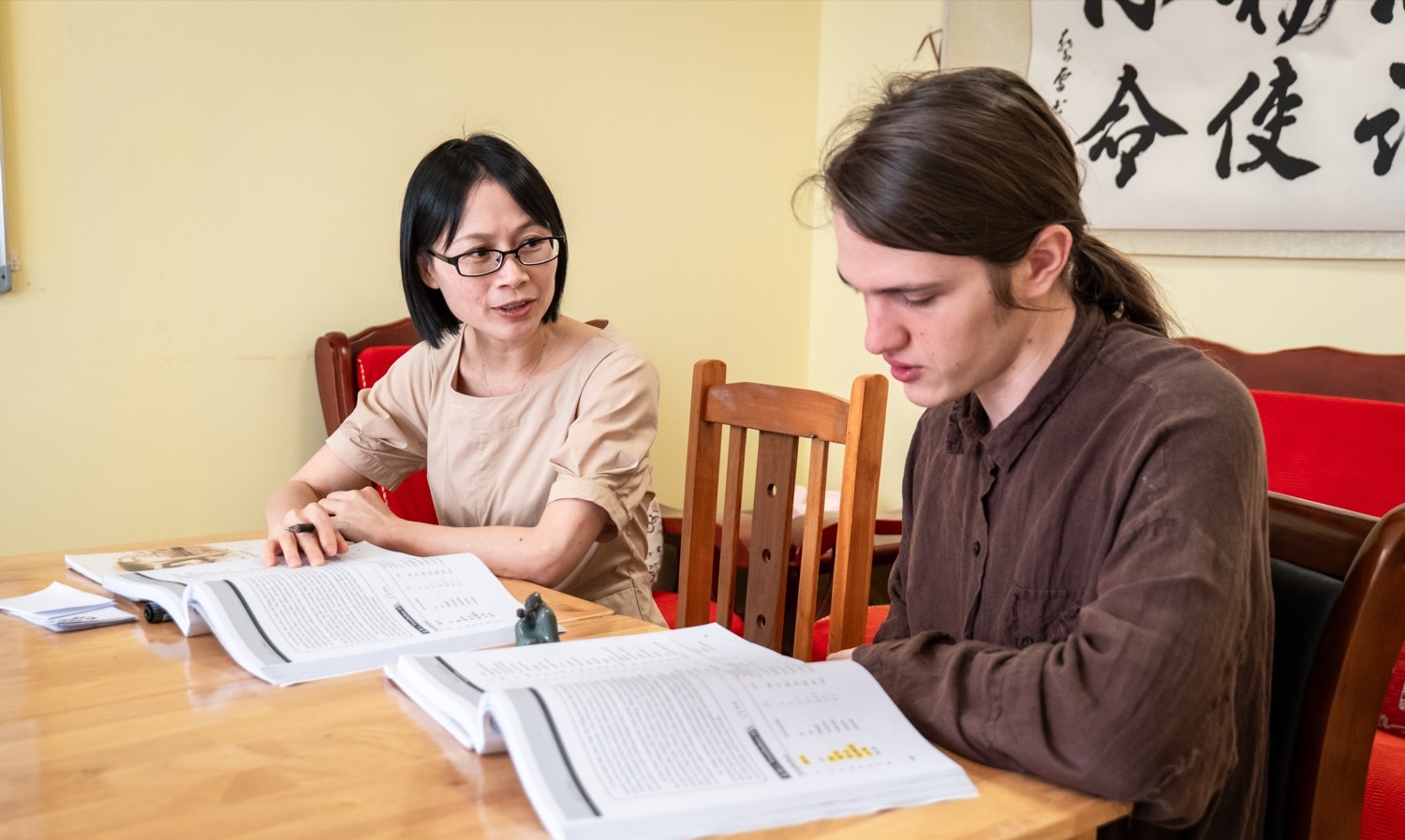
Speaking of cool teachers, CLI has a lot of them and they’re all capable of improving your Mandarin. I’ll be honest, as an English teacher, you may not have as much time to learn Mandarin as you would like. Teaching English lessons, planning them, and grading papers won’t leave you as much time for studying as being a study abroad student would, but you’ll be surprised how much you will still pick up. From there, you can improve your Mandarin language with the CLI teachers.
As someone of Asian descent, I didn’t get all of those random “hellos” aimed at foreigners you hear about in the brochures. Instead, everyone thought I was Chinese and so I was handed the menu every time I went to a restaurant, despite not being able to read Chinese characters. I was also expected by Chinese people to translate whenever I was with Caucasian friends. This resulted in me ending up with some great travel stories. One girl even asked me for an autograph one time! Who knows, maybe she thought I was famous.
Living in Guilin for a semester got me through of one of my biggest gripes about traveling – not staying in one place long enough to let it all sink in. Usually whenever I travel, I’m only there for a couple days or weeks. That’s not enough time to get through the initial “honeymoon” phase of traveling, which degenerates to me taking a lot of photos that one could Google. A whole semester let me really get to know what’s in and around Guilin and get a feel for how the locals live. I got the complete experience of living in Guilin. If anything, I learned to better appreciate indoor heating and clothes dryers as they are scarce here!
Guilin is a great location for traveling. Places like Shanghai, Hong Kong, Indonesia, and Vietnam are only a couple of hours away by plane. If you’re going to fly, I suggest saving up money before you get here. Your teacher’s salary allows you to live very comfortably in Guilin, but you may want extra money for traveling. Now, while I don’t like going to a place only to end up with pictures, although I do take a lot of them, I do like meeting up with friends when traveling and sampling the local food.
Teaching in Guilin has definitely been one of the highlights of my life so far and was a path worth taking. Meeting and making friends with people at CLI is something I won’t be forgetting anytime soon. You always meet the most interesting people while traveling and Guilin is a place worth spending a bit of time in.
CLI Perspectives #13
Mark Robinson, founder and president of HandicappedPets.com and the inventor of the Walkin’ Wheels adjustable dog wheelchair, was initially motivated to learn Chinese strictly for business reasons. He wanted to better communicate with Chinese manufacturers. However, Mark quickly realized that learning about Chinese language and culture provided him a sense of discovery and enjoyment other subjects simply couldn’t provide. Below, Mark shares one of his favorite cultural exchange moments from studying in Guilin.
The Adventures of Living in China
By Mark Robinson, CLI Immersion Student
One of the highlights of my stay in Guilin was the Sunday I spent going to English Corner. Sunday was a warm and sunny day. People still had their jackets on, but the sun was out and you could see a few patches of blue sky peering through the clouds.
My friend Edwin in Nashua recommended I meet some of his friends while staying in Guilin. They are the organizers of the Guilin English Corner that meets every Sunday at 10 AM. Like most of my excursions I had no idea what to expect.
Edwin had given me the QQ (China’s popular instant messaging software) address of Lisa, who sent me the location, in Chinese, of the place I was to meet them. I carefully copied the characters for the address on notepaper to give the taxi driver. He dropped me off about 30 minutes early and I went in search of breakfast.
Looking through American eyes I saw a dirty, open storefront where a toothless old man takes 3.5 RMB (about US$.56 cents) from the dozen or so people in line. As they get to the window, a matronly woman spits a few questions then serves a bowl of noodles from a makeshift pot adding chunks of brown stuff, a handful of green stuff, and a spoonful of balls of something-or-other. The people take the bowls to a table with a dozen cups of condiments, add several, and then sit on kindergarten-style plastic stools on the curb where they prod their food with chopsticks until it slides into their mouths.
My turn. She asks her questions. I nod and say “hào” (good). Sometimes you can nod and say “hào” and everything works out fine, no luck this time. She asks again. I have a line in reserve, just in case. “Wǒ shuō zhōngwén shuō de bù hǎo, kěshì wǒ hěn è.” This translates roughly to, “I cannot speak Chinese well, but I am very hungry.”
Success! She smiles, chuckles, and points to various pots and I keep saying “hào” as she adds a spoonful of their contents to my bowl of white rice noodles. There are four kinds of meat on the cutting board. She waves her finger and I point to one – pork, I’m guessing (guessing is always an adventure). I added a few condiments like I watched others do, found a stool, and began my chopstick attack. I’m good, but the noodles were better and I spent the next 15 minutes slurping up an incredibly delicious breakfast.
A quick side note, as I’m sitting on a large rock riverbank writing this on my iPad four young boys, maybe 6 – 8 years old, just came up to me, tentatively, oozing curiosity. “Nǐ hǎo“, I said with my most friendly smile. One child answered, “Hello”. They giggled, started to back away and I answered, “Hello, how are you.” They thought this was hilarious and answered, almost indistinguishably, “Fine thank you. How are you?” (more about this exchange later…) and ran off down the beach laughing.
English Corner was wonderful! About 50 people of all ages met outside on the local library steps. Lisa and Ammi introduced themselves. Chinese people choose English names because we can neither remember nor pronounce their real names. This group, some of whom can speak only a few words of English, others almost fluent, meets for no other purpose other than practicing English.
Immediately, I was the star of the show. I was surrounded by people introducing themselves. The standard introduction was this:
Them: “Hello.”
Me: “Hello, how are you?”
Them: “I’m fine, thank you. How are you?”
They are taught this from an early age as a polite introduction. Much like the boys on the riverbank I mentioned previously, if they can only say a few English words, these are they.
Mothers would push their young children up to me and say, “Talk to him. Ask him where he is from. Ask what his name is.” They would dutifully try, usually succeeding quite well. Some of the older boys and girls were able to carry on a conversation and took this opportunity to do so.
People settled down and the speech portion of English Corner began. People would come up to the microphone and give a one or two paragraph speech about their upcoming vacation. One 8 year old girl read a prepared speech about how we have to take better care of the planet. Another young boy sang a “Happy New Year” song.
Then they asked me to say something. I said a few words about the designated topic: winter vacations in America. I was asked questions like “What did you do for Christmas?” and “What do you think of National Day?”, which someone else corrected as Independence Day. They all wanted to have their picture taken with me. I felt like a movie star.
Afterwards, they gave me a wonderful lunch, took more pictures, and we continued our discussions in English, Chinese, and strange combinations of the two.
As I learn more of the Chinese language, it somehow brings me closer to the people I’m passing on the street. Although this is my sixth trip to China, I’ve never felt as connected as this. Many ancient wisdoms speak of the power of knowing a name. Indeed, walking through the woods is a different experience when you can name each of the plants and trees you pass. Just so, walking in the streets of China, knowing a few of the words I overhear and having the ability to read bits and pieces of the signs I see brings me closer to my surroundings. The world is more in focus.
The Year of the Snake at CLI
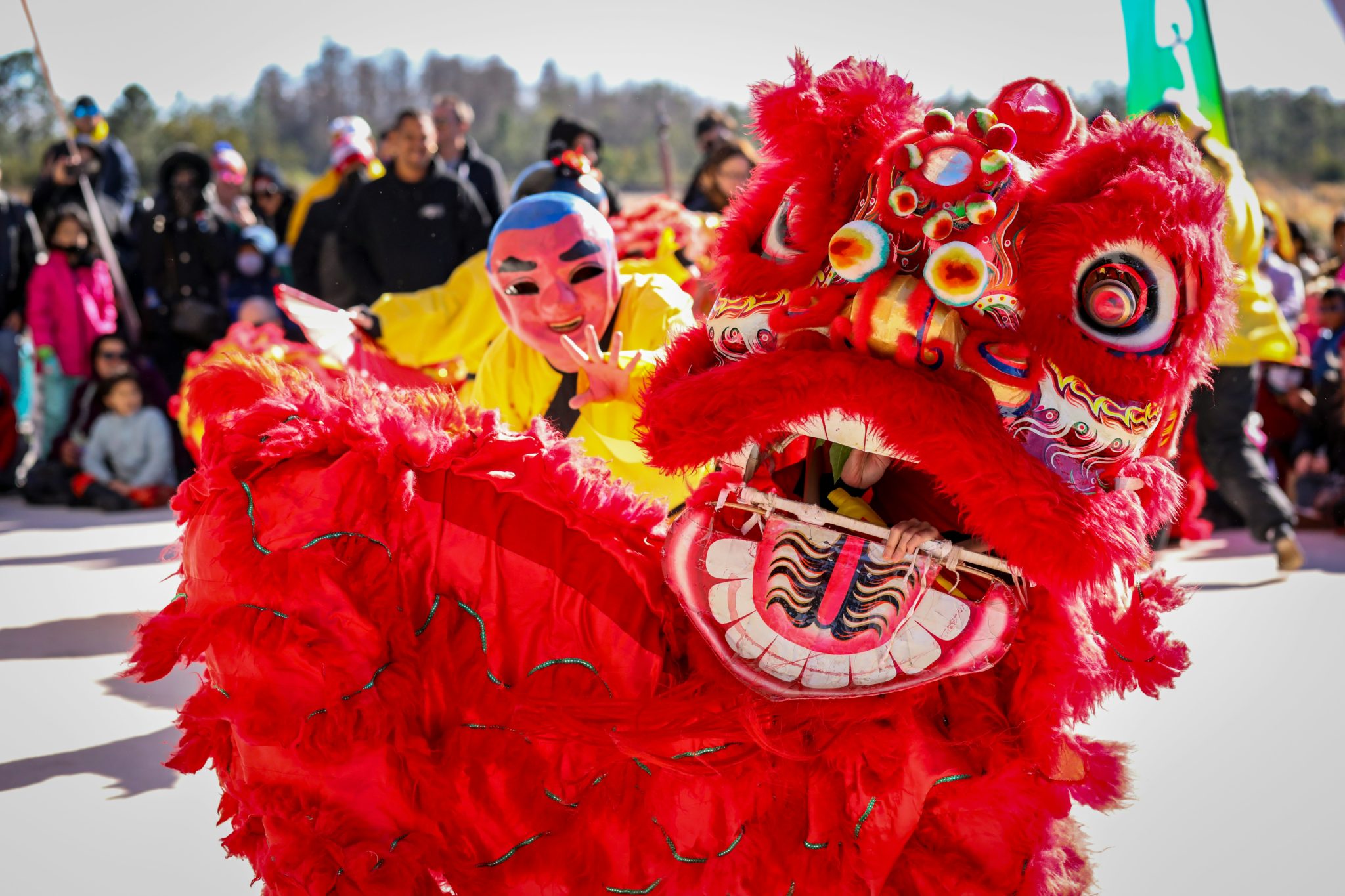
The lunar calendar is coming to an end, meaning it is time to celebrate one of China’s most traditional holidays. Chinese New Year (also referred to as the Spring Festival) marks the end of the winter season and the beginning of a new Chinese Zodiac.

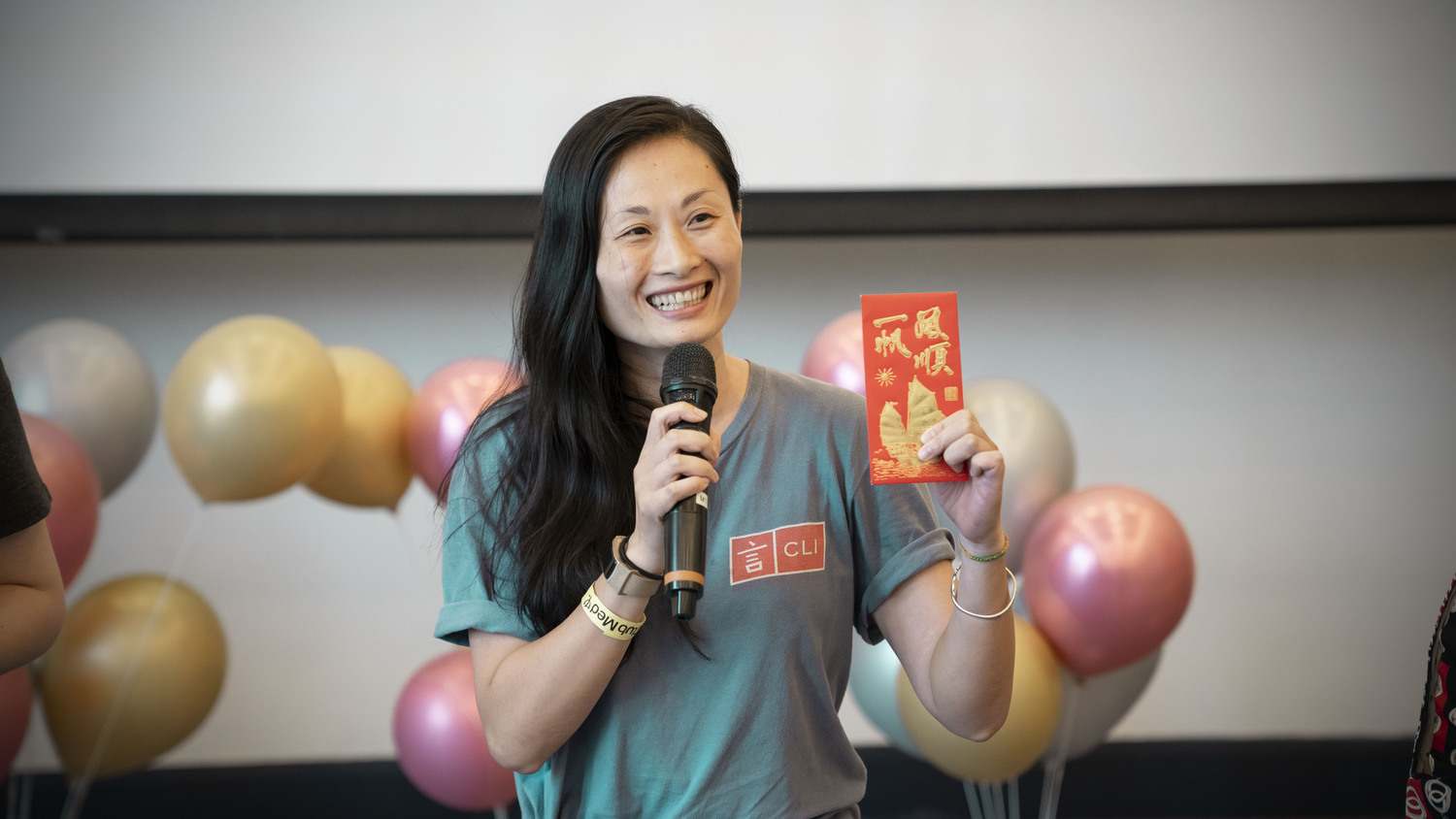
Red envelopes (hóngbāo) are traditionally filled with money and given as gifts during Spring Festival.
As the Year of the Dragon comes to a close, CLI students and teachers are preparing their Spring Festival travel arrangements. Most teachers are planning to return home to visit family and friends, while students are using the vacation break as an opportunity to test their Mandarin language skills outside the classroom. Some students will accompany newly made friends home to have a traditional Spring Festival experience and others will use their vacation to trek across China.
One of the more popular travel destinations is Harbin. Harbin is home to the world famous International Ice and Snow Sculpture Festival. As the festival’s name suggests, Harbin can be quite cold. However, the chilly temperatures do not deter travelers from around the world wanting to see, firsthand, ice sculptures that can reach heights of over 48 meters.
No matter where one will be over the Spring Festival, there is one thing that you will be sure to hear – fireworks. Firecrackers are traditionally lit throughout the Spring Festival to scare away evil spirits and to signify a joyful time of year. Some of China’s bigger cities have been known to ban firecracker use during certain times of the year, but this ban is lifted during the holiday season.

CLI's last activity before the break was a goodbye dinner for Mark, Harry, and Bryan. We hope to see them back in Guilin soon!
The Year of the Snake or, as some Chinese say, the Year of the Small Dragon is going to be an exciting one at CLI. We are thrilled to announce the completion of a comprehensive renovation of our 5-story language learning center. After the vacation break, we will be posting a photo tour of the new additions. The Year of the Snake also brings new CLI Perspectives and fresh opportunities to immerse oneself in Chinese language culture with CLI’s Pengyou Program and newly expanded fully customizable faculty-led study tours.
Be sure to keep checking our blog and Facebook page for all the latest happenings at CLI.
春节快乐!
Studying Chinese in Nature’s Hot Tub
There may not be snow in Guilin, but winter is still winter and with the changing seasons come new opportunities to experience Chinese culture. Last weekend, CLI students partook in what some locals deem a winter tradition by traveling into the mountains for a soak in the hot springs.
The hot springs, or nature’s “hot tub”, provided students the opportunity to relax in the mountain’s natural beauty without feeling the effects of its cool, stinging wind. Besides being surrounded by scenery fit for a postcard, the sulfur springs are also believed to have many health benefits. The sulfur springs are used to treat ailments ranging from arthritis to skin irritations to high blood pressure.
After a relaxing day, students sat down for a traditional Yao minority dinner. Students enjoyed homemade rice wine, local produce, and the traditional Spring Festival meat, làròu. Yao minority women are known for their colorful handmade clothes, silver jewelry, and long hair. Their hair often reaches lengths of over one meter.
The next morning, as the sun climbed over the mountains and steam billowed off the water, students return to the hot springs for an early morning soak before hiking to a nearby village for lunch. The consensus amongst students was that everyone should have the opportunity to start their day in this tranquil manner. Once in the water it was tough to leave, but a flowing waterfall and lunch were waiting in a nearby village.
To get to the nearby village and waterfall students trekked alongside a meandering river. The water rushing over rocks and quacks of webbed foot inhabitants provided the optimal hiking soundtrack.
At the village students had the opportunity to practice speaking Chinese by ordering lunch. After lunch was ordered, students relaxed near the local waterfall while waiting for the food to be prepared. A hot pot lunch was eaten outside in the shadow of the mountains. Food was plentiful as each student did their best to finish the heaps of food that were placed before them.
After lunch, it was time to hike back to the van that would return us home to Guilin. It was tough to say goodbye to the comforts of the hot springs, but with Monday fast approaching and homework still needing to be done it was time to go. It’s a safe bet to assume many wished CLI had its own nature’s “hot tub” to relax in.
Guilin is Full of Warm Holiday Cheer
Trees inside living rooms, lights draped on houses, jolly old men in red suits ringing bells outside department stores, and cars pouring into shopping mall parking lots are all common sights and sounds this time of year in the West. Western holiday traits may be at a minimum in the Middle Kingdom, but the warm feelings, content smiles, and family togetherness that come this time of year are not lacking in Guilin.
December in Guilin continues to be filled with activities ranging from excursions to see the colorful Chinese tallow trees to homemade cake baking to a lesson on how to play the gǔqín. Each activity provides a new opportunity for students to demonstrate their Mandarin language ability, share Chinese culture, and connect to local residents on a personal level.
December’s first weekly Chinese culture class gave students the pleasure of learning traditional Chinese music from a gǔqín master. The gǔqín is a seven-string Chinese musical instrument and playing one is truly an art form. The students were excited to have the opportunity to learn this ancient skill. It may not have been “Jingle Bells”, but CLI’s halls echoed with satisfying music.
After a diligent week of studying and teaching Mandarin Chinese, students and teachers shared a relaxing weekend afternoon alongside the Li River on Wujiu Island. Wujiu is known for its colorful tallow trees. The tallow tree’s leaves change with the seasons from pale green to yellows, oranges, purples, and reds, rivaled only by the maple tree on the color spectrum. A relaxing afternoon in the fresh air provided the perfect motivational recharge for the coming week’s Mandarin lessons.
Last weekend, students took their Chinese language skills to the kitchen to learn how to bake a cake. Baking seemed appropriate given the season and the warm atmosphere provided the perfect opportunity to apply one’s classroom lessons to real life situations. No one claimed to be the next Martha Stewart, but with a seal of approval from our baking instructor, new vocabulary words learned, and a sweet treat to show for our hard work, the afternoon was deemed a success.
CLI Featured in the China Daily!
More great news from the Chinese Language Institute! Another major publication recently featured an article about CLI — this time it’s the China Daily. The article takes a look back at the founding of CLI, detailing the journey that Robbie and Brad Fried embarked on to start the institution. Please also feel free to visit the China Daily website for the original story.
Let’s learn Chinese
9 December 2012 by Mike Peters | China Daily
A family-based business from the United States has settled in Guilin, Mike Peters learns, and has introduced an innovative yet practical method of learning Mandarin.
If Virginia native Brad Fried liked milk, there’s no telling where his younger brother Robbie would be today.
When the elder Fried came to Beijing in 2001 as a 22-year-old vegan, he was delighted to find that, unlike in the West, he didn’t have to worry that dairy products lurked in all sorts of prepared foods.
That helped him to settle down to a happy life as an expat, first as an exchange student and later as an English teacher in Guilin, Guangxi Zhuang autonomous region.
And that set the stage for his brother, who came out for a three-week vacation in 2006 and heard his own siren song.
“I’d been here about two days, and I was hooked,” Robbie Fried says. “For me it was the language. My experience with foreign languages before was in a classroom on the east coast of the US. It was basically an academic exercise, with no tangible benefit.”
“But when I came here, and saw how quickly you could connect with people, how excited my language partner was – it was just real.”
So instead of going home after his scheduled holiday, the younger Fried spend two months memorizing vocabulary and then taking it to the street.
The experience stimulated him to enroll in formal Mandarin study at a top Chinese university. But instead of getting the big boost he expected, Fried hit a brick wall.
“It was like I’d carried the old classroom experience across the ocean,” he says. “There were a thousand foreigners studying Chinese – completely sectioned off from the university environment. We walked to class with other foreigners, where there was one Mandarin speaker in the room – the teacher. So English was the medium of communication among ourselves, whether in class or segregated in our dining hall.”
In Guizhou with his brother, Mandarin had been organic and alive – a way to connect with people, to buy bread and cabbage, and to find your way in a new culture. In Beijing, it was suddenly theoretical, something in a book.
Lots of Americans have an itch to learn Mandarin and instruction has grown by a factor of 12 in the past decade, he says.
“So at that point it was my goal to tear down all the barriers.”
“Sparks flew when I combined three factors,” he says. “There was a huge market for Mandarin learning, the quality of service was insufficient, and most foreign students were being overcharged.”
Overcharged?
“Most foreign students – Americans, anyway – come to China to study through their home university,” he says. “That means they are paying the US tuition rate.”
Fried himself had chased scholarships and took out a student loan for courses that cost about $10,000, only to discover he could have paid about one-tenth that amount by enrolling directly.
If only he had known how.
So the two brothers put together a business plan for Chinese Language Institute, where they would teach the way Robbie had learned from Brad, in bite-sized pieces, intensive but not overwhelming.
They approached a group of businessmen who worked with their father, borrowed $10,000, and CLI was born in Robbie’s dorm room at Tsinghua University.
Soon the brothers had rented a three-bedroom apartment and held classes in the living room. They say a chalkboard was their biggest investment in teaching tools.
The Frieds had one student at first in 2009, four at the year-end winter term, and five the next spring. But they stayed focused.
“I wasn’t turned off by the low turnout,” Robbie Fried says. “I was confident that we had something special.”
By the end of 2010 they had 42 students, and the numbers have doubled each year since, reaching about 200 today.
The loan was repaid the first year and the language school now thrives in a five-story building in scenic Guilin, with a strong base in the community.
Despite it’s professional staff, CLI is still a family affair. A third Fried brother runs the company website, and mom Nancy Fried works as director of admissions from her home base in the US.
Besides its own immersion courses in Mandarin, the institute staff runs a semester-abroad program at Guangxi Normal University, where it has 13 classrooms, and helps Americans secure English-teaching positions from middle-school to university level.
That includes many Asian-American students who can speak perfect English and have a head start interacting with the culture, says Fried.
Many incoming Americans are part-time Mandarin students at CLI and part-time English teachers in local schools simultaneously.
The brothers negotiated a three-week study tour with Virginia Tech, Robbie’s alma mater, that was a huge success and started word of mouth that the Frieds credit for CLI’s growth.
Virginia Tech students can claim course credits for studies done at CLI.
The institute’s programs last from two weeks to a year, with tuition costing from about $700 for two weeks to slightly more than $19,000 for one year, depending on the program and accommodation. The institute grossed more than $160,000 in its first year, Fried says.
Nicholas Gacos, a student in that inaugural study tour, told a Virginia-based newspaper that, “We crammed so much learning into those three weeks. The things we did, and saw, and ate, and the people with whom we interacted It was an unbelievable learning experience.”
Understandably, the Frieds think US President Barack Obama’s project to boost the numbers of Americans studying in China from about 14,000 to 100,000 in four years is a great idea.
“It’s a wise investment,” says Robbie Fried, who is now 26. “And the starting point is breaking misconceptions about China, ideally with high-school students.”
CLI Perspectives #12
Nati Tamir, former Ambassador of Israel to Australia, New Zealand, and Finland, has been to many places around the world, but not until recently did his life long dream bring him and his wife, Daphne, to China. As he shares in this week’s CLI Perspectives, his dream for Mandarin proficiency was closer than he realized. In the midst of studying Chinese in China, he stumbled upon the true secret of CLI allowing his dreams to become reality. What’s the secret that he discovered? Read on to find out!
The Secret of CLI
By Nati Tamir, CLI Immersion Student
Acquiring some knowledge in basic Mandarin Chinese has been a dream of mine for a very long time and living in China has been on my mind for just as long. A year before retiring from over four decades of work, I started to explore the possibility of making my wish come true.
After committing myself and doing a bit of research, I soon discovered a school located in Guilin called the Chinese Language Institute (CLI). My wife, Daphne, and I decided that CLI was the school that would allow us to reach our dreams. Soon thereafter, my wife and I joined the CLI student body and were ready to start our adventure. The warm welcome we received from the faculty and fellow students at CLI, as well as the citizens of Guilin, had convinced us both that we had made the right choice.
We did not expect that that our six month stay would enable us to become proficient in a language that is seen as complex and intricate as Mandarin Chinese. Nevertheless, throughout our immersion studies we were able to decipher the language’s complex structure. All the while, we were able to live among local Chinese people and experience their fascinating, ancient culture and traditions first hand.
The secret of CLI lies, first and foremost, within each and every member of the CLI team. From the teachers to the administrative staff, no words can possibly describe each member’s dedication and devotion to enriching the lives of the students. Studying Mandarin Chinese through a one-on-one teaching structure is the greatest way of ensuring full immersion into the learning process. The knowledge gained at CLI allowed my wife and I to travel across China for more than a week and enjoy, with no hitch, every minute of our newly acquired ability to communicate with the local people.
CLI students spent this past Sunday on a cultural tour of the Guilin countryside. We may have started a little early for some, but after a quick breakfast at the local bāozi (traditional steamed bun filled with meat or vegetables) shop, everyone was energized and ready for the day’s events. The first stop on the cultural tour found students at a local art school. Young children’s shyness and nervousness quickly turned to smiles and amazement as CLI students demonstrated their Chinese language ability. After the ice was broken, CLI students were given a traditional painting and calligraphy lesson. Laughter warmed the room as students followed their instructors in writing their Chinese names with the traditional brush and black ink.
As the art school began to warm up, so did the weather outside. This provided the perfect backdrop for the next cultural stop, a countryside kindergarten. Like the art school, shy students quickly turned to rambunctious, excited children as CLI students gained the trust of their new friends by connecting with them through language. With introductions over, our new little friends accompanied us to the local market to buy food for lunch. Lunch was truly a banquet which everyone helped to prepare. CLI students learned how to make dumplings, sticky rice, and other traditional Chinese dishes.
The day’s fun continued as everyone journeyed to the river bank for an outdoor face-changing performance. After a lovely show, students were given some free time to enjoy the natural beauty of Guilin’s countryside. Some students took the time to enjoy a bamboo raft ride down the Li River while others simply relaxed on the cool river bank.
As evening arrived and the weather cooled, everyone was treated to some local tea and cakes. Satisfied faces were everywhere, thanks to a hearty meal and the feeling that comes from making new friends. As darkness fell, goodbyes were said and CLI students prepared for the return trip home. The ride was mostly silent as many were exhausted from the never-ending ball of energy that are young children, but all were content. It is safe to say that Sunday’s trip was something special that no one will soon forget.